Category Archives: General

The Somme Remembered – 1st July 1916

The Somme Remembered – 1st July 1916

Frederick Arthur Churchyard – In 1901 Frederick was seven years old, the son of Arthur and Emma Churchyard of Bruisyard, Suffolk.  Arthur worked as an Ag. Lab. on a local farm, while Frederick and his elder sister Mabel,  attended school.  Their younger brother, Leslie, was only one at the time.  The family at the time lived on The Street, Bruisyard, a small village which seems to mainly consist of a hall, a collection of houses and a few farms.

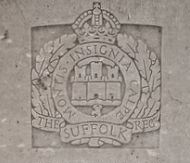
Ten years later the family had grown with eight children being born to Emma, all of which were alive to be included in the census, with the ages ranging from 17 down to eight months.  Arthur and Emma had been married 19 years and he now was a yardsman at a local farm, while Frederick worked as a milkman on a farm – possibly the same farm his father worked on.  Also, living in the house was Samuel Crisp, a widow, who in the previous census lived next door to the Churchyard family. It appears that when looking at Mr Crisp’s place of birth it is the same as Emma Churchyard.  A quick look at FREEBMD for Arthur and Emma’s marriage (Dec. Qtr. 1891), and it appears that Emma’s maiden name was Crisp.  Home for the extended family of 10, must suffolk regt headstone logohave been quite a good size as it consisted of nine rooms – Emma, who completed the census form, wrote in the ‘number of rooms’ box, that her house had six bedrooms and three sitting rooms.

The war, which was supposed to end all wars, started and Frederick enlisted in Ipswich.  He became Private 14702 in the Suffolk Regiment and entered France in July 1915.

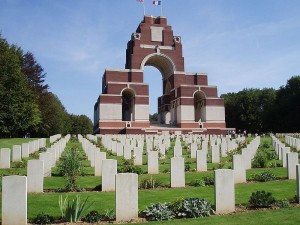
The Suffolk Regiment 8th Btn., had been raised in Bury St. Edmunds the month following the outbreak of war as part of Kitchener’s New Army.  The Division moved to Salisbury Plain in May Thiepvalof 1915 and by July were on their way to France.  In 1916 the regiment saw action on The Somme including the Battle of Albert and the Battle of Thiepval Ridge.

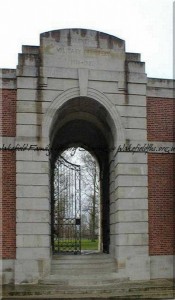
Frederick was Killed in Action on Saturday, 1st of July 1916 and is remembered on the Thiepval Memorial to the Missing, Pier and Face 1 C and 2 A, along with over 72240 other casualties of war whose final resting place is known only unto their God.

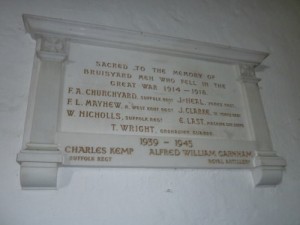
St Peter's Church, Bruisyard war memorial via lives of WW1

St Peter’s Church, Bruisyard war memorial via lives of WW1

Frederick is also remembered on the war memorial in St Peter’s Church, Bruisyard along with six others who died during WW1 and two who died in WW2.

Emma, in the latter part of 1916 was sent £4 15s from the War Office, with a further £8 10s in September 1919.

Lijssenthoek Military Cemetery – Who is resting in peace?

Lijssenthoek Military Cemetery

Lijssenthoek Military Cemetery entrance © Carol Sklinar

Lijssenthoek Military Cemetery entrance © Carol Sklinar

Lijssenthoek Military Cemetery nr Poperinge has a very special place in my heart, not only does my great uncle rest there but Nellie Spindler from my home town also calls Lijssenthoek ‘home’. A while doing a bit of research a few years ago, I came across another man whose final resting place is also Lijssenthoek – Philip Brydges Henriques.

In 1901 Philip was six years old and living with his parents Philip Guttery Henriques, a Barrister at Law and Beatrice Rachel nee Faudel-Phillips, who married in 1892.  Home for the family at this time was 33 Grosvenor Place, Knightsbridge. The young Philip at the time was cared for by Amalie Eberhard, his Governess.

Ten years later in 1911 Philip Guttery Henriques and Beatrice were living at Normandy Park, Surrey, which they had purchased in 1903. In the house on the night of the census there were no children (Philip was an only child), but  Philip and Beatrice had a few visitors and plenty of staff. The visitors included : John Fowle, 48 a Colonel in H M Army (War Dept.,) and his wife Helene Fowle, 35 who was born in Belgium; Natananiel Davidson, 26 a silk merchant; Stephen Slocum, 51 U S American Naval Attache and his wife Luna, 38 and Lay Louise Prescott, 56 who was a Paris resident. The servants included a Butler, cook, footmen, ladies maids, housemaids and kitchen maid – one of the ladies maids was Rosalie Schustes, she was one of the visitors maids and born in Russia – possibly Lady Prescott’s maid.

Philip during the 1911 census was attending Eton College, just a short walk from Windsor Castle, which he left in 1912 then attended New College, Oxford.  War was declared while he was in France when on a break from Oxford. Following his return to the UK he was Commissioned in August 1914 into the King’s Royal Rifle Corps (KRRC.

The following May he was on the Western Front, serving in his regiment as a Second Lieutenant.

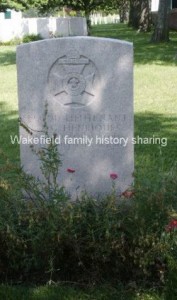
Henriques headstone in Lijssenthoek Military Cemetery © Carol Sklinar

Henriques headstone in Lijssenthoek Military Cemetery © Carol Sklinar

On 23rd July 1915, at Ypres, he was wounded and died of his injuries while in hospital the following day. He rests in Lijssenthoek Military Cemetery near Poperinghe, Belgium along with over 10,000 other casualties including one English nurse from Wakefield, Yorkshire, QAIMNS Nellie Spindler. Although he rests in France, he is remembered by his family with a stained glass window in St Mark’s Church, Normanby and also on the Normanby War Memorial and All Saints Church Memorial, Eastbourne.  He is also remembered with honour on the KRRC Memorial, Eton College.

The Probate entry for Philip reads ‘ Henriques Philip Brydges of 33 Grosvenor Place, Middlesex 2nd lieutenant K R Rifle Corps died 24 July 1915 at Ypres Belgium Administered London 15 January to Philip Joseph Gutterez Henriques barrister-at-law.  Effects £6126 13s 2d’

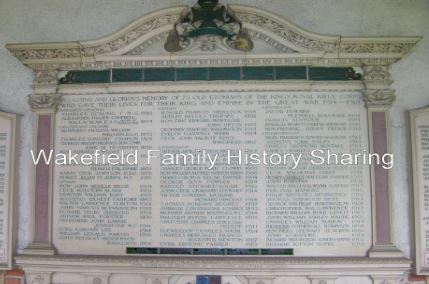
King's Royal Rifle Corps Memorial Eton College © Carol Sklinar

King’s Royal Rifle Corps Memorial Eton College © Carol Sklinar

The public schools of England suffered 20% losses, as opposed to 13% of others who served.  These men who were more than likely junior officers, lieutenants and captains, who lead by example and were first out of the trenches and last to return, and were often the target of snipers – without an officer in charge the leadership would be passed down the ranks.  Eton College, was not alone when it came to losing high numbers of  its ‘Old Boy’s’.  They infact lost 1,157 men, some as young as 17 and still only boys. Harrow School lost over 600 of its ‘boys’.

During the war Philip’s father served in the Government and received a Knighthood when peace had been declared.

The couple, Philip Guttery Henriques and Beatrice continued to live at Normanby Park and in 1939 just before the outbreak of the second world war their information was once again recorded.  Sir Philip was now a JP,  Deputy Lieutenant of Surrey and Chairman of Surrey County Council. Beatrice the lady of the house had her personal occupation classed as ‘unpaid domestic duties’ – I bet that made the paid staff cuckle!  Other people within the walls of Normandy Park were :- Juliana V Lucas, a widow living on her own means; Dudley Aukland, a Clerk to Surrey C C; William My Hollingshead, manservant; Walton Sandford, cook; Lilly S Watkins, ladies maid; Marian A Watkins, housemaid; record closed; Alice M Sandler (?), ladies maid; record closed; John T Moore and Thomas Banks, both house boys.  It appeared that the family chauffeur, Sidney Fisker and his wife Kate, lived at Normanby Park Lodge, as did the gardener William Church and his wife Florence.

Sir Philip died in 1950 and Beatrice, his wife followed in 1952.  The estate then passed to their nephew Claude Arthur Lucas, which he sold the following year.

From the Papers – Sunday Post 18 June 1916

From the Papers – Sunday Post 18 June 1916

Paisley Sailor Drowned.  Paisley Saturday.  Mrs Knox, 6 Maxwelltown Street, Paisley has received official intimation of the death of her brother, Ordinary Seaman William Steward, H M S Defence, who went down with his ship in the North Sea fight on 31st May.

He joined the navy after the outbreak of war, having formerly been employed in the turning shop at Ferguslie Mills. Deceased was 23 years of age a brother, Sergeant Daniel Stewart, is serving with the KOSB

Canadian Woodcutters at Kirkconnel – Today the Canadian woodmen who arrived at Kirkconnel on Thursday have all things in order to start to clear the large plantations in Kirkconnel parish and on the estate of the Duke of Buccleuch.  The men are in the charge of several officers, and number twenty-five.

Irvine Family Hard Hit. Irvine, Sunday – The family of Mr and Mrs Thomas Potts has been hard hit with the war. They had three sons serving. One named Tom, of the Gordons, has been missing since Loos in September of last year; Robert wa badly wounded in the fighting, but ha now returned again to France; and William has been killed.  The latter was attached to the Canadians and fell on 2d June.  He was struck with a stray bullet.

The Battle of Jutland

The Battle of Jutland

A battle took place on the 31st of May 1916 – 100 years ago today it was  The Battle of Jutland.

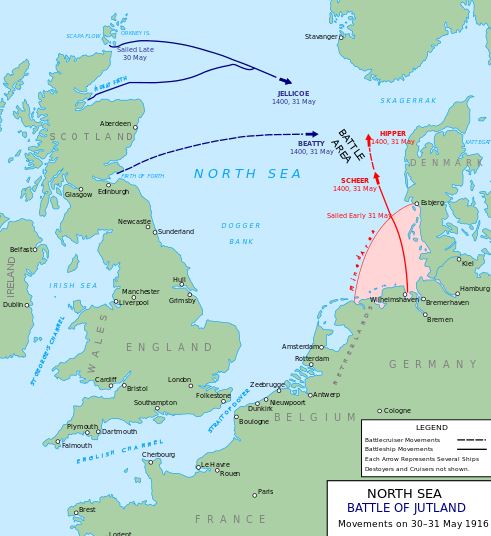
The battle was the main sea battle during 1914-1918, taking place over two days. The German vessels, including Lutzow and Derffinger, were under the command of Vice-Admirals Reinhard Scheer and

Jutland map via Wikipedia

Jutland map via Wikipedia

Franz Hipper, while commanding the navy were British Admiral Sir John Jellicoe and Vice Admiral Sir David Beatty. The ships included HMS’s Defence, Invincible, Black Prince, and Lion, Beatty’s Flagship.

In total the navy lost 14 vessels, including HMS’s Defence and Black Prince while the Germans lost 11. British casualties amounted to some 6,800 men. After all these years it is still debatable as to who won the battle, but one thing was sure, the German fleet never ventured out of port again although there was still the odd skirmish in the North Sea between vessels. German ships out of Scapa Flow surrendered at the end of the war.

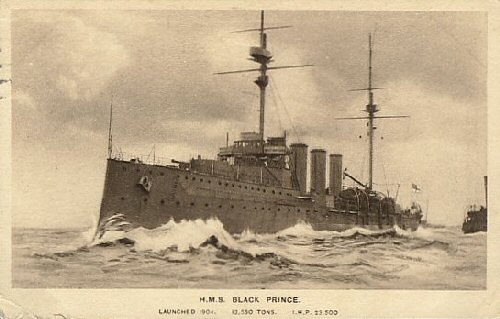
The Black Prince was commissioned in March 1906, being launched two years earlier. She was 505ft in length, 73ft 6in wide and displaced 12,790 tonnes and could reach 23 knots.

HMS Black Prince via Wikipedia

HMS Black Prince via Wikipedia

Separated from the rest of the British fleet, according to German reports, Black Prince approached the German lines at approximately midnight. She turned away from the German battleships, but it was too late. The German battleship Thüringen fixed Black Prince in her searchlights and opened fire. Up to five other German ships, including battleships Nassau, Ostfriesland, and Friedrich der Grosse, joined in the bombardment, with return fire from Black Prince being ineffective. Most of the German ships were between 750 and 1500 yards from Black Prince effectively point blank range for contemporary naval gunnery. Black Prince was hit by at least twelve heavy shells and several smaller ones, sinking within 15 minutes. There were no survivors from its crew, all 857 being killed.

One of those 857 was Joseph Edward Oldroyd, son of Joseph and Elizabeth of 18 Brooks Square, Bridge Street Morley – One source gives the family’s address as Brook Street, Hollow Top, Morley.

Joseph was born on the 5th of October 1885 in Leeds. The Royal Marine Grave Rolls confirms that Joseph was born in Leeds and was killed or died as a result of enemy action. Consulting the census of 1891, not one entry could be certainly our Joseph. The same goes for the 1901, but there is an entry for an Oldroyd family living in the Hunslet area.

The Royal Navy Registers of Seamen’s Services confirms why the 1911 census entry I found for Joseph in the navy, was the one I was looking for, as he signed up on the 15th of February for 12 years, ending up as Stoker 1st Class, 308243 in the Royal Marine Light Infantry.

Joseph was 5ft 7½ in tall with dark brown hair, brown eyes and a dark complexion. He seems to have been through the wars a bit as he had three scars on his head, a scar on his left cheek and a scar on his right loin. His conduct seems to have been generally good throughout his service with the odd glitch where he had spent some time in the cells. On the 22nd of October 1908, he is reported to have broken out of his ship and served 14 days in cells. Even though there was the odd mishap he was still awarded three Clasps for Conduct.

He served on various ships including:- Nelson, Victor II, Hampshire, Patrol, Monotour, sometimes having return postings to previous ships, finally ending up on the Black Prince. During his service he transferred to the Royal Navy. The National Archives hold the Register of Service for Joseph and can which can be downloaded for £3.45

The wreck of the Black Prince is classified as a war grave site and is regulated as such.

Another seaman who served during the Battle of Jutland  was  as a young naval officer named Prince Albert, later King George VI. Prince Albert fought in the battle on 31st May 1916 on the British Battleship HMS Colossus and came under fire.

There is a Wikipedia page for the Black Prince which gives more information on the vessel and its service.

Sugar Lane Cemetery – Stocks Family

Sugar Lane Cemetery – Stocks Family

What can words inscribed on a headstone tell you?

For starters, you will hopefully find names and dates of death but I have written about a headstone remembering ‘father and mother’, luckily other people were remembered on the headstone to work out who the parents were.  The missing parents names is quite unusual in my experience.  While others omit information there are the families who add extra snippets  of information.  These snippets are a boon for family historians and genealogists, as they can confirm information already known or, give a clue to information yet to be found.

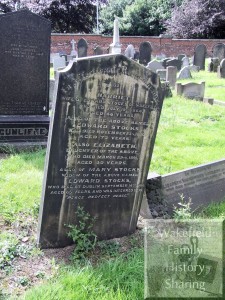
Stocks family headstone © Carol Sklinar 2015

Stocks family headstone © Carol Sklinar 2015

One such headstone in Sugar Lane Cemetery, Wakefield, is to the Stocks family.  The headstone is delicately ornate as it stands proud among a few lower commemorations, even though there is a slight leaning to the right (depending on which way you look at the stone!)

Harriet (nee Kirkbhthe wife of Edward Stocks of Wakefield died on July 1864 aged 46.  Her husband died on November 25th 1890 aged 73.  What happened  to the couple prior to their demise?  There is a marriage for a Harriet Kirkby and Edward Stocks that took place in the Huddersfield Registration District during the September quarter of 1848.

In 1861 the couple were living in Park Street in the Primrose Hill area of Wakefield with Elizabeth their 10 year old daughter. A few years later we know that Harriet had died.  What became of Edward?

Edward, born in Marsden, Huddersfield was by 1881 was hotelier of the Royal Hotel on Wood Street, Wakefield, living with his second wife, Mary and his daughter Elizabeth and Mary Duckworth who he states is also his daughter!  It appears that Mary was a Duckworth (nee Woolley) prior to her marriage to Edward in 1867 in the Huddersfield area.  Edward we know was proprietor of the Royal Hotel, which was owned by Hy Mark Carter and others, Brewers of

Wakefield, he would be in later years the licensee of the Stafford Arms.  The Stratford Arms, according to the Alehouse Licences, was owned by Trustees for Hatfeild Carter Esq., for whom J T White, Esq., of Westgate, Wakefield was the agent. I suppose you could say that life continued, in a way that life still does today and more than likely will do in years to come.

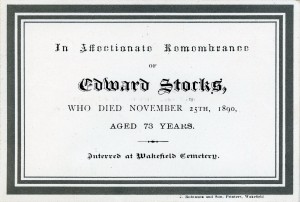
We know that Edward died in 1890 but information on Ancestry leads me to

Edward Stocks funeral card via Michael Coffey

Edward Stocks funeral card via Michael Coffey

believe that his passing was not quick.  His daughter, Elizabeth died on March 29th 1891 aged 40. That leaves the two Mary’s – Mary Stocks and Mary Duckworth her daughter.

Mary Woolley, the wife of John Duckworth. She was the sister of Sarah Woolley, who married William Henry Gaskell who inturn is connected to the Gaskell family who lived in Wakefield.

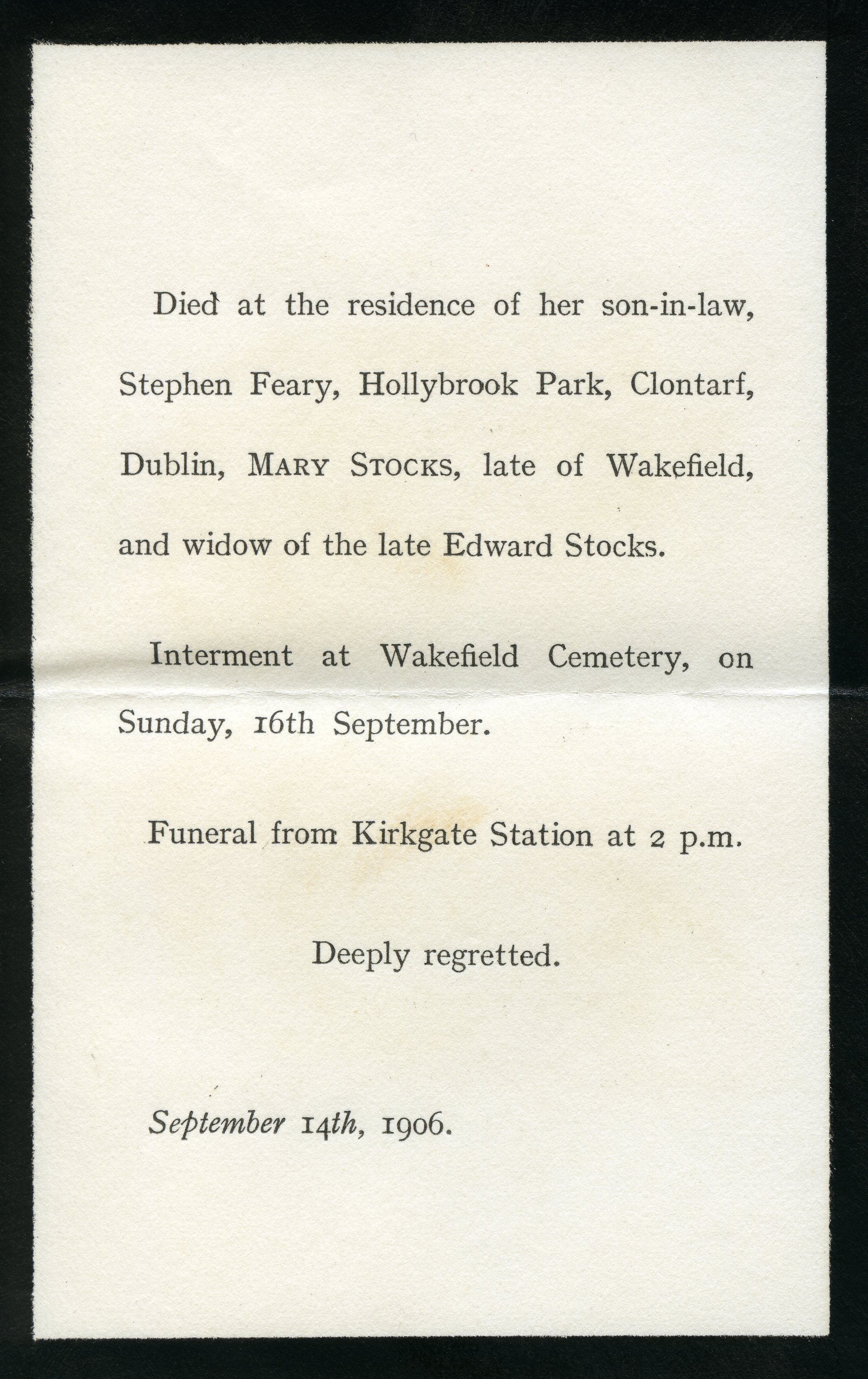
Mary Stocks funeral card via Michael Coffey

Mary Stocks funeral card via Michael Coffey

Mary Stocks – it is here where the headstone caught my attention.  The information about Mary would be a bonus for anyone looking for her death and who  ended up frustrated,annoyed and probably said they were not going to do this anymore.  Without the information on the headstone, if you were a distant relative, you would have searched death records and returned zero finds.  Whoever added Mary’s death details of September 14th 1906, also included that she died in Dublin aged 69 and was interred in Wakefield.  If you, the researcher, did not have access to the headstone or knew of Wakefield MDC’s online Burial Records, you may not have known where she died and now rests.

Four people are mentioned on the headstone – Edward, his two wives and his daughter to his first marriage. But what of Mary Duckworth?  Was it Mary Duckworth that had this information placed on the headstone to remember her mother? It could well be as there is a marriage for a Mary Duckworth to a Stephen Feary in 1888 – the couple married in Wakefield Cathedral.

It appears that Mary and Stephen lived in Ireland – could her mother have moved with them or been on a visit when she died?  This entry seems to be all questions doesn’t it?  There goes another question to add to the pot!

Mary Feary, now a widow, of Hollybrook Park, Clontarf, Dublin died on the 4th of February 1920 leaving over £1200 to Robert Henderson Feary and Geoffrey Clarke Ferguson according to Probate which took place in England.

It looks like it could have been Mary who included the valuable information about her mother.

One last question.  Did Mary accompany her mother on her final journey and stay until after the funeral? Does anyone know?

Wakefield City Police – Constable 17

Wakefield City Police – Constable 17

My father was brought up by his grandparents from being about 2 years old – the reason, well not quite sure, as both his parents were living, but have a good idea and he was the only one of his siblings being brought up by the Victorian couple.

It appears from the stories told to me by my father that his grandmother was the hub of the family.  It seems she was a very strong willed woman and after the death of her husband always wore black.
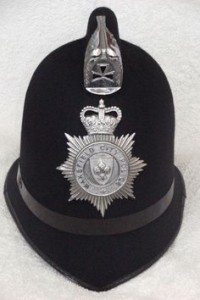
Wakefield City Police helmet via Pinterest - date not known

Wakefield City Police helmet via Pinterest – date not known

What did my father tell me?  I heard of three soldiers who were  KIA during WW1 and their siblings and cousins who lived to be reunited with their families.  I heard a tale of a hangman (but that’s another story), a very vague story about a woman who attempted to murder the Prime Minister, and the story of a policeman who used to enter the house and stand between the dresser and the back door.  By the time I was born my great grandma had died – the hub of the family had gone, so I missed the vast number of relatives who used to pop by and see her.

Who was the policeman?  Walter Siddle, my third cousin, was born in Wakefield in 1881 to Walter Siddle and his wife Sarah Margaret nee Walker  one of their 11 children. Walter snr. worked as a hawker and salt dealer to earn a living, while home, was on Grantley Street, 90 Stanley Road and Brickmakers Yard.

Years later, I was in contact with Colin Jackson, a retired Wakefield City Policeman, who had written a fantastic book about the Wakefield Constabulary 1818 – 1968, and I came face to face with Constable 17, Walter Siddle.

Walter jnr. joined the Wakefield City Police and completed his probation on 30th September 1907 and was appointed PC17 on 16th October of the same year. The area at the time had two police forces – the City force, where you had to live within the city boundary to be eligible to join and the West Riding Constabulary which catered for those outside the city limits. Prior to him joining the police, Walter was employed as a stoker. Walter was 5′ 10″ tall, with a fresh complexion and brown hair and seems to remind me of Sgt. Dixon from Dixon of Dock Green – some of you may remember from tv series by that name years ago.

1911 is an eventful year for Walter.  The census is taken and he is living with his parents and four siblings in Brickmakers Yard.  This census gives a wonderful insight into family life at the time as it tells that Sarah Margaret had given birth to 13 children but by the second of April 1911, she had lost seven of her children – such a loss for all the family.  But 11 days later, on Thursday the 13th of April,  Walter and his family were just down the road, waiting in St Andrew’s church for Clara Leonard to walk down the aisle and become his wife. Another milestone came in Walter’s life in the autumn, when Sarah Margaret his daughter was born, followed in May of 1913 by Walter Leonard.

Life would have continued for the family but some 15 months after the birth of Walter Leonard war was declared.  Men from all walks of life signed up to go, as ‘it would be all over by Christmas’.  Many occupations were ‘reserved’ i.e. farmers, iron and steel workers, coal miners and doctors (although some miners and doctors did join the services) and the police.  This all changed in December 1915, when all members of the police force under 41 years of age (including Walter) attested and were placed n the reserve list, under Lord Darley’s Scheme (World War 1).  By March 1917, the goal posts were moved and all under 41 years of age were to be examined by the Army Medical Board, again Walter qualified for the examination.

The war ended the following year with Walter not having to go to war but 11 constables did go and fight.  By reading the local newspapers for the time, it seems that the police forces had enough to deal with at home – soldiers deserting, overstaying leave and generally causing chaos was enough to keep any force (about 60 constables, 9 sergeants and 4 high ranking officers (191 nominal roll)) busy. So busy in fact, that with having to contend with the possibility of air-raids (several alarms of Zeppelins raids were reported to which the Police and Fire Brigade were put on standby), in the early part of 1916 the Chief Constable found it necessary to reduce monthly leave to only day with payment being for the extra days worked.  Towards the end of 1917 daylight raids were a possibility and the Watch Committee was asked to purchase bicycles. Factory buzzers and the Town Hall bell were to be used to warn of such raids and Clayton Hospital had made arrangements for the evacuation and handling of its patients and the possible casualties resulting in these raids.  Although these precautions were made, there is no record of any actual raids.
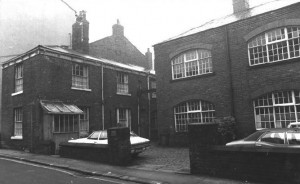
King Street Police on left with lock-up and Fire Station

King Street Police on left with lock-up and Fire Station

In January of 1918 the Force applied to the Watch Committee for an increase in pay, it was not until December and the war was over that the men got their increase in pay and a War Bonus of 12/ ½d per week was eventually paid to regular members of the Force.

Life continued for Walter and Clara and his career seemed to be on the up.  On the first day of 1920 he is appointed Detective Constable.  By July 1923 he is promoted to Uniform Sergeant ‘C’, with responsibilities which include drilling the Fire Brigade and a few days later his responsibilities include the cleanliness of both the Police and Fire Stations.
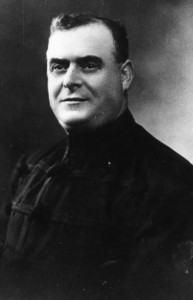
Walter Siddle via Colin Jackson

Walter Siddle via Colin Jackson

April of 1931 the family move from the police house at 22 Thompsons Yard, to the Police Station at 26 King Street.  In March of 1933, on the retirement of Supt. Tattersfield, Walter is promoted to Superintendent of the Fire Brigade.  During his service Walter would have been serving under Inspector George Kealey Spindler, the father of Nellie Spindler, who was KIA during the war – this is another connection I have with Nellie!

On June 8th 1934 the Watch Committee were informed of the death of Superintendent Siddle. His widow, Clara, was  granted a gratuity of £758 6s 8d and informed that she must vacate the property by the end of October, but in the meantime pay 23s 6d per week rent.

Clara lived to see both her children married – Sarah Margaret married Willie Rushworth Brownhill in the Cathedral in 1934.  While Walter Leonard married Joan Donnelly in 1949.

Walter and Clara now rest within the boundaries of Wakefield City Cemetery, Sugar Lane.

FREE family history charts and forms

FREE family history charts and forms

fan chart extractIf you don’t use a family tree programme to keep your family history organised, where do you keep all the information you have found online, in the archives or gathered from relatives or family friends? Please tell me it is not on scraps of paper that just hold the smallest amount of details.  But, where did you collect this information from?  Will you remember in weeks or months to come which census these scribbled notes refer to.  Or, which newspaper the snippet about great uncle Ted was taken from!

You don’t have to go to the expense of a family tree programme when you begin to research your family history, but you do need to keep things orderly and make a note of where you found information and what information you need to find next – saves searching for the same thing over and over.

census summary chart excerptHere are a few websites that offer FREE downloads of forms that will help keep your research in some form of order, where you are from the UK, Canada or USA.
  • Wakefield Family History Sharing – printable charts and logs including check lists, research journals, census summaries, family group sheets with continuation sheet, inquiry forms, family tree/ siblings tree, deed index and cemetery transcription sheet
  • Cyndi’s List – has a wonderful collection of forms and is well worth a look
  • Vertex42 – has a selection of templates including a good selection of family tree layouts.  You do have to put up with a few advertising banners , but hey, they are FREE
  • Mid-Continent Public Library – has made available a good selection of charts, forms and worksheets.  The site also has a form for each of the American census – fantastic if you have a family member who went to the USA prior to 1940
  • Pinterest – Don’t forget to have a look here, it is wonderful what people upload to this site
  • Family Tree Magazine – mainly USA based forms, but still some that could be of use to UK researchers

Don’t forget to use a pencil when including your newly found information on the forms and charts – you may need to amend the details later!

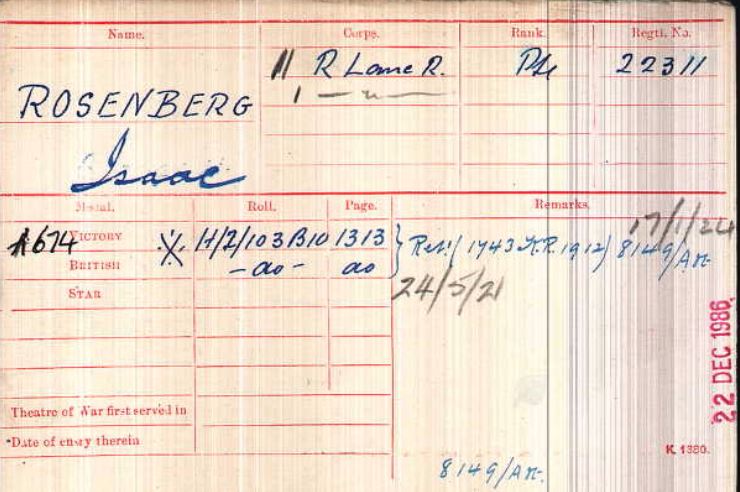
Isaac Rosenberg

Isaac Rosenberg

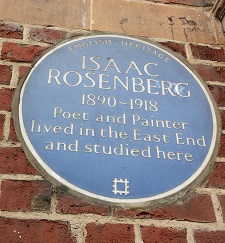
English Heritage Blue Plaque to Isaac Rosenberg © C Sklinar 2015

English Heritage Blue Plaque to Isaac Rosenberg © C Sklinar 2015

Following on from the last entry, it is now the turn of Isaac Rosenberg.  I found the plaque to Isaac about 12 months ago and was prompted by writing a small piece about Anna Maria Garthwaite yesterday.

I had come across Isaac before with my interest in WW1.  He had also been part of an Open Learning course I had completed last year.

Who was Isaac? He was a poet and artist.

Isaac was born in 1890, one of six children to Barnet (Dovber) and Anne (Hacha).  His twin brother died at birth.  His parents were Latvian immigrants.  Barnet, in the 1891

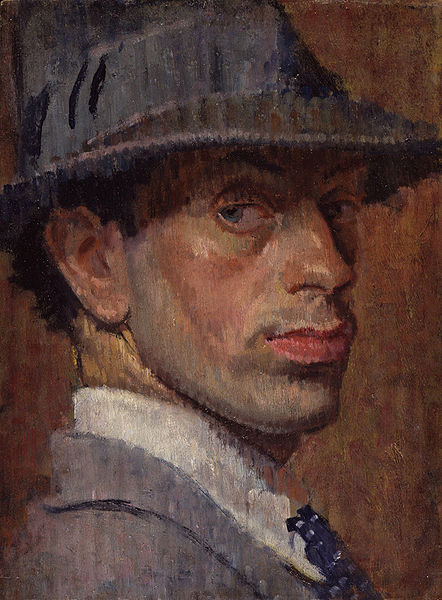
Isaac Rosenberg self portrait

Isaac Rosenberg self portrait

census was described as a Drapery Dealer and was the father of two children.

Ten years later in 1901 the growing family are living on Jubilee Street, Mile End, next door to another Rosenberg family.  The head of the house is of an age to be Barnet’s brother.

By 1911 Isaac  is 20, and described as an artist.  His parents have been married for 30 years and have had six children – no mention of Isaac’s twin on the census, who is mentioned in some sources.  Home for the family is a four roomed house – 159 Oxford Street, Stepney.

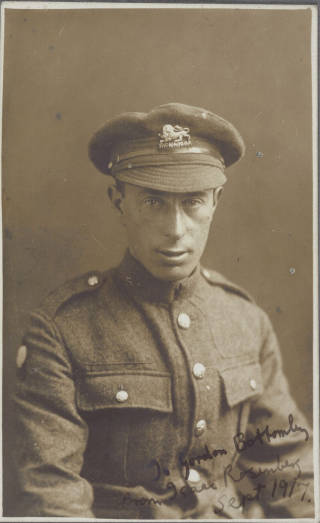
War broke out and Isaac enlisted in London, joining the Suffolk Regt., as a Bantam due to his stature. being under

Isaac Rosenberg in uniform

Isaac Rosenberg in uniform

5″ 3′.  He was transferred to the Lancashire Regt., and finally transferring to the King’s Own Royal Lancaster Regt., He was sent to the Western Front in June of 1916 and during this period wrote and sent home poetry to his family, including Day Break in the Trenches

During several periods of sickness he was removed from the front lines and transferred to various duties, including delivering barbed wire to the trenches.

In March of 1918, being sent to the front lines with reinforcements, he was killed while on a night patrol with ten other men.  He was initially buried in a mass grave but re-interred at Bailleul Road Cemetery in 1926.  Marked with his name, rank, regiment and service number, his headstone also has the Star to mark his religion, the words ‘buried near this rosenburg isaac medal cardspot’ and near the bottom ‘Artist and Poet’.

Isaac’s father, Barnet was the recipient of monies owing and his War Gratuity, which was all finalised by September of 1919.

After his death.

  •  His self-portraits hang in both the National Portrait Gallery and Tate Britain.
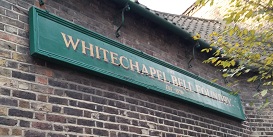
  • A Blue Plaque commemorates him, situated on the Whitechapel Gallery, formerly Whitechapel Library, where Isaac studied.
  • In 1985, Isaac, along was among 16 Great War poets who were commemorated on a stone in Westminster Abbey’s Poet’s Corner – “My subject is War, and the pity of War. The Poetry is in the pity.”

Isaac’s poetry is dark and deals with the horror of life in and around the trenches


Anna Maria Garthwaite

Anna Maria Garthwaite of Spitalfields.

Whitechapel Bell Company © C Sklinar 2015

Whitechapel Bell Company © C Sklinar 2015

About two years ago my daughter and her now husband took a guided tour of the Whitechapel Bell Foundry.  I was going to visit them for a long weekend, but sadly, was not able to get a space on the tour………never mind.  I had my Kindle, a string of coffee shops were available.  I could easily find something to do for a couple of hours.  And I did!

Just around the corner from the coffee shop was Brick Lane.  I wondered up and down and onto the side streets.  One of the streets sounded familiar, did I know why?  No, then it struck me, Hanbury Street, was made famous in the 1880’s by the Whitechapel Murders………..Jack the Ripper.   I saw Spitalfields Market and the beautiful Spitalfields Church.

Time was passing by and I needed to retrace my steps back to Whitechapel Bell Foundry, But, I was held up just a little by a Blue Plaque on a house.  I had seen quite a few plaques, but this one caught my attention and drew me close.  As I walked up to the house two men were chatting.  As I drew close, they parted and let me pass on the narrow kerb ‘thank you gentlemen’, I said and continued.  But one of them looked familiar, I later remembered who he was, but I’m not telling!

But, I will tell who the plaque was to, you already know that, don’t you!   I’ve been meaning to do this blog a while, and it wasn’t until I went to a History Wardrobe afternoon, when Lucy Adlington, spoke of Anna Maria, that I was prompted to make a ‘draft’ page.

Who was Anna Maria?  She was born in 1688, the daughter Revd. Ephraim Garthwaite, who at one time was the rector of Harston, and his wife Rejoyce.  Anna moved to York, then later to the silk-weaving area of Spitalfields, London.

Garthwaite Blue Plaque © C Sklinar 2015

Garthwaite Blue Plaque © C Sklinar 2015

Anna is said to have created over 1000 designs for woven silk and some of her original watercolour designs from the 1700’s are now in the keeping of the Victoria and Albert Museum.

Her work is associated with the fashion at the time for floral patterns.  The English design at the time was for more dainty patterns, opposed to the French silks designs of the time, with large floral designs in unrealistic colours.

The Spitalfields weavers exported to Colonial America, which at the time was prohibited from trading with France.   Anna’s work appear in portraits of the period and surviving skirt panels previously owned by Martha Dandridge, have been acknowledged as Anna’s work.

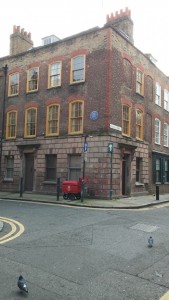
2 Princelet Street, Spitalfields © C Sklinar 2015

2 Princelet Street, Spitalfields © C Sklinar 2015

Anna died in October of 1763 aged, and rests in Christ Church burial ground.  Her house at 2 Princelet Street, Spitalfields, a three story dwelling with large sash widows, has on the first floor wall the Blue Plaque that was placed there in 1998 by English Heritage.

After meeting up with my daughter and her then fiance, who had by now ordered a Whitechapel Bell in the note of G, to ring at their wedding later in the year, we walked back to the car, but on the way we passed another Blue Plaque that caught my attention because of the dates moulded on the plaque for all to see, well for all to see who care to take their eyes up and look around.

So, that looks like the next blog is about that plaque!

The Somme Remembered

The Somme Remembered

The Somme Remembered – during the month of July 100 years ago many servicemen, nurses and aid-workers lost their lives.

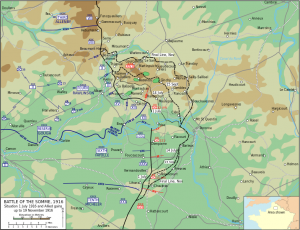
The Somme 1916 via Wikipedia

The Somme 1916 via Wikipedia

The First Day of the Battle of The Somme saw Commonwealth countries and the allies suffer over 650,000 being killed or wounded, while Germany had approximately 450,000 killed or wounded.  Such huge numbers for one day – imagine taking the populations of Liverpool and Edinburgh off the face of the earth!

What can Wakefield Family History Sharing do to mark this month?

31 days 31 casualties

The month of July will feature 31 casualties – servicemen, nurses, aid-workers who lost their lives in that month during World War 1.

Did one of your family, or  someone you know of die in July 1916?

Let Wakefield Family History Sharing know and their life and times could be featured in our The Somme Remembered month.

Use the contact form initially to show your interest or email    Somme (at) Wakefieldfhs.org.uk

The First Day of the Somme Imperial War Museums podcast