Category Archives: News

Walk the streets of 18C Wakefield

Have you every wondered what it would be like to be walking the streets of 18th century Wakefield ?
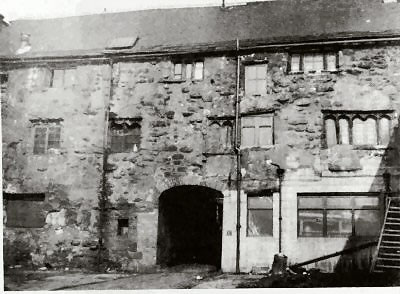
Bishopgate, former Cock & Bottle Yard

Well, a notebook of William Scarth will take you there and for anyone who knows the town, these notes are sure to be of interest. There is even one instance where two of the people known to William Scarth go to America ~ a snippet for family historians and helpful if you happen to have ‘lost’ someone !

There are a few maps that help you to get your barings while following Mr Scarth chatting about his neighbours and people whom he knew.

William tells of Mr Oakland who kept the Golden Cup public house and sold flour and bread and was greatly attended by Foreing picture hawkers.

There was a Betty Fisher mother to Robert Fisher brick layer who lived bottom White Horse Yard next James Lane who used to flogg in the streets of Wakefield with the Cat of Nine Tails from the prison.

Jonerthon Hartley white washor and drummer in the Wakefield Volumnturs they next house in from was Jackie Sunderland a Malster who kept his 2 beautifull Black Cursing Dogs.

To read the rest of Mr William Scarth remembering his neighbours and friends click here

This article was compiled by Kevin Scarth and Richard Bointon
Nelly Spindler

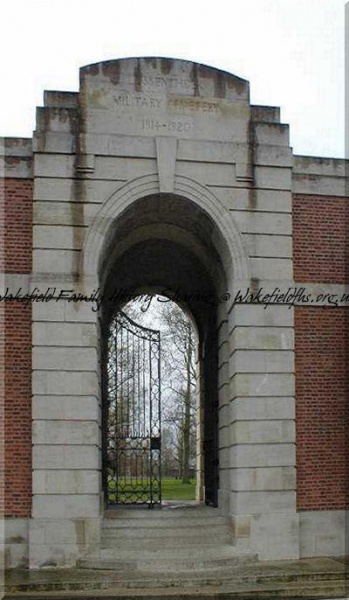
Nelly Spindler, a Wakefield girl, who nearly 100 years ago was one of the Queen Alexandra Imperial Military Nursing Service.  She was a young woman, a nurse, who served so close to enemy lines she  almost stood on them!

Nelly was born in Wakefield in 1891 to George and Elizabeth Spindler, the eldest of their children.  George was a policeman, serving in the Wakefield City Police Force.

By the time of the 1911 census George was now an Inspector in the City Force and ‘our’ Nelly was a hospital nurse living on Park Lane, with the Matron as head of household.

Nelly, like many other women from the area watched as young men signed up for King and Country – they had heard the call but there was also a call for women – a special type of women, specialists in their field, yes,  nurses.

Nelly answered the call and joined the QAIMNS who were mobilised very shortly after the BEF left.  These nurses initially numbered 3,000 but soon rose to over 20,000.  These young women went where ever there was a wounded soldier – in all theatres of war and in all kinds of danger.   Nelly worked at the 44th CCS (casualty clearing station) Brandhoek, Belgium.

The 44th CCS had expertise in abdominal wounds which needed immediate attention due to the amount of blood loss, high infection rate and high mortality rate.  The first day of the Battle of Passendale saw the 44th CCS overwhelmed with casualties.  Not only were they an ever growing line of casualties needing attention but the CCS was also being bombarded by enemy shells.

Sadly, her name is nearly forgotten in her home town, it is only the family/local historians and military researchers who know of her and her fellow nurses whose final resting place is in a foreign land that shall ever be British.

To read more about Nelly click here

Absent Voters list – Wakefield 1918

In the General Election in 1918 men away from their home were allowed to vote for the first time.

How? Well an Act of Parliament passed on6 February 1918 allowed service men and other men who were away from home on election day  to cast their vote in their home constituency.

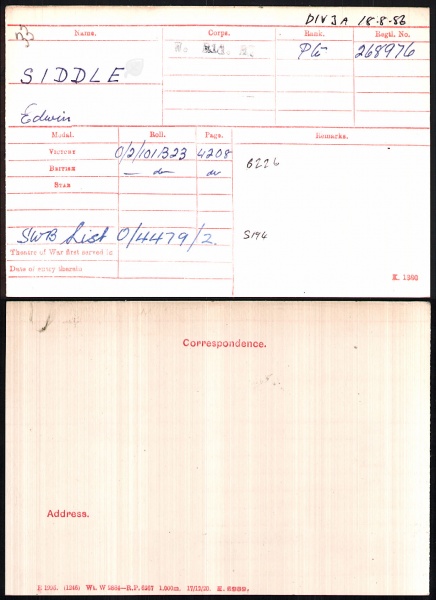
Medal card index for H Siddle, KOYLI

The absentee voters had to register their applications before 18 August 1918 to be allowed to vote and the first of the Absent Voters Lists was published in October 1918.

Wakefield Family History Sharing has transcribed the Absent Voters List for Wakefield mainly as it is a very useful tool for finding a soldiers regiment and service number, be it only good for those young men over 21 years of age (men under 21 years of age were not given the vote until much later, as were women), and don’t forget the first one was in 1918, so no point in looking for a soldier before that date!

Why would I need to look on such a list.  Well, you know great uncle George served and was KIA in WW1, but what you don’t know in which branch of the armed forces he served in. The Commonwealth War Graves Commission website can’t help you in your search as he has a common name, which means there are lots of entries  and some have no specific family information.  It is now that a service number and regiment comes in very handy.

What information can the Wakefield Absent Voters List tell me? Firstly, the lists are divided into Polling Districts.  Each district is then in street order and it is here you will find your man with his regiment and service number which will help you when looking on the CWGC to find the right man.

Not only will this newly found information aid your CWGC search but will also help when looking for service records, medal cards etc. Sometimes you have to go sideways to go forward!.

One thing I will mention is that it was not until c1920 that each individual service man was given a unique number.  Prior to then if a serviceman changed his regiment, he changed his number too.

You know have the information you need to find the grave or memorial of your relative and, if it survives the service records too – so if you have a WW1 soldier from Wakefield the Absent Voters List page is worth a visit.

Wakefield 1918 Absent Voters List can be found here

Leeds City Council did have a searchable version of their Absent Voters List containing over 50,000 enlisted men but unlike the Wakefield transcription there are no addresses.  For further information you have to go to Leeds Library.

Transported to Australia

Have you a convict in your tree?  If you have a bit of good luck has come your way as Ancestry.com have made available over 42,000 records of convicts transported to the Australian penal colonies.  These new additions join a collection now in the region of over 2 million documents from the 19th century related to convicts from their arrest to release.

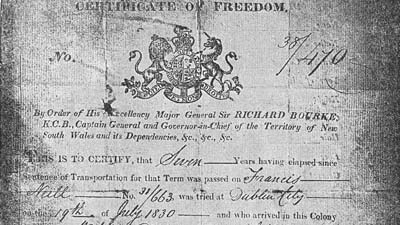
Ticket of leave

During an 80 year period over 160,000 men, women and children were transported as convicts and it is estimated that over 2 million Britons have one or more convicts as relatives – so why not have a look, you never know what or who you may find.

You can either read the article on the link below or follow the direct link to begin your search – happy hunting!

The article can be found by clicking here    The linked has been removed 


New South Wales and Tasmania, Convict Pardons and Tickets of Leave, 1834-1859

Free Forms & Charts for family historians

Anything that’s free is good, well most of the time.  But here are some charts and forms that you will find of use when researching your family.

To view these charts you will need a PDF reader but a free one is available for download with the charts.

Some of the charts/forms include :-  Analysis sheet; census summary; family group sheets with continuation sheet; various pedigree charts; family tree with siblings; cemetery transcription form+ others all designed to help keep some order to your research.

But talking about order don’t forget the Family History Diary a must for when you visit the archives, the library and relatives – even with a computer a Family History Diary is a must!

You can find the charts for free download here

The   Family History Diary can be found in the  shop or follow the link on the sidebar

French Soldiers KIA WW1

Anyone have any French soldiers who died in World War 1 or any conflict involving France i.e. WW2, Indochina and Korea?

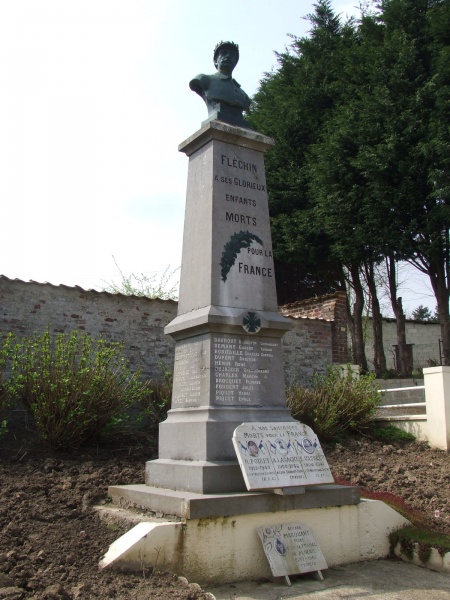
The French site SGA-Memoires des hommes can certainly help you – each soldier having their own scanned sheet giving the following information :- Name, date of birth, regiment and service number, date of death etc.,  Obviously the information is in French but it is quite easy to understand some of the information.

Soldiers who died for France  – SGA-Memoires des Hommes

Eton College Memorials

You’ve just read how my family treat me as an object of fun when talking about war memorials but I felt I must tell you how it all started.

My daughter, yes its her fault! She had the opportunity after graduating to work for nearly 6 months in China.  She was to work in Tianjin University teaching the young trainee pilots English – I sometimes call her Miss Chips, as she had lots of pupils and all boys!

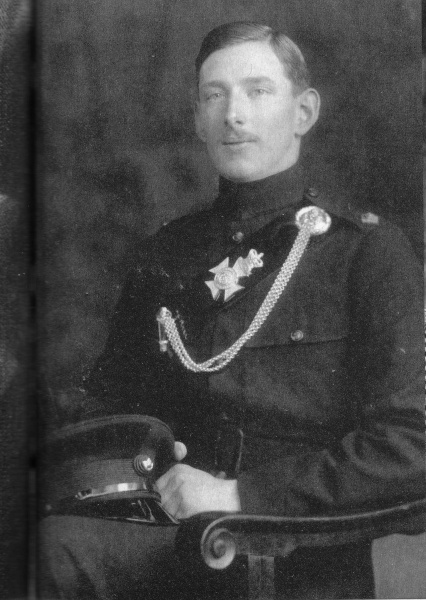
John Henry MacDougall Scott – old Etonian KIA WW2

And with only a couple of weeks notice she packed all her belongings and I do mean ALL!  We took her to Heathrow where she met her fellow ‘teachers’ and off she set – leaving us with only Skype to communicate with.

We stayed for the night in Windsor and walked down to Eton – it was the holidays and very few students were left boarding.  Firstly, I was taken by the Quad – I’d seen it on many a film but looked different in reality.  Anyway, we wandered around the outer edge, under the covered area that surrounds the central courtyard, and there were memorials galore but at this stage they were just memorials.  We took pictures, as you do, of them, finished our walk around and left.  Leaving for home later in the day.

By this time Wakefieldfhs.org.uk had been going for about 5 years and was mainly transcripts that I gathered along the way, a series of links and other useful info for people with a Wakefield connection.  Eton was out of the remit of the site so Genealogyjunction was born!

What to do with these pictures – memorial, glorious in their remembrance of fallen Etonians.  I started to think and that can be lethal and cause work for some people.  The transcriptions started, names on a white page – but who were these men, young and not so young, some ones son, husband or brother.  A name meant nothing, these men had to come to life, have parents, a place to live, a job they did and a final resting place.

The great monster was born and over the years ‘life’ has been given back to many a man who thought it would be over by Christmas and those whose fight was over only a short time before November 11 at 11am.

….When you go home tell them of us and say, for your tomorrow we gave our today…

www.wakefieldfhs.org.uk

www.genealogyjunction.org.uk –    memorials and other transcripts  outside of the Wakefield area, Belgium and France

Australian soldiers in WWI

Most of my family and friends know I can spot a war memorial or a CWGC headstone at a great distance.  My family make a joke out of the fact that if I want to go anywhere there has to be an ulterior motive i.e. a memorial of some kind.

Holidays and weekends away have always been expeditions where viewing the countryside was secondary!

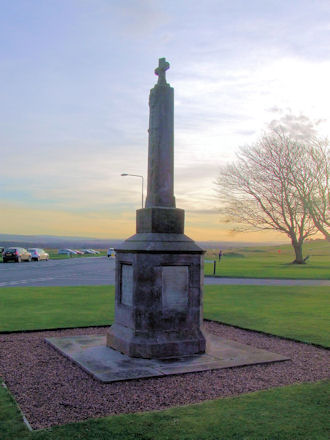
On one of our annual trips to Aberfoyle we found a very nice little memorial in Gullane – a nice place on the Edinburgh to North Berwick road (A918).

The memorial to those who died in WW1 & 2 is situated on a grassy section near the golf course.

Back home I started the transcription and followed up with looking to see who these young men were.  There were 3 young men who stood out.  Firstly, James Harper who died in the local police station and rests in the village kirkyard.  Secondly, Hugh Burns who died while in a prisoner of war camp and his service records hold correspondence from his father asking why there is a discrepancy in his date of death.  Thirdly, and the most interesting to a family historian or researcher is the entry on the memorial for Richard H Whitecross.

Richard served in the Australian forces and whose army life was not to say the least – interesting! If you have Australian or Canadian service men who served in WW1 then you will find that their army service records are intact.  The records for UK service men are not so good.  They form part of the Burnt Records as they were damaged by fire in WW2. Saying that the Medal Record Cards are good but their information is limited.

Anyway, back to Richard – he left his home in Gullane for Australia where he went to work as a bricklayer.  His papers tell of his enlistment, give a description, and more to the point tell us where he served and what his attitude was to service life.  Well I can tell you that he was not the most enthusiastic squaddy.  Richard was always on report, failing to turn up for Roll Call, being drunk, AWOL and more.

To read the entry for Richard and the men of Gullane  click here

To look for an Australian soldier from WW1 click here

To visit the Canadian Expeditionary Force records for soldiers  click here

Passports, Leaving the UK and India service

Did your relatives leave the UK ?

Did they have a connection to India? Either in the Army or East India Company – Find My Past have gathered a collection of information that might help in your search.

Fantastic, I found my J Younie in these records working with the Judicial system in Bengal in 1933.  This record was easy to find as all I needed to do was insert his unusual surname.  When looking to see if any other of my far flung lot had a passport… now that opened up another can of worms.

FMP have passport applications from 1851 – 1903 with a few gaps in between, but when entering information into the search boxes they only want the first 3 letters of the surname – making it very time consuming to do a search, especially if your first 3 letters are Mac.  They do have other records in their Migration section. including Passenger listings, that are just as easy to search as the India Office List.  If you find a 3 letter search, just make sure you are in a ‘moochin’ mood so you won’t get frustrated and annoyed looking at every page to find your ‘Mac…’

On the other hand, Ancestry have an Immigration and Travel section which incudes : Alien Arrivals; English Adventurers and Emigrants and UK Incoming Passenger List 1878 – 1960 and all these use a full name search.  Now, how easy is that for the Mac prefix families of the world!

On a more personal note – I use both these websites (well one more than the other) sometimes using one to compliment research gleaned from the other but when it comes down to ease of search, ignoring both their transcriptions errors –  I prefer the  Ancestry  site for its full name search facility.

NOTE :- both Ancestry and Find My Past are pay per view sites, although you can look at some indices for free.

WDYTYA – Who do you think you are?

The Who do you think you are?  Live, makes another appearance at Olympia between the 25 and 27th of February 2011,  there you will find  family history societies and groups exhibiting alongside well known commercial giants at this fantastic gathering.

As well, as the many stands there are a series of talks and workshops and a few celebrities will be taking to the stage including Ainsley Harriot, Monty Don, Hugh Quarshie and Tony Robinson.

So, go rummaging for all your pocket money, raid the piggy bank, make notes of what you want to do, which stalls you want to visit and what information you want to know.  Cancel all your appointments, forget the shopping, leave the kids to get to football on their own and head off to Olynpia.

To visit the WDYTYA website click here