Category Archives: News

The Somme Remembered – 7th July 1916

The Somme Remembered – 7th July 1916

The 7th of July would be a day the Moth family would not forget in a long time.

Albert Victor Moth, was the son of Shadrach Moth and his wife Sarah nee Cook.  He was born in Manchester.  By 1911 he was one of 8 surviving children living at 50 Bosworth Street, Openshaw, Manchester – a six roomed house where 10 lived.  His father worked as an iron founder at the local waggon works and 12 year old Albert attended school.

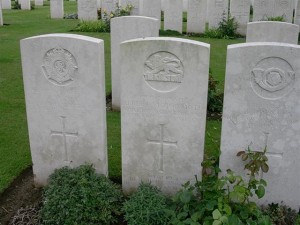
headstone logoAlbert enlisted in Manchester, joining the King’s Own Royal Lancaster Regiment – Private 3571.

The Service Record for Albert survives and one page tells that he was wounded in action on the 4th July and transferred to 76 Field Ambulance.  Warloy-Baillon during the early part of 1916 had become a popular billeting area, with the hospital there at the time specialising in abdominal and chest cases.  By the summer of that year the 76th Field Ambulance was in the village – some said that the 76th should have been run as a base hospital and not by Field Ambulances.  On 2nd July, the situation at the hospital was said t be chaotic, with ‘too many wounded unable to be evacuated’, lying outside the tents.  The 76th FA was taken over by the 92nd Field Ambulance, the original medical officers slowed their working pace, their commanding officers being overwhelmed with paperwork.  The 92nd marched out on the 5th July leaving everything in disarray and dirty.

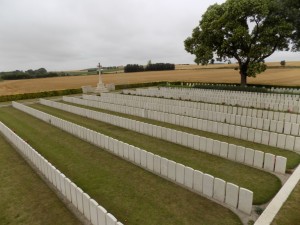
Albert's headstone via FindaGrave

Albert’s headstone via FindaGrave

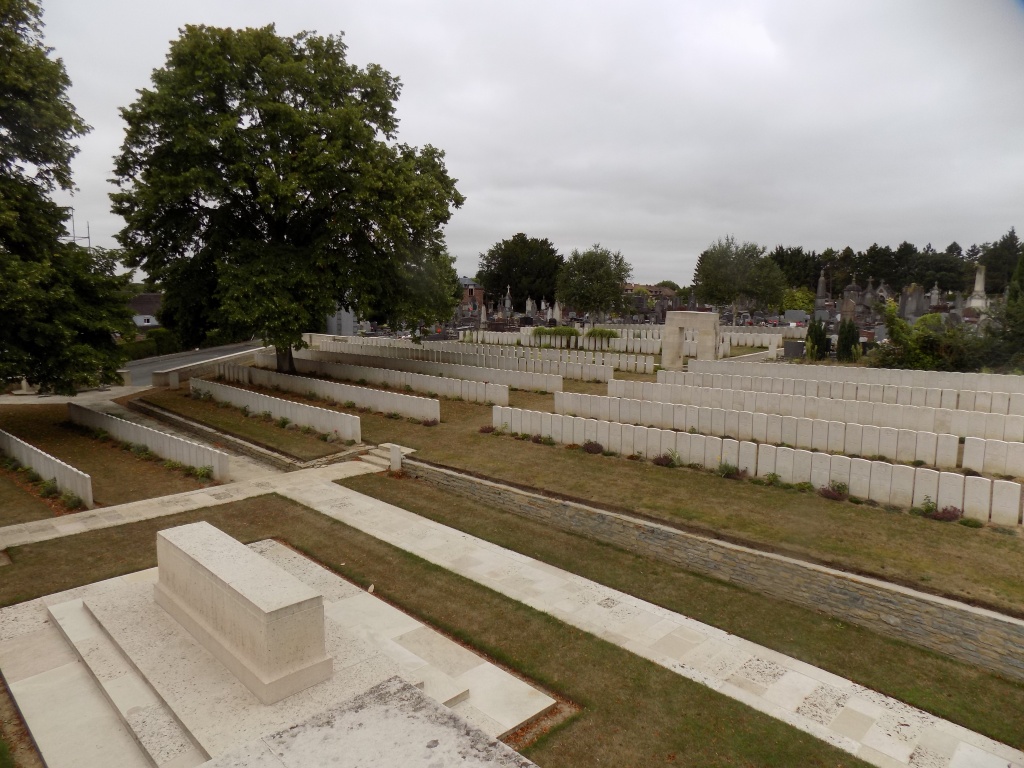
Albert died of wounds on the 7th July 1906 aged 17.  He rests in Warloy-Baillon Communal Cemetery Extension with over 1300 other identified casualties including 18 German casualties and two Second World War casualties.

The Somme Remembered – 5 July 1916

The Somme Remembered – 5 July 1916

George Neate was the son of George Neate and his wife Alice Maud Mary, born in Slaughterford.

The 1901 census has the family living, according to the census enumerator ‘road from Chippenham to Slaughterford’, possibly close to what was known as ‘Keeper’s House’. George snr. worked and his wife worked at the local paper mill.

Ten years later in 1911, George snr. was now a foreman at the papermill and it looks like four of his six children also worked in the mill.  Home for the family was Fford near Chippenham, the enumerator entered that their house had four rooms and that seven people lived there..  The entry for the family was completed by George jnr. who in error included his sister Annie on the sheet, Annie was infact living in Bath and worked as a servant for 70 year old Annie Marie Daries.  Annie’s entry was struck through by the enumerator and is one of the many mis-entries that are useful snippets of information.

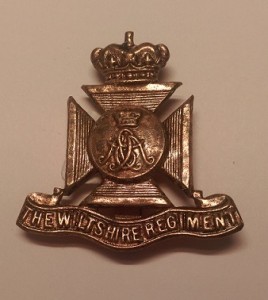
Wiltshire Regiment via Wikipedia

Wiltshire Regiment via Wikipedia

George jnr. enlisted in Devises into the Duke of Edinburgh’s Wiltshire Regiment, serving as Private 18360 in D Company.

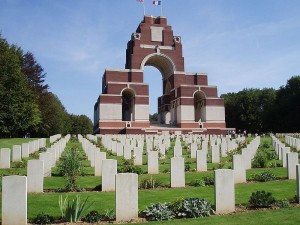
George, aged 22, was Killed in Action on the 5th of July 1916 and is remembered on the Theipval Memorial to the Missing along with over 72200 casualties whose final resting place is known only unto their God.

Thiepval Memorial

Thiepval Memorial

The Somme Remembered – 4th July 1916

The Somme Remembered – 4th July 1916

William James Denton Milson was born in Beverley in 1890, the son of William Carr Milson and his wife, Ann Marie nee Cooper.

In 1909 William attested in Scarorough. By 1911  was a drummer in the 1st Btn Yorkshire Regiment, following in his father’s footsteps.  William Carr Milson had attested in 1885 aged 19. He was discharged at his own request on payment of £15 in 1884 – there must be an error in the typing as he was discharged before enlisting!  He must have at some time re-enlisted as he served in Egypt, South Africa, and the Cape Colony and was the recipient of medals for his service.  His character is described as being Very Good whist with the Colours.  He is described as being 5′ 5″ tall with a fair complexion, blue eyes, brown hair.  He had a scar on his right leg and had the tattoo of a man on his right breast and an anchor etc., on his left forearm.

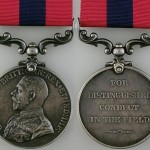
DCM via Wikipedia

DCM via Wikipedia

Back to William jnr., William James Denton Milson served as sergeant7813 in the Yorkshire Regiment, and according to his Medal Card was in France by June of 1915. On the 15th of March 1916 he was awarded the Distinguished Conduct Medal (DCM).  His citation reads ‘7813 Sjt W J D Milsom (note the m in his name) 2nd Bn.  For conspicuous gallantry. Serjeant Milsom and Corporal Wilson organised a rescue party under heavy shell fire, and supervised and assisted in rescue work regardless of continuous sniping (15.3.16).

Yorkshire Regiment © Carol Sklinar

Yorkshire Regiment © Carol Sklinar

July 1916 arrived and with it one of the bloodiest battles – The Battle of the Somme. William during the first days of battle was injured and on the 4th day died of his wounds.  He rests in Corbie Communal Cemetery

C#orbie Communal Extension Cemetery via CWGC

C#orbie Communal Extension Cemetery via CWGC

Extension along with over 900 other identified casualties.  The Commonwealth War Graves Commission entry for the cemetery tells that the town became a medical centre and no. 5 and 21 Casualty Clearing Stations (CCS) based at La Neuville until October of 1916.

 Williams Medal Card tells that he was eligible for the 1915 Star along with the British and Victory Medals (Pip, Squeak and Wilfred).  His mother Annie Marie was the recipient of monies owed to her son, which were paid in two installments.  She would also have received his Memorial Plaque which is more popularly known as the ‘Dead Man’s Penny’ or ‘Death Penny’ and the accompanying scroll

The Somme Remembered – 3 July 1916

The Somme Remembered – 3 July 1916

Humphrey Robertson Barkworth the son of Harold Arthur Sandbach Barkworth and  Mary Alma nee Gadesden, was born on 16 October 1891 (registered in Paddington) and baptised on 25 November 1891 in Christ Church, Epsom, Surrey.

Home for a 9 year old Humphrey, according to the 1901 census was 11 Cargate Avenue, Aldershot, one many fine looking semi-detached and detached villa’s.  Humphrey’s father was a Major in the Infantry and at one time served in the Border Regiment.  Humphrey was one of two children looked after by Miriam Thompson, the 21 year old children’s nurse.  The household also had a cook named Lottie Redman and a parlourmaid called Martha Gregg.

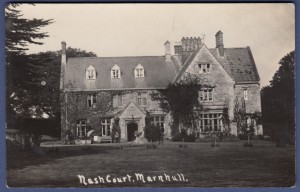
Nash Court

Nash Court

Ten years later, there are still only two children to Harold and Mary – Humphrey and Godfrey Egremont Boulderson Barkworth who is three years younger than his brother.  Harold, born in Beverley, is now retired and pension from the army and living with his family at Nash Court, Marnhull, Dorset- a rather nice looking country residence.

Humphrey attended Hazelwood School, leaving in 1905 for Wellington College.  He left in 1909 for Sandhurst Military College and was commissioned as a 2nd Lieutenant in the 25th Battalion of the Northumberland Fusiliers.  Being promoted to Lieutenant in August of 1914. Humphrey’s entry in the Sandhurst Register is available to download from the Sandhurst Collection for a small charge.

When war was declared Humphrey was in India with his regiment.  After sailing from Karachi to Plymouth he was the following month in France.  During February of 1915 Humphrey and many others from his regiment suffered from frostbite.  He was returned to England was hospitalised.   He was shortly back in France, and it was while stationed near Kemmel that he was wounded in the chest while lying in one of the front trenches. After being evacuated to Boulogne he was again sent back to England.

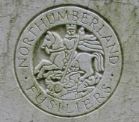
Northumberland Fusiliers

Northumberland Fusiliers

Humphrey was soon back in the thick of war again and on the 1st of July 1916 his battalion as part of the 103rd Brigade was near La Boiselle.  At 7.30 in the morning a British mine exploded telling the allies that the advance was to start.  And start it certainly did.  Humphrey and his men advanced slightly behind the main advance due to the congestion of such large numbers moving forward.  Humphrey’s men for some time during their advance were sheltered by a higher ground.  As they started to move towards the enemy they became visible to the German machine gunners and riflemen. The Northumberland Fusiliers were mown down as the machinegun worked from left to right over and over again.  Humphrey was wounded but would not allow himself to be attended to until his men had had their wounds attended to and dressed.  He was eventually carried to 92nd Field Ambulance where he died two days later.

During that fateful day, the 1st of July 1916, the 25th Battalion Northumberland Fusiliers sent into battle 20 officers and 730 other ranks.  By the end of that day 16 officers and 610 other ranks were either killed, wounded or missing.

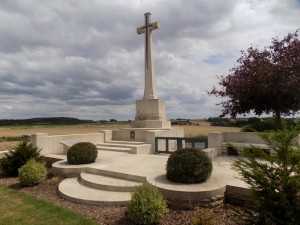
Warloy-Baillon Communal Cemetery Extension via CWGC

Warloy-Baillon Communal Cemetery Extension via CWGC

Humphrey rests in Warloy-Baillon Communal Cemetery Extension Plot I Row B Grave 8 along with over 120 other casualties of war.

Humphrey’s brother, Godfrey Egremont Boulderson Barkworth, also served in WW1, serving in the Royal Welsh Fusiliers.  He survived the war and in 1922 was granted the Freedom of the City of London and was a member of the Guild of Grocers.  He moved to Kenya and died in 1955

The Somme Remembered – 2nd July 1916

The Somme Remembered – 2nd July 1916

Walter Edmund Say enlisted in Southwark.  He was born in Newington or Walworth depending which census you are look at.  In the 1901 census you will find Walter aged 1 year living with his parents, Walter and Sarah, and his sibling – Henry aged 7 and his step-sister Rhoda Eaglen aged 8, at 38 Rodney Place, Newington.  His father, Walter was a labourer but is listed as being on the Army Reserve List.

Ten years later in 1911 the family has grown and Walter Edmund now has three siblings. Rhoda, his step-sister, is now listed as Rose but Henry who was entered as 8 years old in the 1901 census, now becomes a step-brother.  Home for the family at this time is 16 Palatinate Buildings.

Walter while living at 2 Black Prince Court, Walworth, signed his Attestation Papers at Southwark Town Hall on 9 December 1914, joining the 9th Batt.,  in the Queens (Royal West Surrey. In August of 1915  he was transferred to the 7th Batt.,  of that regiment and they became his new family.  He served as Private 3887.

One document in Walter’s surviving service records give his sibling and information on Rose and other close relatives.

The Queen 7th Battalion was made up mainly of Kitchener Volunteers.  These volunteers had served on the Western Front with distinction.  Walter and the 7th went to France in August 1915 and suffered horrific casualties on the Somme, at Ypres and Amiens.

La Neuville British Cemetery via CWGC

La Neuville British Cemetery via CWGC

Walter was wounded, and died on the second of July aged 17.  He rests in La Neuville, CWGC cemetery, Corbie.

For his service to King and Country Walter was eligible for the 1915 Star and the British and Victory Medals.

Walter’s family, unable to say goodbye to him or visit his grave, for many years would be receiving letters from the Army.  One such letter was posted on the 9 November 1916 – addressed to his mother, Sarah Ann, asked to confirm where Walter’s possessions and medals were to be sent. Can you imagine how many tears must have been shed over that letter, but Sarah, as we now know, was not alone in shedding tears over such letters.

Walter died of wounds in July 1916.

The war ended in November 1918 and in 1921 Sarah was still receiving letters and documents from the Army.  The 18 March 1921 Sarah was asked to confirm the receipt of Walters Victory Medal.  The 1914-15 Star and the British War Medal had been received in June of the previous year.  The monies due to Walter were settled in two installments, firstly in November of 1916 with the sum of £2 13s 7d and in August of 1919 with £6 10s.

The Commonwealth War Graves Commission headstone information has Sarah Ann as Mrs S A Day, 2 Black Prince Court, Walworth Road, London S E 17.  Sarah chose, in addition to the standard information, to include on her son’s headstone the following inscription:-

Gone to meet our Saviour. He who loves so dear.  Gone to rest in Heaven and we shall meet him there.

Sarah Ann Say died in 1932.  Did she ever get to see the grave of her son and say Goodbye?


The Somme Remembered – 1st July 1916

The Somme Remembered – 1st July 1916

Frederick Arthur Churchyard – In 1901 Frederick was seven years old, the son of Arthur and Emma Churchyard of Bruisyard, Suffolk.  Arthur worked as an Ag. Lab. on a local farm, while Frederick and his elder sister Mabel,  attended school.  Their younger brother, Leslie, was only one at the time.  The family at the time lived on The Street, Bruisyard, a small village which seems to mainly consist of a hall, a collection of houses and a few farms.

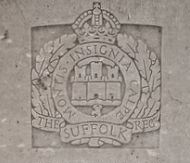
Ten years later the family had grown with eight children being born to Emma, all of which were alive to be included in the census, with the ages ranging from 17 down to eight months.  Arthur and Emma had been married 19 years and he now was a yardsman at a local farm, while Frederick worked as a milkman on a farm – possibly the same farm his father worked on.  Also, living in the house was Samuel Crisp, a widow, who in the previous census lived next door to the Churchyard family. It appears that when looking at Mr Crisp’s place of birth it is the same as Emma Churchyard.  A quick look at FREEBMD for Arthur and Emma’s marriage (Dec. Qtr. 1891), and it appears that Emma’s maiden name was Crisp.  Home for the extended family of 10, must suffolk regt headstone logohave been quite a good size as it consisted of nine rooms – Emma, who completed the census form, wrote in the ‘number of rooms’ box, that her house had six bedrooms and three sitting rooms.

The war, which was supposed to end all wars, started and Frederick enlisted in Ipswich.  He became Private 14702 in the Suffolk Regiment and entered France in July 1915.

The Suffolk Regiment 8th Btn., had been raised in Bury St. Edmunds the month following the outbreak of war as part of Kitchener’s New Army.  The Division moved to Salisbury Plain in May Thiepvalof 1915 and by July were on their way to France.  In 1916 the regiment saw action on The Somme including the Battle of Albert and the Battle of Thiepval Ridge.

Frederick was Killed in Action on Saturday, 1st of July 1916 and is remembered on the Thiepval Memorial to the Missing, Pier and Face 1 C and 2 A, along with over 72240 other casualties of war whose final resting place is known only unto their God.

St Peter's Church, Bruisyard war memorial via lives of WW1

St Peter’s Church, Bruisyard war memorial via lives of WW1

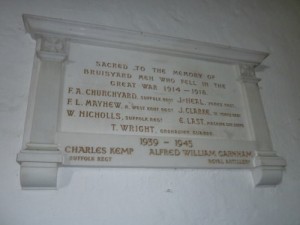
Frederick is also remembered on the war memorial in St Peter’s Church, Bruisyard along with six others who died during WW1 and two who died in WW2.

Emma, in the latter part of 1916 was sent £4 15s from the War Office, with a further £8 10s in September 1919.

10 Scottish Family History Websites

10 Scottish Family History Websites

10 Scottish Family History Websites of use when researching Scottish family history.

A few of the sites are portals which take you to other useful and interesting collections of information, while others are Record Offices and Archives.  I hope you find what you are looking for. Sites are listed in no specific order.

  1. Scotlands Family – The site in their words is a ‘one-stop’ shop for all do-it-yourself Scottish family historians, with their aim being to point you to free on-line data.  Well worth a look!
  2. ScotlandsPeople – The on-line face of the National Records of Scotland and the Court of the Lord Lyon.  Look here for births, marriage and deaths; Old Parish Registers; Catholic Registers; Census; Service Records; Wills and much more.  This site is a pay-per-view site – credits being purchased in 30  credit vouchers to allow both searching and viewing. Sadly, even a search costs.  On the plus side your purchases and searched are remembered, so going back to view your purchases is not a problem.  I do wish they would do an annual fee!
  3. Genuki Scotland – A site that has been around for years but still worth a look as its pages are always updated with new information and websites links.
  4. National Library of Scotland (Family History) – What would you expect from a library….books, books and more books.  With the libraries collection covering various topics including: local history; newspapers; voters rolls, gravestones, emigration, clubs. There is also an India collection – did your family have a commercial or military connection to India, if so this may be the place to look.
  5. Scotland – Although the focus of this website is about Scotland in general, there is a handy little section entitled ‘Getting started in Scottish genealogy’. A question and answer based help page giving hints, tips and useful information for beginners and veteran researchers alike. Other pages on the site are full of information about visiting, living and working in Scotland plus a features page of informative articles
  6. FamilySearch (Scottish Genealogy – No matter where you are researching in the world FamilySearch has a section for you.  The Scottish page is packed with information and links to useful and informative websites to aid your research.  If you are looking for a map or a specific surname look no further.
  7. GlobalGenealogy – Again, a collection of useful websites, but this time there are one or two that seem to not only aid research but help with deciphering that newly found data.
  8. Old Maps –  Search for a town or village and view the map but to view in detail there is a subscription cost.  Depending on your needs you may find the fee worthwhile but the amount of maps available is worth a look.
  9. The Federation of Family History Societies or Scottish Association of Family History Societies – Joining a family history society could be the next step in your research.  Their members may be able to assist your further research, or connect you with researchers who have the same or similar interests. The local knowledge of these local societies is outstanding.
  10. The Happy Haggis – Another collection of links divided and indexed by subject, well worth a look.

Yorkshire Post and Leeds Intelligencer – From the War

Yorkshire Post and Leeds Intelligencer – From the War

A Liverpool Mans Request – A clause in the will of Mr. W. S. Marvel, a provision broker, of Liverpool, requests that on his decease his remains “shall not in any way be interfered with, neither washed nor re-clothed, but shall be conveyed in an inexpensive case or casket to the nearest crematorium, and there burned, the ashes being thrown away,” and that “there shall be no funeral ceremony or religious service, and no outward showing of mourning, either of the wearing of mourning by his relatives or the pulling down of blinds, or anything of that character.” The deceased left £11,627.
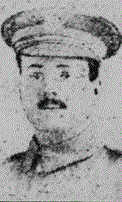
leatherbow

Pte. Edmund Leatherbarrow

Casualties to Yorkshiremen in various units.Pte. Edmund Leatherbarrow, of the Liverpool Pals, was killed in action on July 1. He was the eldest son of Mr. and Mrs. J Leatherbarrow of Ryecroft, Lidgett Lane, Roundhay, and was in business in Liverpool. His youngest brother, L. Corpl. W Leatherbarrow, Yorkshire Regt., was killed in action in the Dardanelles last August. (see top photograph)

Pte. J. W. Blanshard, Duke of Wellington’s Regiment, killed in action on July 7. His home is at 29 Lodge Avenue, New Wortley, Leeds. He leaves a widow and four children. 
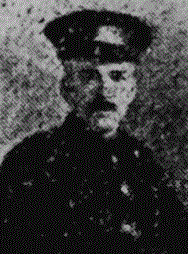
blanshard

Pte. J. W. Blanshard

Private Percy Rhodes, West Yorks, the son of Mr. William Rhodes, 15 Milner Street, Hunslet, died of wounds in the General Hospital, Havre, France, on July 12th. He was 18 years of age

A Goods Guard’s Sudden Temptation – At Wakefield today, Henry Hemingway, a goods guard, in the employ of the Lancashire and Yorkshire Railway Company, was fined £5, or one month’s imprisonment, for stealing a bottle of brandy from the goods yard at Kirkgate Station. He said he committed the theft under sudden temptation.

Mrs. Mary Wheatley, of New Market House, Adwalton left £3000 in her will.

How our wounded were dealt with on the Somme – One of the most gratifying features of the operations on the Somme has been the splendid work of the medical units.

On the fourth day of the battle the Commander-in-Chief issued the following order of the day, addressed from Advanced General Headquarters to the deputy directors of medical services, and by them sent on to all medical units with instructions that it should be read on parade :- “The Commander-in-Chief directs me to convey to you, and through you to the directors and all concerned under them, his high appreciation of their hard work and the efficiency of arrangements for dealing with the medical aspects of the present situations”.

It seems certain (says the British Medical Journal), that the proportion of light to serious cases has been unusually large, while even among the more severe the prognosis is regarded as more hopeful than usual. The reason would seem to be that the enemy depended for the most part on machine rifle fire in their endeavours to repel the attack, and rifle bullet wounds, if they do not cause immediate death, tend on the whole to heal more quickly than those caused by high explosive and other shells.

The rate of evacuation from the front to the bases was so considerable that by the end of the fourth day – that is to say, within a few hours of the end of the initial battle – most of the casualty clearing stations and field ambulances seem to have had very few patients left on their hands. The great majority had already been put on many of them the ambulance trains or otherwise safely removed to a distance from the scene of action, and they were in hospitals at home.

The staffs of most of the units named had previously been strengthened by sending to them men who for the time being could be spared from their ordinary duties elsewhere. For the most part they were all medical officers who had had previous experience of the same kind of work either as battalion medical officers, field ambulance officers, or members of the staffs of casualty clearing stations. Some previous experience is very desirable, for the work that has to be done at front line formations during the progress of heavy duty actions is quite special in its character. The number of casualty clearing stations distributed within easy reach of the part of the line at which the operations were most active, was, we believe, considerably above the usual proportions. As a rule, they were arranged in pairs with the idea of allowing one of the two to have time to deal with the cases already taken in, while the other was open for the admission of fresh cases. They emptied and filled alternately.

This was one strong feature in the arrangements; another was the care taken to provide for the prompt classification of cases. From the fighting line backwards the cases were winnowed and re-winnowed, men being sent to one place or another according as the apparent gravity of their wounds or their general condition seemed to demand. In addition, for instance, to the casualty clearing station, there were also places to which those who were only slightly wounded could be sent and receive immediate treatment, as well as medical rest houses, some for officers, some for men, to which could be sent those who were not wounded but only temporarily exhausted from their exertions.

The Battle of Jutland

The Battle of Jutland

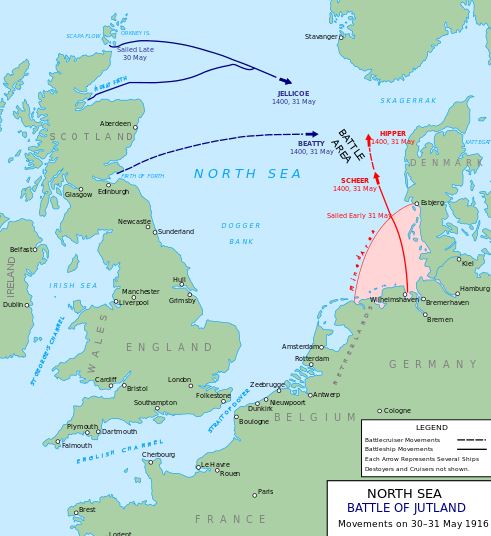
A battle took place on the 31st of May 1916 – 100 years ago today it was  The Battle of Jutland.

The battle was the main sea battle during 1914-1918, taking place over two days. The German vessels, including Lutzow and Derffinger, were under the command of Vice-Admirals Reinhard Scheer and

Jutland map via Wikipedia

Jutland map via Wikipedia

Franz Hipper, while commanding the navy were British Admiral Sir John Jellicoe and Vice Admiral Sir David Beatty. The ships included HMS’s Defence, Invincible, Black Prince, and Lion, Beatty’s Flagship.

In total the navy lost 14 vessels, including HMS’s Defence and Black Prince while the Germans lost 11. British casualties amounted to some 6,800 men. After all these years it is still debatable as to who won the battle, but one thing was sure, the German fleet never ventured out of port again although there was still the odd skirmish in the North Sea between vessels. German ships out of Scapa Flow surrendered at the end of the war.

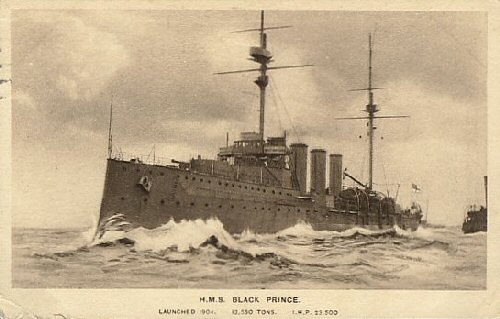
The Black Prince was commissioned in March 1906, being launched two years earlier. She was 505ft in length, 73ft 6in wide and displaced 12,790 tonnes and could reach 23 knots.

HMS Black Prince via Wikipedia

HMS Black Prince via Wikipedia

Separated from the rest of the British fleet, according to German reports, Black Prince approached the German lines at approximately midnight. She turned away from the German battleships, but it was too late. The German battleship Thüringen fixed Black Prince in her searchlights and opened fire. Up to five other German ships, including battleships Nassau, Ostfriesland, and Friedrich der Grosse, joined in the bombardment, with return fire from Black Prince being ineffective. Most of the German ships were between 750 and 1500 yards from Black Prince effectively point blank range for contemporary naval gunnery. Black Prince was hit by at least twelve heavy shells and several smaller ones, sinking within 15 minutes. There were no survivors from its crew, all 857 being killed.

One of those 857 was Joseph Edward Oldroyd, son of Joseph and Elizabeth of 18 Brooks Square, Bridge Street Morley – One source gives the family’s address as Brook Street, Hollow Top, Morley.

Joseph was born on the 5th of October 1885 in Leeds. The Royal Marine Grave Rolls confirms that Joseph was born in Leeds and was killed or died as a result of enemy action. Consulting the census of 1891, not one entry could be certainly our Joseph. The same goes for the 1901, but there is an entry for an Oldroyd family living in the Hunslet area.

The Royal Navy Registers of Seamen’s Services confirms why the 1911 census entry I found for Joseph in the navy, was the one I was looking for, as he signed up on the 15th of February for 12 years, ending up as Stoker 1st Class, 308243 in the Royal Marine Light Infantry.

Joseph was 5ft 7½ in tall with dark brown hair, brown eyes and a dark complexion. He seems to have been through the wars a bit as he had three scars on his head, a scar on his left cheek and a scar on his right loin. His conduct seems to have been generally good throughout his service with the odd glitch where he had spent some time in the cells. On the 22nd of October 1908, he is reported to have broken out of his ship and served 14 days in cells. Even though there was the odd mishap he was still awarded three Clasps for Conduct.

He served on various ships including:- Nelson, Victor II, Hampshire, Patrol, Monotour, sometimes having return postings to previous ships, finally ending up on the Black Prince. During his service he transferred to the Royal Navy. The National Archives hold the Register of Service for Joseph and can which can be downloaded for £3.45

The wreck of the Black Prince is classified as a war grave site and is regulated as such.

Another seaman who served during the Battle of Jutland  was  as a young naval officer named Prince Albert, later King George VI. Prince Albert fought in the battle on 31st May 1916 on the British Battleship HMS Colossus and came under fire.

There is a Wikipedia page for the Black Prince which gives more information on the vessel and its service.

Western Front Association Conference – July 9th 2016

Western Front Association Conference – July 9th 2016

wfa banner

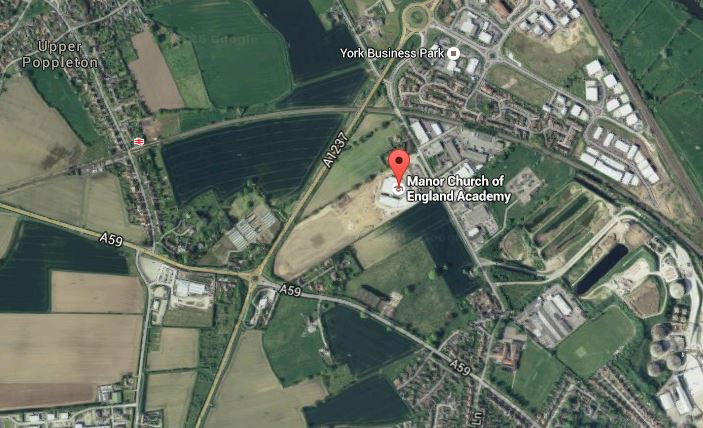
To commemorate the 100th anniversary of the Battle of the Somme, the  Western Front Association is hosting an all-day conference at the Manor Academy, Nether Poppleton, York YO26 6AP.

The all day event has a full programme of talks which are as follows:-

  • ‘Reflections on 1st July, 1916’ – Prof John Bourne
  • ‘BEF Artillery on the Somme and the lessons learned’ – Geoff Spring
  • ‘British Intelligence on the Western Front in 1916’ – Dr Jim Beach
  • ‘Rawlinson on the Somme’ – Prof Gary Sheffield
  • ‘The Somme of the parts’: The BEF experience on the Somme, 1916-1918′ – Rob Thompson

The first talk starts at 10:00, with doors opening at 09:15. The conference is likely to end about 16:45. The fee of £30 includes tea/coffee on arrival, plus during the morning and afternoon breaks, and buffet lunch.

There is ample, free, on-site parking at this venue. It is easy to find, being just off the York ring road.

To book your place follow this link to the Western Front Association eShop – Book your place

wfa york directions map