Category Archives: General

Sugar Lane iii

Sugar Lane iii

Sugar Lane © C Sklinar 2014

Sugar Lane © C Sklinar 2014

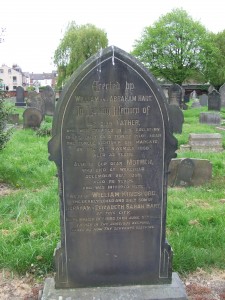
The third in the series of headstones, photographed while walking the cemetery photographing headstones for a forthcoming project.  This headstone does not form part of the project but, like a few others, it seemed to stand out!

The very simple and clean looking headstone, with the odd piece of damage just above ground level, is to George Perkin and his wife, Bridget.  Why did this headstone stand out from the rest?

Most headstones give details of a names,  dates of death and if you are lucky, dates of birth. Some, will give a clue as to armed service, while others tell of an occupation, a town of residence or area of birth – information that the deceased or their family were proud of and wished the visitors to the cemetery to see and take note of.

George Perkin’s family were one such family as his headstone proudly displayed his occupation, that of ‘gravestone letterer’.  George died on June 17th 1897 aged 69. But who was he in life?
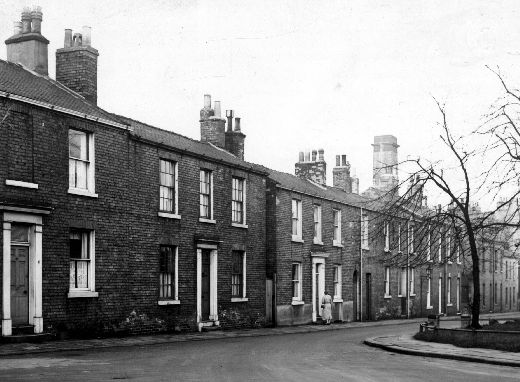
Rishworth Street, Wakefield.  Source unknown.

Rishworth Street, Wakefield. Source unknown.

George was born around 1828/9 in Wakefield. Working backwards, as we only have two names to work with. A look in the nearest census to George’s death, the 1891, we see George aged 63 and his wife Bridget aged 59, living at 2 Rishworth Street, Wakefield. George gave his occupation as ‘retired monumental mason’.  Ten years earlier, 1881, the couple are still living on Rishworth Street, his occupation now being described as ‘gravestone letterer’.

On April 14th 1873 George married his Bridget nee Fearnside. The entry in the church of St John’s, Wakefield tells that both were of full age – George was around 45 years of age. He was living in Rishworth Street and his father’s name was given as William Perkin, a mason.  Bridget’s father was David Fearnside, a blanket manufacturer, living on Northgate – just around the corner from Rishworth Street.  The witnesses to the union were Frederick Kitson Perkin (Kitson was his grandmother’s maiden name), and Ann Ashton. There are two entries in the parish registers for that day, both preceded over by Edward Bell – the first wedding of the day was for George and Bridget and the second was for Harry Mountain and Ann Longbottom.  Reverend Edward Bell, seems to have changed his writing for the second ceremony, seeming a little rushed, having larger writing and not as neat.

Two years earlier in 1871, George is at Rishworth Street, the head of the house and living with his unmarried sister, Mary Ann and Sarah A Fletcher, his niece.  George tells the enumerator that he earns his living by being a ‘gravestone cutter’.  The 1861 census sees George and his siblings living with  Margaret, their widowed mother, still in the same house, on Rishworth Street.  Margaret, aged 58, gives her occupation as ‘provided for by her children’.  George tells he is a ‘stone mason, gravestone cutter and **** at St John’s Church’.  Other sons are working as ‘clock and watch maker’ and two sons are a  ‘mechanic at the local iron foundry’.

Ten years earlier in 1851, there is still no sign of George’s father.  Margaret is now aged 47 years old and on ‘parish relief’. George, aged 24 is a stone mason, as is his brother Henry.  While, Charles aged 21 is a ‘tobacconist’s assistant’ and Edward aged 14 is an ‘errand boyh’.  The remaining five children range between 4 and 11. The age of the youngest child could hold the key to when their father died!

After working back for many decades the 1841 census gives the information – George and his siblings father. Living on South Street, William Perkin, ‘stone mason’, aged 35 (remember the ages are more than likely rounded up in this census).   The Freebmd collection of death’s has two entries for a William Perkin in the Wakefield area.  The first is the March 1/4 of 1849 and the second is also in the March 1/4, but the following year, 1850 – which one is Margaret’s husband? That information is not needed at this time as George and Bridget are the focus of Sugar Lane iii.
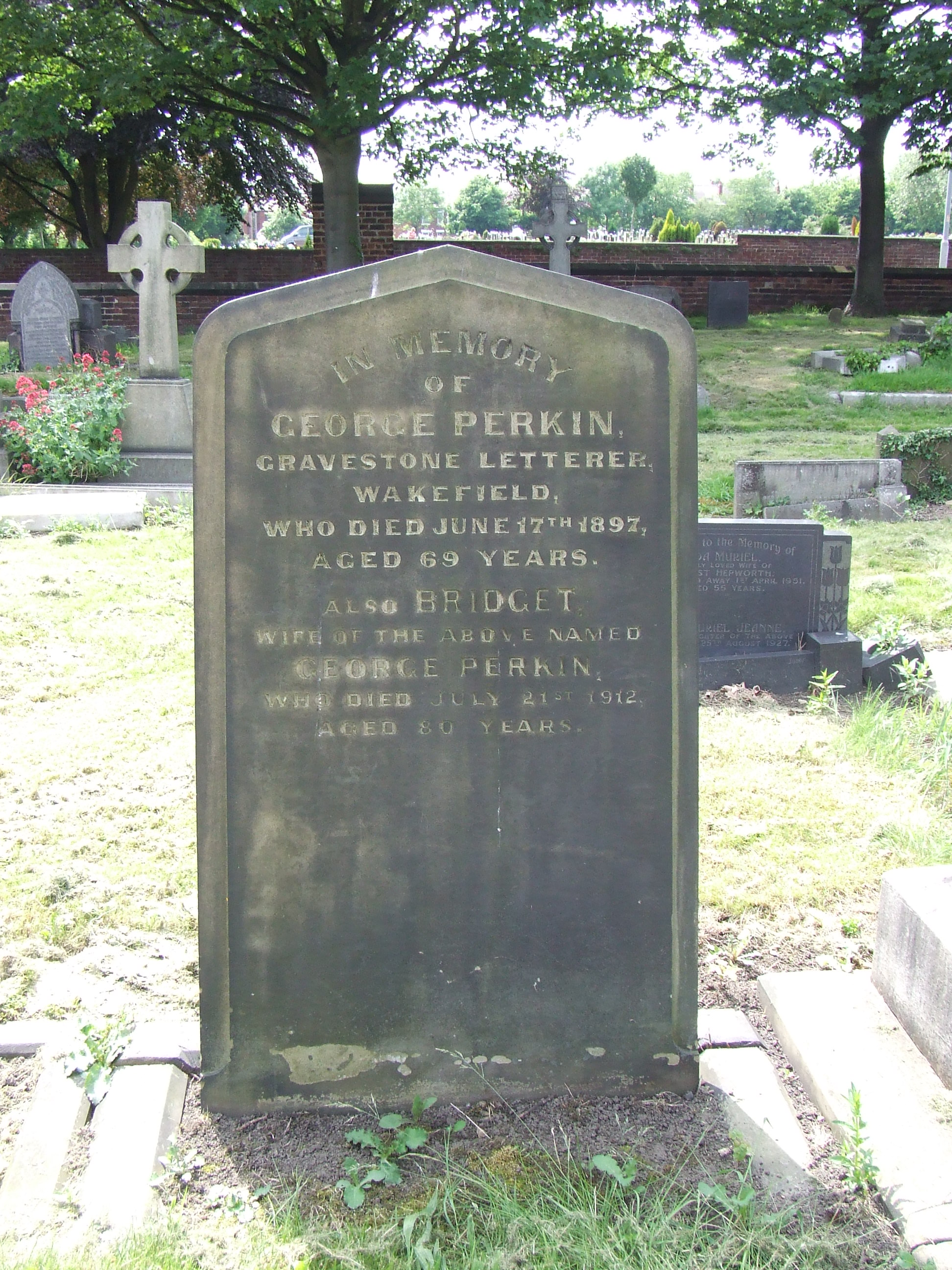
George & Bridget Perkin © C Sklinar 2014

George & Bridget Perkin © C Sklinar 2014

George died on June 17th 1897 aged 69 years.

In memory of George Perkin, Gravestone Letterer, Wakefield, who died June 17th 1897, aged 69 years.  Also Bridget wife of the above named George Perkin, who died July 21st 1912 aged 80 years.

An entry in the Probate Registers, tells that George Perkin, gentleman, had Probate granted on the 13th of August to Bridget Perkin, Frederick Kitson Perkin, silversmith and jeweller and Henry Turner gas-fitter.  Effects £2709 10s 2d.

Bridget lived on to see two more decades, dying on the 21st of July 1912 aged 80.  Probate for Bridget was granted in the August, to Herbert Caress, schoolmaster and Walter Lumb, butcher.  Effects £1625 5s 5d.

Bridget died in the year that the Titanic sank. The year that Lawrence Oates, leaves the tent of Scott’s South Pole expedition, never to be seen again.  The year that the first non-stop flight from Paris to London was made in just 3 hours, and  Harriet Quimby became the first woman to fly across the English Channel. The Piltdown Man, the famous hoax, claimed to have been found in this year.   This was the year that Suffragettes smashed shop windows in London’s West End.  The movement were in the headlines and would be the following year when Emily Wilding Davison by giving her life for her beliefs.
Sugar Lane cemetery ii – Hart family

Sugar Lane cemetery ii –  Hart family.

Hart family headstone © C Sklinar 2014

Hart family headstone © C Sklinar 2014

Another headstone is highlighted from Sugar Lane cemetery, Wakefield.

A simple, yet quite beautiful in its way, and remarkably very well-preserved, is the headstone erected by William and Abraham Hart paying tribute to:

‘our dear father who was drown in the execution of his duty as a Trinity Pilot, near the Tongue Lightship, off Margate, on the 25th of November 1858 aged 33 years,’

Further down the stone –

‘Also of our Dear Mother who died at Wakefield December 26th 1899, aged 78 and was interred here.’

We know who erected the headstone, but why did they not put their parents’ names for all to see?  They were proud of their father but more than likely saddened at the way he lost his life – but who was their father?

Where to start?  An internet live chat with a librarian from Deal came up with nothing on  the drowning, so no clue to his name there.  A quick look at Freebmd for deaths in the deal area around the date revealed  nothing that you could say ‘that’s him’ to.  So I decided to go forwards and eventually go back……………..Bingo!

I looked for Abraham on the 1871 census first, since the name is less popular than William but found no Abraham.  However, the 1861 census showed Abraham aged nine born in Deal (I now had his approximate birth year) living with his mother, Sarah.  This was confirmed by the fact that she gave her occupation as ‘pilot’s widow’.  She was aged 39 and born in Ash (?) Kent.  The family was living at Water Shale in Deal as were quite a few other pilots and their families.  But why was William not with his mother and sibling?

Maritime Museum via Wikipedia

Maritime Museum via Wikipedia

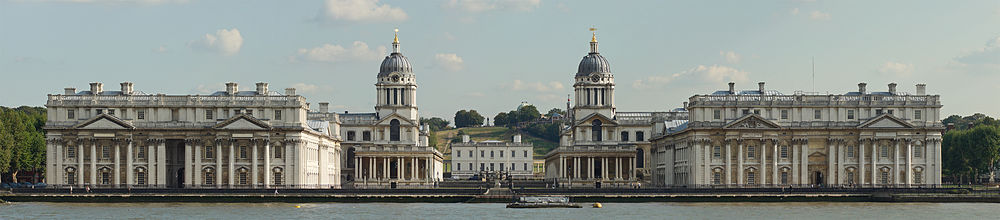
Further researching on the 1861 census showed William to be a pupil at Greenwich Hospital School.  The Royal Hospital at Greenwich was Britain’s largest school of navigation and seamanship.  During the time William attended the school, it was housed in what is now the National Maritime Museum.  I needed to find his birth and in the 1851 census I found William aged one, living with his mother at 20 Water Street, Deal.  The head of the household was Abraham Hart aged 27, who gave his occupation as that of mariner and his place of birth Deal – the anonymous parents of William and Abraham had now come to life.

By 1871 Abraham was living with his mother in St Mary’s Square, Lambeth, where Abraham was a Surveyors Pupil and as for William there were quite a few saying they were born in Kent but nothing to point a finger at and say ‘found you!’.  The family so far were in the South of England. When and why did they come to Wakefield?  The 1881 census answers that question  as by then Abraham, living in Northgate, was an architect and surveyor, married to Elizabeth.  They had three girls and grandma  was living with them.   William in 1881 was married but on the night of the census he was with 11 other pilots on the Granville out of London.

Sarah was not on the 1891 census as I knew she had died  in 1899, Abraham, however, was living at 99 Northgate and by 1901 he was residing at Oxford House, Oxford Road, Wakefield. His brother, William, following in their father’s footsteps, was a Trinity House Pilot in the Cinque Ports living with his wife, Caroline and two children in Malcolme Regis.

Ten years later Abraham was living at 24 Leeds Road and had been married to Elizabeth for 36 years.  The couple had six children but sadly lost one.  William was living in Dover with a group of other Trinity House Pilots, while Caroline, who said they had been married 23 years and had had three children, lived in a nine-roomed house named Sh**ad House, Deal.

Back to the headstone, after ‘our dear mother’ is the epitaph to –

William Kingsford’, the dearly loved and only son of Abraham and Elizabeth Sarah Hart of this city. Born March 12th 1885, died June 5th 1908. ‘Father in thy Gracious Keeping, Leave we now thy Servants Sleeping.

Abraham now of 2 Buxton Place, Newton Bar, died on December 29th 1938 and Probate was granted to Barclays Bank on March 1st of the same year, leaving £1270 11s 4d.

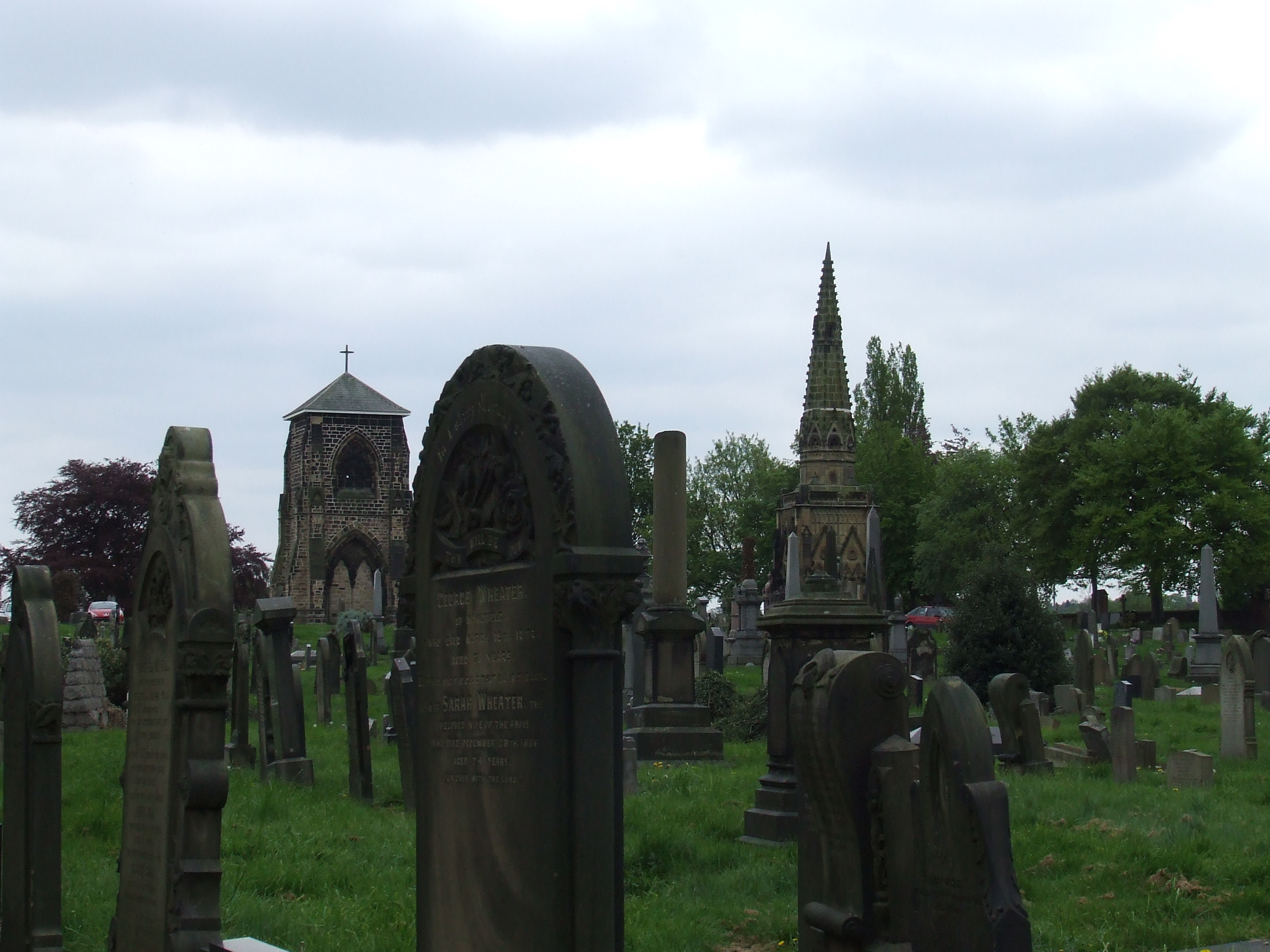
Sugar Lane cemetery

Sugar Lane cemetery

It is amazing how many interesting headstones you can find in your local cemetery or churchyard.

An ever growing population soon brought the churchyard burial grounds to bursting point, making a need for a Municipal cemetery. Sugar Lane cemetery, Wakefield opened in 1859 covers over 9 acres on land once owned by Sir J Pilkington.  The cemetery is divided into Conformist, Non-Conformist and Catholic sections.  The division of religion at the time was shown by the central twin chapels, as many used to say ‘one for us and one for them’.  The funny thing is that both the Church of England and the various Methodist religions used to say the same thing, making the saying work for them.

Over the past 12 months I have been researching over 250 men and women who either rest in or are remembered on headstones in, as it is known locally, Sugar Lane.  Whilst walking every row and reading every headstone I found who would form the basis of the research but also found many other interesting headstones that sadly fall outside the criteria I had set.

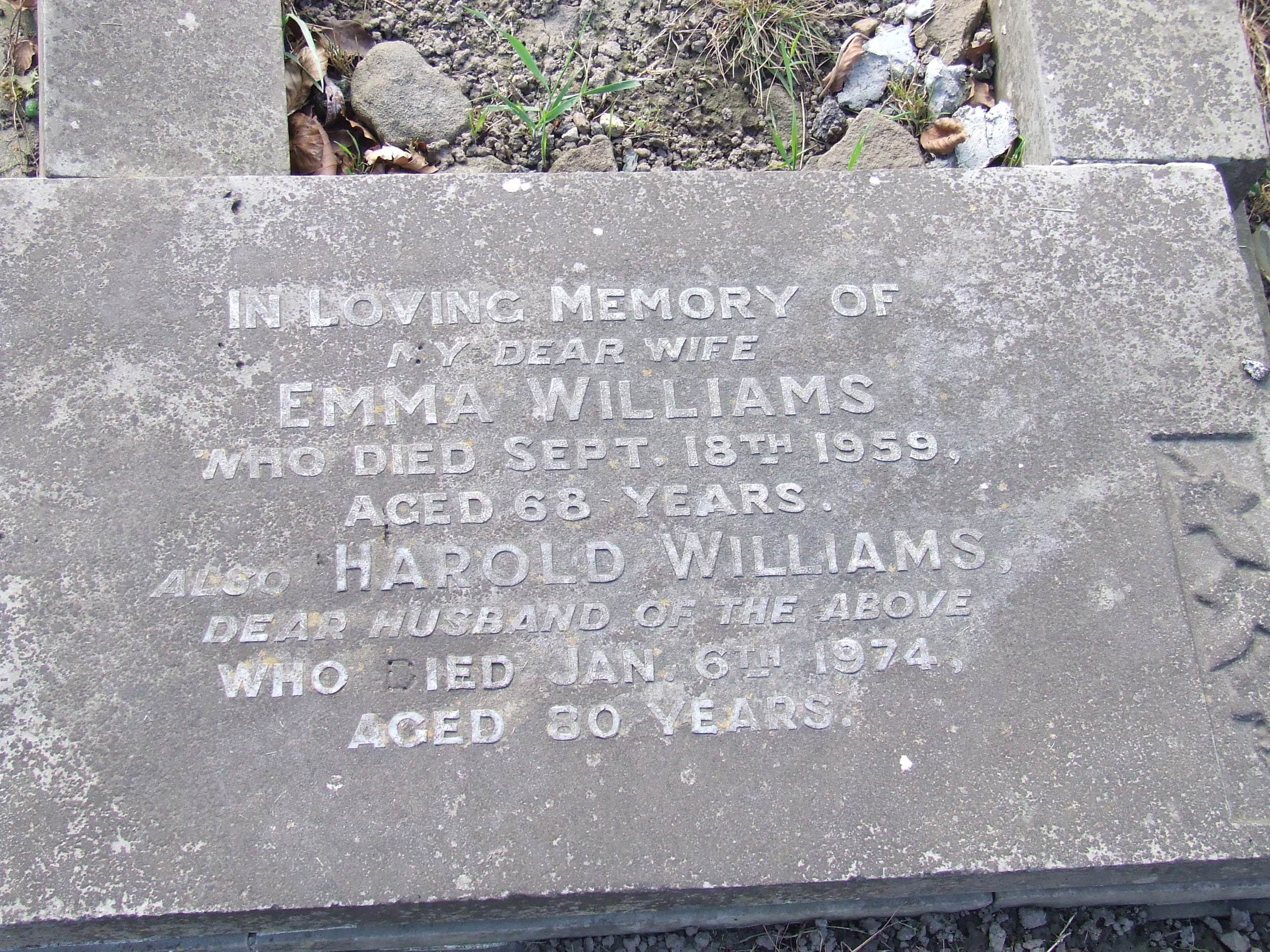
Emma & Harold Williams © C Sklinar 2014

Emma & Harold Williams © C Sklinar 2014

One such headstone has kerbstones, with a small header tone flanked by two square stones, each with a receptacle for flowers.  The kerbs are now uneven and there is a stone slab within the kerb stones but only a small portion can now be seen.  At the foot of the memorial is a tribute which reads –

In loving memory of my dear wife, Emma Williams, who died Sept 18th 1959 aged 68 years. Also Harold Williams, dear husband of the above who died Jan 6th 1974 aged 80 years.

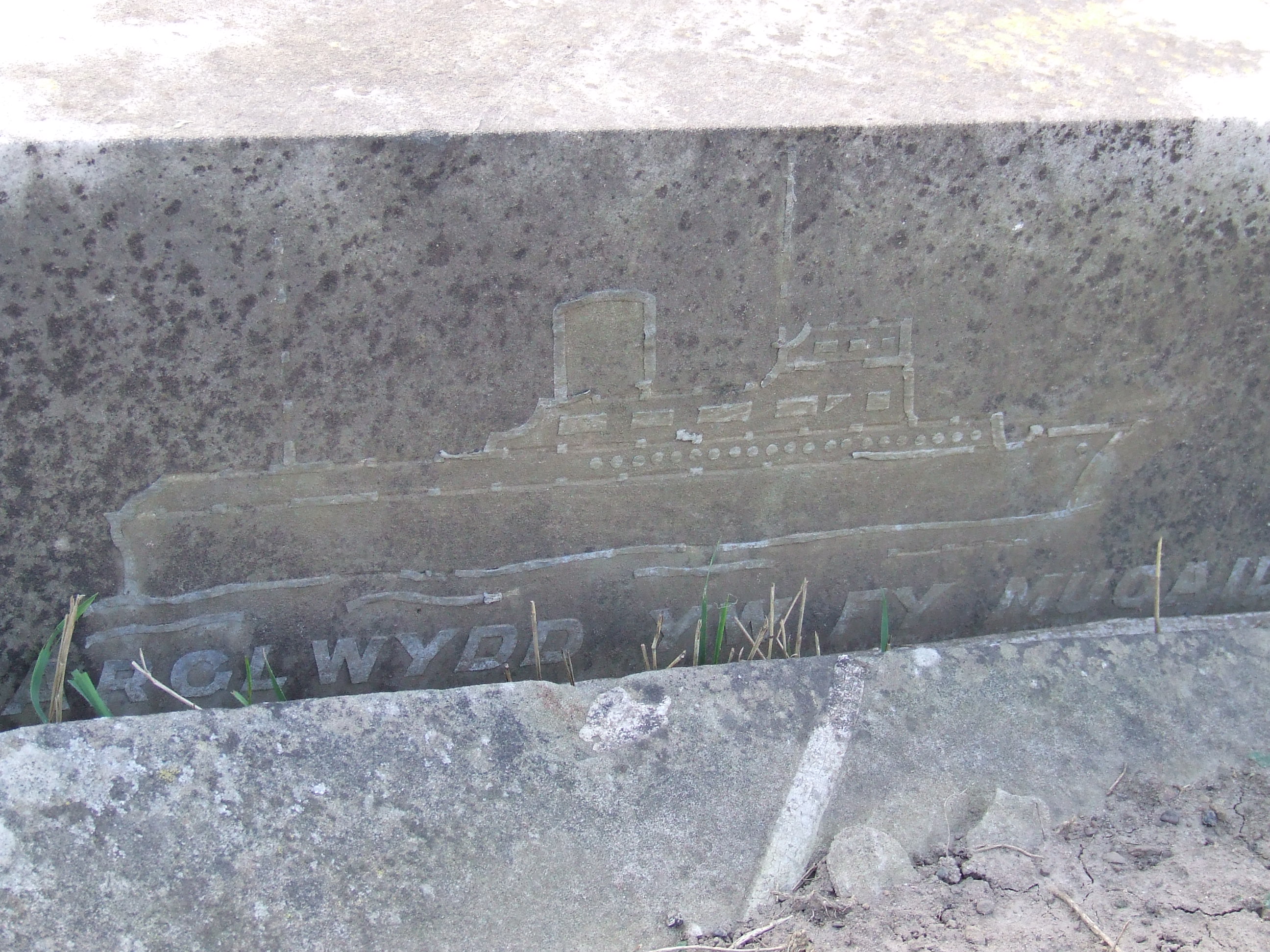
© C Sklinar 2014

© C Sklinar 2014

Nothing remarkable, you might say but the headstone has engraved on it a vessel and the words ‘Arglwydd yw fy Mugail’ (The Lord is my Shepherd).

Possible clues:  Was Mr Williams Welsh or were his family Welsh?  The name Williams and the Welsh inscription below the ship would appear to indicate that.

The Ship: Did Harold serve at sea in WW1, as he was old enough?  Was he in the Royal Navy or in the Merchant Services?

Intriguing, but perhaps the mystery is buried for ever or does someone out there reading this now the answers to these questions.

Tower Poppies – mine is still in its original box

Tower Poppies – mine is still in its original box

Well, thankfully, my Tower Poppy is still in its original box – no thanks to the delivery driver who left it by my back door on a drizzly day and with no receipt signature.  I still cringe at how the box would have ended up if it had been raining hard………………mush probably.

My Tower Poppy © C Sklinar 2015

My Tower Poppy © C Sklinar 2015

Luckily, my poppy arrived with little water damage to the exterior box.  The poppy, was still wet from its wash and there was still some Tower of London moat soil attached and the stem had gone a little rusty, but who cares!

My family, like many other families from around the world, had husbands, brothers, sons and a few wives and daughters who served during The Great War, a war to end all wars and like many other families around the world, we had our losses.

Now, one year on since the eyes of the world focussed on, and crowds headed to the Tower of London with its cascade of blood red poppies, I was in France………..

You may be wondering what is the connection? Read on and you will soon see.

During the summer I was on one of my regular visits to France and Belgium.  The weather was hot, so time was divided between reading outside and researching for information on over 250 WW1 soldiers – well what else do you do whilst on holiday.  There was the odd trip to the local supermarket and time spent chatting to friends.  One cooler day I decided to pay a visit to a local CWGC cemetery – a journey that should have only taken less than 15 minutes.

I had looked at my trusty, or not so trusty, CWGC cemetery booklet, plotted my route and off I went heading for the village and the road marked on the map as being the closest to the cemetery.  I can now tell you that location dots on maps are not always printed in the correct place.  I drove around the village, asked villagers – yes, my broken French worked but nobody knew of the cemetery I wanted.

Back to compare the road map and the CWGC map and try a few of the other local villages. After nearly an hour of driving around some pretty villages I decided to go home and set ‘Sally Satnav’ for home.   I had criss-crossed many roads during the afternoon, and saw places I had seen earlier.  Does this sound familiar?  ‘Sally’ bless her was taking me home via the quickest route and soon I knew where I was, heading to a large round-a-bout near to where a very large supermarket used to stand.  I had been close to this round-a-bout earlier, coming off a road and turning right……..If only I had turned left! There was the focus of today’s outing- Longenesse Commonwealth War Graves Commission cemetery.

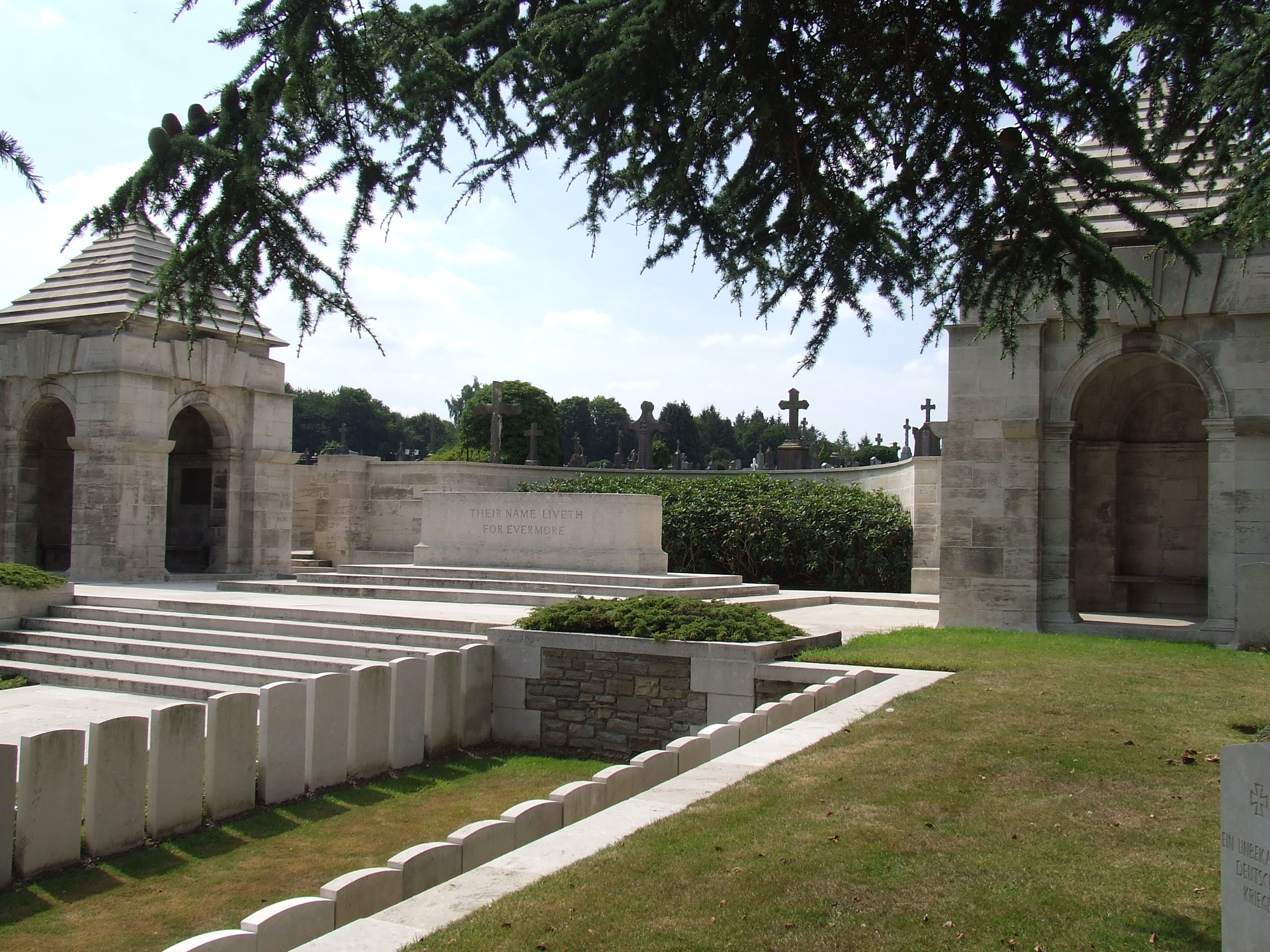
Longenese CWGC cemetery © C Sklinar 2015

Longenese CWGC cemetery © C Sklinar 2015

Longenesse Souvenir CWGC cemetery is situated alongside the busy D928, Rue des Bruyeres, close by the D942, dual carriageway, that I had exited earlier and turned right, not left!  The cemetery forms part of the large community cemetery.    I parked in the communal cemetery parking area and walked through the French cemetery until I reached the white walls and the twin lodges that seemed to guard the headstones from many nations.

Longenese CWGC cemetery © C Sklinar 2015

Longenese CWGC cemetery © C Sklinar 2015

The cemetery contains 3177 identified casualties, mainly from WW1 and during that afternoon I paid every one of them a visit.  I was the only one walking around most of the time, another couple parked on the main road, stayed a short while then went, leaving me and a rather large hare who seemed to be enjoying the open space.

Near the entrance are the graves of some members of the Chinese Labour Corps., German soldiers and a row of English nurses and V.A.D. volunteers.  Walking down each row there are a few who I will write about in detail later as they had an unusual surname or they were the recipient of an award – something to make them stand out but not any more special than the rest.

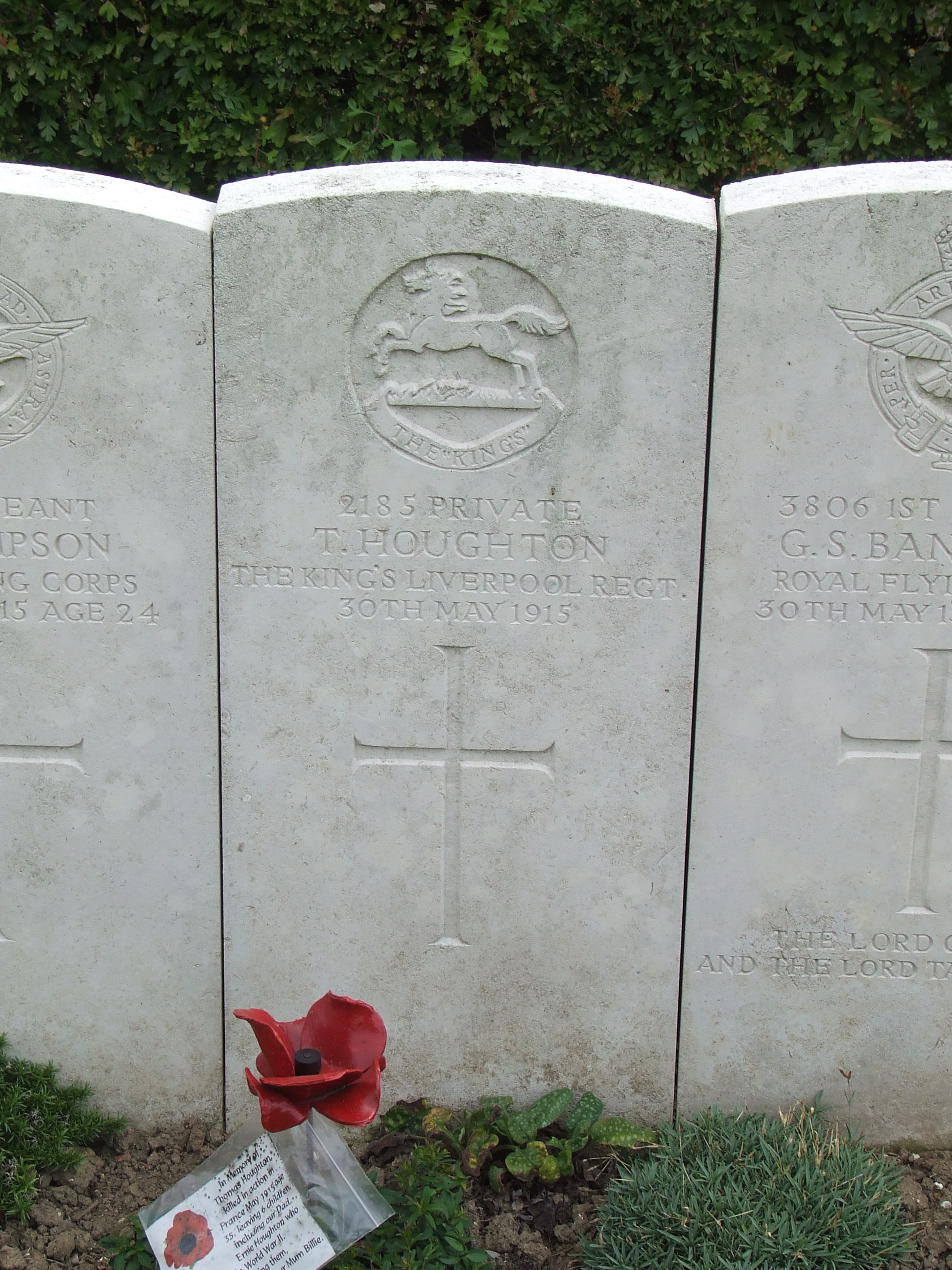
Pvte., T. Houghton © C Sklinar 2015

Pvte., T. Houghton © C Sklinar 2015

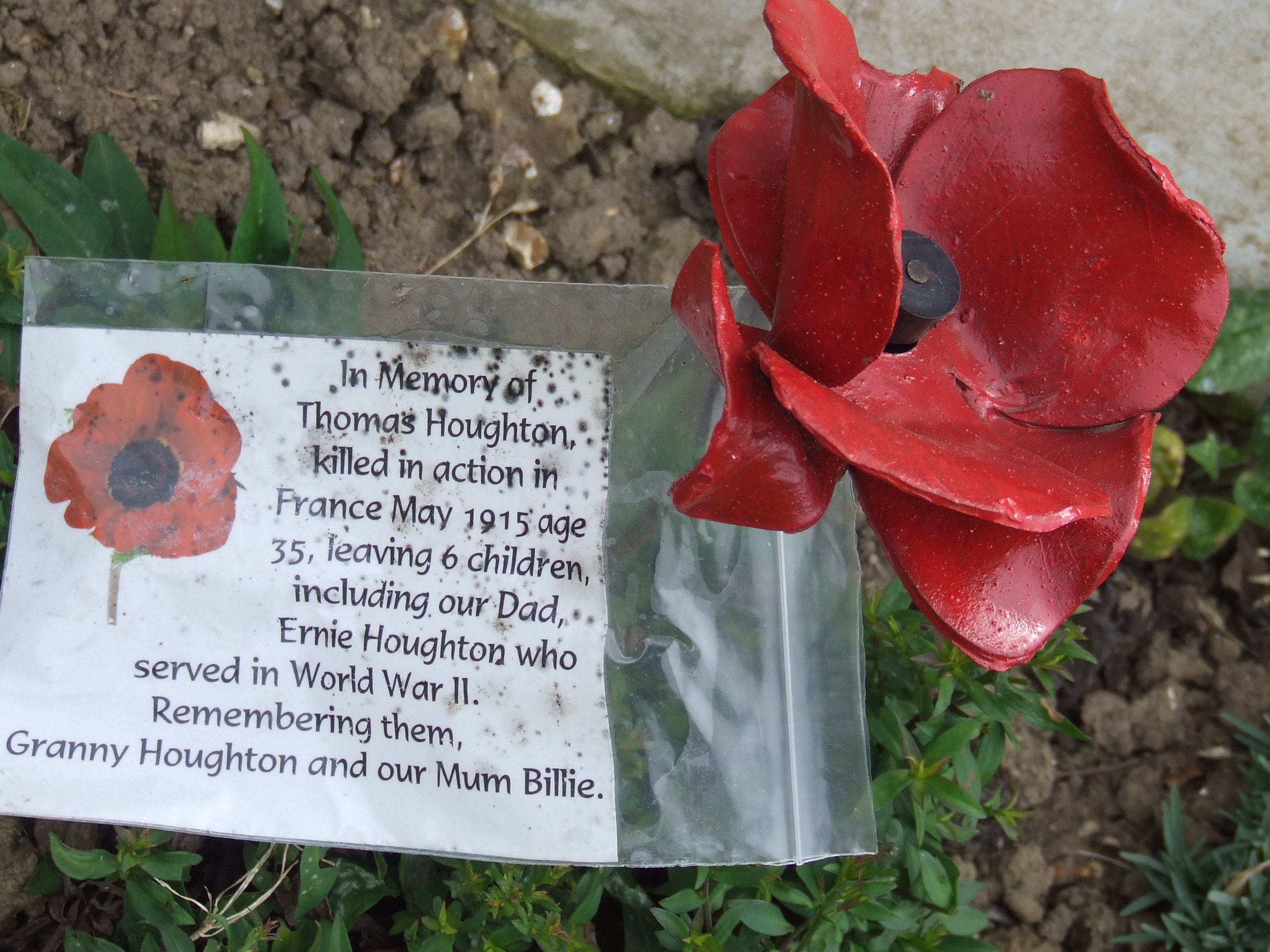
One such grave that stood out from the others was the grave of Private 2185, Houghton, T, of The King’s Liverpool Regiment, who died on the 30th of May 1915.  Why did his stand out from the others that had photographs and poppy wreaths left in remembrance.  Private Houghton’s grave rested shoulder to shoulder with its neighbour  but at his grave side a Tower of London Poppy had been left by his family with a short message.

Private T Houghton – who are you?  From the message left by his family, I knew that he was called Thomas and was 35 years old when he died.  He was a married man and left 6 children to be looked after by his wife.

Thomas, was born in Formby, Lancashire, lived in Bootle, Liverpool, and enlisted in the town of his birth according to the SWDTGW, but who was he before the war took his life.  The 1911 census has a Thomas with Elizabeth as his wife.  They had been married 7 years and had 5 children, one of them was Ernest – a clue given on the little note.  The website Freebmd has 2 entries for 1903/4 but one stands out.  The 1911 census has Mary Hefferman aged 22, sister-in-law, working as a monthly nurse, living with the family.  So, it looks like Elizabeth is Elizabeth Hefferman, born in Dublin who married Thomas in the December quarter of 1903 in the Ormskirk area.  Thomas worked as a house painter and little did he know that he was to have one more child before joining the army.

Tower Poppy for T Houghton © C Sklinar 2015

Tower Poppy for T Houghton © C Sklinar 2015

The service record for Thomas, on a quick search, is not found, but his Medal Card and the Soldiers’ Effects Register give details on his medal entitlement and how much Elizabeth, his widow and sole legatee was eligible for.  It seems she received £1 11s 11d in October 1915 and £3 War Gratuity on the 17th of October 1919 – not a lot when you have lost the breadwinner in the family and you have 6 children to provide for.

Thomas died on the 30th of May 1915 ‘in action’, and rests should to shoulder with his comrades in a foreign land that will forever be England.

Place names – not all plain sailing!

Place names – not all plain sailing!   Were they really born there?

A census entry is only as good as the person who gave the information.  Did they really want officialdom to know all their secrets.  Nowadays with the many transcripts, a census is  only as good as the original information and now who transcribed those historical details for online companies.

For example, say a John Riach is found on a family tree sent by a distant relative.  John is a relative you have been missing but have now found thanks to your newly supplied information but all you have been given about John is his birth year as he is from a distant branch of your family.

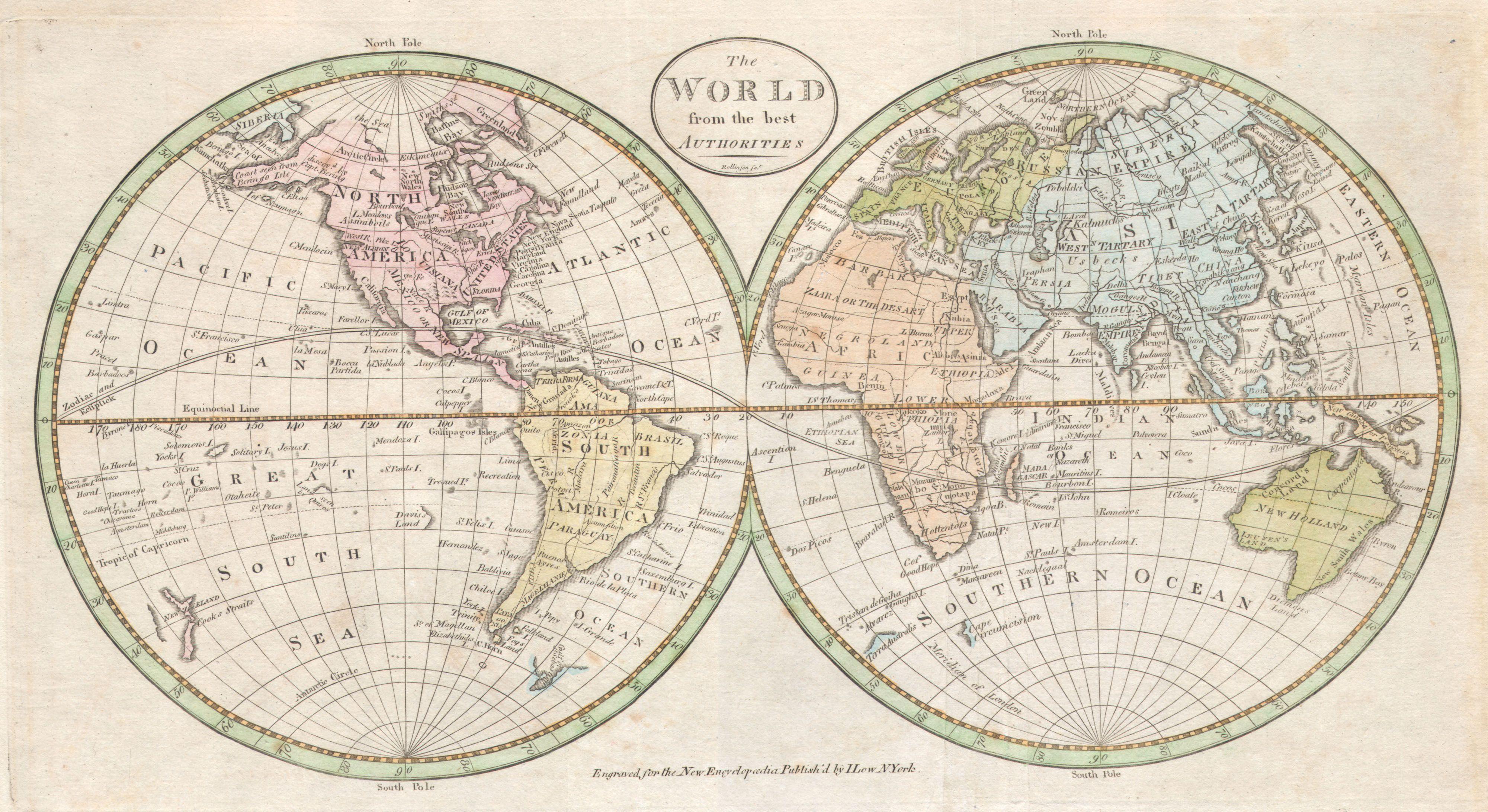
world mapWhere do you then go looking?  If you are in the the highlands of Scotland you would go to Dallas, Morayshire but if you are in America, would you probably look in Dallas, Texas records – you could be looking in the wrong country.

A few other place names that may send you off in the wrong direction :-

Scottish place names – Dallas, Aberdeen, Dunoon, Balmoral, Blairgowrie, Oban, Elgin, Glasgow, Inverness.

English place names – Hollywood, Liverpool, Windsor, Richmond, Newcastle, Exeter, Glossop, Spalding, Hastings, Worthing, Brighton, Crofton, Manchester, Brighton, Carlisle, Durham, Sheffield, Wakefield, Hull and the list goes on.

Welsh place names – Bangor, Cardiff, Welshpool, Caernarvon, Swansea, Haverford, Abergavenny, Ebbw Vale.

Irish place names – Erin, Munster, Ulster, Antrim, Armagh, Fermoy, Dublin, Limerick, Waterford, Roscommon, Derry.

The moral of this tale is don’t always trust place names included in a family tree on an online website.  Don’t always trust other people’s research.  Check where you can, and make a note that the research is not yours, if using information from another source.

On the up side, by looking in other countries, such as America, the Caribbean, Australia, New Zealand or South Africa, you may come up with the information you have been searching for.

Historical timeline

Historical timeline – events in history that have affected our families

From the early 1800’s the lives of our relatives started to change and many thought their privacy was at risk – little did they know what was to come!

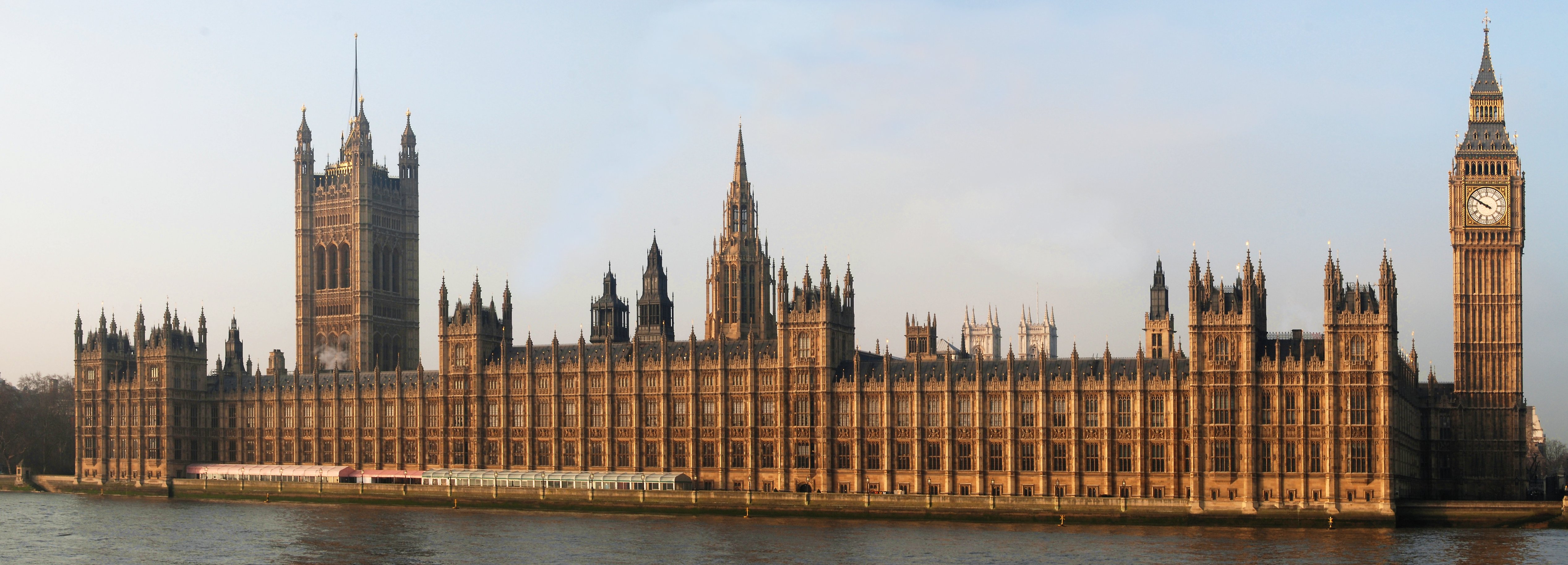
Houses of Parliament via Wikipedia

Houses of Parliament via Wikipedia

The BBC have put together a timeline and many of the events could help you answer one of your family history conundrums.

As time moved on, more information was beginning to be collected, Acts of Parliament and Laws were being made, social life was changing and the population was moving around the country and the world – sometimes not always by choice.

For example the census of 1801, was basically a headcount.  It was not until 1841 that every person was named (with a few exceptions where initials are used i.e. Asylums), their age within a range, and if they were born within the county or not.  The 1851 census,  now gave you  a correct age, well, if they gave it correctly,  a place of birth not just a county – this census was the first one to be of any real use.

The Central Criminal Court had been established in 1834, as had the Poor Law.  One or both of these could have had an impact on your family – I know one of them certainly did on mine.

Other Laws and Acts that many of our relatives could have been involved are, the Matrimonial Cause Act of 1857, the Abolition of Transportation in 1868 and in the last century the National Adoption Register of 1927.

Merchant seaman records via Find My Past

Merchant seaman records via Find My Past

Why not visit the BBC‘s family history section, click on the photograph links for  an overview of the information plus links to other sources.  Also, click on the ‘page’ icon to give you access to other dates such as :- The Swing Riots in 1830, the Registration of Merchant Seaman  in 1835, the Naturalisation Act of 1844 and the Abolition of Slavery also in that year, the Cotton Famine 1862 – 1866 and the Establishment of the Trade Union Congress  in 1868.

 I recommend that you pay this site a visit and bookmark the information for future reference.

Wakefield Express WW1 – Thomas Pearson

Wakefield Family’s Sacrifice

Two Sons Killed and Another a Prisoner of War

The Other in Training

Mr. and Mrs. T. Pearson, Jubilee Terrace, Saville Street, Wakefield, have suffered another bereavement in the death in action of their youngest son, Private Thomas Pearson, of the King’s Own Yorkshire Light Infantry.  They have received very sympathetic letters from an officer and a private, and it appears that the young soldier – he was nineteen years of age – met his death on Sept., 21st.  He was going with his platoon into the front line trench, when a shell dropped near him and killed him and two of his comrades instantaneously.  The officer in the course of his letter says “I have lost a gallant young member of my platoon.  It was his first time in the trenches.  He was a nice boy, and gave such promise of becoming a fine soldier.”  Deceased joined the colours on February 15th last, and had been in France only six weeks.

Mr. and Mrs. Pearson’s second son, Pte., Alfred Pearson, was killed in action n September 25th, 1916, and their eldest son Private Sam Pearson, York and Lancaster Regiment was taken a prisoner by the Germans on April 9th last.  Their third son, Private Mawson Pearson, K.O.Y.L.I., is at present in training  at Rugeley Camp.

Wakefield Express  3rd November 1917.

Who are these young men?

Thomas, served as Private 36270, in the KOYLI’s.  He died, as we know, on the 21st of September 1917.  He rests in Wulverghem-Lindenhoek Road Military Cemetery, with over 650 other identified casualties of war and over 400 whose headstone says ‘A soldier of the Great War’.

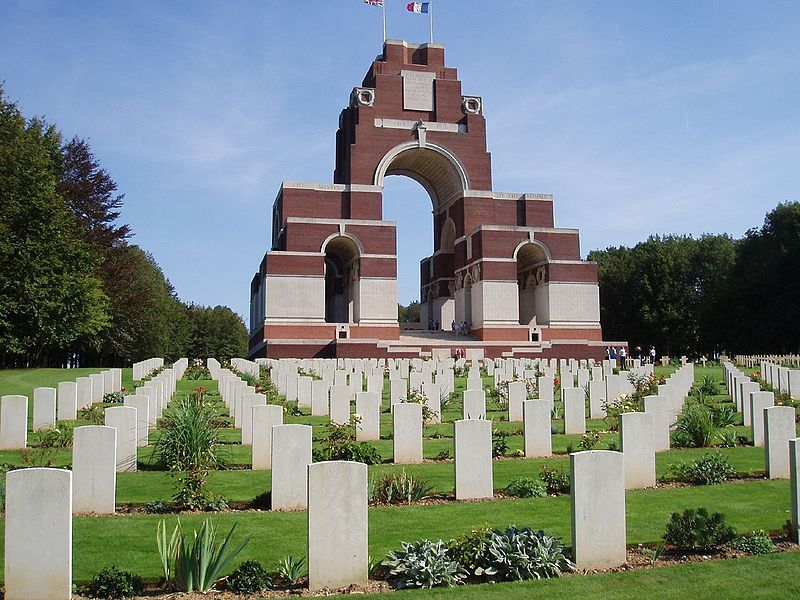
Theipval Memorial to the Missing

Theipval Memorial to the Missing

Alfred served as Private 17294 in the KOYLI’s.  He died, as we know in September, 1916. He is remembered on the Theipval Memorial to the Missing, with over 72,000 others whose final resting place is known only unto their God.

Mawson Pearson served as Private 205520 in the KOYLI’s.  Mawson died in Wakefield aged 70 years in 1966.  Mawson and his brother Sam are both entered in the Absent Voters List for 1918.

Sam Pearson served as Private 32102 in the York and Lancs., Regiment and is not listed on the Commonwealth War Graves Commission list – so it looks like he survived!

Ploegsteert 14-18 Experience

After repeatedly saying I was going to go to the Pleogsteert 14-18 Experience, which I had seen on recent visits to the area, I set off one day for the hour long journey.  I was armed with ‘Sally Satnav’, my camera (minus spare batteries……..oops!) and a bag of Wine Gums!

I had, before setting off, had a look at the Pleogsteert  14-18 Experience website, to find out it’s opening times and how much it was going to cost etc,.  Did I wish I had not bothered?  Yes! The site has the capability of changing languages, but I found it hard to work through, with many of its pages not loading, just leaving me with a page of empty squares.  It was not the kind of website I had expected for such a new historical experience.

Let the journey begin, after stopping at Pont Dachelles Military Cemetery to see who was there (another blog), I found myself in Ploegsteert.  There was only one sign, on a round-a-bout telling me of my final destination, but I did know where I was going, as the Experience is situated next to the Ploegsteert Memorial – and you can’t miss that wonderful structure, even if you try!  I followed the sign, which was where ‘Sally Satnav’ was taking me.  I knew there was parking on the main road, as I had parked there on many occasions,  but thought there may have been a car park specifically for the venue – not a sign in sight for that one!

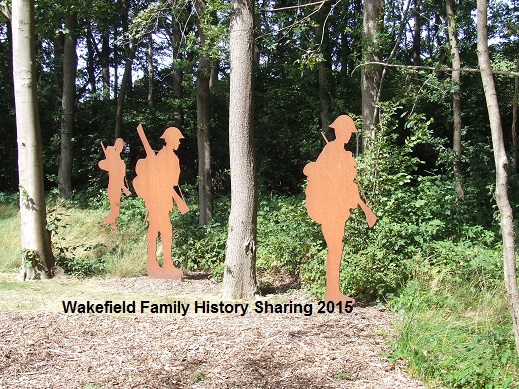
Pleogsteert 14-18 soldiers

Pleogsteert 14-18 Experience soldiers

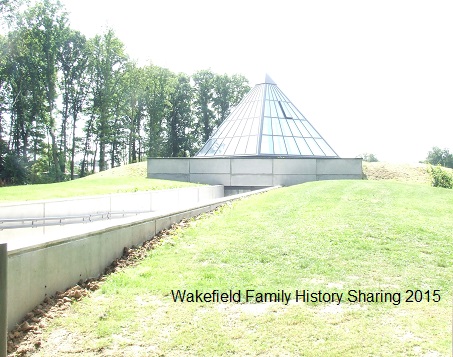
I crossed the road, which was surprisingly quiet, and walked along the tree lined path to the venue.  As I came within a few yards of the sloping entrance, tall metal figures representing First World War soldiers greeted me from just within the tree line.  The entrance is a gently sloping path, leading to an underground centre.  Atop the centre is a glass pyramid.

On entering the small hall are a selection of CWGC booklets (free), informing of a few cemetery/remembrance trails, plus leaflets

Pyramid entrance

Pyramid entrance

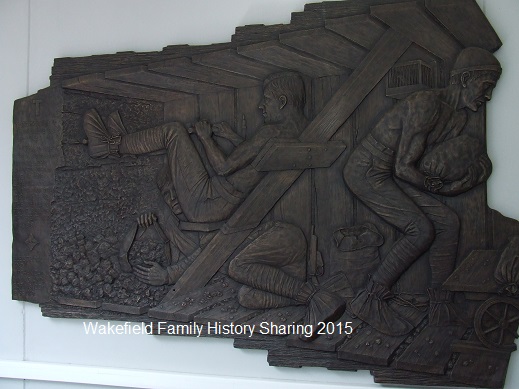
Australian tunnellers

Australian tunnellers

informing of an Australian trail and a very informative leaflet on TocH.  Into the main reception area there is a selection of books in various languages and various items for sale – each one having a poppy somewhere upon its surface.  I did notice a quite striking bronze plaque/monument on the wall, depicting Australian tunnellers.  I paid my 5euro and was informed by a young lady how to proceed and which language buttons to press!

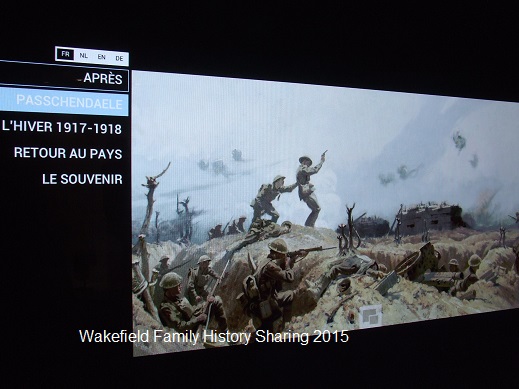
On entering the darkened hall I sat down and pressed the ‘E’ button to listen to the first of the presentations.  Initially, quite interesting, as it passed from how Great Britain and Europe expanded its territories during the early 1900’s. Then, how with the assassination in 1914 war began.  The presentation went on, month by month, year by year and I am afraid by 1916, I was all warred out!  As I exited I was met with a large surface area covered in a map and another visual presentation on the wall – I gave that a miss too!

Interactive wall

Interactive wall


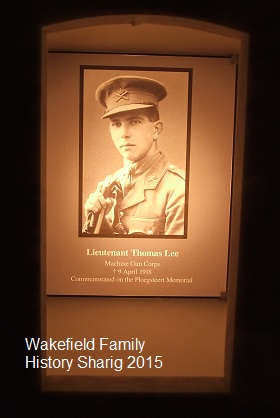
Turning away from that section, in front of me was what looked like a shiney black display case with no instructions of what to do, only a few lines by Peter Eglund. I had been told by the young lady that there was a display to be found here – where? Being a little on the nosey side, I touched the dark surface and and wow!!! Displays appeared.  Interactive displays in various languages.  Press the buttons and off you go.  As you venture around that display you are met with a wall of crosses and oblongs – some being illuminated.  Behind each of the illuminated crosses and oblongs is a picture of

Lieut T Lee

Lieut T Lee

a soldier.  A cross hides the face of a German soldier and the oblong shelters the face of a Commonwealth casualty.

Walking now towards the exit is another interactive presentation – as you walk within a set area the display changes and shows some of the cemeteries within the area, and there are a few. Back in the fresh air, I walked up the slope and followed the path, thinking there may be more to see outside…………….wrong, but I did find the car park!

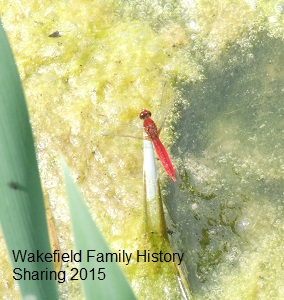
What I also found, and to me was the most enjoyable part of the afternoon, was a pond with a small deck that allowed you to stand a few feet above the war.  The pond edged with bulrushes, was  a quiet spot to ponder your thoughts, as you watched the numerous electric blue and vibrant red/orange dragonflies dart across the still water.  Some chose to settle

Dragonfly

Dragonfly

for a moment on the bulrushes or land upon the greenery just slightly protruding from the water.  What a pity the deckings railings were too low to rest on while you enjoyed colourful visions.  What a pity there was no seating – as it would have been enjoyable to spend a little longer there.

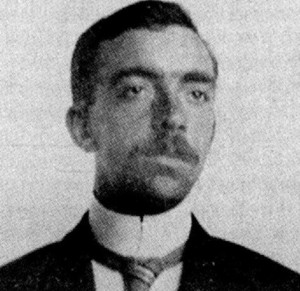
Shot at Dawn – Eric Skeffington Poole

While having a look through one my books I stopped at the entry for Poperinghe New Military Cemetery.  I was very surprised to read that within the walls of the cemetery lie more executed soldiers than any other Western Front Cemetery, 17 to be exact, who were Shot at Dawn.

Who are these men?  P J H Wilson; Pte C LaLiberte; Pte J Bennett; Pte A Botfield; Pte R Stevenson; Pte B McGeehan; Pte R T Tite; Pte W H Simmonds; 2nd Lieut E S Poole (one of only three officers executed on the Western Front); Pte J Crampton; Pte J W Fryer; Pte J S Michael; pte J Stedman; Sgt J T Wall; Pte G Everill; Pte W H Morris and Pte F C Gore.

In 2006, after many years of campaigning by the families of the soldiers, military historians and the general public, the British Government announced a group pardon for  306 of the 346 men ‘shot at dawn’.  These men, many suffering from shell-shock were tried before high ranking officers, who had probably never seen a battlefield close up. These soldiers were poorly represented and in many cases suffered miscarriages of justice.  This blanket pardon, although a positive move nearly 100 years later, pardoned those suffering but  also included those who had criminal intentions and those who willfully neglected their duty.

shot at dawn memorial nat arb cropped

Shot at Dawn Memorial

The New Zealand Government, had the previous year pardoned its executed soldiers.

National Memorial Arboretum, Alrewas, Staffordshire, DE13 7AR, is the home to  many regimental, battle and individual memorials is the memorial to those Shot at Dawn.  A very moving memorial, comprising or a post for each man.  The posts are symbolising the stake the soldiers were tied to before being shot.

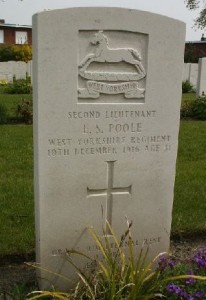
poole eric skeffington

Eric Skeffington Poole

Eric Skeffington Poole – was born in Nova Scotia, Canada in 1885.   He first served in the Halifax Rifles in the first decade of 1900.  His family moved to England, settling in the Guildford area of Surrey.

By October of 1914 Eric had joined the Honourable Artillery Company, working as a driver.  He earned a commission as a  temporary second lieutenant in the West Yorkshire Regiment by 1915.  The following year he was serving in France where his regiment was due to serve in the Battle of the Somme.

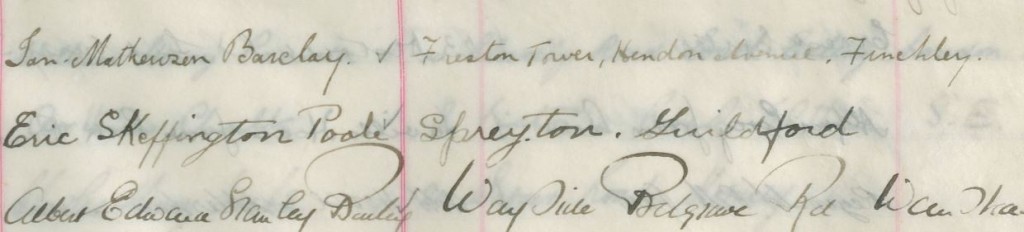
Honorary Artillery Company membership book via Find My Past

Honorary Artillery Company membership book via Find My Past

Eric was, according to the National Archives First World War project. suffering from shell-shock after being hit by clods of earth following enemy shelling on the 7th of July 1916.  He was sent to recuperate and returned to his battalion by the end of August. He was soon to be in charge of C Company at Martinpuich near Albert.

, During his trial Eric described his injuries which caused him to get confused and at times  have difficulty in making decisions.  It was during one of these occasions that it is said he wondered away from his platoon while they were making their way to the front line trenches.  Eric was arrested two days later.  In  November the decision was made to try him by general court martial for deserting ‘while on active service’.

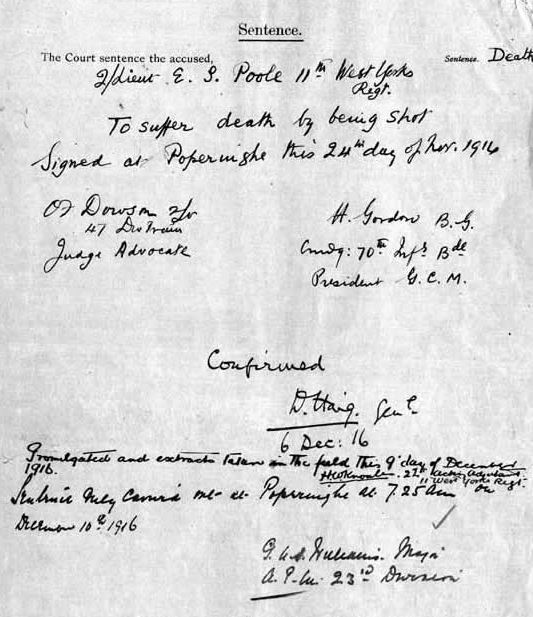
Poole was tried in the small Belgian town of Poperinghe towards the end of November.  Six witnesses were called  It was noted that Eric’s ‘nerves were rather shaken’.  While Eric himself, told that during early October he was feeling ‘damned bad’.  Two men spoke in his defence, one a Royal Army Medical Corps., officer, who told that his condition made him incapable of intentionally deserting.  Eric re-capped his conditions and told he was unaware of the seriousness of his actions.  Despite his defence pleading his case the sentence was ‘death by being shot’.

Eric Skeffington Poole sentence signed by Haigh

Eric Skeffington Poole sentence signed by Haigh

Days after a medical board was sent to report on Eric, they concluded he was of sound mind and understood the consequence of his actions.

Eric Skeffington Poole, the first British Army officer to be sentenced to death by being shot, was executed by firing squad behind Poperinghe town hall on the 10th of December, and as we know he rests in the town’s military cemetery.

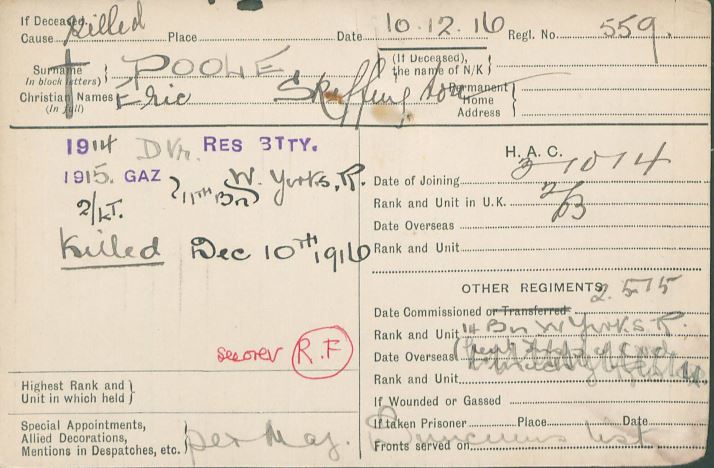
One of Eric's service cards for the H.A.C., via Find My Past

One of Eric’s service cards for the H.A.C., via Find My Past

Eric's Commonwealth War Graves Commission headstone in Poperinghe New military Cemetery via Ancestry.com

Eric’s Commonwealth War Graves Commission headstone in Poperinghe New military Cemetery via Ancestry.com

Eric’s fate was not made public back home.  His demise was not published in newspapers and his family were also anxious to avoid the word spreading.

The fate of Eric was not confined to the Commonwealth forces – France sentenced more than 600 men to death by firing squad.  Often in open spaces in view of the public and passing servicemen, thus trying to set an example to other soldiers and pointing out the fate of desertion.

Bleue Maison

Bleue Maison Commonwealth War Grave Commission cemetery is situated within the community of Eperlecque,  Pas de Calais.  The cemetery, made in spring 1918 to be a final resting place for the dead from a group of Casualty Clearing Stations in and around Watten. Situated a short distance from the main St. Omer/Dunkerque road is where 60 casualties of WW1 and one unidentified casualty of WW2 now lie surrounded by fields of corn.

Bleue Maison is a small place compared to other cemeteries in France and Belgium, but sometimes these are more personal. While the vast numbers of white stones in the larger cemeteries show how horrific war could be, this small cemetery, close to a small road and surrounded by fields can, like other small places can be left out, while the bigger, more well known get all the glory.  But not this time!

Let’s take a little walk around and see who is there!

DSCF4843

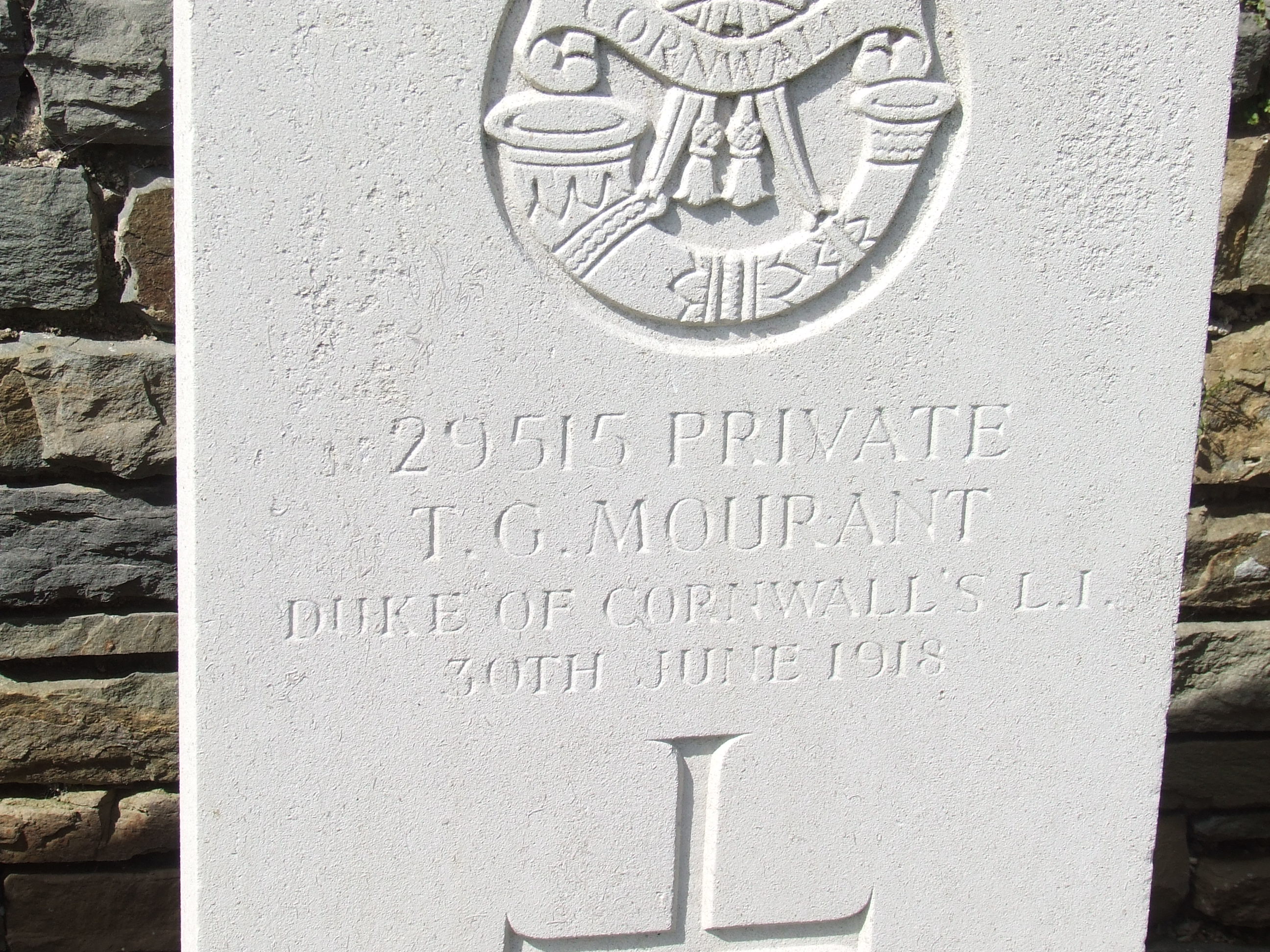
Bleue Maison CWGC – T G Mourant

Thomas George Mourant – Thomas was the son of Thomas Mourant and his wife Eliza.  In the census of 1911 the couple had been married 15 years and Eliza had given birth to three children, two of which had survived to be named in the census – Thomas aged 14 and his younger sister, Violet who was only three. Thomas snr, a house carpenter, was born in St. Clements, Jersey, while his wife was born on mainland UK in London.  Thomas jnr, was born in Grourville(?), while his sister was born in St Martins.  In this census the family of four were living at Percy House, Gorey, Jersey.

During the Great War, Thomas served in the Duke of Cornwall’s Light Infantry, as Private 29515. He enlisted in Grouville, the place of his birth and had previously served as no. 172 in the Royal Jersey Garrison Bn.  Thomas, like all other Jersey men, volunteered to go to war, as Jersey and the other Channel Islands did not call-up their young men.

Thomas George Mourant died of wounds on the 30th of June 1918.  He had been one f over 6,200 Jersey men who served in HM Forces and one of 862 who were either killed in action or died of wounds. His entry in the Army Register of Soldiers’ Effects, tells that monies due to him were paid to his father and  had all been finalised by the end of 1919.

DSCF4834

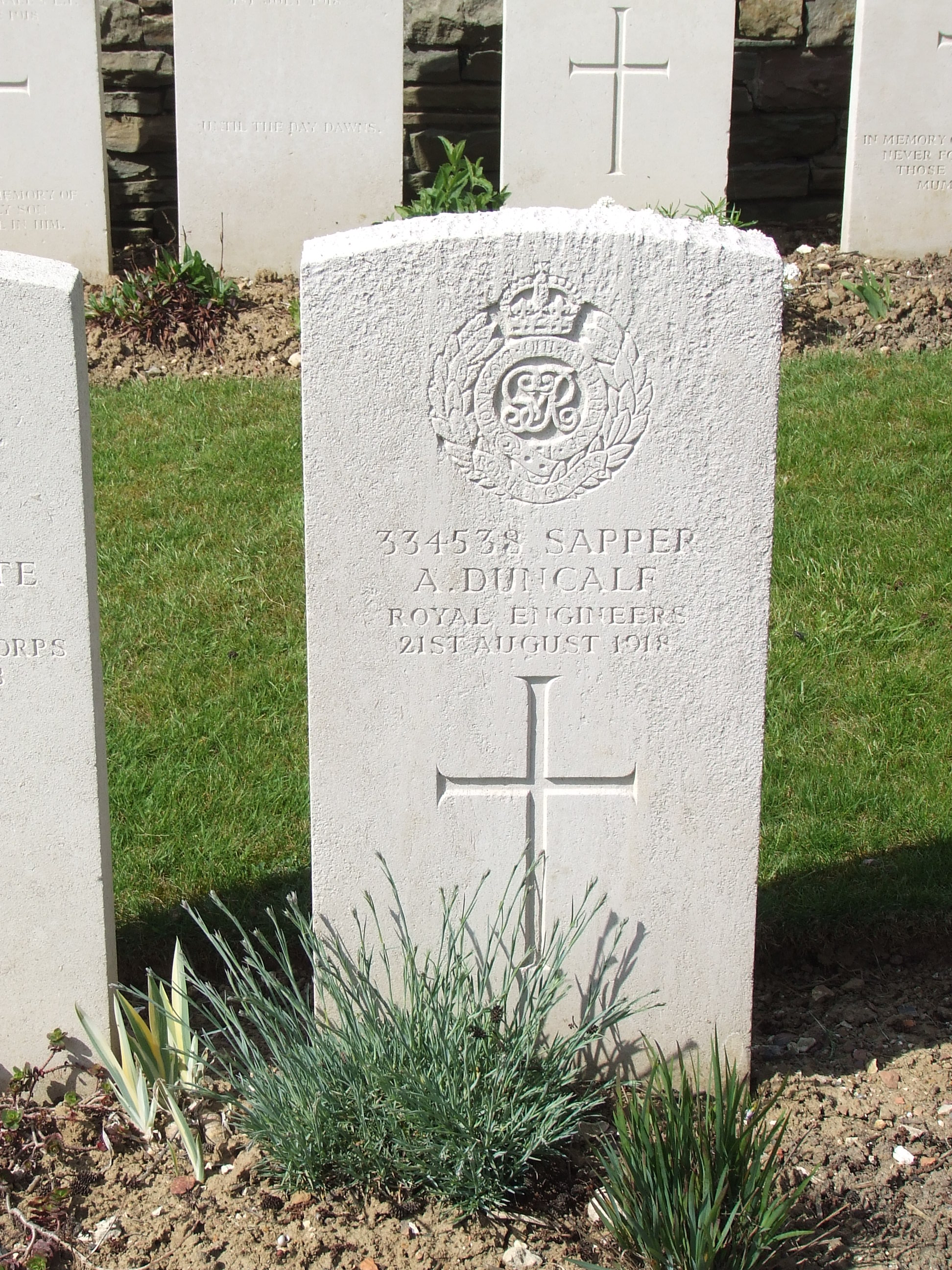
Bleue Maison CWGC – A Duncalf

Arthur Duncalf – Arthur, born in 1898, was the son of Arthur and Charlotte Duncalf, who in 1911 lived at 3 White Street, Widnes.  Arthur snr, worked  a local soap works.

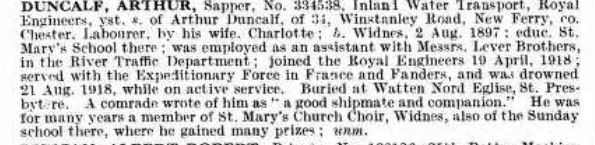
Arthur enlisted in Lower Bebington, joining the Royal Engineers and becoming Sapper WR/334538 and served in the Inland Water Transport battalion.  Arthur died on the 21st of August 1918 aged 21.  The extract below gives us a little more information about Arthur – especially the fact that he drowned whilst on active service only a few months after joining the RE’s. The information also tells that he was previously buried in the small churchyard in Watten before being moved to Bleue Maison.  It seems that he was liked by many, and that can’t be a bad thing, can it?

Arthur Duncalf extract from De Ruvigny's Roll of Honour

Arthur Duncalf extract from De Ruvigny’s Roll of Honour

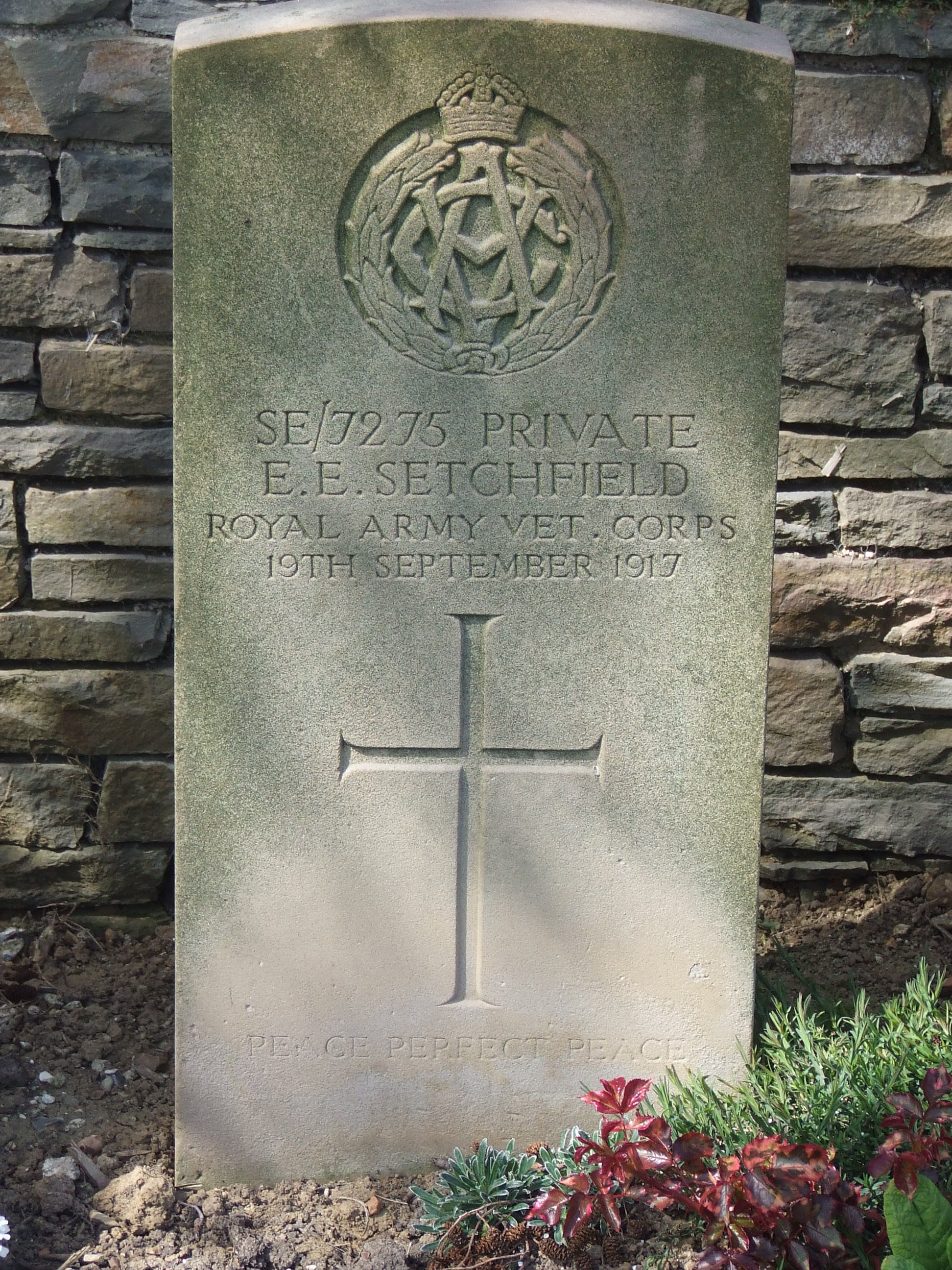
E E Setchfield

Bleue Maison – E E Setchfield

Edward Ernest Setchfield – His entry in Soldiers Died in the Great War, tells that Edward was born in Emneth, Norfolk, and that he enlisted in Norwich.  The Army Veterinary Corp., had Edward listed as Private SE/7275 and he died on the 19th of September 1917 age 37.

Edward had married Rose Adamson in late 1901.  By the time of the 1911 census Ernest and Rose were living in Wolsoken, with their two children at 40 Elizabeth Terrace.  Ernest worked as a coal porter to support his family.

Looking a little further into the surviving records, the Register of Soldiers’ Effects sees all Edwards effects finalised by 1919.  But one thing that is noted, is how he met his death.  Edward Ernest Setchfield is noted as being accidentally drowned in France or Belgium.  Edward rests in a sheltered, shady corner in what is quite an open cemetery.