Tag Archives: Army

Killearn War Memorial

Killearn is in the western district of Stirlingshire, formerly part of Lennox or Dunbartonshire.
In the mid 17oo’s the population was just under 1000 – fluctuating in the decades slightly up and down.  In 1831 the population was 1,206 and in the census of 1841 the village consisted of 1,187 souls  and again the population went up and down by about 20 people until in 1871 the number of people was 1,111. The 1911 census  the village had just over 1,000 with 583 males an 502 females.   In 2001 the number of people in the village was 1,781.

The village church, having close connections with the Orr-Ewing family  was opened in 1882 being in memory of Ella Orr-Ewing, who rests in the old kirkyard.

That’s a little bit about Killearn whose area boasts the most southerly Highland distillery at Drumgoyne – Glengoyne

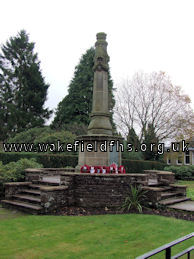
Killearn War Memorial is set in a small grassed area on the corner of Main Street and Balfron Road.  The memorial is set on a risen plinth with a short run of steps leading up to the base and column.  The column is quite ornate and the whole memorial stands proud.

One of the names on the memorial has been mentioned on one of my memorial blog posts, Strathclyde, namely Wm G Edmonstone, who family owned Duntreath Castle and have done for many centuries.  Also mentioned is Hugh Lennie who served in the CEF.  Hugh was unusual as he was over 6′ tall and I can’t remember the last time I transcribed a name on a memorial to anyone who was over 5′ 10″.  He must have been a very strong young man.  And finally, there are the two McCuaig brothers.

You can visit the memorial and the young men by clicking here
Saline War Memorial, Fife

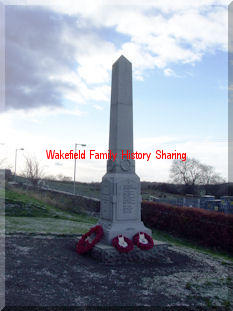
Saline War Memorial, Fife is situated outside Saline Parish Church, just off the main road.   On the day I visited there was a small herd of cows in the adjacent field and all seemed very curious as to what I was doing.

Saline is a small village, some five miles out of Dunfermline.  In the 2001 census the population was 1188 and in the previous centuries the main occupation was that of weaving, later mining became the main source of work for the local populaiton.  The village today, has a large number of listed buildings, mainly 18th century weavers’ cottages.

The War Memorial contains nearly 50 names of young men from the area who were either KIA or DOW in both the World Wars.

To see the transcript of Saline War Memorial click here

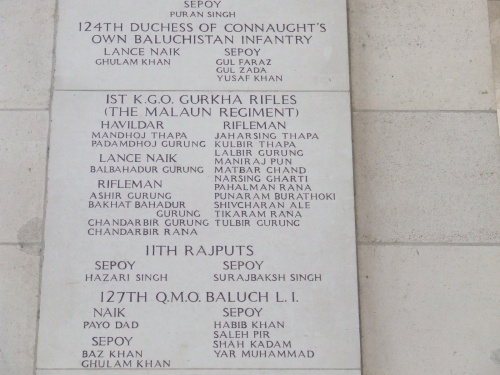
A guide to finding a Regiment on a large War Memorial

On many of the large memorials there is an order in which the names and Regiments are listed – I din’t know either until a fellow member of the NVA (Normandy Veterans Assoc.) passed on the information.

Take for example you have a relative on the Thiepval Memorial – he is one of over 72,000 other casualties who were KIA and their final resting place is not known, being only remembered on a memorial far from home.

Edmund Hilton Dadd, M.C., Capt, Royal Welsh Fusiliers  died 1916;  Edward Davy Pain, Capt., Somerset Light Infantry and Edward Aubrey Jackson, Rifleman, KRRC.  Which Regiment is listed first, do you know ?

Firstly, you need to understand that the Command Staff are always first, mostly General, Colonels etc., then the regiments, the regiments that traditionally guarded the King, so we have the Life Guards.   Followed by the Dragoon, Hussars and Lancers, then the Royal Horse and Field Artillery, the Guards in their various forms.  With the other regiments following on, again in a strict order.

Back to our young men who are on the Thiepval Memorial – ~The Somersetshire LI (Prince Albert’s) Regt., is first being 13th after the Guards and Household Regiments who are not numbered.  The Royal Welsh Fusiliers are 23rd on the list and the King’s Royal Rifle Corps., are following on in 60th position.

It dosn’t work out that if your regiment had a regal connection i.e. King’s, Prince or Princess in their name.  Putting it simply, as I like to do most of the time, the more traditionally connected to looking after the monarch the higher up the list you are.

Saying that, it is still confusing and sometimes you are best looking straight at a list of the regiments.  The Corps of Royal Engineers is listed after the Royal Horse and Field Artillery, but before the Grenadier Guards, Scots, Irish and Welsh Guards.  The listings don’t work on how new the regiments were i.e. the Welsh Guards were only formed in 1915.  The Guards Machine Gun Regiment raised in 1917 is listed after the Welsh Guards but the Machien Gun Corps raised in 1916 follows on near the end of the list.

Before you get totally confused and end up at a memorial looking for your great uncle take a look at the list, it may help shed a smattering of light on the subject.

Oh! before I forget, there is also within the Regimental order an order for the Commonwealth Forces – have fun !!

The Order of Regiments can be found by clicking here