Tag Archives: conflict

Lumphinnan and Shandon War Memorials

A gazeteer entry for Limphanan describes it as follows :-
Lumphanan, a hamlet and a parish in Kincardine O’Neil district, S Aberdeenshire. The hamlet has a station on the Deeside section of the Great North of Scotland railway, 27 miles W by S of Aberdeen; a post and railway telegraph office; a branch of the North of Scotland Bank; an hotel; and fairs on the second Thursday of January, February, March, April, May, September, and December.

The village now has neither a church or a station but does have a golf course, a school and a fine War Memorial.
A Gazeteer entry for 1882 describes Shandon as follows :-

Shandon, “hamlet on north side of Gareloch, 5½ miles north-north-west of Helensburgh, Dumbartonshire. It took its name, signifying ‘old fort,’ from an ancient fortalice, now almost extinct; it has a post office, with money order and telegraph departments, under Helensburgh, and a Free church; and it is near the elegant modern mansions of Shandon Lodge and West Shandon. Pop. 291.

Shandon, however, just a few short miles from Rhu developed alongside similar settlements to form fashionable residential areas for the wealthy Glasgow merchants.  West Shandon House was one of these residences for Robert Napier and housed his vast art collection.  Another residence is Shandon House, built for William Jamieson c1849 and now a Grade B Listed Building .  The house and its grounds overlook Gare Loch – now owned by the MOD  the house has been a school –  a remand home.  But sadly the once grand fittings and plaster work are now in a sad state of decay as Shandon House has lain empty for many years.

The Shandon area is now, since the 1960’s, dominated by the Royal Naval Base at Faslane.

To have a look at the Lumphinnan War Memorial click here

To have a look at the Shandon War Memorial click here
Dunbarton South African Campaign Memorial

The Second Boer War or South African War, was fought from 11 October 1899 until 31 May 1902, between the British Empire and the Dutch-speaking Boer of the Transvaal Republic and the Orange Free State.  The Union of South African then became part of the British Empire.

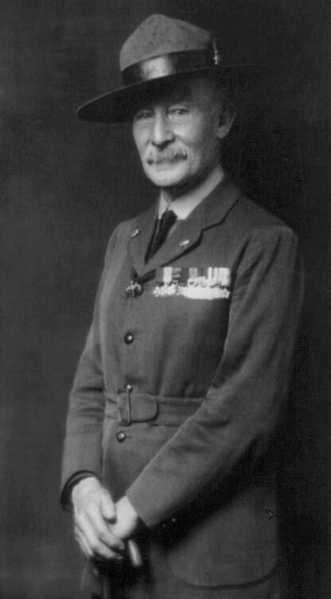
Robert Baden-Powell, Commanded the defense of the Seige of Mafeking, lasting 217 days

The First Boer War being fought from December 1880 to March 1881 – The Boer Wars.

It is a known fact that over half of the British Casualties during the war were caused by illness, particularly Typhoid Fever, enemy action being less of a cause.

The wars were also to be responsible for new words being added into our language, for example Kop, a well known term at football grounds and Concentration Camps.  The term was first used to describe camps operated by the British during this time.  The camps were initially refugee camps but later as numbers grew new ideas and tactics were introduced to stem the guerilla campaign.  Being poorly administered and overcrowded conditions became terrible for the internees.  Poor hygiene and sanitation, bad diet and lack of shelter only made a bad thing appauling.

So, who left the Burgh of Dunbarton to fight in South Africa, never to return home ? Well, Captain Peter Robert Denny ; J Ponsonby ; D W Moore to name a few.

To read the rest of the memorial click here

Further reading click here

There is an information sheet available from the National Archives – The South African War 1899-1902 Service Records of Other Ranks and NCOs   M11

Cardross War Memorial

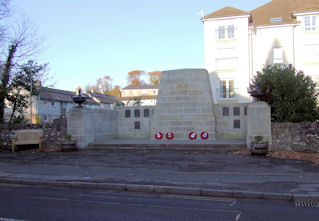
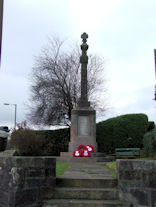
The war memorial at Cardross is a very magnificent tribute to the men from the area, but I get the feeling that the placement could have been better.

Yes, the memorial is roadside for all passers by to see and acknowledge  the  loss of the area but I feel that putting the memorial in a small gardened area or in a park would have given the large memorial more impact – such a large memorial for 8 plaques.    Did Cardross want to ‘out do’ the other villages or where they so proud they wanted the world to know ?

I have seen one picture of the memorial will a row of trees in the background, probably before the buildings were there, which did make the memorial look more ‘cumfy’ in its surroundings and less stark.

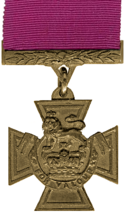
But one thing they should be proud of is the fact that a Victoria Cross was awarded to one of their own – one W H Anderson.

Other names on the memorial area :-  Hugh Caldwell ; Malcolm McKillop ;  W Beardmore Stewart and Adam Umpherston, to name a few.

Rhu War Memorial, Argyll & Bute

On a very sunny but chilly late November in 2010 we drove down the coast ending up in Helensburgh, but before we arrived there were a few little places to stop at on the way – Rhu being one of those places.

Rhu, had a population of 1,854 in the census of 2001

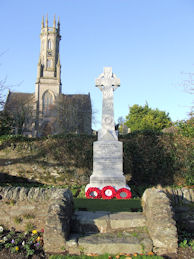
The village war memorial sits back from the road and just in front of the parish church and on a sunny day the memorial seems to shine. The memorial and the boundary wall are one of many listed buildings in the village of Rhu, including the Church,   graveyard  sundial and the boundary wall ; Glenarn House, coach house and garden house with the gate piers ;  Torwood Cottage + more.

Some of the names mentioned on the memorial are :-  J Maitland Downie ; William Limmond ; David Girvan ; Robert N K Barge ;  J D Oatts.

To have a look at the memorial transcription click here

Killearn War Memorial

Killearn is in the western district of Stirlingshire, formerly part of Lennox or Dunbartonshire.

In the mid 17oo’s the population was just under 1000 – fluctuating in the decades slightly up and down.  In 1831 the population was 1,206 and in the census of 1841 the village consisted of 1,187 souls  and again the population went up and down by about 20 people until in 1871 the number of people was 1,111. The 1911 census  the village had just over 1,000 with 583 males an 502 females.   In 2001 the number of people in the village was 1,781.

The village church, having close connections with the Orr-Ewing family  was opened in 1882 being in memory of Ella Orr-Ewing, who rests in the old kirkyard.

That’s a little bit about Killearn whose area boasts the most southerly Highland distillery at Drumgoyne – Glengoyne

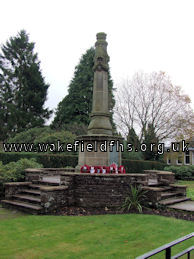
Killearn War Memorial is set in a small grassed area on the corner of Main Street and Balfron Road.  The memorial is set on a risen plinth with a short run of steps leading up to the base and column.  The column is quite ornate and the whole memorial stands proud.

One of the names on the memorial has been mentioned on one of my memorial blog posts, Strathclyde, namely Wm G Edmonstone, who family owned Duntreath Castle and have done for many centuries.  Also mentioned is Hugh Lennie who served in the CEF.  Hugh was unusual as he was over 6′ tall and I can’t remember the last time I transcribed a name on a memorial to anyone who was over 5′ 10″.  He must have been a very strong young man.  And finally, there are the two McCuaig brothers.

You can visit the memorial and the young men by clicking here

Saline War Memorial, Fife

Saline War Memorial, Fife is situated outside Saline Parish Church, just off the main road.   On the day I visited there was a small herd of cows in the adjacent field and all seemed very curious as to what I was doing.

Saline is a small village, some five miles out of Dunfermline.  In the 2001 census the population was 1188 and in the previous centuries the main occupation was that of weaving, later mining became the main source of work for the local populaiton.  The village today, has a large number of listed buildings, mainly 18th century weavers’ cottages.

The War Memorial contains nearly 50 names of young men from the area who were either KIA or DOW in both the World Wars.

To see the transcript of Saline War Memorial click here

Strathblane War Memorial

As I have said in previous entries I can spot a war memorial at a few thousand paces and my family always make a joke that whenever I go anywhere, there always has to be an ulterior motive i.e. a memorial or a CWGC headstone.

Over the years I have uploaded a lot of transcribed headstone from all over the country including France and Belgium  and have still many, many more to start work on.

So, today I have transcribed Strathblane War Memorial and for the majority of men have given their entry extra information – you know who were their parents, where they lived and were they finally rest or are remembered.

Some of the men include :- John Y Barr who was the son of Prof. Archibald Blair ; Wilfred Blake Moyes the son of Rev. W B Moyes and his wife Clara who was educated at public school and later Oxford and William George Edmonstone the eldest son and heir to Sir Archibald Edmondstone.

There will be a few, well more than a few other memorials being uploaded within the next week or so all from around the Stirlingshire, Dunbartonshire, Fife and Argyll and Angus areas.

Have fun and happy hunting

Wakefield’s Dambuster

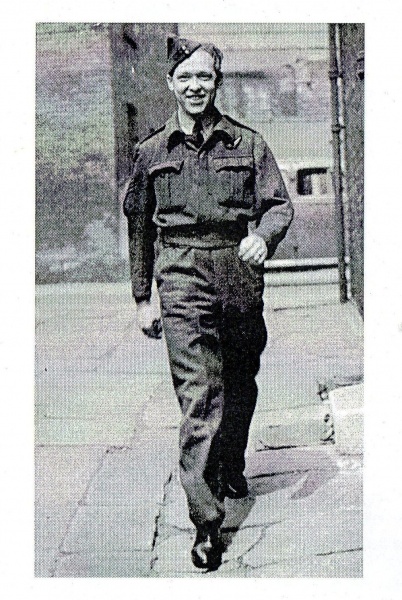
Billy Hatton – the Wakefield Dambuster – how many of you knew we had a dambuster in our midst?

William Hatton was born in Wakefield on 24 March 1920, the son of George and Florence nee Lee.  The couple marrying in the Autumn iof 1911.

Billy attended the Holy Trinity School and later Thornes House, joining the RAFVR in 1940. He served as 1013557 and  rose to the rank of Sergeant.  Billy became a member of 617 Sqdn on 25 March 1943, as a flight engineer. His plane crashed into the sea 8 miles of Cromer and is remembered on the Runnymede Memorial.

The Runnymede Memorial, cared for by the CWGC commemorates over 20,000 airmen who were lost in the Second World War during operations from bases in the U K and North and Western Europe, and who have no known graves. They served in Bomber, Fighter, Coastal, Transport, Flying Training and Maintenance Commands, and came from all parts of the Commonwealth. Some were from countries in continental Europe which had been overrun but whose airmen continued to fight within the ranks of the RAF.

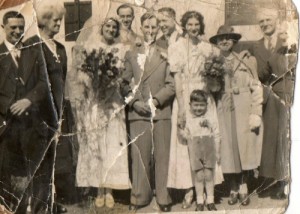
During the month of May 1940, Billy was the Bestman at my cousins wedding – Albert Edward Binns and his wife, Evelyn Pickard at Flanshaw Congregational Chapel

Billy’s father George served in the RN in WW1, living at 8 Ingwell Street, Wakefield – just off one of the main thoroughfares in and out of the City.

So, like Nelly Spindler, you could say that they are ‘forgotten hero’s’ in their home town!

Photographs supplied by D Ross nee Binns

Crimean Casualty Rolls 1854 – 1856

‘Into the valley of death rode the 600’

Similar to the previous post but this time the Casualty Rolls of the Crimean War of 1854 – 56, mainly extracted from the London Gazette – these extracts are mainly pass on details and their accuracy is questionable.

Saying that, the information contained within the transcription is similar to the previous posts with serial no., name, regiment etc.,

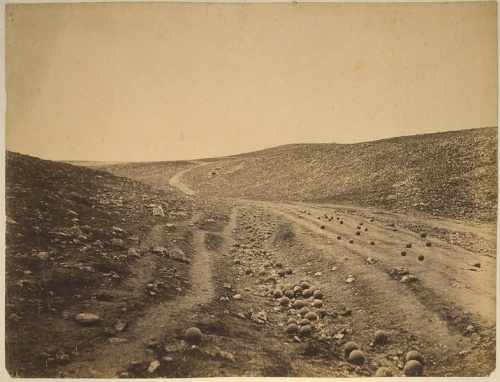
Picture by Roger Fenton –
The Valley of Death – the road littered with cannonballs

The Crimean War was the first war to be photographed – Roger Fenton born in Crimble Hall, Heap, Lancashire in 1819 was the son of a banker and the grandson of a wealthy cotton manuracturer.  He went to UCL and attained a 1st Class honours degree.  He had an interest in the new art form – photography and it was this that he followed the war to Crimea on an assignment for Thomas Agnew.  Roger and his assistant, Marcus Sparling, took over 350 usable large format negatives.

The casualty Rolls for the Crimean War can be found here

The names of Officers and Troopers who took part in the Charge of the Light Brigade on October 25th 1854 are here

South African Campaign of 1877-79

Casualty Rolls of the South African Campaign of 1877 – 79 (The Zulu Wars)

This Casualty Roll is not as easy to read as the previous blog entry but is still informative, especially if a member of your family served in the Zulu Wars.

If you have ever watched Zulu or Zulu Dawn, as I have many times – you can’t beat a good film, can you ? You will know of places such as Isandhlwana and Rorke’s Drift, but you may not know where they are.

It was at Rorke’s Drift where 150 soldiers defended a supply station against thousands of Zulu warriors and 11 of those very brave soldiers were awarded Britain’s most highest military decoration – The Victoria Cross, awarded for valour ‘in the face of the enemy’.

The information contained within the Roll is :- Army number (if applicable – Officers have no number) ; Rank ; Name ; Regiment ; Action i.e. KIA, Wounded, followed by place and date.

You may be familiar with such names as – 1373 Private Alfred Henry Hook, 2nd Btn 24th Foot, wounded at Rorke’s Drift on 23 January 1879, or 1362 Private Frederick Hitch, also from the 24th Foot, he was also wounded on 23 Janaury at Rorke’s Drift or even, 623 Sergeant Robert Maxfield again of the 24th Foot and KIA on 23 January.

The Casualty Rolls for the Zulu Wars can be found here