Yearly Archives: 2011

Pope and Pearsons, Altofts

Did your family come from Altofts in the West Riding of Yorkshire?

Well, if they did, there is a good chance that they could have attended Pope & Pearsons, West Riding Colliery School.

A few years ago, I was offered the transcriptions done by Eve Kubiak for my website, Wakefield Family History Sharing – well, would you have said NO !  Didn’t think you would.

Eve spent many hours in the local archives taking the names down in longhand and then adding them to a computer programme – when you visit the pages you will see what a task that was for one person.  The entries start in 1875 and continue up to 1914.  The earlier entries are two or three years to a section when in 1893 they are in  individual years.

The information includes for each entry :- ID no. ; Date of admission or re-admission ; Surname followed by Christian name ; Date of birth ; Fathers of Mothers Name ; Address, From where and finally but not always having an entry is the Date of Leaving.  In later years there is a Remarks section with some of the entries being very informative.

For example in the 1877 – 79 section we have Mary Em Shepherd entering on 10 Dec 1877.  She was born on 29 Jan 1870, the daughter of Joseph of 1 Pit Row and was from the infant school.

Or, we have Beatrice Goldsburg born on 25 Jul 1889 who entered school from the Hunslet Board School.  She was the daughter of William of Railway Houses and she enter school on 2 May 1898.  The remarks say that she left on 10 Oct 1902 as she was Wanted at Home ! Her younger brother and sister left school in 1909 and 1906.

The same year, 1898, we have George Buxton, born 18 June 1889. the son of William of 9 Co-operative Terrace who came from the infants school, left on 1 Nov 1900 to go to The Grammar School.

The year of 1902 sees Sarah Thompson born 31 Oct 1891, the daughter of Sarah of 69 Pope Street.  She was admitted to school on 1 July 1902 – she was re-admitted as she had been in Knottingly but on 23 Dec 1904 she was taken out of school due to illness on Doctor’s Orders.

In 1904 the children of William Shaw of the Canal Boat Eardsly of Leeds were attending school, previously been attending Green Lane Pro (?) School.  The family entered on 13 March 1906 and left of 26 March 1906 as they returned to the Knottingley Canal.

If your family are from the area, you will surely find these lists fascinating, especially as you will know the names of families from your research – they could be neighbours, employers or relatives.  On the other hand, with no family connections to Altofts, I am sure you will still find the entries just as interesting.

The school entries for Pope & Pearson, West Riding School can be found here.
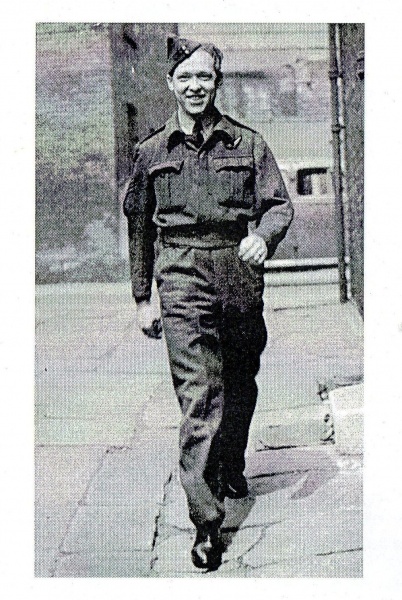
Wakefield’s Dambuster

Billy Hatton – the Wakefield Dambuster – how many of you knew we had a dambuster in our midst?

William Hatton was born in Wakefield on 24 March 1920, the son of George and Florence nee Lee.  The couple marrying in the Autumn iof 1911.

Billy attended the Holy Trinity School and later Thornes House, joining the RAFVR in 1940. He served as 1013557 and  rose to the rank of Sergeant.  Billy became a member of 617 Sqdn on 25 March 1943, as a flight engineer. His plane crashed into the sea 8 miles of Cromer and is remembered on the Runnymede Memorial.

The Runnymede Memorial, cared for by the CWGC commemorates over 20,000 airmen who were lost in the Second World War during operations from bases in the U K and North and Western Europe, and who have no known graves. They served in Bomber, Fighter, Coastal, Transport, Flying Training and Maintenance Commands, and came from all parts of the Commonwealth. Some were from countries in continental Europe which had been overrun but whose airmen continued to fight within the ranks of the RAF.

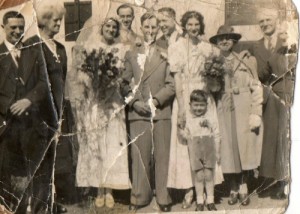
During the month of May 1940, Billy was the Bestman at my cousins wedding – Albert Edward Binns and his wife, Evelyn Pickard at Flanshaw Congregational Chapel

Billy’s father George served in the RN in WW1, living at 8 Ingwell Street, Wakefield – just off one of the main thoroughfares in and out of the City.

So, like Nelly Spindler, you could say that they are ‘forgotten hero’s’ in their home town!

Photographs supplied by D Ross nee Binns

Crimean Casualty Rolls 1854 – 1856

‘Into the valley of death rode the 600’

Similar to the previous post but this time the Casualty Rolls of the Crimean War of 1854 – 56, mainly extracted from the London Gazette – these extracts are mainly pass on details and their accuracy is questionable.

Saying that, the information contained within the transcription is similar to the previous posts with serial no., name, regiment etc.,

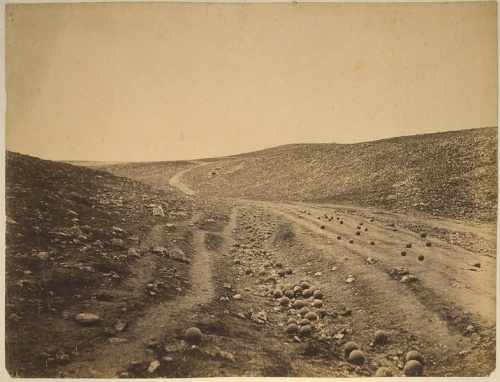
Picture by Roger Fenton –
The Valley of Death – the road littered with cannonballs

The Crimean War was the first war to be photographed – Roger Fenton born in Crimble Hall, Heap, Lancashire in 1819 was the son of a banker and the grandson of a wealthy cotton manuracturer.  He went to UCL and attained a 1st Class honours degree.  He had an interest in the new art form – photography and it was this that he followed the war to Crimea on an assignment for Thomas Agnew.  Roger and his assistant, Marcus Sparling, took over 350 usable large format negatives.

The casualty Rolls for the Crimean War can be found here

The names of Officers and Troopers who took part in the Charge of the Light Brigade on October 25th 1854 are here

South African Campaign of 1877-79

Casualty Rolls of the South African Campaign of 1877 – 79 (The Zulu Wars)

This Casualty Roll is not as easy to read as the previous blog entry but is still informative, especially if a member of your family served in the Zulu Wars.

If you have ever watched Zulu or Zulu Dawn, as I have many times – you can’t beat a good film, can you ? You will know of places such as Isandhlwana and Rorke’s Drift, but you may not know where they are.

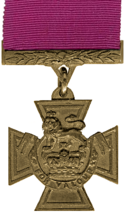
It was at Rorke’s Drift where 150 soldiers defended a supply station against thousands of Zulu warriors and 11 of those very brave soldiers were awarded Britain’s most highest military decoration – The Victoria Cross, awarded for valour ‘in the face of the enemy’.

The information contained within the Roll is :- Army number (if applicable – Officers have no number) ; Rank ; Name ; Regiment ; Action i.e. KIA, Wounded, followed by place and date.

You may be familiar with such names as – 1373 Private Alfred Henry Hook, 2nd Btn 24th Foot, wounded at Rorke’s Drift on 23 January 1879, or 1362 Private Frederick Hitch, also from the 24th Foot, he was also wounded on 23 Janaury at Rorke’s Drift or even, 623 Sergeant Robert Maxfield again of the 24th Foot and KIA on 23 January.

The Casualty Rolls for the Zulu Wars can be found here

Afghan Campaign 1878-1880

The cd, Soldiers who died in The Great War is a good source for finding a soldier who was KIA or DoW in WW1.  Recently its counterpart for WW2 was also published  also on cd.  Both of these fantastic resources are now on pay per view sites and compliment the entries on the Commonwealth War Graves Commission with giving places of enlistment and cause of death i.e. Killed in Action or Died of Wounds.

But what do you do if your family member died in other conflicts.

I was recently sent a link to a very good site for the Afghan Campaign 1878-1880.  The information on the site gives the following information :-

Service number, rank, surname and christian name, regiment, how died or severity of wounds, place, date and remarks.  It is the remarks that are interesting.

For example, Captain Seymour Dun Barrow of the 10th Bengal Lancers was severely wounded at Patkao Shana on 1 July 1880, the remarks saying ‘ Incision to right forearm and left hand in a personal encounter with a nephew of Sultan Mahomed’.

Another entry for Lance Sergeant, 1583, William Cameron, 72nd Foot (Duke of Albany’s Own Highlanders, KIA at Kandahar on 1st September 1880, the remarks state ‘Gunshot abdomen. ‘A grand specimen of a Highland soldier’.

Major John Cook, 5th Gurkha Regiment, Danger Wound, at Kabul on 12 December 1879, the remarks go on to say ‘Gunshot left leg. Awarded V.C. for Peiwar Kotal, 02 December 1878. Died of Wounds 19 December  1878’.

Or, 514 Colour Sergeant  Ge Jacobs, 72nd Foot (Duke of Albany’s Own Highlanders), severely wounded at Kandahar on 1st September 1880.  He was awarded the DCM for Kabul, got a gunshot in the groin and was awarded bar to DCM.

Or, Private Jonathan Longworth, 32B/104, 1st Bn 12th Foot who was severely wounded at Besud on 19th May 1880.  He had a very deep knife wound, back of left shoulder with deep muscles severed.  He was awarded the DCM.

The detail about each soldier is concise but very informative and well worth a visit just to see what has been put in the remarks column, as there are a couple of V.C’s mentioned.

The information can be found here

Military Abbreviations

We know what AWOL and POW is but have you ever come across A.P.or the B.W.I, or heard mention of D.B., or  E.R.A. , P.U.O. or even S.I.W?     Probably not!

We all abbreviate in some way and depending where you work or which hobby you pursue, there will be a set of abbreviations that all within those fields will know and feel comfortable using.  For example you are a lover of sport, the NVA will immediately become the National Volleyball Association, but belong to an association connected with the brave men who fought within the Normandy conflict in WW2 and NVA will mean The Normandy Veterans Association. The same few letters but within different groups mean totally different things.

As the heading says, we are talking about Military Abbreviations, so many to consider that you could never remember the more obscure ones. The military know the abbreviations, they use them every day but it is us that follow in our soldiers footsteps that are left wondering what regiment great uncle Fred served in and what he did during his service.

Many more military records are being placed on free, pay per view and subscription websites that it would be handy and ease the curiosity complex that all family historians seem to have to have a list of abbreviations.

Give a family historian something i.e. an abbreviation,  half a story or tell them that you would rather not say and woop! – curiosity mode pops up within seconds and won’t rest until there is a good answer with evidence to support the findings.

Where to go if you find P.U.O. or E.R.A. on a record, headstone of website………

look no further than here!


War Memorials Wanted !!!

If you have ever visited my website or read previous blog entries you will be aware that I collect, transcribe and add information about those whose names are carved in stone or wood, cast in metal or written in a book and then add to my websites for all to view.

Do you have access to a digital camera, know of any war memorials from any conflict.  I have 100’s of memorials transcribe and many more to do, but there are 1,000’s of village memorials, company memorials and private memorials still out there waiting a visitor with a camera who would pass the photographed memorial over to me for the transcription process.

All I would as that you do is photograph the whole memorial – it’s always nice to see the actual memorial.  Then all you have to do is photograph the names so that they can be transcribed.  If the names are in panels, I normally photograph the whole panel, then photograph sections within the panel – making for a good image when transcribing.

For this you will get my thanks and your name put to the photograph used and a note saying that you were the person who made the transcription possible.

You can contact me at memorials@wakefieldfhs.org.uk for further information or to see if I already have your village, town or company memorial.

Memorials for the Wakefield area can be found here

and those from everywhere else can be found here simply click on the county or country link.

So, if you are from the UK, Eire, Europe, America, Canada, Australia or any where else, please contact me with your war memorials from any conflict.


Very much looking forward to hearing from you all.

More than 8.5 million records go on FMP + Free Trial

FMP has just put online over 8.5 million records.

The records include :- Apprentices of Great Britain 1710 – 1774

Boyds Inhabitants of London & Boyds Family Units 1200 – 1946

Boyds London Marriages and Burials

Faculty of London Marriage Licence Allegations 1701 – 1850

Perogative Court of Canterbury Wills Index 1750 – 1800

Teachers Registration Council Registers 1914 – 1948

Trinity House Calenders 1787 – 1854

Vicar-General Marriage Licence Allegations 1694 – 1850

+ more.

While there is a 2 week Free Trial offer on Find My Past, why don’t you go along and see what they have online.

Oh! by the way the Free Trial also includes the 1911 census, so get your selves organised, work out who you need to look for and off you go!

Find My Past  Free Trial can be found here


London Remembers

Have you family from London or do you just like looking at images of interesting places?

Well if the answer to either of those questions is Yes! Then take a look at this website – London Remembers.

The map page has 100’s of hotspot links to places of interest :-  The Ship Tavern WC2 ; Wynkyn de Worde- father of Fleet Street ; site of Zeppelin bomb ; Hobby-horse bicycle and much more.  If you don’t want the hotspot version you can chose a list – a little easier to work with if  like me, you were mooching.

A good site and lots to keep you interested

To visit London Remembers click here – this link takes you straight to the map but click on the home link to see what else is happening

Leeds History at Lunchtime talks

The following talks are to be held in Leeds Central Library and hopefully some of you will be able to attend and enjoy

18th March – Catherine Callinan, Leeds Grand Theatre – “The Grand: An Entertaining Story”

8th April – Alan Humphries, Thackray Museum – “Earthworms and swallows: delftware drug jars at the Thackray Museum”

13th May – Geoffrey Forster, Leeds Library –  “Joseph Priestley and the Leeds Library”

3rd June – Janet Douglas, local historian –  “Isabella Ford: Trade Unionist, Suffragist and Socialist”

8th July – Alun Pugh, Leeds Tour Guide & Chairman of the Friends of BSTC –  “Beckett Street Cemetery: the oldest public cemetery in England. The story of Victorian Leeds told through the people who are buried there- an illustrated talk.”

5th  August – Nicola Pullan, Leeds City Museum –  “Buying up the Empire – globalised shopping in Victorian Leeds”

9th  September – David Thornton, Thoresby Society – “Edward Baines, Leeds Mercury editor and Leeds MP – ‘the Great Liar of the North’”

7th  October –  Shirley Jones,  Head of Conservation, WYAS-  “Conservation of the Leeds Tithe Maps”

All talks are free and take place in the 3rd  floor Meeting Room,  Leeds Central Library, between 1.00pm and 2.00pm.

No booking required, but places are limited.

Tel: 0113 2478290