Tag Archives: transcription
Names, but this time Latin
I’ve just published a couple of Blogs on names and naming traditions and it seems logical to follow on that thread with a few names in Latin, after all, we all have to look at Latin registers or documents at some time – we don’t always want to………….. but needs must.
A few years ago I put together a list of Latin names with their modern equivalent i.e. Gualcherus – Walter; Guido – Guy; Jacobus – Jacub/James; Guliemus – William.
Go on, have a look or bookmark the site for future reference – click here
Margaret – Maggie, Peggie or Daisy ?
The previous blog was about naming traditions, so I thought I would follow on with nicknames.
My aunty was called Dolly or Do-do, but it was not until I was nearly a teenager that I found out she was really called Frances – I still can’t work out why she was called Dolly. She was always a Dolly but to me she was aunty Do-do and very much loved.
So, why an I putting pen to paper or fingers to keyboard? Well, to suggest a few other names that Margaret or Pauline or Caroline might have been known by and therefore found on documents, census etc.
Imagine, it is the night of the census in 1871 (UK) and the enumerator comes to your home – it’s a good job he came and did the writing as you can only ‘make your mark’. He enters your house, your husband is out and there is you with your children and your grandchild. Mr Jones, the enumerator, asks who lives here. You say there is your husband Jack. You come next as the wife, so you say Jane. Your children are next, John, George, Rosie and ‘our Aggie’ and ‘little Isa’.
You answered the enumerator, he did his paperwork and off he went next door. But who really lived in your house?
Here is where it gets tricky! The husband Jack, was really John – Jack being a familiar for John in certain areas. Jane and George are easy, but Rosie is Roseanna, ‘Our Aggie’ is really Agnes and ‘Little Isa’ is Isaiah – confused yet?
When searching for your family in the census and documents remember, not everyone used the name they were Registered with, or Christened/Baptised with.
Many years ago I put my Riach line on hold as I had a choice of fathers for one family – the dates were a year out, not too disasterous, the place was the same but the names were Patrick and Peter, until some kind person informed me that Patrick and Peter were one in the same, just like Jack and John – easy when you know!
To have a look at some name variations and nicknames click here
(This link also includes the English Naming Traditions)
Pope and Pearsons, Altofts
Did your family come from Altofts in the West Riding of Yorkshire?
Well, if they did, there is a good chance that they could have attended Pope & Pearsons, West Riding Colliery School.
A few years ago, I was offered the transcriptions done by Eve Kubiak for my website, Wakefield Family History Sharing – well, would you have said NO ! Didn’t think you would.
Eve spent many hours in the local archives taking the names down in longhand and then adding them to a computer programme – when you visit the pages you will see what a task that was for one person. The entries start in 1875 and continue up to 1914. The earlier entries are two or three years to a section when in 1893 they are in individual years.
The information includes for each entry :- ID no. ; Date of admission or re-admission ; Surname followed by Christian name ; Date of birth ; Fathers of Mothers Name ; Address, From where and finally but not always having an entry is the Date of Leaving. In later years there is a Remarks section with some of the entries being very informative.
For example in the 1877 – 79 section we have Mary Em Shepherd entering on 10 Dec 1877. She was born on 29 Jan 1870, the daughter of Joseph of 1 Pit Row and was from the infant school.
Or, we have Beatrice Goldsburg born on 25 Jul 1889 who entered school from the Hunslet Board School. She was the daughter of William of Railway Houses and she enter school on 2 May 1898. The remarks say that she left on 10 Oct 1902 as she was Wanted at Home ! Her younger brother and sister left school in 1909 and 1906.
The same year, 1898, we have George Buxton, born 18 June 1889. the son of William of 9 Co-operative Terrace who came from the infants school, left on 1 Nov 1900 to go to The Grammar School.
The year of 1902 sees Sarah Thompson born 31 Oct 1891, the daughter of Sarah of 69 Pope Street. She was admitted to school on 1 July 1902 – she was re-admitted as she had been in Knottingly but on 23 Dec 1904 she was taken out of school due to illness on Doctor’s Orders.
In 1904 the children of William Shaw of the Canal Boat Eardsly of Leeds were attending school, previously been attending Green Lane Pro (?) School. The family entered on 13 March 1906 and left of 26 March 1906 as they returned to the Knottingley Canal.
If your family are from the area, you will surely find these lists fascinating, especially as you will know the names of families from your research – they could be neighbours, employers or relatives. On the other hand, with no family connections to Altofts, I am sure you will still find the entries just as interesting.
The school entries for Pope & Pearson, West Riding School can be found here.
Crimean Casualty Rolls 1854 – 1856
‘Into the valley of death rode the 600’
Similar to the previous post but this time the Casualty Rolls of the Crimean War of 1854 – 56, mainly extracted from the London Gazette – these extracts are mainly pass on details and their accuracy is questionable.
Saying that, the information contained within the transcription is similar to the previous posts with serial no., name, regiment etc.,
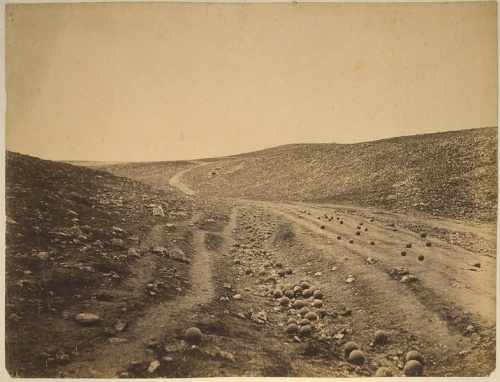
Picture by Roger Fenton –
The Valley of Death – the road littered with cannonballs
The Crimean War was the first war to be photographed – Roger Fenton born in Crimble Hall, Heap, Lancashire in 1819 was the son of a banker and the grandson of a wealthy cotton manuracturer. He went to UCL and attained a 1st Class honours degree. He had an interest in the new art form – photography and it was this that he followed the war to Crimea on an assignment for Thomas Agnew. Roger and his assistant, Marcus Sparling, took over 350 usable large format negatives.
The casualty Rolls for the Crimean War can be found here
The names of Officers and Troopers who took part in the Charge of the Light Brigade on October 25th 1854 are here
South African Campaign of 1877-79
Casualty Rolls of the South African Campaign of 1877 – 79 (The Zulu Wars)
This Casualty Roll is not as easy to read as the previous blog entry but is still informative, especially if a member of your family served in the Zulu Wars.
If you have ever watched Zulu or Zulu Dawn, as I have many times – you can’t beat a good film, can you ? You will know of places such as Isandhlwana and Rorke’s Drift, but you may not know where they are.
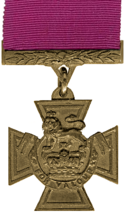
It was at Rorke’s Drift where 150 soldiers defended a supply station against thousands of Zulu warriors and 11 of those very brave soldiers were awarded Britain’s most highest military decoration – The Victoria Cross, awarded for valour ‘in the face of the enemy’.
The information contained within the Roll is :- Army number (if applicable – Officers have no number) ; Rank ; Name ; Regiment ; Action i.e. KIA, Wounded, followed by place and date.
You may be familiar with such names as – 1373 Private Alfred Henry Hook, 2nd Btn 24th Foot, wounded at Rorke’s Drift on 23 January 1879, or 1362 Private Frederick Hitch, also from the 24th Foot, he was also wounded on 23 Janaury at Rorke’s Drift or even, 623 Sergeant Robert Maxfield again of the 24th Foot and KIA on 23 January.
The Casualty Rolls for the Zulu Wars can be found here
War Memorials Wanted !!!
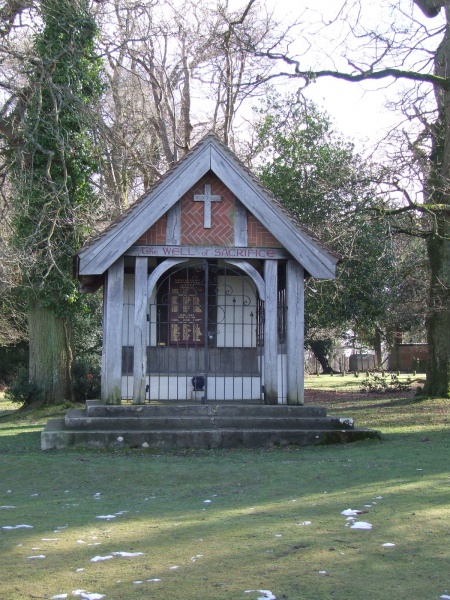
If you have ever visited my website or read previous blog entries you will be aware that I collect, transcribe and add information about those whose names are carved in stone or wood, cast in metal or written in a book and then add to my websites for all to view.
Do you have access to a digital camera, know of any war memorials from any conflict. I have 100’s of memorials transcribe and many more to do, but there are 1,000’s of village memorials, company memorials and private memorials still out there waiting a visitor with a camera who would pass the photographed memorial over to me for the transcription process.
All I would as that you do is photograph the whole memorial – it’s always nice to see the actual memorial. Then all you have to do is photograph the names so that they can be transcribed. If the names are in panels, I normally photograph the whole panel, then photograph sections within the panel – making for a good image when transcribing.
For this you will get my thanks and your name put to the photograph used and a note saying that you were the person who made the transcription possible.
You can contact me at memorials@wakefieldfhs.org.uk for further information or to see if I already have your village, town or company memorial.
Memorials for the Wakefield area can be found here
and those from everywhere else can be found here simply click on the county or country link.
So, if you are from the UK, Eire, Europe, America, Canada, Australia or any where else, please contact me with your war memorials from any conflict.
Very much looking forward to hearing from you all.