Category Archives: General

Weekend in Basingstoke

The other weekend I went to visit my daughter in Ealing.  After a trouble free drive down I  arrived in Ealing and met Kim.  She had arranged for us to visit one of her friends who has just had a baby, she’s gorgeous by the way – the baby not the friend and whats even better, only a short walk away, but we  did divert to Pitshanger.  Pitshanger although minutes from Hanger Lane has a village/small town feel about it.  One of the best things is a charity shop and Kim seemed to gravitate towards it, which is good as she has a special fundraising programme for this year.  Inside was the most fantastic 196o’s style coat, bright yellow and black with circle pockets and very reasonable – an early Easter pressie and looks wonderful on.

Anyway, after a visit to the new mum, dad and little one we walked into Ealing, Kim gathered her bags and off we set for Basingstoke.  The motorway should have been reasonably quiet by that time but no, there had been a few accidents and there were miles of ‘rubber neckers’.  We arrived, parked the car outside Kim’s boyfriends house and did none other than went to the pub – drink and food in that order.

Saturday we had a wonderful walk around Winchester, had lunch in Raymond Blanc’s on the Broadway, Winchester and then spent a wonderful time in the Cathedral.  Now that was eventful! There must have been a concert on very soon as there was a full orchestra and choir having a rehersal and the sound found every corner of that magnificent building.  And the sun shone through all of the glorious windows making wonderful shadows across the stone floors.

Well, I take it you know me by now and you have guessed there were war memorials galore – even Kim and Mark found some wonderful things to immortalise on a ‘chip’.

I think the cherry on the cake was a war memorial to one of my distant relatives – Guy Victor Baring, closely followed by a memorial to a young man who attended Eton College. It was transcribing Eton College that started my collection of memorials and look where that has got me !!

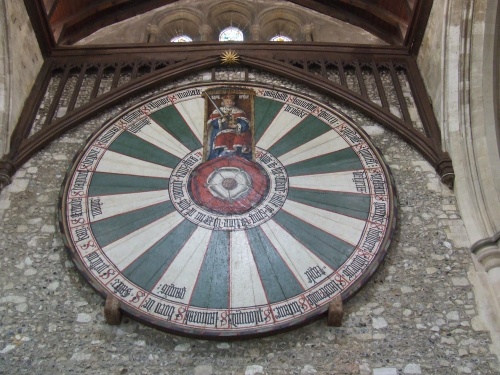
On the way back to the car we stopped of at Winchester Great Hall to see The Round Table.
Back in Basingstoke, Mark cooked a meal for us and then we settled down to wine and Scrabble – I won !

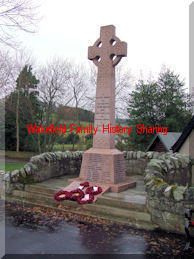
Sunday morning we packed up and set off for Odiham – Mark’s parents house, where he cooked Sunday lunch and Kim made vanilla custard tartlets.  Before our meal I was given a wonderful tour of the village including the village war memorial, the church and the pest house.  The church has a wonderful modern window with an RAF theme.  The fact is the window is no more than an illuminated box, but for a modern ‘window’ is wonderful in its simplicity.   Thank you Margaret for the tour and hospitality.

My wonderful weekend was over and it was time to head back ‘up North’ and start transcribing the new additions to my collection.

STOP PRESS – Odiham War Memorial full transcription with additional information is coming soon.

Scatcherds History of Morley

A friend of mine is selling his signed copy  Scatcherd’s History of Morley 2nd edition (1874) with monochrome plates.

He is open to any sensible offer and can be contacted  through me

If there is no interest he will put on ebay this weekend.

The original version is good to look through but if you just want to use the book for reference I have Scatcherd’s History of Morley available on a cd at the shop on Wakefield Family History Sharing

Same name, same age but oh, so different lives

Tonight is census night and whoever is in your house tonight should be on your census form.  This decades census asks different questions to those in previous times and is based more on social and cultural subjects.  Some, sorry, many family historians question the use of this census in 100 years time.  Basic information is being left out, for example it is not asking for a middle name, yet this is now we distinguish a John Smith from a John W Smith.  Where were we born, again another question that could distinguish our John Smith from the other.  But who are we to argue ?

Yesterday I was thinking, I do that sometimes, about the 1911 census and wondered if I could find two people with the same name, born in the same year with two totally differing backgrounds and lifestyles.  I chose a family from one of my war memorial transcriptions but could not find the family on the 1911 census – foiled again! So this morning with a new vigour, 2 monitors (making life easier) and using the pc not the laptop I started my quest for these two people.  Who would they be, how old would they be and what would their every day life be like.  My challenge is on and a cuppa is called for.  Cuppa by my side and here we go !

Who are these young men? What name did I decide upon? How old are they? Questions hopefully we will all find the answers too.

The name – John Radcliffe.  The year of birth – 1886 (as per 1911 census).  Place of birth, well this is where the difference really starts.

Firstly, John Douglas Henderson Radcliffe was born in 1886, the summer of 1886 to Alexander Nelson Radcliffe and his wife Isabel Grace nee Henderson, whom he had married in the late spring of 1884 in Kensington.  Alexander was a solicitor and in the 1911 census he was living with his wife, 4 children, 2 visitors (Noel Burn Rosher b1876 Consulting Engineer born in Higham and Percy Otto St Clair Wilbraham Perryman b 1886 , Asst Dist Commt Uganda born Redhill) and 7 servants (incl cook, nurse, kitchen maid and house maid + butler and footman) all residing on the night of the census at 45 Kensington Square – in total 15 people in 20 rooms.

45 Kensington Sqr

Alexander of Bag Park  was born in Paddington in 1856 and died in Widecombe, Devon in March of 1944.  His wife Isabel was born in March of 1861 in Fremantle, Australia.

John Douglas Henderson Radcliffe had been a pupil at Eton College, leaving by 1904 and going on to Balliol, Oxford where he was known for his satirical humour and sense of fairness.  He rowed in the Eight and was Captain of the Boat Club and according to sources was a first rate coach and gave up his spare time to ‘the river’, being devoted to his College – Balliol. In 1911 he was elected was a Fellow of All Souls College and delighted in the traditions and atmosphere.

After Oxford he joined his father as a solicitor but it was politics that was his goal.  In 1913 he married Mary Augusta  Garlinda Bolitho and only too shortly after The Great War broke out.   John joined the KRRC, serving as a Captain. In July of 1915 there was desperate fighting near Hooge.  John  was KIA on 30 July 1915 aged 30 when the enemy over ran the trench held by Capt., Radcliffe and his men. John  is remembered on the Menin Gate Memorial, Ypres.  John had been living with Mary at 20 Craven Street, Charing Cross and he left over £1,500 pounds to her on his death.

So ended John’s life, a life of privilege and opportunities.  A life lived in Eton, Oxford and London.  Would he, had he had the chance, been able to influence the politics post war? Who knows, but one thing is certain, he left a small piece of himself with all whom he met and was certainly fondly remembered and loved.

Now, which John Radcliffe born in the same year, well we find him in Leeds, the son of John William and his wife Mary Ann.  One of 3 surviving children out of 8, John was also born in 1886 and in 1911 living at 36 Wellclose View, Leeds.  John W was a 61 year old Organ Builder born in Bolton and his wife was also 61 and hailed from Leeds. John jnr was aged 25 and a Textile Printers Foreign Correspondent and his sister Lilian aged 31 was a Co-op Stores Cash Clerk – 4 people living in 5 rooms.

30-36 Wellclose View, Leeds. Leodis Archive

The houses around Wellclose View were terraced, more than likely on a hill.  The terrace ends, those facing the next street had bay windows and attics with full  windows making use of the roof space.  The doors were straight onto the cobbled streets  and most of the houses had usable cellars.

Did our 2nd John fight in WW1, I don’t know.  I’ve looked on SWDTGW, Medal Cards, CWGC and Army Pension records and there is not one John Radcliffe that gives a clue to him being our John.  Let’s hope if he did go to foreign shores, he at least came home to his family.

Did John marry ? There is a marriage for  John Radcliffe in Leeds in the June ¼ of 1912, could this be him ? And there are no deaths that stand out any more than others.

I think it goes to show that if you fit into any of the following categories :- The Great, The Good or The Bad you are recorded very well in historical documents.  But, if like John, and his family, you went about your business, sometimes with a little to spare at the end of the week and others the week was longer than the money, records are limited.

If anyone knows of John Radcliffe of Leeds, please let me know I’d like to know what happened to him.

Brothers, sons and dads – The Hester Disaster in 1862

A short time ago I was sent a link to a song written by a friend about a Chateau in France where we meet most years and dedicated to my husband, Ben.

This reminded me of a cd we had been given in late November 2010 and one of the tracks I found very moving, as from our house you are very close to  the mining shaft which was used in the rescue mission  of the Lofthouse Mining Disaster – one of my friends was in the team sent in just after to access the damage.  I also remembered a lady with whom I worked many years ago, her son was a miner in the Lofthouse Colliery, lucky for him he was not at work that day.  In  Woodkirk Churchyard, only a few miles away, there is a memorial to  some brothers who were killed in a mining accident in Morley.

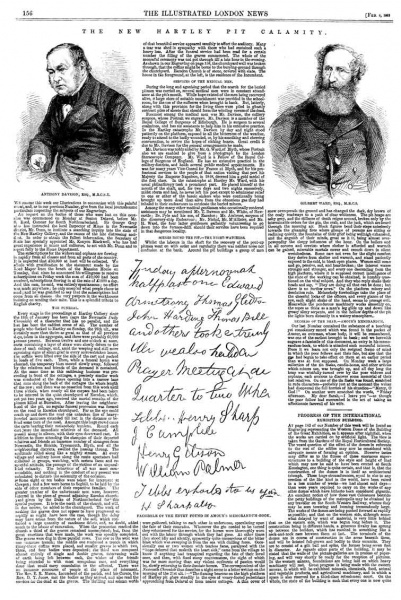
Hartley pit calamity from Illustrated London News

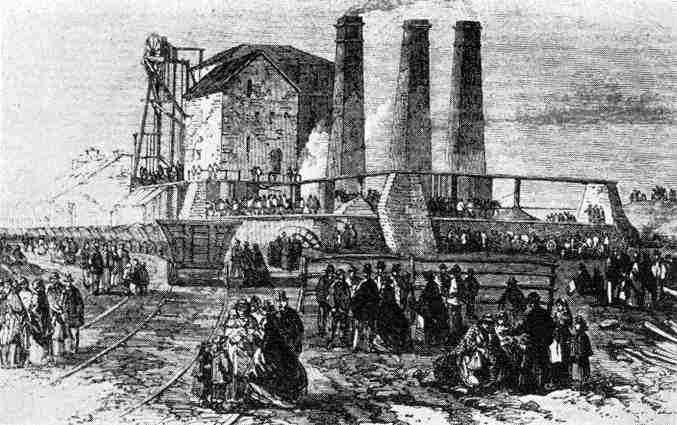
The Hester

The Hester

Anyway, The Hester Disaster of 1862 – It was a normal day, the same as many others.  The men went to their work, the women went about their tasks and the children did what children at that time did, but this day would end very different from any other day in this, the small community of New Hartley.

That day, the 16 January 1862,  the fore-shift was just coming to an end there was  over 200 men and children  down the Hester, whose only entry and exit was via a single shaft.  During the process of lowering the new shift and bringing the old shift up to daylight an engine been snapped and fell into the one and only shaft, totally blocking the men’s exit with debris.

At this news, you can only imagine how the families of the trapped miners felt on hearing the news of the tragedy.  And it would be a very long 6 days before the rescuers, lead by Mr William Coulson,  managed to dig down with the hope of rescuing some of the men and boys.  How they must have felt when they were met with 204 people who were family, friends and fellow workers, who would never know the sensation of seeing daylight again after working in the dark for so long.

One of the men down ‘The Hester’ that day was George Hindmarsh, a man in his early 30’s, married with 4 young children.  In the 1861 census George and his family were living in Colliery Row, Bedlington where he probably worked down the local pit.  By the New Year of 1862 George and his family were in New Hartley and on 16 January 1862 was George’s 1st day at work and his last.  George along with the other brothers, sons and dads was laid to rest later that month.

Listen to John Leslie’s moving composition Brothers, Sons and Dads performed by Sawdust Jacks

Other sites about ‘The Hester’  you may find interesting

Names of miners who lost their lives with names of relatives

Names and mine information can be found here

Illustrated London News transcripts for the disaster

The Hartley Pit Disaster article in Tree Magazine 1993

Local History at Lunchtime

Earlier I posted about Leeds Central Library hosting a series of lunchtime talks.  Well the good news is that they start tomorrow, the 18th of March from 1pm – 2pm and the first talks is “The Grand: An Entertaining Story” given by Catherine Callinan.

3rd Floor Meeting Room, Leeds Central Library 1pm – 2pm.  If you can manage to get there, please write a comment on this page and let us all know how it went.

Iron Bridge War Memorial

Before I start this entry for Iron Bridge War Memorial I must just mention this in the hope that some people can make arrangements to visit the event listed below :-

Heroic Spitfire Veterans to Attend 75th Anniversary Event on 5th March 2011 at the RAF Museum, Cosford – to read more click here and scroll down to Latest News. At the event will be a number of Spitfire pilots including Margaret Frost, female pilot.  Margaret being one of only 15 women and 100 men to have a Special Merit Award for their service in the ATA flying replacement fighters to RAF bases during WW2.

image K Scarth 2010

Now back to Iron Bridge Memorial, but firstly a little bit about the bridge that the war memorial stands so close to.

Abraham Darby III in the late 1770’s was an ironmaster working at Coalbrookdale and was commissioned to cast and build a bridge to cross the gorge.  The bridge was opened in 1781 and today still remains a magnificent sample of how Britain was at the forefront of pioneering the way forward.  The gorge over which the bridge spans is a UNESCO World Heritage Site, with the bridge being Grade I listed and a Scheduled Ancient Monument – now isn’t that something for Abraham and his family to be proud of ?

The War Memorial to the men of Ironbridge stands proudly within feet of the bridge and visitors walking over the bridge will pass the memorial.  The soldier atop the memorial plinth stands with his back to the gorge, at ease, resting his hands on the  his rifle as he seems to be waiting, looking for his friends from Ironbridge to come into view and come home once more.

So, who is our soldier waiting for ?  John Wlliam Adams who died of wounds ; Cecil Davies, KIA ; Frederick ; Drewball ; William Onions, KIA ; John Steventon, KIA to name a few.

To visit the rest of the young men of  Ironbridge who never came back to their gorge click here

Buchlyvie War Memorial

Buchlyvie lies between the Highlands of Scotland and its more gentler Lowlands.  In years gone by the villagers would been wary of the ‘fowk from the Highlands’ who were known to come down and steal cattle from the local pastures.

Stirling, Glasgow and Edinburgh are within easy reach, as are the Trossochs and Aberfoyle.  Many inhabitants may commute to work but there are many who stay in the village and keep the services going i.e. The Buchlyvie Inn and the Rob Roy + the cafe, B & B, garage, shop, butchers and hairdresses to name but a few.

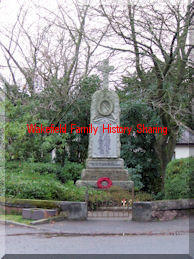
Buchlyvie War Memorial C Sklinar 2010

The War Memorial to remember  Buchlyvie men is situated on the edge of the village and sits proud in a small garden at a ‘T’ junction for all passers by to see.  The consists of a contrived rough cut stone set upon a few tiers with a wreath mounted above the names, surmounted by a cross.

So who is mentioned on the memorial ?  Robert Alexander ; Andrew McLaren (MacLaren) ; Willliam McLellan born in Huntingdon, Yorkshire and enlisted in Stirling ; Ronald J McOnie of Buchlyvie, with brown eyes and hair  and served with the Canadian Forces ; Archibald McVicar, son of Niven and Bessie and Alexander McIntyre who died of wounds and rests in one of France’s National Cemeteries.  I’ve only mentioned a few here but follow the link to read more.

Oh! and if you have any more information about these young men, please let me know and I’ll add it the the page.

To read more about Buchlyvie young men who fought and laid down their lives click here

Luss War Memorial

The village of Luss is known to many of us as it was featured in the 1980’s TV Soap ‘Take the High Road’.

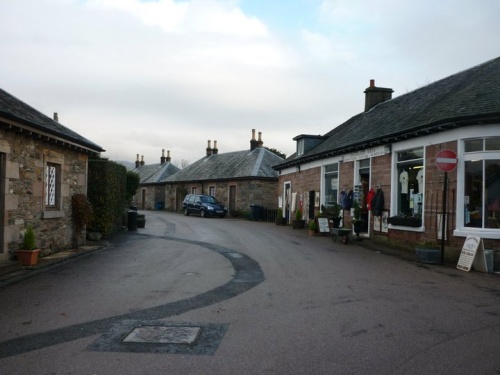
Luss 2010 by K M Sklinar

Luss, in early records was known as Clachan Dubh, the dark village due to its mountain setting.  Many of the village cottages were originally built to house workers in the cotton mill and slate quarries of the 18th and 19th centuries.  The homes have now been fully restored and Luss is  now a designated Conservation Village.

I am pleased to say that Luss is now by-passed by the A82 making the village a very nice place on the banks of Loch Lomond.

The War Memorial on School Road is set upon three tiers of stone with a simple cross bearing a sword, surrounded by a low dry stone wall.

Some of the names set in stone are :- Ludvic Colquhoun ; James Colquhoun ; Archibald McBeth and Robert T Hamilton to name just a few.

To see Luss War Memorial click here

Rhubarb, Rhubarb and more Rhubarb !!

The Wakefield Festival of Food, Drink and Rhubarb takes place on Friday 25 and Saturday 26 February 2011 – yes, this weekend.

Wakefield’s famous Yorkshire  Forced Rhubarb has now  European Protected Food Status, joining Champagne, Parma Ham, Cheshire Cheese and the Cornish Pasty

Whats happening this weekend then ?

Jean-Christophe Novelli, cooks for Wakefield Hospice – details here

Sean Wilson of Coronation Street fame – cooks in Wakefield Cathedral Precinct – more information

Wakefield Cathedral Precinct ‘foody festival’ on Friday and Saturday – entertainment, cookery demonstrations, walks and tours etc.


For a full list of places to stay, see and do during the 2 day event click here.

What are you waiting for, head into Wakefield on Friday or Saturday, but then why not both days and enjoy !!

Stow War Memorial

Stow, a village in the border region, a few miles from Galashiels.

The industrial revolution had a great impact on the area, changing the pace of life in Stow for ever.  Until the eighteenth century the area was a farming community, but the coming of the Turnpike road to the west of Gala Water in the 1750’s brought with it change and the village became industrious, mainly in the spinning and weaving sector. Following on in 1862 the railway came and made the area easier to get materials and people in and out.

The village has had a connection to the church since the 7th or 8th century with written records surviving and the Parish of Stow became one of three sactuaries in Scotland where there was safety from persicution.

The village war memorial is sited in the centre of the village and is a pleasing site with a small stone wall partially enclosing the memorial and has names of men from both wars carved upon it.

Who is mentioned on the memorial ? George Aitchison, born in Blackadder rests in Selkirk Shawfield Cemetery ; T E Thorburn Brown was mentioned in the London Gazette in 1914 and rests in Grevillers British Cemetery ; James Brydon served with the Canadians as he lived in Canada – a young man with blue eyes and brown hair ; Alexander and Archibald and Charles Chisholm, brothers who died months apart in 1915 ; James H Doig, also served with the Canadians and had gray eyes and black hair ; The Rev. J T C Ireland who died as a result of  HT ‘Transylvania’ being torpedoed  and many others who were sons, brothers, uncles and husbands.

To visit Stow War Memorial click here