Tag Archives: Army

Dunbarton War Memorial WWI & WWII

When we visited Dunbarton  a quick drive round the area only found the Dunbarton Memorial to those who died in the South African Campaign.  Well, it was an easy find as it was just outside the Town Hall, but I did have to get out of the car and do an ‘Anneka Rice’ impression before I found out it was not exactly what I was looking for, but a bonus.

After going inside the Town Hall and enquiring I eventually had directions to the memorial, but I must add the directions were not all that good!.  In the end I saidto my long suffering husband ‘just park the car and I’ll find it’ .

You would be surprised how many people use a park every day, walk past a large lump of stone with wrought iron fencing and don’t even know what it is – well, after having my website for over 12 years and doing the memorial transcriptions for about 8 or 9, I am not surprised, I am ashamed.
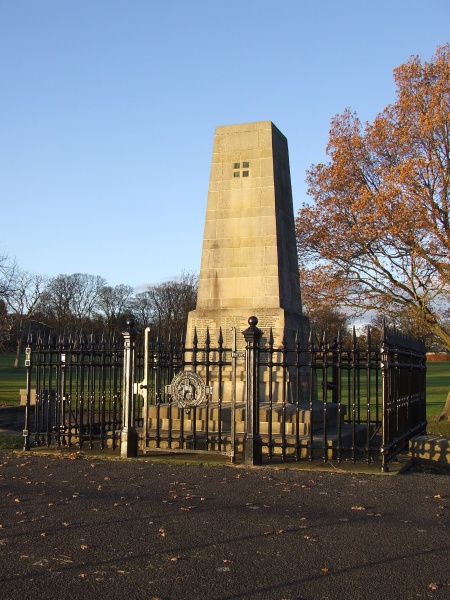
Dunbarton War Memorial by Carol Sklinar 2010

So starting with the South African Campaign Memorial, who is there ?

Peter Robert Denny, Capt., 1st Kings Dragoon Guards was killed on 24 April 1900.  Also mentioned is J M’Ghee, Pte 2101 in the Scottish Rifles.  He died at Spion Kop on 24 January 1900.   Just to name a few.

Now to the WW1 & 2 memorial.  This wonderful piece of stone stands in Lenongrove Park – close by the path that runs along the Clyde.  Although, this memorial and the South African Campaign memorial are not on my website yet, I thought I would give you a little of glimpse of what it to come……….soon!

For starters, I thought I would let you know about Pte Robert Mustarde – he served as Pte 202169.  Robert was born in Kirkintilloch and enlisted in Stirling, joining the HLI.  He is recorded as dying on 14 April 1917 at sea and is remembered on the Mikra Memorial, Greece.  Robert is more than likely 1 of over 5oo nurses, officers and men who were lost on transports and hospital ships in the Mediteranian.  Many were washed ashore, identified and buried in Thessalonika, others like Richard were not so lucky and a name on a memorial is there only memorial.

William Yuille, son of John and Catherine of 1 Beechwood Terrace, Dunbarton is also on the memorial.  He served s 43314 in the Royal Engineers.  He was born in Dunbarton, also enlisting in the town.  He was KIA on 7 December 1916 and rests in Bancourt British Cemetery near Bapaume.

Basil Withy, the son of Henry and Mary Forrest Withy of Brantford House, West Hartlepool. Henry was in the 1901 census listed as being a shipbuilder, by 1911 he is a widower and retired.  But on those census I can find no mention of Basil who was born in 1886 in Hartlepool – where was he?   Basil  served as a Lieutenant in The King’s ( Liverpool Regiment).  He Died of Wounds on 2 July 1916 and  rests in La Neuville British Cemetery, Corbie.  Henry, his father was granted Probate at Durham on 6 September with Basil’s effects adding up to £5049 15s 1d.     Note – there is an Ernest, son of Henry and Mary who is of a similar age, could this be Basil who is known to the family by a differant name……….does anyone know any different?

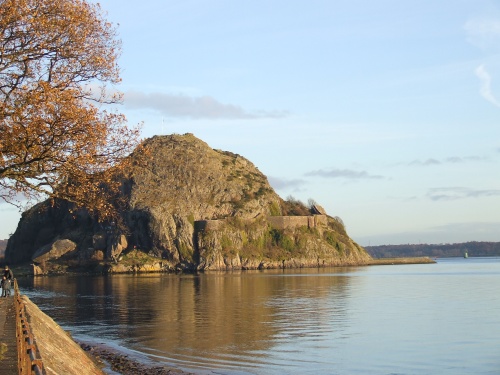
Just a few names and information to be going on with along with an image of the memorial and I could not let this posting go without leaving you with this view from just along the  path.
William Harold Ryder

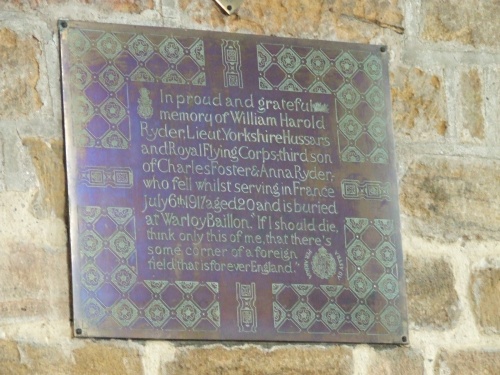
While writing a previous blog I remembered my visit to Bardsey Church a few years ago and while clicking through the pictures I took on that morning I found one, a photo of a memorial plaque.

What do we know about this young man from the plaque on the wall of the church?
He was called William Harold Ryder, the third son of Charles Foster and Anna Ryder. Now another question arises, who are they as there is also a memorial to them.

But back to William, he served during WW1 as a Lieutenant in the Royal Flying Corps and fell whilst serving in France on July 6th, 1917 aged 20 and rests in Warloy Baillon.

William’s memorial plaque C Sklinar 2007

The information on the memorial inside the church gives a good start to finding out more about William.

William, as we know, was the son of Charles Foster Ryder and his wife Anna. Anna died in 1907 and a memorial in the church informs all that Charles Foster had the church floor relaid to its original level in 1914 in memory of his wife.

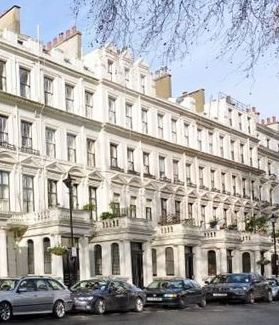
Charles F Ryder married Anna Potter on 7th February 1888 at Christ Church, Lancaster Gate. Charles was aged 32, a bachelor of Chapel Allerton and the son of Charles Ryder a brewer. While his new wife was aged 25, a spinster with no occupation living at 48 Cleveland Square, the son of William Potter (decd.), a merchant. Witness to this joyful event were Anna(?) L Ross and W Henderson.

Cleveland Sq. (source unknown)

Anna, in the census of 1881 was living with her father, William and mother Agnes (both from Manchester) at 48 Cleveland Square, where William gave his occupation as that of East India Merchant. In the household were the parents, Anna and her brother and 7 servants.

In the census of 1901 Charles F, a brewer is living on Leeds Road, Scarcroft with his children – Daniel G aged 8, Agnes L aged 6 and Wm H aged 4, Rosamund aged 2 and Marion E Harrison a visitor – Anna is not with her husband in the census. But a search for Anna born in 1863 in Little Missenden, find an Anna Ryder living as married Head of The Hall, Little Thurlow, Suffolk. With Anna is Georgina M Bryant a 25 year old trained hospital nurse and other staff – could Anna have been sickly and lived in the country for her health?

By 1911 Charles is a Brewery Director, more than likely Tetley’s Brewery, and living at The Grange, Scarcroft. On the census for The Grange is Charles F, Agnes Louisa, Rosamund Daphne and 7 servants. The Grange was a 20 roomed property with 10 persons living within its walls. William now aged 14 was a boarder at Uppingham, one of Englands Public Schools. The school seeing many people pass through its doors who have now become well known including:- 5 Victoria Cross recipients; Richard Thorp, actor ; John Suchet, journalist and broadcaster ; Phil Spencer, property expert ; C R W Nevison, Official War Artist in both World Wars ; Sir Donald Campbell ; Sir Malcolm Campbell and William Henry Pratt aka Boris Karloff to name just a few.
William served in the RFC and his medal card states that he had served in the Yorks Hussars as a Lieutenant but there is no mention of any medals awarded in his name, but his date of death is recorded in the remarks section.

William died on 6 July 1917 and Probate was granted in London on June 8th, 1918, to Charles Foster Ryder, gentleman.

Men from Wakefield in Lijssenthoek CWGC

Resting in Lijssenthoek CWGC Military Cemetery are over 35 young men from the Wakefield area.  I know there names and in which section they rest but only two I know very well – one being my great uncle Herbert Siddle.  Herbert was 1 of 13 children born to Charles Siddle and his wife Emma Mills – Emma lost 3 of her children within months of their births.

The siddle family lived in the Kirkgate area of Wakefield, with cousins living just up the hill on Warrengate, Stanley Road and in the East Moor area.

Herbert was born in  Wakefield in the year 1892 and by 1911 he was a driller at the local boiler works, living with his parents, 4 siblings, a nephew and a niece, an uncle and a boarder on Hardy Croft, Wakefield – 11 people in a 5 roomed house.  I was brought up in that house and I can’t imagine how it would have been living in a house with a dining kitchen, front room, 2 double bedrooms and an attic.  It would have been so different from when I lived there with my parents.

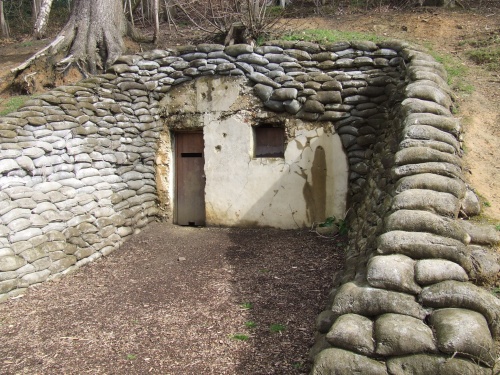
Herbert enlisted in Wakefield, joining the KOYLI and becoming Pte 242874.  He had been wounded in the Somme and sent home to recuperate before being sent back to France and Belgium.  In April of 1918 he was in a trench and was shot in the neck.  Very quickly he was taken to a Dressing Station at Kemmel before becoming one of the many who are KIA.

Kemmel Wood bunker copyright C Sklinar 2008

Mrs Siddle had 2 other sons serving in WW1, Claude served as 241166in the RFA; Edwin served as 268976 and had been in in the WRVAD Hospital – he had been awarded, along with his other service medals, the Silver War Badge which he would have worn on his lapel to show he had been injured out of service.

Coming forward many decades to the 1980’s my father and I often met and chatted with an old gentleman whom we met while shopping.  After not seeing him for many months I mentioned to dad that we’d not seen him in a while, to which I was informed that he had died.  The conversation went on about the gentleman only for it to be brought up that this man was next to or very near great uncle Herbert when he had been shot !!!  By the 80’s I’d already started the family tree and there are no words to describe how I felt at this moment – should I scream ‘Why did you not tell me?’, utter a few choice words or just throttle my dad.  The reply I got from a bemused father was ‘Well, didn’t think you’d be interested’, like hell!!

I could have throttled my dad but could give my great grandma a very big hug for she kept all the paperwork from the army, including an eye witness report from Sgt Greasby and the Red Cross along with a newspaper from the time with Herbert on the front page. The local paper tried to put a picture of the young men on the front page  when Wakefield lost a son, brother or father.

I have this about my Wakefield soldier but do you have a soldier from Wakefield or know anything about your Wakefield soldier who was KIA or DoW during WW1?  Please let me know.

Please contact me with information.

Imperial War Museum in the North

After trying to arrange a visit for a few weeks and work always getting in the way I finally got there!

Did I enjoy my visit ?  Was I disappointed ? Wait and see !

Firstly, the museum was reasonably easy to find and we only went twice around a roundabout once – I must add I was not driving and the front passenger did give good directions and in plenty of time – I say no more!

The car park was larger than I expected with enough pay machines BUT I was disappointed that people with a Blue Badge even had to ‘cough up’.  One thing I did like, but did not seem to be well advertised was a cabin, a wooden hut that gave change – a good idea.

The building seemed strange, not because it was modern and industrial but seemed lifeless, now was that a play on the subject within, I don’t know.  We entered via a large tower, at the time seemed pointless and a waste of space and money – we were peering through the slatted sides of the tower as we went in and it seemed one big void.  On entering we found it was basically a lift shaft to a viewing tower and a charge of £1.40 was made for the journey to stand over a chasm – not flippin’ likely!  Passed the lift ladies have their handbags searched, yes, for good reasons, but why only women and why only handbags?

Although the museum is free entry you are still funnelled via a ticket machine and a little persuasion is made to purchase a guide.  Ticket entry via a turnstile would be ideal, you would still get a ticket, they would still know how many people are in for fire regulations, you would not be badgered into buying a guide (unless you wanted one) and on exit you go through a similar turnstile – at the moment you are ticketed, counted on the way in, but there is no count on the way out – does not seem right when fire regulations come into it

Mini moan over, we entered the museum which is on the 1st floor.  Well, as we entered the first hall my companion and I decided the outside matched the inside – it was claustrophobic, even though the hall was very high, oppressive and depressing.  I’ve been in many military and war museums over the years and never felt this on entering.  Yes, war is a harsh subject but never have I felt this on entering a museum before, even a modern museum.

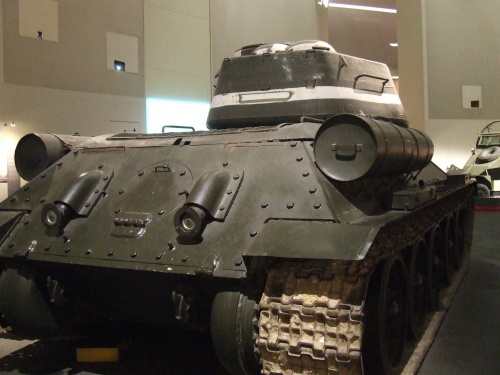
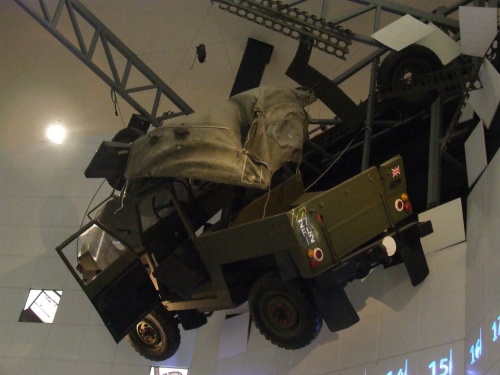
A Harrier Jump Jet was the first thing we saw, mounted in mid air – what a wonderful thing to greet you, they always seemed larger in flight.  The halls were very spacious, only the tank, a Trabbant, and other large displays on the floor – still leaving a very large amount of open floor space.  The main exhibits were in cabinets within the walls and for the amount of space there was not that many.

copyright C Sklinar 2011

The cabinets did hold some fascinating artifacts for example: – A souvenir In Loving Memory of the women and children killed in an air raid on London on June 13 1917, War Bonds and one or two cabinets dedicated to people with a definate story.  I’ll blog about those later. I was surprised that how much wall and floor space there was there did not seem a great deal of artifacts on display.  I could have spent time spelling what it was like in the trenches, what wet smelly socks smelt like or what a lot of men together for a long time with no where to wash or limited facilites also smelt like – that was one for the kids as were a lot of the displays.

While we were in the main hall a visual display started and the already dimly lit room went virtually dark apart from the illuminated images on the walls and the slide show.  If you only wanted to listen to the slide shows description, walking around without tripping over someone who was sat down or just standing around was a task.  The darkness also made reading any description in and around the displays a waste of time.  When the lights came back on it was done quite gradually.

The museums history of war started with WW1 and went up to the present, with a special display telling of the fantastic work that war correspondents do in time of conflict.  One of the displays in this section was for want of a better word a chart showing how many journalists from all over the world have had their lives taken by the very thing they wanted to tell the world about.

copyright C Sklinar 2011

Time to check out the café! Yes, it was lunchtime but the queues were reasonable apart from the picnic section and one lady with a hoard of children who could not make up their mind.  Overtaking them and going straight for the kill – coffee and cake, the prices were reasonable and the portions very good.  The pork lunch served with all the trimmings was very good value and looked fantastic.

Yes, I bought a book, again that information is in another blog, but I also bought two other items, but can’t tell you about those as they are ’stocking fillas’ for christmas.

The shop had the usual bits and bats for children and then some very nice memorabilia, gifts and some wonderful jewellery made from buttons in all shapes, sizes and colours – so unusual and very retro.  After this I, we, homed in on the WW1 books but we were both disappointed in the small display.  The sections for wars post WW1 was far better, but not really my or my companions main interest.

Would I go again to the Imperial War Museum in the North, I don’t think so; next time will venture to the original in London.

If you do wish to visit a wonderful place full of interest and packed with information, artifacts and displays that suit children, military personnel, veterans and those with an interest in all things military,  visit the Royal Armouries in Leeds.  On the various floors there are good displays from all over the world – from the UK to India and Japan , from times gone by to modern warfare and policing – go on pay it a visit.

To see information about the Imperial War Museum click here

To see information about the Royal Armouries, Leeds click here

To see information about the Royal Armouries, London click here

Queen Victoria’s youngest grandson

While reading my newest purchase – yes it has either family history or military connections I came across an entry for the following and found it quite interesting as years ago I transcribed Eton College War Memorials for no other reason than something to research and with a couple of family members who were KIA – I was hooked and as my family and friends know I can now spot a war memorial at a great distance !

So, who caught my interest this time?

Prince Maurice Victor Donald of Battenberg, was the son of Princess Beatrice and cousin to the Tsar and Kaiser.

Maurice was born in October of 1891 at Balmoral and was the first prince to be born in Scotland for nearly 300 years.

He served as a professional soldier in the KRRC – into which he was commissioned in 1910 and moved with his battalion France in August of 1914.  A few short months later there were only 10 of the original officers left.  On the 13th of October Prince Maurice was Mentioned in Despatches.  The battalion moved to near Zonnebeke and on the 27th of October, while leading his men forward he was killed by a shell burst.  During this time, his cousin, Prince Arthur of Connaught, was an ADC to Sir John French and he made every effort to attend his cousin at the dressing station – but was too late.   Kitchener suggested that he be brought ‘home’ but his family, mainly his mother, decided he should rest with his friends and his men and to this end Prince Arthur made the arrangements.

The family had a memorial service in the Chapel Royal attended by King Geore V and Queen Mary along with other members of the family, the Prime Minister and Lord Kitchener.  The Prince of Wales is reported to have said that he had found the names of many of his friends and fellow officers on casualty lists, including his cousin Prince Maurice, his equerry, Major Cadogan and two of his father’s equerries.  He is also reported to have said that he should not have a friend left soon.

The Prince’s elder brothers also fought in the war – Prince Alexander was invalided home with an injured knee and Prince Leopold, a platoon leader in the Grenadier Guards was hospitalised with a chill and he was sent home – according to some, this was not a bad thing.

Prince Maurice Victor Donald of Battenberg rests along with many others in Ypres Town CWGC Cemetery & Extension

To visit the Commonwealth War Graves Commission website click here

To visit Major and Mrs Holt’s Battlefield click here

To purchase any of Major and Mrs Holt’s Battlefield Guides visit Pen & Sword  click here

Find My Past – new additions


Over 500,000 Militia records, 1806-1915

Find My Past have  just launched Militia Service Records 1806-1915 in association with the National Archives. This collection, searchable and online for the first time, contains 580,281 soldiers’ records with 2,223,510 associated images.

These are fascinating and detailed records offering a slice of life about the men who joined the Militia (think of it as a precursor to the modern Territorial Army). Find out details of the regular jobs the men held, information about their military career and personal details including physical appearance.

I always like to add meat to bones, you know the type of thing, especially when transcribing war memorials.  These young men and sometimes women are not my relatives but do belong to someone, so I find it nice if I can imagine them – know how tall they were, what colour eyes they have and any physical marking – tattoos or scars.  Sometimes scars can be the result of a work related accident and if you know what job they did in ‘civvy street’ it all fits together.

Take for example, John Jones born in 1885 in the parish of St Johns, Batley.  He resided with his parents at 51 Chapel Street, Ancoats, Manchester.  The next question is not what we would call PC – ‘What is the Name and Residence of your present (or former) Master.  John answered Mr Cooper, grocer of Chapel St, Gt. Ancoates.  John was aged 19 years 4 months  and was single, never been married.  Never been in prison and had no children.

He had never belonged to any Force and was not receiving a pension and was willing to be vaccinated.  He acknowledged that he had recieved a Notice and did understand its meaning and was willing to be attested for the term of 6 years, providing  His Majesty should so long require his services as a Militiaman for the County of Lancashire.

John duly signed on the 23rd day of August in the year 1904.

So what did John look like.  We know he was 19 years old but now we can get an idea of his stature – he was 5’ 6″ tall, weighing 126lbs and a fully expanded chest of 35 ” – a 2″ expansion.  He had a fresh complexion, grey eyes and brown hair.  He had a scar on his left thumb and was a Roman Catholic – a hint when trying to find him in church records.

As to the names of his next of kin and his service, that’s not listed but we can now at least imagine him walking down the street in Manchester or working in Mr Cooper’s shop.

Source :-

The National Archives reference:

WO96 / 1011 / 241

Unknown Soldier

Just over  a month ago I was given a framed picture, I say picture, as it is not truly a memorial.  Anyway, this picture was for a soldier who served in the King’s Own Yorkshire Light Infantry during WW1.

KOYLI Badge

It would have been quite colourful, with its curled horn with a central white rose surrounded by a horse shoe shaped wreath containing the Battle Honours of the Regiment.

The framed picture must have been on a family wall for many years as the soldiers number, rank and name are very faint and I do mean faint.

Armed with a good source of light, magnifying glass, large cup of tea and a couple of tried and trusted websites I set off on my quest.

The first two numbers and the last few numbers were easy to read, it was the ones in the middle that were the problem.  His regiment was clear, he was  a Private.  His initial was clear, an old fashioned L, you know the one, similar to a £ sign.  His name, well, I decided on M for the first letter, with a L in the middle.  Variations of the names first few letters went on for a while, varying from Mc, Ma, Me and Mo.

As you can guess one of my favourite websites was getting well and truly used and I was certainly making my subscription work.  The eyes of a neighbour and fellow family historian were also called upon and she achieved the same as me.

One thing that we both felt certain about was that he did not die as the CWGC and SWDTGW have no match for any permutation of his army number.

The frame was put on my desk and left in view, but it was certainly not forgotten.  Where else could I look? What else could I do? He was an army man.  He may not have volunteered but he was called to Serve King and Country in some way but where? Who would know the regiment better than the Regimental Museum?  The KOYLI museum is housed within Doncaster Museum, being moved from The Barracks at Pontefract.  I ‘phoned, spoke to a nice man who told me he would get someone to call me back as the person who I needed to speak to was on his holidays.  I didn’t have to wait long and Steve rang – I gave him the numbers, rank and what I thought was his name.  He’d ring me back.

Guess what ?  He rang and came up with the same as me – no trace of our man.  He did however, suggest that I go over and take the picture to the Museum, so that he could possibly, shed light on the matter.  Believe you me, it needs a lot of light !

Today was the day I ventured to South Yorkshire, that OK as it was once part of the West Riding before all that reorganisation stuff in the 1970’s.  The Museum is a nice place with nice helpful staff,  but parking is ‘iffy’ as you need a voucher from reception to say you are in the library and you need to sign in but that’s not a problem, but the car park is smallish.

Anyway, Steve looked at the picture and went on the web.  He put various variations of the army number into websites and the numbers came up but with nothing matching the Regiment of anything that even on a good day you could say was his name.

Steve, who works for the library, changes his ‘hat’ and does work for the KOYLI Museum one day a week  and he told me that he thought ‘our man’ did serve, we know that, but that he could have served and done his duty only in the UK and therefore would not get a medal.

What have we come up with in the past weeks :-

We know who gave/lent me the picture BUT NOT from where it came

We know ‘our man’ served in the King’s Own Yorkshire Light Infantry.

We know his rank.

We know his initial

We know that WW1 service records were damaged by the enemy in WW2 and are called ‘The Burnt Records’ for that very reason.  Some were partially  burnt,  some have water damage and others were totally destroyd.

We know that he survived the war.

We seem to know quite a lot don’t we?  But the important segments still remain a mystery.

What is his true army number?

What is his name? The surname that seems to start with an ‘M’.

Who does he belong to?

I think that this picture will be picked up and put down on my more occasions before I get totally exhausted from searching.

My thanks to Steve for his time and help and the fact that he like me, will keep looking.

King’s Own Yorkshire Light Infantry Museum Collection click here

National Archives – Looking for a person incl. Military, Police, Clergy, Migrants, Wills & much, much more click here


Riach family in Yorkshire

It is another rainy Bank Holiday so have changed my plans.  I was going to go get some chuck food then do some weeding……NO, its chucking it down and not with hens.  So instead have decided to see how Riach people in the Brighouse area link in with mine from good old Morayshire.

A few minutes after my search began I came across a few people researching the same line and started to verify their work by looking at census returns, BMD entries etc.  Well, the good news is, but some would say bad news, is that yes I am related to the Brighouse Riach’s.

A couple of cuppa’s and a very large bowl of strawberries and creme fraiche later I have the family linked in to mine up to and around the second world war.

One of the men   born around 1923 triggered the old brain cells and got me thinking.  Not a pretty site I might add!  Years ago I bought a book giving the names of men and women from the Spenborough area who died in WW2 and who served in that war.  There were a few Riach names and they will need further work.

Yorkshire Trench, Boezinge. © C Sklinar 2009

There is however, a James Riach who lived in Brighouse.  So, who was James and how does he link into my tree ?  James is one of my 6th cousins.  He was born in May of 1871 in Bellie, Morayshire, the son of John Riach (1847) and Susan Goulder (1850).  John was a Police Constable in the 1881 census and by looking at the places his children were born, he seems to have come south of the border between May of 1871 and 1873 when he and his wife are having children in Fewston.  Susan according to the 1911 census wrote she had been married 41 years, given birth to 15 children and 11 of which were alive in 1911.  James had died a few years earlier so the entry had been crossed out by the enumerator.  Susan had answered the questions asked as there was no note saying that a widow/widower had no need to answer that section.  It is good to see those questions answered from a family history point of view.

Back to James, the 1911 census, the good old 1911 census has transcribed his place of birth as Forhibers, but Fochabers can be made out on the original document – it makes you wonder where the census was transcribed.  Anyway, James married Ada Louisa MacAulay in the Spring of 1894 in the Halifax Registration District.

James and Ada went on to have 3 children, Blanche, James and John.  Ada married William Sutcliffe ; James jnr married Elsie A Norcliffe and John married Doris Jackson and went to Australia after 1939.

On 24 July  1912 James signed papers to put him on the Special Reservists list for the Army.  He was found to be 5′  5″ tall with a 34 ” chest with a 2″ range of expansion. His physical development was ‘good’ and so was his vision He  gave his trade as that of Mechanic, employed by J Sharp and living at 35 Birkby St, Wilson Road, Wyke. He declared his age as 34 years.  He was given the no. 1442 and served as a Private in the West Riding Regt., Pioneer Corps being struck through and he signed his name in a good clear hand.  James on one of the forms gave details of his wife and children, his parents and siblings, including addresses for them all – what a fantastic piece of information.

James embarked from Folkestone on the SS Invicta on 14 April 1915.  By 10 July of the same he he was appointed unpaid L/Cpl and just over a month later on 15 August 1915 he was Killed In Action.

Colne Valley CWGC cemetery, Belgium from CWGC site

On the 14th of January 1916 the War Office, st James’s Park sent a memo to the Officer in charge of the Territorial Force Records, York ref: E/128920/1 (Accounts 4) requesting that the personal property in their possession belonging to No. 1442, Lance Corporal James Riach 1/4 Battalion West Riding Regiment be despatched to Mrs Ada Louisa Riach, 25 Birkly Street, Wilson Road, Wyke, Bradford.  The memo also requested that any medals in their possession now or at a later date also be despatched to Mrs Riach.

Ada L Riach was sent on 2 July 1919 a form requesting she complete and return so that the ‘Death Penny’ could be forward to her. Ada on September 25th 1919 signed a receipt for a medal, on  January 24th 1921 she signed another  receipt for medal awarded to her late husband. Ada was also eligible for a 21/- a week pension for herself and her two children with effect from 28 February 1916.

James served 3 years 52 days in the army and was awarded the 1914 – 1915 Star, The British War Medal and the Victory Medal.

L. Cpl 1442, Riach J, of the West Riding Regiment rests in peace with 47 Officers and Men in  Colne Valley Cemetery – 30 of those men are from the West Riding Regiment.

Colne Valley Cemetery is at Beozinge, just north of Ieper on the N369 towards Diksmuide.  For most of WW1 Beozinge faced the German front line.  The cemetery was begun in July/August of 1915 and was in use until around February of the following year.

Note:- Ada remained in the Bradford area and died in the June Qtr of 1958 aged 86.

Further information later came to light so you might want to visit this later blog

The War Memorial on the Green at Reeth

In May of 2008 we spent a day in North Yorkshire – I think I’d said something like, ‘do you fancy a day out on Sunday?’.  ‘Where?’ Would have been the answer and my reply would have been that I didn’t mind.  Ben, by now would have known the places I’d been and would certainly have known there would have been a war memorial or 10 involved, with the odd churchyard thrown in for very good measure.  It was a nice day but I seem to remember a little windy in Reeth.

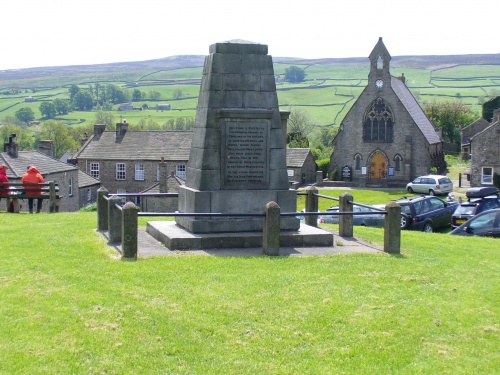
The War Memorial, The Green, Reeth, © C Sklinar 2008

The Green in Reeth is a very large open piece of ground in the centre of the village surrounded by houses and a few shops.  The War Memorial sits proud, high on The Green, protected by small posts and a rail.  Although the structure is large, it is simple in design and bears the names of 28 men from the Grinton, Reeth and Marrick areas.

The memorial seemed very much similar to others I’ve transcribed over the years – young men who were sons, brothers and husbands but each with a simple story to tell, until…….. It came to sort out the WW2 section.  The first name of the memorial is that of Major A K Charlesworth.  I found him on the CWGC and that gave me his full name, I then went onto look at the Army Roll of Honour 1939 – 1945 and confirmed information.

But when I googled him – he had a rank and a medal, so I thought there could be a little bit more about him on the great www. Yes, there was ! A connection to Wakefield. Albany Kennett had lived at Grinton Lodge and this had been purchased with its kennels and outbuildings by Col. Albany Hawke Charlesworth, born in Stanley, Wakefield,  who had been MP for Wakefield in the mid 1890’s, having purchased the hall in the 1880’s and becoming Lord of the Manor having purchased the rights from the Crown, using Grinton Lodge for shooting.

The census of 1891 has Albany Hawke with his family living at Chapelthorpe Hall, Wakefield.  He states he is  a ‘West Riding of York Colliery Proprietor’, born Chapelthorpe, West Riding of York – the transcription of that census is not correct. The family consists of Albany H aged 37, his wife Eleanor aged 24 and daughter Eleanor aged 21 months snf 15 servants including :- Housekeeper; Ladies maid; Housemaid; Laundress; Dairymaid; Grooms; Footmen, to name a few.

The census of 1901 has the family living in Portman Square, London with Albany Hawke living ‘on his own means’ with his family and 14 servants, including :- Governess x 2 ;  Housekeeper; Hospital Nurse; House and Kitchen Maids and Footman to name a few.  The nurse would have been for Albany Hawke as he had been injured in a hunting accident.  He had Grinton Lodge adapted to take his wheelchair.

Ten years late in 1911, we have Albany Hawke with his wife and two daughter living at Brockhurst, W Didsbury and a  mis-transcribed entry for places of birth.  A H is a Colliery Owner / Director and his wife is listed under occupation as Christian Science Practitioner, with two other people in the household giving their occupation as Christian Science Teacher or Practioner, aswell, as the usual amount of servants.

Albany Kennett, seems to be missing from the 1911 census or has been mis-transcribed and needs a little more time to find him.

Also mentioned on the WW1 section is Stanley H Moore.  Stanley Harding Moore had been born in 1898 in Reeth and in 1911 his father was  recorded as being Head Teacher of the Friends School, Reeth.

Tom Was, was the son of John Thomas Ward and Louise Alice.  Tom was 1 of 7 children and in 1911 was a Student Teacher – could he have been working under Mr Moore at the Friends School?  Tom’s father John Thomas Ward was noted as being the Registrar for BMD’s and a Mine Manager.

If you can help with further information or a photograph, please let me know.

To see Reeth War Memorial click here

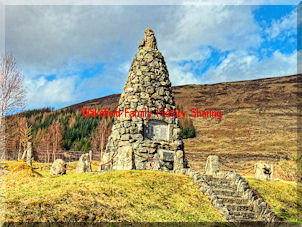
Glen Lyon War Memorial

A short while ago a friend sent me his pictures of Glen Lyon War Memorial.  He like many others, know I collect and transcribe them, and he kindly sent me a couple of pics taken on his adventures.

image by J Hall 2011

I can’t say what a beautiful place it is, as I don’t know, but from the picture it certainly looks a pleasant place and with the sun shining and a blue sky, even a cold day would be a pleasant day in Glen Lyon.  The glen is approx. 20 miles in length and stretches from Fortingall to Cashlie and from all accounts well worth a visit.

Who is mentioned on this very special memorial, special, you will see why shortly.  Firstly, and only because his name appears first on the memorial (all names are in rank order)  is Lieutenant Colonel John Robert Beech CMG, DSO who died in Lincolnshire while in command of his troops. Next on the list is Clyde, actually, Robert Clyde Beech, the 20 year old son of John Robert. Next comes Alan Tompson, a relative by marriage of John Robert’s wife, who was the widow of John Bullough or Meggernie Castle. Also on the memorial is Francis Cowie who was before the war was an asistant factor at the castle.  So all in all, the family from ‘the big house’ didn’t fair well from the war.

The last name I am mentioning in this ‘snippet’ is that of John Alexander McCallum of Camusvrachan, KIA in October of 1918 aged 23.  It was his father Alexander, who designed and built the Glen Lyon War Memorial.  What greater gift could a father give to his son, a splendid memorial built at the side of the road that all who pass by will see and hopefully more will now know of the great love and sadness with which it was built.

Where can you read about Alexander and his son and others from the area Click Here