Category Archives: News

Find My Past – new additions


Over 500,000 Militia records, 1806-1915

Find My Past have  just launched Militia Service Records 1806-1915 in association with the National Archives. This collection, searchable and online for the first time, contains 580,281 soldiers’ records with 2,223,510 associated images.

These are fascinating and detailed records offering a slice of life about the men who joined the Militia (think of it as a precursor to the modern Territorial Army). Find out details of the regular jobs the men held, information about their military career and personal details including physical appearance.

I always like to add meat to bones, you know the type of thing, especially when transcribing war memorials.  These young men and sometimes women are not my relatives but do belong to someone, so I find it nice if I can imagine them – know how tall they were, what colour eyes they have and any physical marking – tattoos or scars.  Sometimes scars can be the result of a work related accident and if you know what job they did in ‘civvy street’ it all fits together.

Take for example, John Jones born in 1885 in the parish of St Johns, Batley.  He resided with his parents at 51 Chapel Street, Ancoats, Manchester.  The next question is not what we would call PC – ‘What is the Name and Residence of your present (or former) Master.  John answered Mr Cooper, grocer of Chapel St, Gt. Ancoates.  John was aged 19 years 4 months  and was single, never been married.  Never been in prison and had no children.

He had never belonged to any Force and was not receiving a pension and was willing to be vaccinated.  He acknowledged that he had recieved a Notice and did understand its meaning and was willing to be attested for the term of 6 years, providing  His Majesty should so long require his services as a Militiaman for the County of Lancashire.

John duly signed on the 23rd day of August in the year 1904.

So what did John look like.  We know he was 19 years old but now we can get an idea of his stature – he was 5’ 6″ tall, weighing 126lbs and a fully expanded chest of 35 ” – a 2″ expansion.  He had a fresh complexion, grey eyes and brown hair.  He had a scar on his left thumb and was a Roman Catholic – a hint when trying to find him in church records.

As to the names of his next of kin and his service, that’s not listed but we can now at least imagine him walking down the street in Manchester or working in Mr Cooper’s shop.

Source :-

The National Archives reference:

WO96 / 1011 / 241

My day as a ‘Tour Guide’

It seems to have been a busy old week, with going to the KOYLI Museum on Tuesday looking for information on a WW1 soldier, work all day on Wednesday and Thursday, now that was very different but very enjoyable.

A friend of mine has been expanding his business (SeeYourPast) and I was asked if I would be a guide for a lady from Australia who wished to See Her Past.  The lady who I will call B communicated via emails to the SeeYourPast office where she was under the care of James.  At the early stages I was not involved, initially knowing only a name, Annie Eccles and an area – not a lot to go on, really! Without a little more information I could be barking up the wrong tree (sorry!!).But as emails  scurried through the air, we found out a bit more and an email giving a link to Prophet Wroe started the ball rolling.  As an name and an area was not a lot to base a days tour on.
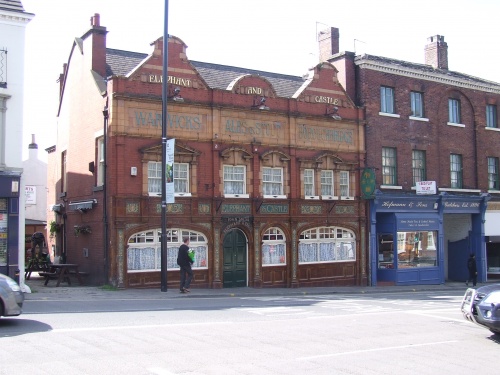
Elephant & Castle © Carol Sklinar 2011

Now I had a bit more information I could look on the census and see where that would lead.  I started with the 1901 census as B had said that her husband family had been in Australia around 1905.  So, 1901 what did you have to tell us ? Well, Annie was there on the census and the connection to Prophet Wroe was loud and clear.  Annie was living in Melbourne House, the Temple based on the design of Melbourne Town Hall and the place where the Messiah could dwell, according to the Christian Isrealites.  There were only 2 people recorded as living in Melbourne House, the Head being Mary J Frazer, a widow aged 70, born in Ireland and classed as a General Servant (Domestic).  Annie was classed as a neice, single and aged 30, again born in ireland and again a General Servant (Domestic).

As I went back to 1891 I found that Mary Frazer had been there as the Head of the House, but there were still only 2 people in a quite large Melbourne House. But Annie in 1891 was described not as a niece but as a Servant.  It seems obvious that Mary was basically responsible for keeping the house clean, tidy and ready for visitors, while she and Annie were supposed to keep to the ‘back stairs’.

Back a further 10 years to 1881 and I was able to find the parents of Annie (B had not been able to find them).  The family consisted of Thomas, a gardener,  aged 45 from Co. Tyrone, his wife Elizabeth aged 49 from Armagh and their children, Thomas, a gardener,  aged 21 and Annie, a scholar, aged 13 both born in Armagh.  There is also a James Eccles, a shoemaker, aged 55 , born in Armagh – all living on Wilson Hill.

I now had the information to set out a days excursion for B and myself.  B new about the Underwood side so I concentrated on the Eccles who stayed behind in England and their extended lines.

Where did we go ?  I had arranged to meet B at Westgate Station and from there go for a coffee when I planned to give her an introduction to the places where we were to visit and who was connected to those places.  This did not really go to plan.  I’d spoken to someone in the The Green Room Cafe, in the Theatre Royal who told me it was open from 8am – brilliant, I thought a place to go for coffee and also include a bit of information about the Theatre.  No, what do they say about well laid plans………..as I walked passed from the car park………it was shut !!  I was not happy and although Wakefield Westgate Station did a very nice cup of coffee, the atmosphere was not the same.

While sat with out coffee I’d shown B some census extracts, Parish Register entries and a family tree I’d compiled for her.  Even after a few minutes we had found that we had so much in common.  I had been a little unsure while I sat with an A4 sheet of paper with her name in big, bold letters, but that all fell away when we started to chat over coffee.

After coffee we started back to the car park and walked  as short way up Westgate where I told her about the Elephant and Castle, The Orangery, The Westgate Run and the cattle market, woolstaplers and the large banks.

First stop was Wilson Hill.  As it happened we parked next to a rhubarb field and it seemed an opportunity to mention The Rhubarb Triangle, B was delighted by the view and the connection to rhubarb as her husbands family had always been rhubarb fans but she had never seen it grown commercially before.  Further up the hill and to the left is Melbourne House, as we know the home of Prophet Wroe, later an old folks home and now a part of a telecommunications company.  We stopped outside and took piccies, walked down to the farm buildings, the granary and other out buildings now private housing and saw 3 of the 4 gatehouses.  Just across the road we paid a flying visit to Carr Gate and the Lawns, then up the road to East Ardsley – Grand View actually.  Although Grand View is no longer there you can see the properties next door and across the road.  B walked up the road and was in awe of Old Hall which dates back to around 1622. The hall is now divided into 3 dwellings.  There were 2 fantastic and very large fire places in the end rooms with a staircase going from one side to the other – linking the two end rooms.  There was also a bedroom, panelled in oak(?) and again a large carved fire place.  I went in years ago and remember the floors upstairs sloped, making walking across the room a strange experience.

While in East Ardsley I took B to see one of the Forcing Sheds and explained the ‘forcing’ process.
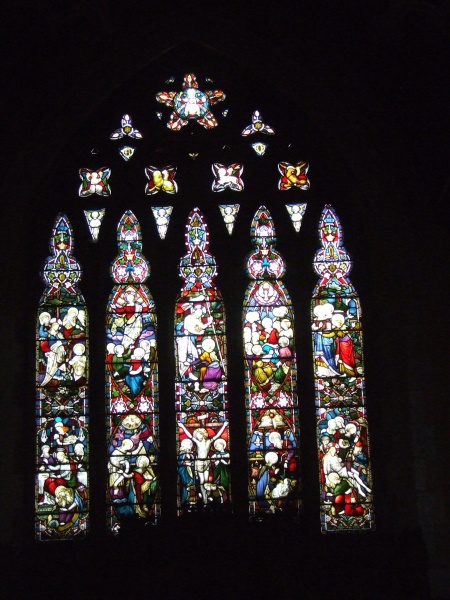
St Mary Magdalene, Outwood © Carol Sklinar 2011

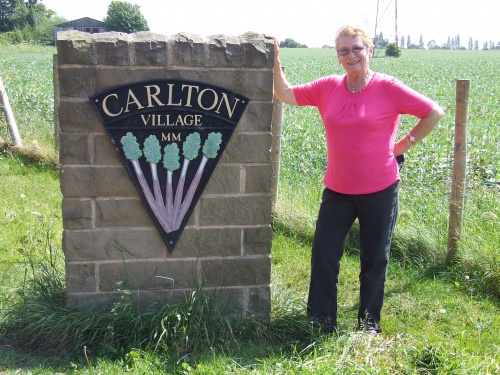
Our next stop was St Mary Magdalenes Church, Outwood where Thomas jnr (Annie’s brother) married Ada Hemingway.  The church was open on Thursday as it was Ascension Day and we were able to walk around at out leisure.  I was on the look out for war memorials and found 2 – the memorial to both wars with names only and a private memorial to the right of the door.  Lunch, where to go ?  I suggested The Rhubarb Triangle, keeping up the theme, so we headed there.  While waiting for lunch B and I chatted about our families and then it was time to head off again, this time to Carlton, Rothwell where some of her family lived and more rhubarb fields.  It was here that I confessed to B that I had lied to her during the morning and had a surprise for her but she would have to wait a little.
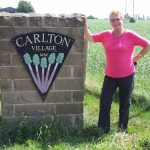
Carlton village boundary and B © Carol Sklinar 2011

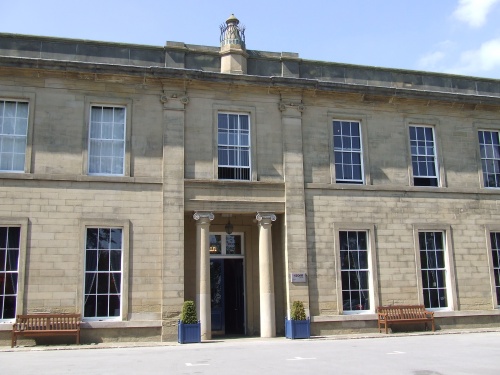
Time was pressing and we headed back through East Ardsley, over the motorway and headed for Wakefield on the ‘old road’ but I turned off towards Brandy Carr and turned into the drive of Melbourne House as I had arranged for B to go inside and see where Annie lived and worked. Even though Melbourne House is a working building and is used every day as a venue for meetings, the building is wonderful.  I had seen pictures of the mahogany and ebony  staircase and clock and read about the building in a book by Kate Taylor and John Goodchild, but the black and white picture did not do the entrance hall and staircase any favours.  I thought the stairs would lead up from the front entrance but I was shocked to see them go at 90º.  If we had been able to use the side entrance, now that would have given me the staircase view I had imagined… never mind! The lady who is responsible for the building came to meet us and we told her of Annie and how she was entered in the census of 1891 and 1901 and of Mrs Mary Frazer.  We were taken from room to room, up the stairs and passed the clock that is an integral part of the stairs and into more rooms.  Back down the stairs we then ventured into the cellar, this would have been very familiar to Mary and Annie.  There was a corridor with two rooms remaining, both with vaulted ceilings and mullioned windows, now minus glass, looking onto the hall.  One of the rooms still had a large stone slab, which would at one time have kept all the fresh food cool.  Back upstairs we went into the visitors room and had a coffee –  a wonderful room to the left of the front entrance.  Time was now getting on so we said our thanks and goodbyes and after a few photo’s outside the hall we set off to Wakefield and park the car again as B had said she would like to walk up Westgate and see the buildings I’d told her about earlier in the day.
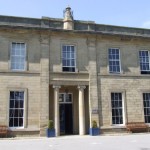
Melbourne House © Carol Sklinar 2011

It was now nearly time to say goodbye.  But I had to make a phone call to James of SeeYourPast as B wanted to thank him for all the help and pointers he had given her over the past few months.  Her train was by now pulling into the station, so I said goodbye and wished her a fantastic trip across Europe and said that I would post her all the hard copies of the information.

All in all – Hot and sunny day + good company = very good day.

I did leave B with one question to solve – Absalom and Annie crossed to Australia in 1905 and crossing with them was a child aged 1 years called Rachael .  B had believed her to be the daughter of Absalom and his first wife, but Absalom and Annie had married in the September ¼ of 1904 and arrived in Australia in on 10th April 1905 after a 90 day voyage.  So, just who did Rachael belong to?

A very big thank you to the staff of Melbourne House – THANK YOU !

For those of you who may link to Annie Eccles and her husband Absalom Underwood here are a few local names that connect :-  Bedford ; Cobb ; Hemingway ; Wood and Frost.

To become a guide for SeeYourPast or make enquiries about a guided tour click here

Unknown Soldier

Just over  a month ago I was given a framed picture, I say picture, as it is not truly a memorial.  Anyway, this picture was for a soldier who served in the King’s Own Yorkshire Light Infantry during WW1.

KOYLI Badge

It would have been quite colourful, with its curled horn with a central white rose surrounded by a horse shoe shaped wreath containing the Battle Honours of the Regiment.

The framed picture must have been on a family wall for many years as the soldiers number, rank and name are very faint and I do mean faint.

Armed with a good source of light, magnifying glass, large cup of tea and a couple of tried and trusted websites I set off on my quest.

The first two numbers and the last few numbers were easy to read, it was the ones in the middle that were the problem.  His regiment was clear, he was  a Private.  His initial was clear, an old fashioned L, you know the one, similar to a £ sign.  His name, well, I decided on M for the first letter, with a L in the middle.  Variations of the names first few letters went on for a while, varying from Mc, Ma, Me and Mo.

As you can guess one of my favourite websites was getting well and truly used and I was certainly making my subscription work.  The eyes of a neighbour and fellow family historian were also called upon and she achieved the same as me.

One thing that we both felt certain about was that he did not die as the CWGC and SWDTGW have no match for any permutation of his army number.

The frame was put on my desk and left in view, but it was certainly not forgotten.  Where else could I look? What else could I do? He was an army man.  He may not have volunteered but he was called to Serve King and Country in some way but where? Who would know the regiment better than the Regimental Museum?  The KOYLI museum is housed within Doncaster Museum, being moved from The Barracks at Pontefract.  I ‘phoned, spoke to a nice man who told me he would get someone to call me back as the person who I needed to speak to was on his holidays.  I didn’t have to wait long and Steve rang – I gave him the numbers, rank and what I thought was his name.  He’d ring me back.

Guess what ?  He rang and came up with the same as me – no trace of our man.  He did however, suggest that I go over and take the picture to the Museum, so that he could possibly, shed light on the matter.  Believe you me, it needs a lot of light !

Today was the day I ventured to South Yorkshire, that OK as it was once part of the West Riding before all that reorganisation stuff in the 1970’s.  The Museum is a nice place with nice helpful staff,  but parking is ‘iffy’ as you need a voucher from reception to say you are in the library and you need to sign in but that’s not a problem, but the car park is smallish.

Anyway, Steve looked at the picture and went on the web.  He put various variations of the army number into websites and the numbers came up but with nothing matching the Regiment of anything that even on a good day you could say was his name.

Steve, who works for the library, changes his ‘hat’ and does work for the KOYLI Museum one day a week  and he told me that he thought ‘our man’ did serve, we know that, but that he could have served and done his duty only in the UK and therefore would not get a medal.

What have we come up with in the past weeks :-

We know who gave/lent me the picture BUT NOT from where it came

We know ‘our man’ served in the King’s Own Yorkshire Light Infantry.

We know his rank.

We know his initial

We know that WW1 service records were damaged by the enemy in WW2 and are called ‘The Burnt Records’ for that very reason.  Some were partially  burnt,  some have water damage and others were totally destroyd.

We know that he survived the war.

We seem to know quite a lot don’t we?  But the important segments still remain a mystery.

What is his true army number?

What is his name? The surname that seems to start with an ‘M’.

Who does he belong to?

I think that this picture will be picked up and put down on my more occasions before I get totally exhausted from searching.

My thanks to Steve for his time and help and the fact that he like me, will keep looking.

King’s Own Yorkshire Light Infantry Museum Collection click here

National Archives – Looking for a person incl. Military, Police, Clergy, Migrants, Wills & much, much more click here


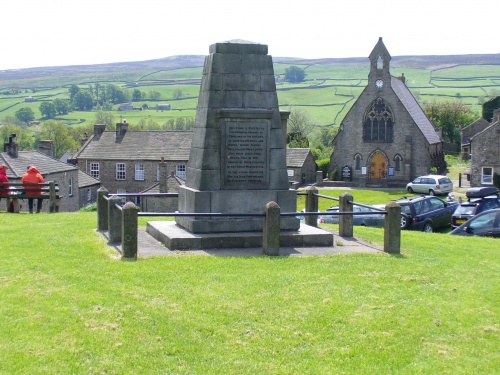
The War Memorial on the Green at Reeth

In May of 2008 we spent a day in North Yorkshire – I think I’d said something like, ‘do you fancy a day out on Sunday?’.  ‘Where?’ Would have been the answer and my reply would have been that I didn’t mind.  Ben, by now would have known the places I’d been and would certainly have known there would have been a war memorial or 10 involved, with the odd churchyard thrown in for very good measure.  It was a nice day but I seem to remember a little windy in Reeth.

The War Memorial, The Green, Reeth, © C Sklinar 2008

The Green in Reeth is a very large open piece of ground in the centre of the village surrounded by houses and a few shops.  The War Memorial sits proud, high on The Green, protected by small posts and a rail.  Although the structure is large, it is simple in design and bears the names of 28 men from the Grinton, Reeth and Marrick areas.

The memorial seemed very much similar to others I’ve transcribed over the years – young men who were sons, brothers and husbands but each with a simple story to tell, until…….. It came to sort out the WW2 section.  The first name of the memorial is that of Major A K Charlesworth.  I found him on the CWGC and that gave me his full name, I then went onto look at the Army Roll of Honour 1939 – 1945 and confirmed information.

But when I googled him – he had a rank and a medal, so I thought there could be a little bit more about him on the great www. Yes, there was ! A connection to Wakefield. Albany Kennett had lived at Grinton Lodge and this had been purchased with its kennels and outbuildings by Col. Albany Hawke Charlesworth, born in Stanley, Wakefield,  who had been MP for Wakefield in the mid 1890’s, having purchased the hall in the 1880’s and becoming Lord of the Manor having purchased the rights from the Crown, using Grinton Lodge for shooting.

The census of 1891 has Albany Hawke with his family living at Chapelthorpe Hall, Wakefield.  He states he is  a ‘West Riding of York Colliery Proprietor’, born Chapelthorpe, West Riding of York – the transcription of that census is not correct. The family consists of Albany H aged 37, his wife Eleanor aged 24 and daughter Eleanor aged 21 months snf 15 servants including :- Housekeeper; Ladies maid; Housemaid; Laundress; Dairymaid; Grooms; Footmen, to name a few.

The census of 1901 has the family living in Portman Square, London with Albany Hawke living ‘on his own means’ with his family and 14 servants, including :- Governess x 2 ;  Housekeeper; Hospital Nurse; House and Kitchen Maids and Footman to name a few.  The nurse would have been for Albany Hawke as he had been injured in a hunting accident.  He had Grinton Lodge adapted to take his wheelchair.

Ten years late in 1911, we have Albany Hawke with his wife and two daughter living at Brockhurst, W Didsbury and a  mis-transcribed entry for places of birth.  A H is a Colliery Owner / Director and his wife is listed under occupation as Christian Science Practitioner, with two other people in the household giving their occupation as Christian Science Teacher or Practioner, aswell, as the usual amount of servants.

Albany Kennett, seems to be missing from the 1911 census or has been mis-transcribed and needs a little more time to find him.

Also mentioned on the WW1 section is Stanley H Moore.  Stanley Harding Moore had been born in 1898 in Reeth and in 1911 his father was  recorded as being Head Teacher of the Friends School, Reeth.

Tom Was, was the son of John Thomas Ward and Louise Alice.  Tom was 1 of 7 children and in 1911 was a Student Teacher – could he have been working under Mr Moore at the Friends School?  Tom’s father John Thomas Ward was noted as being the Registrar for BMD’s and a Mine Manager.

If you can help with further information or a photograph, please let me know.

To see Reeth War Memorial click here

Local History Lunch Time Talks

Leeds City Council, as I have mentioned before, are hosting a series of lunch time talks and the next in the series is :-

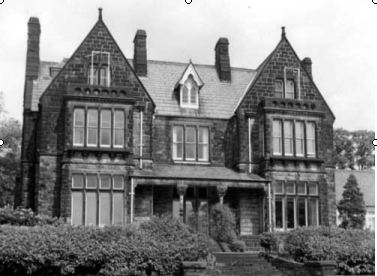
Adel Grange, home of Isabella Ford. Image from Leodis.net

Janet Douglas giving a talk entitled

‘Isabella Ford: Trade Unionist, Suffragist and Socialist’ on
Friday 3rd June, 1.00 – 2.00pm
in the Central Library, third floor meeting room.

All are welcome, no booking required.  **

For more information contact 0113 247 8290 or
localstudies@leedslearning.net

** space limited to 50

See Your Past newsletter

Just received this newsletter and thought some of you may be interested.

Carol

syp banner 2
See Your Past
23 May 2011
OBAMA IS SEEING HIS PAST – NOW SO CAN YOU
When you are the President of the United States of America and you want to see where your ancestors lived they paint the whole town and roll out the red carpet for you.

We can’t promise quite the same reception awaits you but we can take you back to exactly where your ancestors lived and died. We have a dedicated network of Tour Guides in the United Kingdom and Ireland who will create a wonderful tour of all the places you have found as you have researched your family history.

They can show you everything that remains of your family’s past and combine this with places and sights which would have been familiar in their time. For every client the tour is unique. They may find a house is still standing, or a school, the family church, a factory or the local squire’s farm. Who knows?

This year we have taken people to bog houses and Elizabethan country mansions, courthouses and mills, churchyards and taverns and told clients of the area’s history from 9th century inter-tribal battles to 19th century Luddite Revolts. What is in your past?

If you want to see your past take a look at our website www.seeyourpast.co.uk and see the full range of services we offer, and then when you start planning your visit to find your ancestors tell us where you want to go and when and we will begin to arrange a once-in-lifetime tour you will never forget.

David Moody
See Your Past

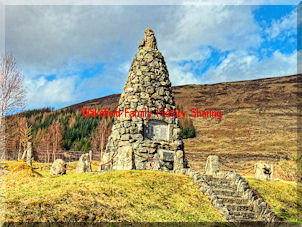
Glen Lyon War Memorial

A short while ago a friend sent me his pictures of Glen Lyon War Memorial.  He like many others, know I collect and transcribe them, and he kindly sent me a couple of pics taken on his adventures.

image by J Hall 2011

I can’t say what a beautiful place it is, as I don’t know, but from the picture it certainly looks a pleasant place and with the sun shining and a blue sky, even a cold day would be a pleasant day in Glen Lyon.  The glen is approx. 20 miles in length and stretches from Fortingall to Cashlie and from all accounts well worth a visit.

Who is mentioned on this very special memorial, special, you will see why shortly.  Firstly, and only because his name appears first on the memorial (all names are in rank order)  is Lieutenant Colonel John Robert Beech CMG, DSO who died in Lincolnshire while in command of his troops. Next on the list is Clyde, actually, Robert Clyde Beech, the 20 year old son of John Robert. Next comes Alan Tompson, a relative by marriage of John Robert’s wife, who was the widow of John Bullough or Meggernie Castle. Also on the memorial is Francis Cowie who was before the war was an asistant factor at the castle.  So all in all, the family from ‘the big house’ didn’t fair well from the war.

The last name I am mentioning in this ‘snippet’ is that of John Alexander McCallum of Camusvrachan, KIA in October of 1918 aged 23.  It was his father Alexander, who designed and built the Glen Lyon War Memorial.  What greater gift could a father give to his son, a splendid memorial built at the side of the road that all who pass by will see and hopefully more will now know of the great love and sadness with which it was built.

Where can you read about Alexander and his son and others from the area Click Here

Morleyfhg Speaker 3 May 2011

As secretary and speaker secretary for Morley FHG I Thought you might be interested in our speaker this Wednesday.

Image from Wikimedia Commons

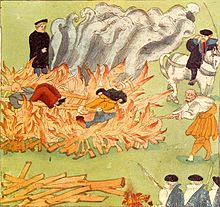
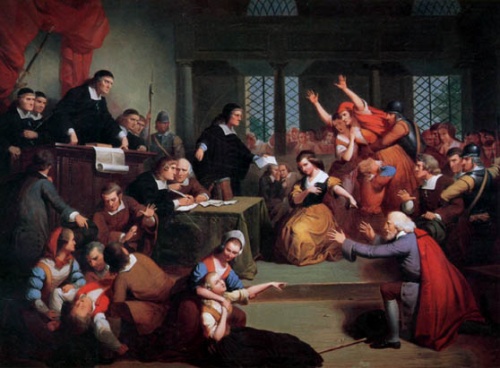
Roy Stockdill, genealogical researcher, writer & lecturer will be enlightening our group with the tales of Mary Bateman, the Yorkshire Witch. Roy, is well known in family history and genealogical circles and always gives very informative and interesting talks.

Image from Wikepedia Commons

Image from Wikepedia Commons

Just to remind you Morleyfhg meet on the 1st Wednesday of the month in the Baker Room, under Morley Library. We open at 7pm for a 7.30 start, the group pride themselves on always being very helpful and informative to both members and guests. Tea & Coffee is available after the speaker. Members entry is free but we ask guests to pay £1.

Look forward to seeing you.

Library Week

The Gale Library in America – an American online library is FREE from the 10-24 April.  I like that as it’s not every day you get something for nothing.

So what can you see for FREE ?

1. Gale NewsVault — The definitive cross-searching experience for exploring Gale’s historical newspaper and periodical collections — with access to more than 10 million digitized pages.

2. Slavery and Anti-Slavery: A Transnational Archive — The largest, most ambitious collection devoted to the study of slavery. In its entirety, it will consist of more than 5 million cross-searchable pages. Part I: Debates over Slavery & Abolition available now.

Included in the above two links are the following :-

19th Century British Library Newspapers & Periodicals

19th Century UK Periodicals: Empire

Financial Times Historical Archive

Illustrated London News Historical Archive & Times Literary Supplement Historical Archive

So what are you waiting for ?  Get on the website and add ‘meat to the bones’ of those relatives on your family tree.

Link to main page of Gale Library

Weekend in Basingstoke

The other weekend I went to visit my daughter in Ealing.  After a trouble free drive down I  arrived in Ealing and met Kim.  She had arranged for us to visit one of her friends who has just had a baby, she’s gorgeous by the way – the baby not the friend and whats even better, only a short walk away, but we  did divert to Pitshanger.  Pitshanger although minutes from Hanger Lane has a village/small town feel about it.  One of the best things is a charity shop and Kim seemed to gravitate towards it, which is good as she has a special fundraising programme for this year.  Inside was the most fantastic 196o’s style coat, bright yellow and black with circle pockets and very reasonable – an early Easter pressie and looks wonderful on.

Anyway, after a visit to the new mum, dad and little one we walked into Ealing, Kim gathered her bags and off we set for Basingstoke.  The motorway should have been reasonably quiet by that time but no, there had been a few accidents and there were miles of ‘rubber neckers’.  We arrived, parked the car outside Kim’s boyfriends house and did none other than went to the pub – drink and food in that order.

Saturday we had a wonderful walk around Winchester, had lunch in Raymond Blanc’s on the Broadway, Winchester and then spent a wonderful time in the Cathedral.  Now that was eventful! There must have been a concert on very soon as there was a full orchestra and choir having a rehersal and the sound found every corner of that magnificent building.  And the sun shone through all of the glorious windows making wonderful shadows across the stone floors.

Well, I take it you know me by now and you have guessed there were war memorials galore – even Kim and Mark found some wonderful things to immortalise on a ‘chip’.

I think the cherry on the cake was a war memorial to one of my distant relatives – Guy Victor Baring, closely followed by a memorial to a young man who attended Eton College. It was transcribing Eton College that started my collection of memorials and look where that has got me !!

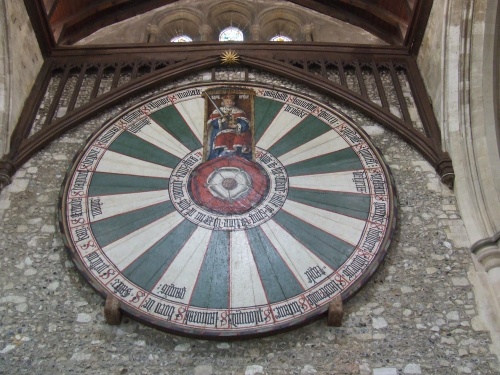
On the way back to the car we stopped of at Winchester Great Hall to see The Round Table.

Back in Basingstoke, Mark cooked a meal for us and then we settled down to wine and Scrabble – I won !

Sunday morning we packed up and set off for Odiham – Mark’s parents house, where he cooked Sunday lunch and Kim made vanilla custard tartlets.  Before our meal I was given a wonderful tour of the village including the village war memorial, the church and the pest house.  The church has a wonderful modern window with an RAF theme.  The fact is the window is no more than an illuminated box, but for a modern ‘window’ is wonderful in its simplicity.   Thank you Margaret for the tour and hospitality.

My wonderful weekend was over and it was time to head back ‘up North’ and start transcribing the new additions to my collection.

STOP PRESS – Odiham War Memorial full transcription with additional information is coming soon.