Category Archives: General

Mail Online – Did your ancestors own slaves?

The Mail Online has an article informing its readers of a new database containing the names of 46,000 Brits who received compensation on the abolition of slavery.

The brief article tells of a few household names whose family were in receipt of part of a portion of £20million.  These names include David and Samantha Cameron, Benedict Cumberbatch, Ben Afflick and Ainsley Harriott, whose great-great-great grandfather, James Gordon Harriott, was the descendant of a line of slave owners.

Going back in time, John Gladstone, father of prime minister William Gladstone, owned nine sugar plantations – British Guiana and Jamaica – of which compensation ranged from £2074 to £22443.

In one of my earlier blogs I told you about, Guy Victor Baring, who is the related to Alexander Baring, 1st Baron Ashburton, and other members of the Baring family who are on the database – and if you visit the blog about Guy, you will find he is distantly related to me.  The Baring family of bankers and investors had between them a number of plantations, with the numbers of slaves varying from 9 to over 320.  Their plantation names included:- Fuller’s Rest; Spring Garden; Cotton Tree; Belair and Philadelphia. The Lascelles family of Harewood House, also had property in Barbados and were entitled to money from the fund.

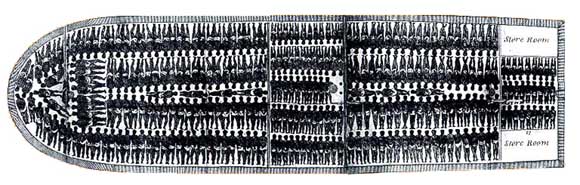
SlaveShipThe database is can be found on the Legacies of British Slave-ownership website is a project based at the University College London.  The informative site, has information about the project and a blog – a little sparse in its content, but what is there is interesting.  The search area is well thought out and depending on your research criteria, there are three sections:- Individual’s Details (including name, occupation, religion and more); Address Details and finally, Claim Details (including claim number; Estate; Parish; Claimant Category along with compensation details and number of enslaved).

There are two estates indexed that have over 550 enslaved – John Blackburn, a Glasgow merchant whose estate was in Jamaica and James Henry Mitchell, a gentleman, of Heath House, Oxfordshire, who also had estates in Jamaica.

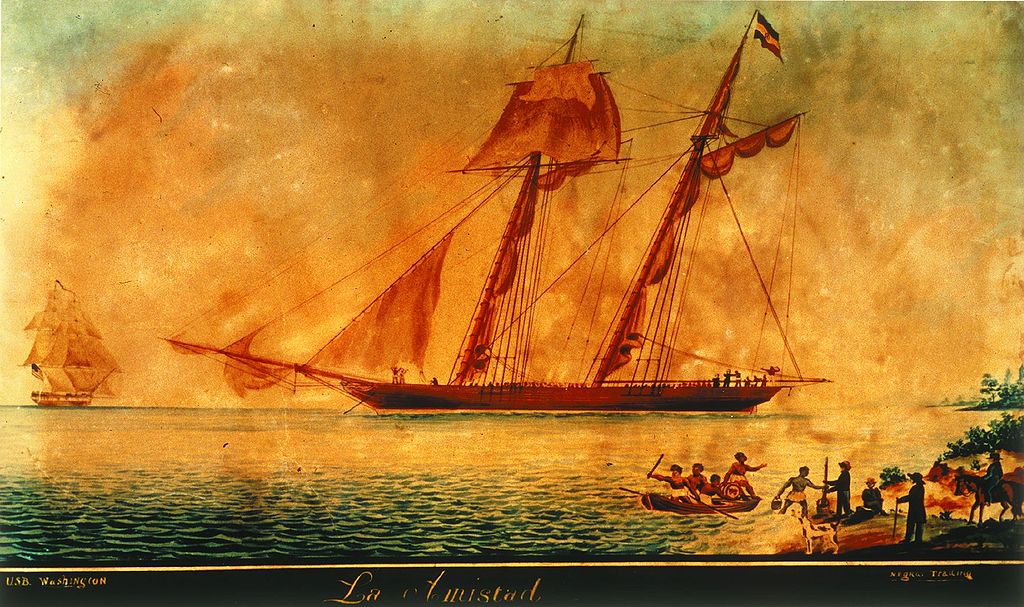
Recently, I found a link to a fascinating interactive map on Slate.com, who had an article The Atlantic Slave Trade in Two Minutes.  The map in 2 minutes shows 350 years of the slave trade and includes 20,528 voyages, equating to millions of lives.  The map counts up, showing the voyages year by year, ending in 1860.  Some of the years are quite shocking in the number of journeys that took place.  When playing the map, it interesting to see that North America has less voyages than the Caribbean and countries in South America (mainly Brazil).

Armistad

Armistad

Another site, also with a link found on Slate.com’s site is The Trans-Atlantic Slave Trade Database which list details of 1,000’s of voyages and includes details of ownership, captain and journeys.

Also  on the same site, is the African Names Database lists 1,000’s names, with physical details i.e. height, age, arrival year, where they embarked and disembarked including a link to African Origins.

On Wednesday 15th of July, 2015 on BBC2 at 9pm there is a documentary entitled ‘Britain’s Forgotten Slave Owners’.  Historian David Olusoga will, in the first of two programmes, discover the cost of the abolition of slavery.  The short series will also who who it was that owned slaves, and not always who you would think.  There were many people including: shopkeepers, clergymen and the ordinary 18th century middle class.

British Red Cross

Red Cross volunteers via redcross.org.uk

Red Cross volunteers via redcross.org.uk

British Red Cross

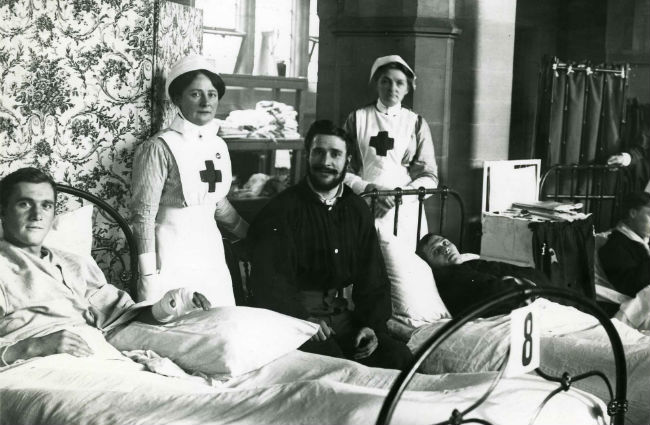
Over 90,000 people volunteered for the British Red Cross at home and overseas during the Great War, they provided vital aid to naval and military forces and cared for the sick and wounded. County branches of the Red Cross had their own Voluntary Aid Detachments (VADs) made up of both men and women. The VAD’s work included such jobs as nursing, transport, rest stations, working parties and auxiliary hospitals. They ran libraries, did air raid duty, and a service that is still being used today – Missing and wounded service.

As women volunteered for jobs normally undertaken by men prior to the war it enabled over 11,000 men to be released for military service of some sort.

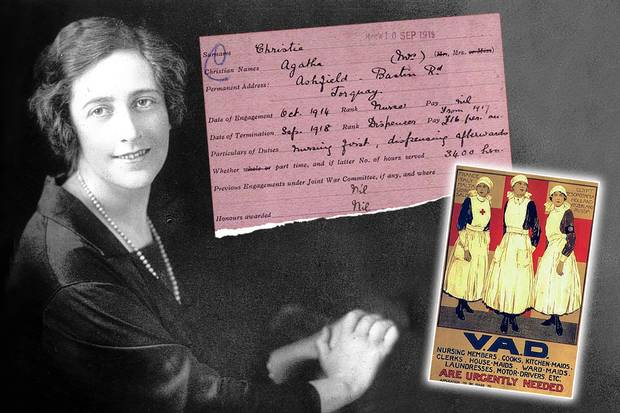
Agatha Christie, VAD WW1 via redcross.org.uk

Agatha Christie, VAD WW1 via redcross.org.uk

Did you know that Agatha Christie, volunteered for the Red Cross before publishing her first novel in 1920 and worked in a Torquay hospital. Vera Brittain, famous for her ‘Testament of Youth’, joined the VAD in 1915 and by 1917 was working in France. Enid Bagnold, of National Velvet fame served in London. Did you also know that E M Forster, novelist, critic and essayist, was a pacifist and instead of fighting he worked with the Red Cross.

Deaths – even though the VADs were non-combatant, they suffered many deaths. During the war, 128 nursing members and over 100 other VAD members not all directly working for the Red Cross died or were killed. The Roll of Honour contains records of the deaths of 498 Joint War Committee members. This figure includes 8 VADs who died as a result of the sinking of the SS Osmanieh on 31 December 1917. The vessel was contracted by the British navy and was struck by a mine laid by the German submarine UC34 and sank, killing 199 people. They are remembered at the Alexandria (Hadra) War memorial cemetery. The most common cause of death of the VADs was pneumonia caused by Spanish flu.

Red Cross HospitalAn obituary in the Red Cross Journal, 1918 stated that: “Miss Elger died on February 10th from pneumonia following influenza… For two and a half years she was a devoted and conscientious worker at Clayton Court Hospital, where her loss is felt most keenly by all who knew her. Clayton Court, it will be remembered, was most generously placed at the disposal of the Red Cross by Mr and Mrs Elger early in the war. After doing so much to help their country, it seems hard that they should have to bear this further personal sacrifice”.

The VADs who died during the war are commemorated in the great Seven Sisters window in York Minster.

The Red Cross has recently transcribed personnel records and at the moment surnames starting with the letters A and B are currently available to search. Volunteers are still working to update the site with more names.

One such volunteer was Achsah Bradley of Westbourne, St Andrews Avenue, Morley. Her record card shows that she had originally lived at Denshaw, Morley. Achsah served from March 1917 to January of 1919. Her work as a Special Service Probationer, a pantry worker, was at Roundhay Auxiliary Military Hospital, Leeds, where she worked part time. In total she worked 3,920 hours, which roughly equates to nearly 40 hours per week for her 2 years’ service.

There are also a number of wonderful photographs, looking to be identified.………..have a look and see if you know who they are?

Source – http://www.redcross.org.uk/ click About us then Who are we and then World War 1

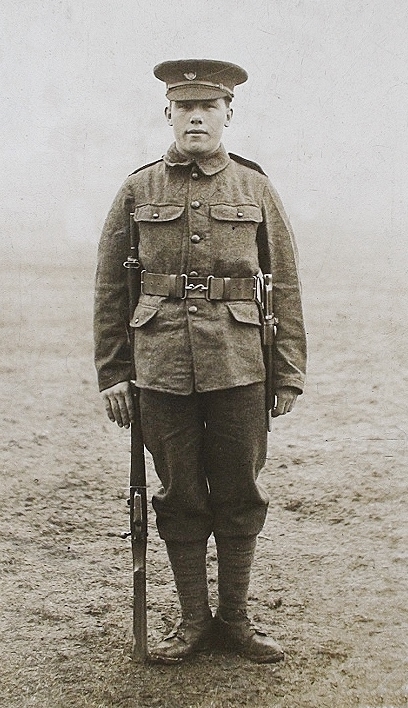
Wakefield Express WW1 – R Metcalfe, Woodlesford

Wakefield Express WW1 – R Metcalfe, Woodlesford

Another look through the Wakefield Express copies and I came across an entry for a young man who had gained military honours.

A WOODLESFORD SOLDIER HONOURED – Sergeant Brittlebank, of the K.O.Y.L.I., writing to a resident says – “I desire to bring to your notice and the people of Woodlesford the honours that have fallen to the lot of Corporal Metcalfe, who has won the Military Medal and the Distinguished Conduct Medal for bravery in the field.  I am his Platoon Sergeant, and can personally say he thoroughly deserves the two great honours that have been conferred upon him.  The N.C.O’s and men of his regiment feel right proud of him.  He enlisted in the first rush of war and he served in the Miners’ Battalion of the  K.O.Y.L.I., ever since, with distinction and ability both in Egypt and France.  Knowing him to be quiet, unassuming young fellow.  I think his people and fellow townsmen should know about his honours.  I think they have every reason to be proud of him.

Wakefield Express 10 February 1917

Robert Metcalf via Woodlesfordstation.co.uk

Robert Metcalf via Woodlesfordstation.co.uk

Again, what do we know about Corporal Metcalfe – well his name, his rank and his regiment, and of course, where he was from!

A very quick search through the D.C.M. Citations, came up with one :-

12/44 L/Cpl. R. Metcalf – For conspicuous gallantry in action.  Although wounded, he remained at his post and dressed the wounds of several men under heavy fire.  On another occasion he showed great courage and initiative in manning a trench after the explosion of an enemy mine. (13.2.17)

Could this be our Corporal Metcalfe?  If it is we now have an initial and a service number.  Now to the Medal Card Index with our new found information – his service number!

Well, the Medal Card Index entry for Corporal Metcalfe, confirmed by his service number, now tells me his first name was Robert.  He now had attained the rank of Sergeant.  He was eligible for the British and Victory Medals.

But what happened to Robert?  Did he make it home?  But more to the point who was Robert? Robert was born in Goole around 1894.  He was the son of Henry Metcalf and Fanny Welburn, from Carlton.  By 1901 the family were living at the Woodlesford Lock, on the Aire and Calder Canal, where Joseph Henry Metcalf, aged 54, was the canal lock-keeper.  In the 1911 census there was a Robert Metealfe (Metcalfe), aged 17 who was born in Goole.  Robert gave his occupation as labourer in the brickworks.  He was lodging with Walter Shorter, a colliery pit sinker, from Kent and his family.

A further search for Robert with his service number I found an entry on Soldier’s Who Died in the Great War and found an entry for a Robert Metcalfe, all seemed to fit, but his place of birth is given as Swillington, Garforth.  Robert enlisted in Rothwell, he is a Sergeant, in the K.O.Y.L.I.  He Died of Wounds on 17th of April 1918, had been awarded the D.C.M. – no sign of his military Medal.

Before I found Roberts name, I Googled ‘Metcalfe, MM DCM Woodlesford and came up with the following:-

WOODLESFORD KILLED AND WOUNDED SOLDIERS. – In the current issue of the Parish Magazine of All Saints’, Woodlesford, is the following reference to local military casualties: – We much regret to have to record that the war is responsible for the deaths of two well-known residents in our village. John Borman, who had only been in France a short time, has been killed in action. Robert Metcalfe, who had been in the lines nearly all the time, has died from wounds in a base hospital in France. He had greatly distinguished himself and won the M.M. and other distinction, and been promoted to the rank of sergeant. They, along with all others who have died in defence of our country, win our lasting gratitude, and their relatives and friends have our sincerest sympathy.h

Rothwell Courier and Times 1918

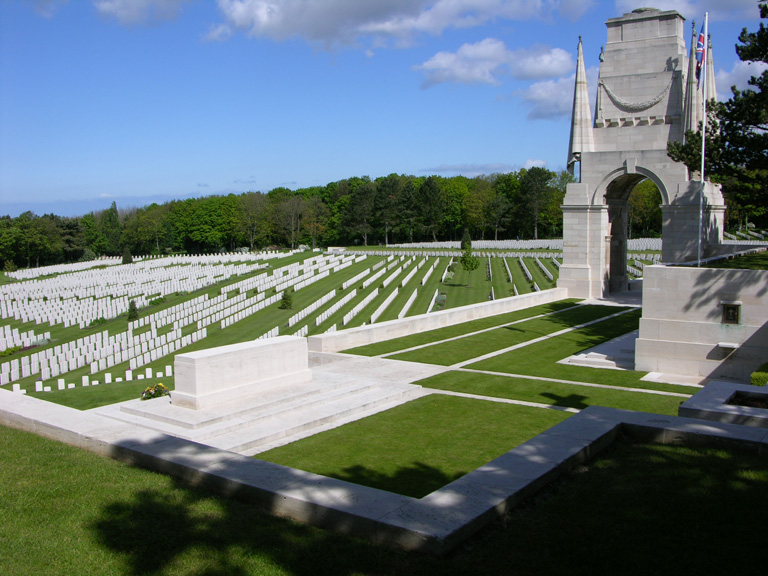
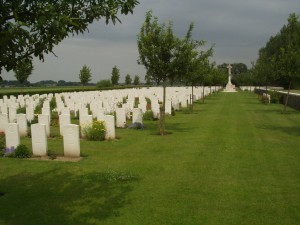
Etaples Military Cemetery via CWGC

Etaples Military Cemetery via CWGC

The entry for Robert in the Commonwealth War Graves Commission, has his name – Robert Metcalfe (no e), his service number, rank, regiment and battalion, along with his place of burial, Etaples Military Cemetery  and plot references XX1X E 10A.   He rests with over 10,770 other casualties of war, of which 35 are unknown.

Etaples and the surrounding area was dotted with reinforcement camps and hospitals, due to its location – being remote from attack, apart from aerial attack.  The area was also accessible by rail, from both the north and the south.  In 1917, over 100,000 troops were camped in the sand dunes close to the town, in the hospitals, which included eleven general, one stationary, four Red Cross hospitals and a convalescent depot, could deal with 22,000 wounded or sick. In September 1919, ten months after the Armistice, three hospitals and the Q.M.A.A.C. convalescent depot remained.

Robert is also remembered on the Oulton and Woodlesford war memorial, Woodlesford School memorial 

East and West Ardsley Conscientious Objectors during WWI

I recently attended  one of my regular family history meetings.  Off I toddled and up on arrival set up my help desk and grabbed a cuppa.  I could not remember who the speaker was but when I heard his name, I knew I was in for an interesting morning.

The talk was a follow-on from one he gave a few years ago, when he then spoke about the background to conscientious objectors, this talk was to give an insight as to why there were hot-spots of CO’s, where they were and highlight the outcome of a few men.  Since his last talk a great deal of work had gone into determining the number of CO’s to the population of men aged between 18 and the early 40 mark, who would have been eligible for conscription. Huddersfield was one of these hot-spots, as was Letchworth Garden City, Nelson and Rawtenstall.  My ears pricked up and my eyes opened very wide when a grid with a few local places was shown on the screen.  This grid included Huddersfield, Wakefield and Ardsley (East and West).  The town of Huddersfield had been highlighted as having a good number of CO’s, but Wakefield, now that was a surprise, only one – I need to find out who he is!  But what was a shock, surprise is not good enough for what I was to learn – East and West Ardsley had six Conscientious Objectors. The shock was, that for the population of Wakefield compared to the Ardsley villages, why more than Wakefield?

After the talk,  there was the usual ‘any questions’.  I posed one, as did others, and was invited to   have a chat with the speaker after the meeting.  I mentioned I had a connection to the Wheeldon family – Alice Wheeldon, had a son William who was a CO, but that story would have to wait. I also mentioned I was curious about the six, who were they?  Where did they live? And why were they Conscientious Objectors? After a look through his database of over 17,000 CO’s found so far, I had their names!

  • Albert Clay
  • Arthur Clay
  • Hubert Clay
  • Ernest Clay
  • James Holmes
  • Arthur Leathley

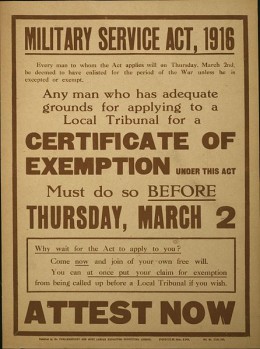
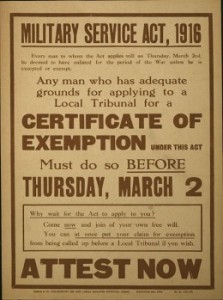
These men and others had their reasons for not wanting to fight, be it religious, political or some other reason.  So, when 1916 came along and brought conscription with it, these men, like many others, chose not to go to the enlistment centre.  The men would ignore the call and stay at home awaiting the police to arrest them.  Or, they would ‘go on holiday’ as it were and tour rural places either camping or staying in safe houses.

The Clay brothers – Sons of Albert Clay and Rachel (nee Rogerson).  Albert and Rachel were married in St Mary’s Church, Woodkirk on the 12th of June 1886 after Banns had been read in there and St Michael’s, East Ardsley.  Albert was aged 24 a labourer from East Ardsley, the son of Henry, a shoemaker, while Rachel, aged 21, from Woodkirk, the daughter of Samuel, a joiner.  Albert signed his name, while Rachel made her mark.  Witnesses to the union were Emma Clay and Horatio Thackerah, who also made his mark!

By 1891, the couple were living on Bromley Street, Soothill and now had two children, Ernest aged 3 and his brother Hubert who was just one.

The census of 1901 came around, the family were now living at Lawns Terrace and all the boys were there, including young Albert who was 10 months old and Isaac. Albert senior, has his brother Isaac living with them.  Another ten years down the line and the family are living on Grand View, East Ardsley.  Albert and Rachel have now been married 24 years and had 6 children – with the four boys we know of surviving to the census.

By 1911 they were all at Grand View, East Ardsley – Albert and Rachel had been married 24 years, had six children and four had lived to be included in the census. Ernest worked as a textile operative, cloth washer; Hubert and Arthur were pit bank labourers and Albert was at school.

Arthur Leathley – he was the son of Samuel and Emily Leathley, who in 911 were living with their eight children at The Green, East Ardsley.  Samuel was working as a miner, Arthur was a brickmaker and the other boys in the family old enough to work were working at the local pit.

James Holmes,  the last of our young men, was, in 1911 had been married to Agnes for the last eight years and was the father of five year old Albert Ernest Holmes – their surviving child of two.  James was employed  by the local Co-op, as their drapery manager.
Exemption Poster 1916

Exemption Poster 1916

Now it looks like it’s time to make the names real! Starting with the eldest of the Clay boys, Ernest. Ernest by the time the 1911 census came around is registered as a widow and living back with his parents.  He married Edith Scott on the 11 of January 1908 at St Paul’s. Morley.  At the time of his marriage to Edith, he was working as a burler and living at 32 Melbourne Place, Morley.  His wife, 2 years his senior, was the daughter of Samuel Marshall Scott, and living at 15 Cross Street, Morley.  The witnesses being Samuel Marshall Scott and Bertha Carlton.  Edith died and was buried on the 5th of February 1910 aged 25, in St Michael’s churchyard, East Ardsley.

Like all CO’s Ernest would have received in 1916 his ‘call up’ papers.  His Attestation Papers are not to be found, probably destroyed by fire or water during WWII.  But his name is there on the Conscientious Objectors’ Register 1914-1918. His name, year of birth and address are recorded along with his marital status and occupation.    There is also a section for ‘Other CO’s in family’ – very helpful if you don’t know and they are listed in the notes section.

Ernest’s entry under the heading Court Martial, 28 September 1916, says he obtained Work of National Importance under the Pelham Committee in a coal mine but he refused to disclose where he worked.
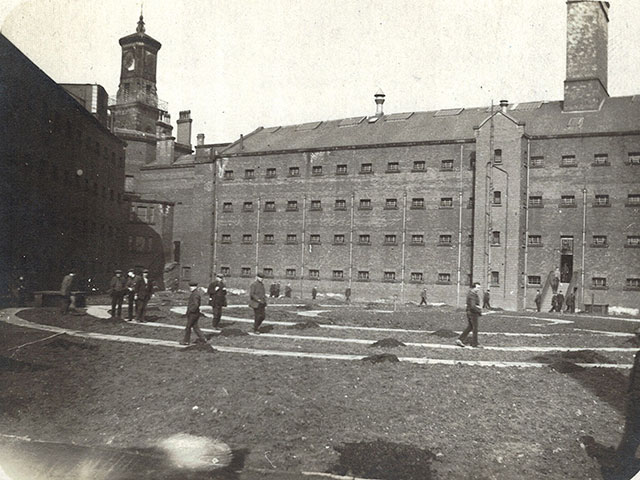
Wakefield prison c1916 pos. with CO's exercising. Unknown source

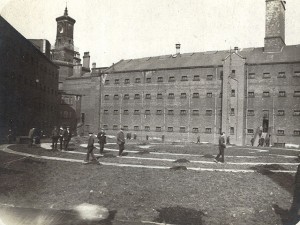
Wakefield prison c1916 possibly with CO’s exercising. Source unknown.

Arthur Clay, now his Attestation Papers are available, a little on the burnt side but in most cases the pages are readable, even though some of the dates seem confusing.  His form is filled in he usual way for the prospective soldiers – name and address details, occupation and age, but written across one of the sections are the words ‘Refuses to sign declaration’.  Below, in the next section it is declared that the recruit has been exempted by a Tribunal on conscientious grounds and written is the date of the Appeal Tribunal (13/3/16) in Wakefield. Arthur was appointed to the Non-Combatant Corps.  His record papers go on with handwritten notes, including names of other CO’s.  The notes tell that he was at Warwick prison, Wormwood Scrubs after being at Dartmoor Works Centre.  Further reading through the pages eventually comes up with a Regimental no., of 4685 in the N.C.C. (Non-Combatant Corps.).  There is one report where Arthur was in the Guard Room on 1st of June 1918 in Pontefract charged with ‘disobeying a lawful command given by his superior officer’, infront of four witnesses, for which he was Tried and given ‘6 months impt with H.L.’ (6months imprisonment with hard labour) on 9th of June 1918.  Arthur was ~Demobbed on 31st of March 1920 and there is a note saying what looks like he is forbidden to wear Chevrons or Wound Stripes. Like his brother, Ernest, his CO Register entry confirms what was found in his Attestation Paper.

Albert Clay, born around 1900 in the CO Register, says he was motivated by the NCF (No-Conscription Fellowship), of which he was an Associate Member. Like his brothers he would have been brought before a Committee.

Hubert comes next and his Attestation Papers are available, even though they are on some pages a little bit pale and hard to read, like his brothers.  Hubert refused to sign and the entry before a Tribunal in Ardsley, on 25 March 1916, says he was exempt from combatant service but given the Regimental number 1685 and the rank of Private. in June of 1916 he was in guard detention room at Richmond Castle, awaiting trial for refusing to obey an order and he was transferred to Durham Prison.  Only a few pages are available but still interesting…….now to look at the CO Register, hopefully that will tell more.

Hubert seems to have been in prison quite a lot – Pontefract, Richmond for his Court Martial in July 1916 followed by 112 days with hard labour.  Transferred to Army Reserve, quickly followed by a Court Martial at Leicester in 1917 – 2 years.  Again in Leicester and now August of 1917 he is given 1 year with hard labour.  To Wakefield Experiment (what ever that was) then to Armley Prison. In between there were Tribunals at Wormwood Scrubs.

 James Holmes, born around 1880 lived at the time of his call up at 52 Gordon Street, East Ardsley.  He gave his motivation as that of being a regular preacher (minister) in the Church of Christ and  a CO therefore claimed Absolute Exemption.

Hubert refused to attend a Wakefield Magistrates summons on 30th of April 1917.  He was at Pontefract in July 1917 and given 7 days.  Later that month he was Court Martialed and given 6 months with hard labour, later ending up at Wormwood Scrubs.

Finally, Arthur Leathley, his CO Register entry is similar to the other men from East Ardsley.  He was born around 1885 and at the time of his Attestation was living at 11 Gordon Street, The Falls, East Ardsley. Even though his service papers have not survived, the COR tells us that it was 1684.

Hubert refused to sign and attended various Tribunals in East Ardsley during the early months of 1916. He was posted to the NCC at Pontefract on 6th June 1916.  Later that year he was at Richmond, Court Martialed and given 11 days.  He is later to be found in Duha Prison.  On the 1st of November 1916 he is in the Army Reserve and re-called on 6th of February 1917.  By the 22nd of the month he has gone AWOL, been re-arrested and given 168 hours detention.  Soon afterwards on the 15th of March 1917 he is again Court Martialed and given 2 years without hard labour and ends up at Leicester Prison, having been at a Central Tribunal at Wormwood Scrubs during August of 1918.

Sometime during his escapades here refused a medical,  was arrested for using the railway at Christmas, which led to him being very badly treated and also refused to obey orders.

What made these men feel the way they did and take the actions they did?

According to many sources, occupations and connections to Unions, Political Social parties and some religious groups are the connections that link them together.  Many did serve alongside fighting soldiers, working as stretcher bearers, in the VAD and other voluntary capacities.  Many of these men were killed while doing non-combatant work, especially those who were stretcher bearers, as they had to go into the battle and retrieve the wounded and the dying.  Some, in fact were very brave men, while not wanting to take another man’s life, they did in fact lose theirs by trying to save life of another.

Golf Club Professional Killed in Action

Wakefield Golf Club Professional killed in action

While doing a little research into a Wakefield soldier killed in World War One, I came across a newspaper article that mentioned he had been a member of Wakefield Golf Club, Sandal. Finding that information was the catalyst for another diversion!

Wakefield Golf Club Golf Professional, killed in the Great War

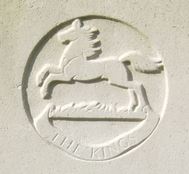
CWGC headstone logo of King’s (Liverpool) Regt., from a headstone in my collection

This morning – two lots of washing have been done, the dishwasher is going, the cats have been fed and watered and so have I! I thought a few minutes to tidy the newspaper articles, so very kindly copied from the libraries collection of Wakefield Express newspaper by a friend, and I would then start getting organised. The plan being to file each article away in the corresponding soldiers file………….did I start, well I filed one away, then I noticed one of the names of those killed in the Great War, who were members of previously mentioned golf club, had died on June 20th. I thought a small bit about him would not lead me astray too far.

George Ernest Skevington – George was one of over 100 members of the Club who served in the Great War, with 20 never coming home to their families and friends.

Who was George?  He was born in 1888 in Brough, the son of Charles W Skevington, a rural postman, born in Arlesey, Bedfordshire and his wife Annie, who was from Little Ouseburn. The family in 1891 lived at Hawthorne Cottage, Broughton Road Elloughton with Brough.

Ten years later in 1901, the family were at Hawthorne Cottage, Elloughton with Brough, the cottage now seemed to be on Welton Road.  George, was now one of nine children, the majority of which were born in Brough.

In 1911, the family were still at Hawthorne Cottage – Charles was now 57 and still a postman. His wife, Annie, was 51 and had been married 26 years, borne 11 children, with eight living to be named in the census.  George, now 23 gives his profession as ‘Pro Golf Club’ with ‘assistant professional’ written above in a different hand – it is possible that George was employed at Brough Golf Club.  Between 1911 and his enlistment in Dewsbury in the October of 1915, George  took up his position as Club Professional at the golf club in Sandal.

He served originally as 15586, in the Army Cyclist Corps., being transferred The King’s (Liverpool) Regiment, 18th Battalion and now becoming Private 57660. While George was away ‘doing his bit’, Wakefield Golf Club still continued to pay him 10s per week. George served in

Wakefield Golf Club Golf Professional, killed in the Great War

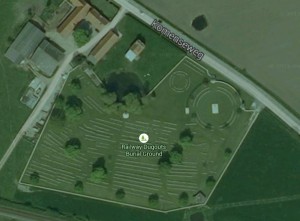
Railway Dugouts Burial Ground from Google maps

Belgium and was Killed in Action, by a shell,  on the 20th of June 1917 aged 30, and rests along with over 2,450 others who gave their lives For King and Country, in Railway Dugouts Burial

Ground, some 2kms west of Zellebeke.

The monies owing to George, from the military, were eventually paid to his father, Charles and were finalised by August 1919.  Charles would also have received George’s medals.

By 1918, a replacement had been found for George, Mr S H Lodge, from Barton-on-Sea Golf Club, Hampshire.

The Club in 2000 were able to purchase a hickory shaft putter, made by George, while he was a Professional, at Woodthorpe.

Wakefield Golf Club Golf Professional, killed in the Great War

War Memorial C Sklinar copyright 2015

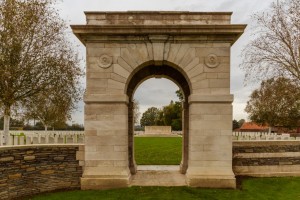
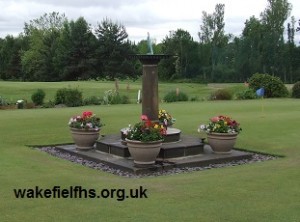
Although, George rests in Belgium, he will always be remembered as his name is engraved on the Golf Club memorial and the memorial in his home town.  The memorial on Welton Lane, Brough, not only bares his name, but also, that of his younger brother 2nd Lieut. William Percy Skevington, who died on the 8th of September 1918.  He rests in Trois Arbres Cemetery, Steenwerck, near Bailleul, France with over 1200 other identified casualties plus 400+ who are known only unto their God. William had enlisted into the East Yorkshire Regiment going through the ranks, as Sapper 62, 12423, then Private 10/111, later to become a 2nd Lieutenant.  William had entered the Egyptian Theatre of War on 22nd of December 1915.

William Percy, was not with his family in the 1911 census, he was in fact a lodger at Bosworth

Wakefield Golf Club Golf Professional, killed in the Great War

Trois Arbre CWGC cemetery

Avenue, Fountain Road, Hull – he worked as a Railway Porter.

In just over twelve months, Charles and Annie Skevington had, like so many other families, had seen two of their children killed in Action.

Plague Pits of London

London during the plague saw over 15% of the population wiped out with the two year period – 1656-1666.  The bodies had to go somewhere and hence, plague pits were dotted over the London area.

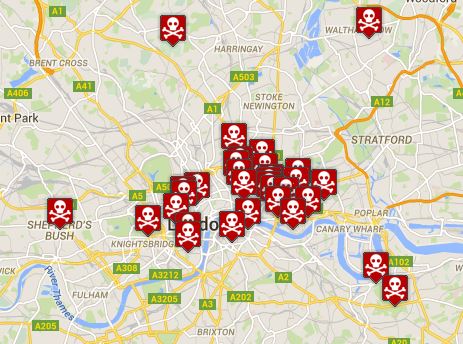
Plague pits all over London

Plague pits all over London

Historic Uk, have made available an interactive map of London showing the reputed Plague Pits. Gathered from various sources with a pop-up information box for each skull and crossbones link.

The burials places include :- Vincent Square; St Giles in the Fields, where the church’s own site gives information about the deaths; Pitfield Lane, Hoxton, was once home to a large plague pit; Queen’s Wood, Highgate; Knightsbridge Green; Bakerloo Line and Cross Bones Graveyard – known as the unconsecrated memorial to thousands of prostitutes who lived, worked and died in the area.  The pit was used during the height of The Great Plague.

History UK, say that although there is little evidence of the exact locations of the plague pits, this information is based on various sources and is an on-going project, and as such they are always willing for information on any other sites in the area.

Nunhead Cemetery, who is named on the headstone ?

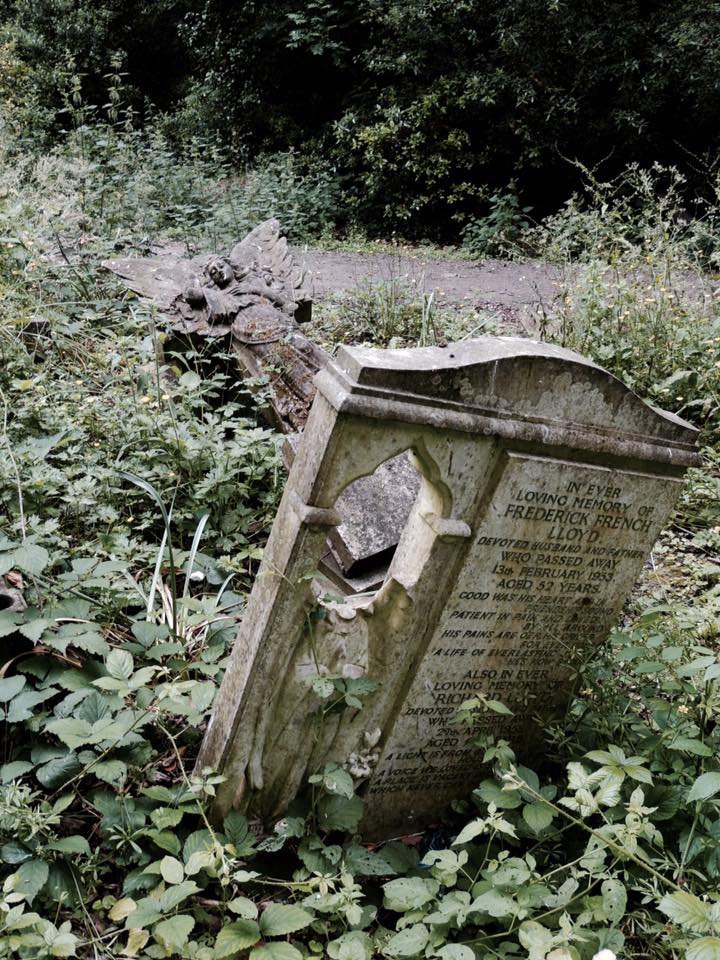
Nunhead Cemetery – Frederick French Lloyd

Lloyd headstone courtesy of Margaret McEwan

Lloyd headstone
courtesy of Margaret McEwan

Ooops, I’ve done it again! But I have done a lot on my project this weekend, so thinking I need a diversion.  I have had a couple of diversions lately, namely the headstone from East Ardsley churchyard, the newspaper article, and now I have another – a photograph of a headstone.

Why is it such a nice photograph? Why does it have information on it that I can read…..why? And why is he not called John Smith, that might be impossible, but he is not called John Smith!

He is Frederick French Lloyd and his tilting and damaged headstone in Nunhead cemetery, still retains some dignity.

‘In every loving memory of FREDERICK FRENCH LLOYD, devoted husband and father, who passed away 13th February 1953, aged 52 years.  “Good was his heart and in friendship sound.  Patient in pain and loved by all around.  His pains are o’er, his griefs forever done, A life f everlasting joy he’s now begun. Also in ever loving memory of RICHARD LLOYD, devoted **** and  *****, who passed away 27th April 1953’

The remainder of the headstone is covered by undergrowth but you can see part of another sentiment.

What relationship does Frederick and Richard have? Are they father and son, brothers or cousins?

Frederick French Lloyd was the son of Robert Horatio Lloyd and Emily  nee Groombridge, who he married in the late summer of 1872, in the St Saviours Registration District of London and was one of nine children:- Susan, Annie, Margaret, Elizabeth, Harriet, Maude, Richard, Albert and Frederick – born between 1870  and 1901.  At the time of Frederick’s birth, the family were living at 110 Brandon Road, Newington.  Robert was employed as a Fish Porter, Susan and Margaret were ‘mother’s helpers’ and 19 year old Annie, she, ironed collars to add to the family coffers.

It was ten years later in 1911. that the family, now consisting of six people, lived at 1 Eltham Street, Walworth, London – a six roomed house.  Robert was now classed as a General Dealer. Emily, who had been married to Robert for 36 years had given birth to 13 children with 10 surviving to the 1911 census.  Susan, now ironed collars, Maud Pearl was an Ironer, Albert was a Printer’s Assistant, while Frederick was still at school

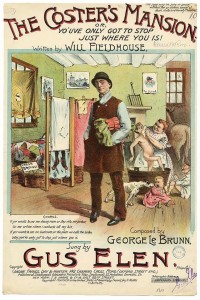
"1899 Gus Ellen" by Kbthompson (talk · contribs) - The Theatre Museum (London). Licensed under PD-US via Wikipedia - https://en.wikipedia.org/wiki/File:1899_Gus_Ellen.jpg#/media/File:1899_Gus_Ellen.jpg

“1899 Gus Ellen” by Kbthompson – The Theatre Museum (London). Licensed under PD-US via Wikipedia –

Frederick left school and started working ‘on the markets’, as a Costermonger – a street seller of fruit and vegetables. In 1920 he was living with his parents, still at 1 Eltham Street with his parents, according to the Electoral Registers.

He married Hannah Tobin in the March quarter of 1924 in the Southwark Registration District and they went on to have five children.  In 1939, 1 Eltham Street is still home, but Frederick seems to be the head of the household, with his wife, Hannah also still living there as is Robert Horatio, but no Emily, as she had died in 1933 aged 77.

I think this now answers the question asked about the relationship between Richard and Frederick, they were brothers.  We know where they rest but where is Hannah ……….oh no! is that another question to answer?

NO!

A Letter sent home

Letter sent from the Front during World War 1 – could this be written to your family member?

While researching for a project, I came across an article in the Wakefield Express issue of the 3rd of March 1915. Instead of continuing, as I should do with the project, I ended up going off on a tangent and finding out who the soldiers were…………Not, I might add, good for the project, but my curiosity would be fulfilled!

NOT CLICKED A GERMAN BULLET.

FIFTY SOLDIERS IN A HOT BATH

The following is an extract from a letter from Ernest Turner, one of the two sons of Mr Joshua Turner, of Woolley Colliery, who are both serving with the R.A.M.C. at the front. Ernest is in the Field Ambulance Section, belonging to the 27th Division of the R.A.M.C. :-

     “We go down for a rest shortly for three weeks, I believe, so you see it is A1 now.  We are not hard worked up here, still a rest won’t do us any harm.  I am pleased to tell you that I am in very good health.  Thank God, I haven’t clicked a German bullet yet.  I now know where poor Jack Melson is buried, but I daren’t go to his grave; it is too dangerous, but it is marked with a cross.  We had a bathing parade before we came here; I mean hot baths.  Just fancy about 50 of us in together and the fun we had.  We are then given a complete change of underclothing.  I felt a different man afterwards.  I have been helping to fetch the wounded in for a while now.  There is plenty of mud out there.

     “Poor Jack Melson said to his sergeant “Is my hour up yet, sergeant?” and the sergeant replied “No, you have 20 minutes more duty yet.” Just then a shrapnel shell came up, and killed them both.  Poor Jack got caught in the side with one of the bullets”

     Melson was in the King’s Royal Rifles and was brother to A Melson, of Woolley Colliery.

Letters printed in the Wakefield Express during World War 1 - is this from someone in your family tree?

Long Row, Woolley, source unknown but acknowledged

Who is mentioned in the above article – Ernest Turner, Jack Melson and his brother A Melson, lets start with Ernest Turner, our very clean soldier.  We know from the article in the Wakefield Express that he is the son of Joshua Turner of Woolley Colliery. But from 1901 the census – there are two Joshua Turners living in Woolley.  One of the Joshua’s is from Barugh, and the other from Hoyle Mill.  One has a family and the other is just listed with this wife, and would seem to be older that I presumed him to be, aged 61, especially with young children…..but not impossible!

The second Joshua is 38 years old, his wife Charlotte E  is also 38 and their children range from 15 down to 1 – this seems more like it!  The census has Charles E Turner, could this be Ernest?  A brother is also mentioned.  I am going to eliminate the youngest brother, Frank, aged 1.  So that leaves Earle aged 7 and George Bennett aged 15.

A Service Record survives for George Bennett Turner – the article said ‘both brothers are serving in the R.A.M.C.’  George is serving in the Coldstream Guards (service no. 16667), was living at the time of enlistment at the Villas, Darton, Barnsley, with his wife Mary (nee Overend, who he married in June of 1911) and daughter Eileen Mary, when he attested in August of 1915.  George survived The Great War, even though he had been gassed in May of 1918, and was demobilized on the 9th of February 1919.

Looks like ‘the other brother’ is Earle, who served as Private, No. 54, in the Royal Army Medical Corps.  Earle, like his brother’s seemed to survive the war and he married Ivy Ellis in the summer of 1920.

Letters printed in the Wakefield Express during World War 1 - is this from someone in your family tree?

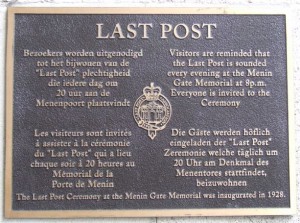
Menin Gate Last Post © C Sklinar

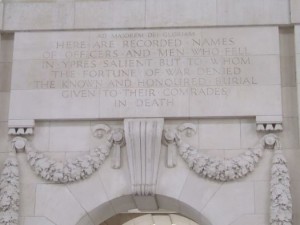
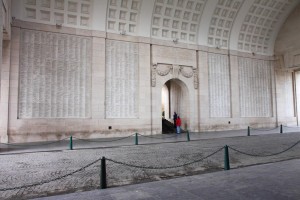
The Wakefield Express letter also mentions that Ernest is sending home news of a friend, or someone from the village – Jack Melson, well after looking for Jack and drawing a blank I started looking for John Melson (Jack and John being interchangeable), and there he was.  John Melson.  John served as Rifleman 9530 in the K.R.R.C., into which he enlisted in Huddersfield.  He was Killed in Action on the 25th of January 1915 and is remembered on the Menin Gate Memorial, after entering France in December 1914.  He certainly won’t have been lonely this year, always busy at 8pm, the last couple of years have seen many

Letters printed in the Wakefield Express during World War 1 - is this from someone in your family tree?

Menin Gate © C Sklinar

more visitors drop by and look at the enormous panels of names to remember and reflect.

Who had John been in life?  John was the brother of A Melson, but from the Commonwealth War Graves Commission site, we now know that Alfred was his name.  So, in 1911 John was already a serving soldier, aged 20 he was in the New Barracks, Gosport with over 300 others, including 5 women.  The Medal Card for John/Jack tells – his medals earned, his entry into France and his demise.  The Soldiers Register of Effects confirms

Letters printed in the Wakefield Express during World War 1 - is this from someone in your family tree?

Menin Gate © CWGC image

already known information, but also includes how much was owed to him by the Army and the recipients were ‘Mo & Fa joint Regotees Norah and Alfred Giggal’, who in 1915 received £7 8s 9d and later in 1919 shared another £5.

The war memorial in Woolley, does not bear the name of John Melson.

Alfred, there is an Alfred in the R.A.M.C., service no. 41962. Alfred according to his Medal Card, had started service in Egypt in June 1915 and was eligible for the three medals – 1915 Star, British and Victory Medal (Pip, Squeak and Wilfred).

As to who the parents of John and Alfred were, there are a few entries in the census but nothing that gives a perfect clue to the family – if anyone knows, why don’t you drop me a line!

A Walk around East Ardsley churchyard – who did we find?

Holman headstone copyright C Sklinar 2015

Holman headstone copyright C Sklinar 2015

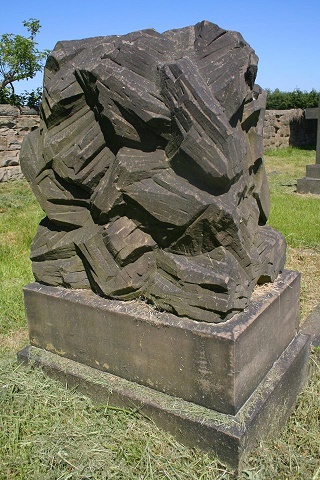
A friend posted a picture on Facebook of the back of a  headstone from the village churchyard.  The only part visible in the image was the unusual back, making the headstone quite unique.

A walk up to the churchyard on a very nice Thursday morning brought me face to face, well face to stone, with the real thing.  From the back it looks like something you might see on Ilkley Moor – stones piled up in a random fashion.  But does the monument mean something more?

Who were these people mentioned on this headstone?  What connection do they have to East Ardsley?  And why does one of the people mentioned have such an unusual name?

First mentioned is ‘Jane Holman of East Ardsley, who died Feby 2nd 1907, aged 56 years‘.  Jane Holman, was born Jane in 1851, the daughter of William Haley and Hannah Walker.  Jane was born in North Brierley, but gave her place of birth as Oakenshaw and in 1881 was living with her family on Green Lane, Cleckheaton, working as a cotton and worsted weaver.

On the 9th of August 1876, Jane Haley went to The Parish Church in Bradford with her family and friends and married Horace Holman, born in Norfolk. Jane was now 24 and gave her residence as Oakenshaw, Low Moor, while Horace was 21 years old, employed as a carrier and also from Oakenshaw, Low Moor.  Horace, was the son of Charles Holman (deceased), a cattle dealer.  The marriage, after banns, was performed by Henry Prosser, B.A., and both Horace and Jane signed their names, as did their witnesses  G J Sewell and Emma Holman – Emma’s signature being quite naive.

By 1901 Horace and Jane were established in East Ardsley, living at Allinsons Buildings, with five children living at home. Horace was aged 45, a farmer, working on his ‘own account’ and a carting agent.  His sons also worked on the farm.

By February, 1907, we know that Jane had died.

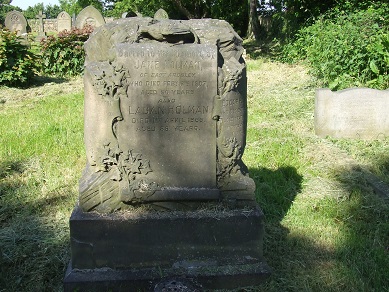
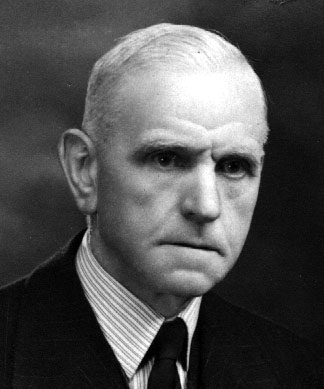
Laban Holman courtesy of Alistair Kennedy

Laban Holman courtesy of Alistair Kennedy

The inscription following that of Jane says ‘Also, Laban Holman, died 1st April 1966, aged 88 years’. As Laban was Jane’s son quite of a few of the census entries cross.  In 1881 Laban was with his family, he was four years old, being born on 2nd of April 1877 at Bottoms, Wyke and baptised on 20th May 1877 at the Wesleyan Methodist, Oakenshaw.

1891, Laban is living and working at Low Street Farm, in the Civil Parish of West Ardsley – he is a farm servant working for William Scott.  We know from his mother Jane’s entry,  that by 1901 the family were living and working in East Ardsley on the family farm and carting business.  Within six years of the 1901 census, we know that Jane had died.  Her will, proven in Wakefield, left all her business dealings to ‘my son Laban Holman for his own use absolutely in return for the good work he has done for me in managing the business and keeping myself and younger children thereout now for many years.’  Jane also left ‘all those Policies of Insurance on my life in the Prudential Insurance Office together with the household furniture and any money that may be in the house at the time of my death and the residue of my estate to my Trustees upon trust to sell, call in and collect the same and pay my debts, funeral expenses and the costs of proving this my will thereout so doing to pay and divide the same amongst all my children inclusive of the said Laban Holman, share and share alike.’…….what happened to Horace?  Probate to Jane, wife of Horace Holman, granted on 21st March to Laban Holman and Charles William Holman, electrical engineer, effect £189 6s.

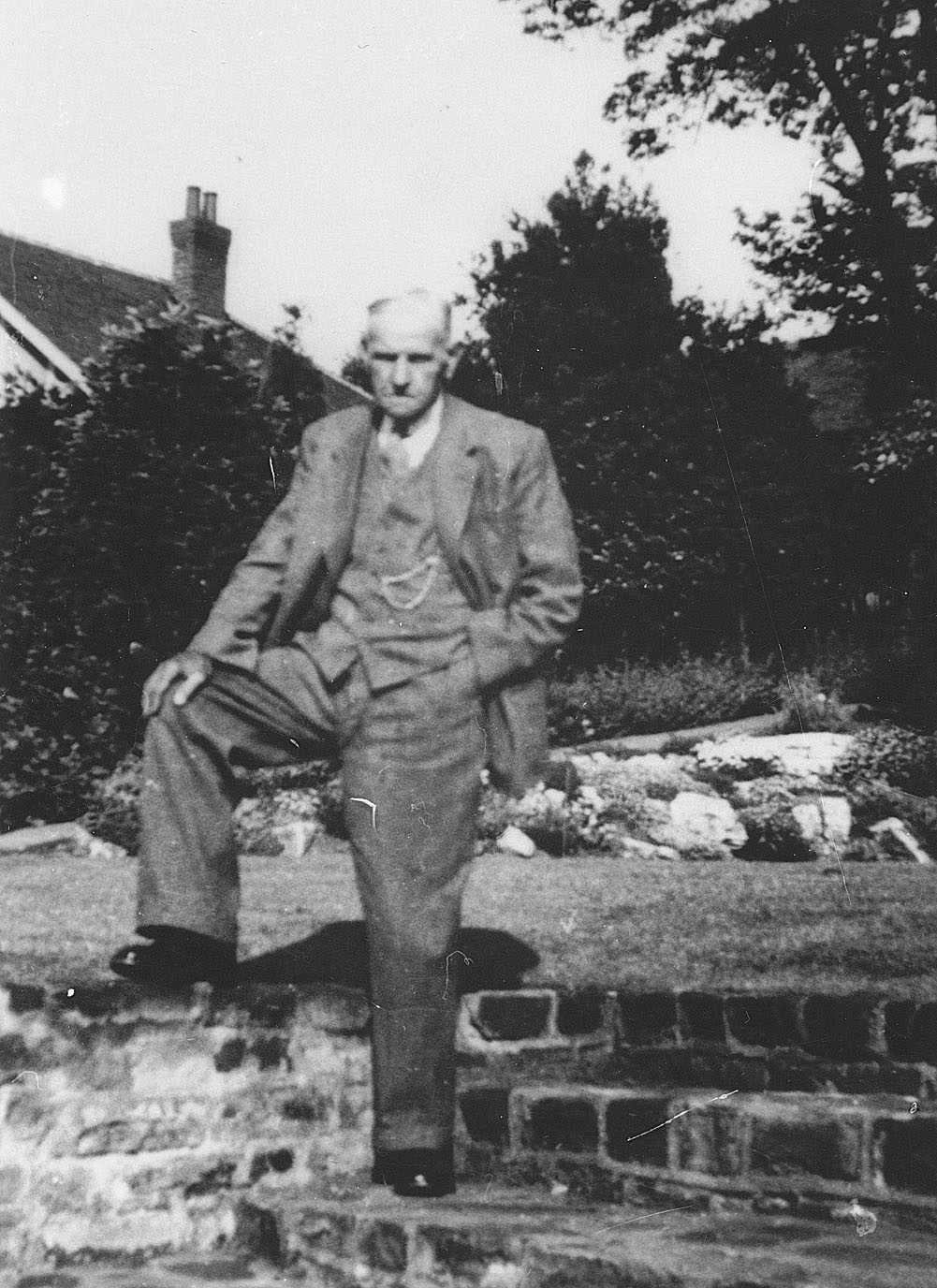
Laban Holman courtesy of Alistair Kennedy

Laban Holman courtesy of Alistair Kennedy

In 1910 there are Tax Valuations showing that Laban had access to various plots of land in East Ardsley and Thorpe  – some he rented from the Great Northern Railway, others he owned and sub-let.

Ten years later, in 1911 Laban is living with his sister Mary, her husband George Harper and their children, at 12 Allinsons Buildings, East Ardsley. Laban is a carting agent, his brother in law, George is employed as a teamster –  is he working for Laban?  The early 1920’s saw Laban, in directories as a haulage contractor working out of Thorpe with the telephone number of Rothwell 6.

Laban Holman courtesy of Alistair Kennedy

Laban Holman courtesy of Alistair Kennedy

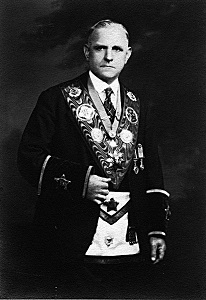
Laban, was also a member of a Masonic Lodge.  Laban, as we know, died on 1st April 1966 aged 88.  His Probate entry read ‘ Holman Laban of Oaklea, Wetherby Road, Bardsey, Yorkshire died 1 April 1966 at St Helen Hospital, Barnsley, Yorkshire.  Probate London 22 August to George Harper, coal and coke merchant and George Stone, bank manager.  £4245.

Another section of the memorial mentions ‘Francis Holman who died on 3rd of August 1903, aged 23 years’. Francis is living with his parents at Allinsons Buildings, East Ardsley in 1891 – so the family were in East Ardsley while Laban was living and working on the farm in West Ardsley. Horace gave his occupation as colliery labourer.  Francis can also be found on the census as Frank.  Also, on a section of the memorial ‘also of Edgar Holman, who died Septr 2nd 1889 aged 1 year ad 8 months , interred at Westfield Chapel, Wyke’.

But. what happened to Horace?   The 1911 census has an entry for a Horace Holman, carter, living at 19 Queen Square, Leeds, with his wife Clara…..could this be Jane’s Horace, who married Clara Hudson in the September quarter of 1907 in the York Registration District?  Could Horace have left the family home after the 1901 census.  That could be the reason why Jane left the business to Laban.   Anyway, there is a death for a Horace Holman in the Leeds area in the June quarter of 1923.

Rear of Holman headstone courtesy of Glyn Sherborne

Rear of Holman headstone courtesy of Glyn Sherborne

The headstone, some say the stonework resembles blocks of coal, or could it be stone.  Coal from the local mines or stone from local quarries that the business transported ………..you make your own mind up!

Thanks to Alistair Kennedy for allowing me to use his images, he also tells me that other members of the family have interesting stories to tell!

Interactive WW2 map

Aberdeen was bombed during WW2 for three years.  This devastated those living and working in the area.

In 1943, according to the Press and Journal, was the deadliest attack killing nearly 100 people and injuring many.

At one time in the air 10 Luftwaffe Dornier 217 bombers circled the district, then swooped low, dropping bombs with no regard life or limb.  Killing, maiming from a distance and leaving panic and trauma in its wake.

The city saw its last raid in 1943 but had seen 141 others that were classed as minor.

Now an interactive map has been developed to show where and when the bombs fell and if your families life was impacted by these events.