Category Archives: News

Event – Life on the Home Front

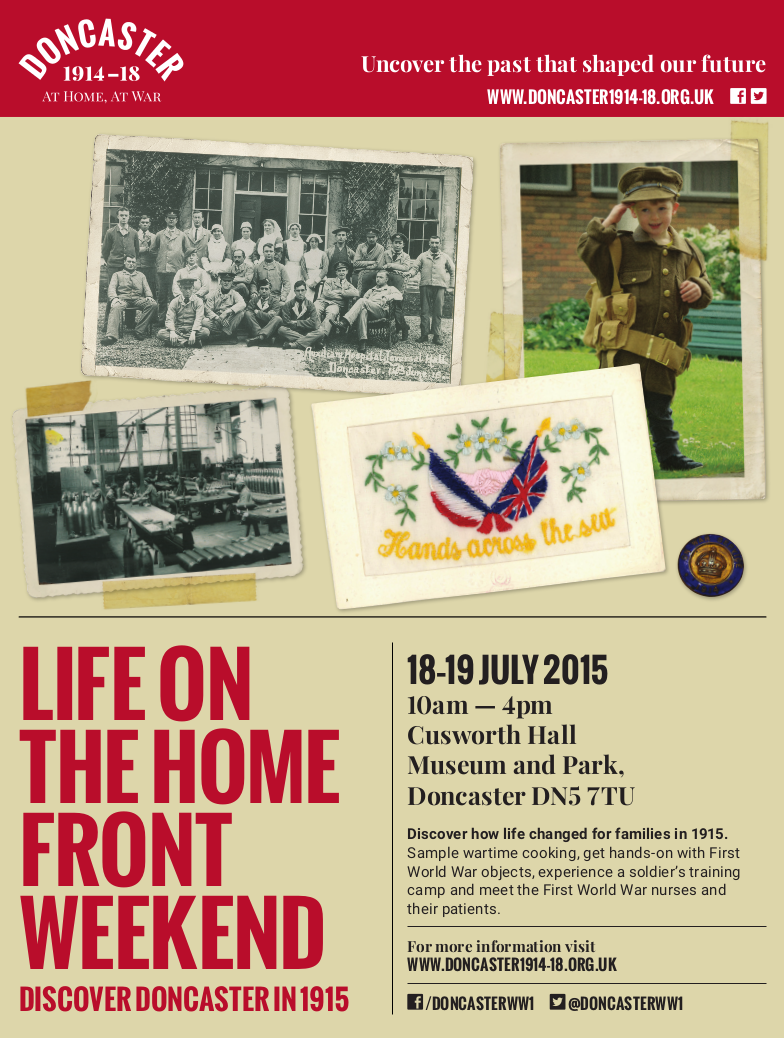
Life on the Home Front Weekend

18-19 July 2015   10am – 4pm

Cusworth Hall Museum and Park

Doncaster, DN5 7TU

An event organised by Doncaster MDC, under the ‘Doncaster 1914-1918 At Home, At War‘ umbrella and funded by the Lottery Heritage Fund.

The organising group are are pleased to announce this, the biggest event in the area of this summer, and with FREE entry, and FREE activities it looks like it could be a wonderful day out for all members of the family.

Life on the Home Front Weekend

Life on the Home Front Weekend

The front lawn at Cusworth Hall will be taken over with a huge range of activities, including:

– Visit First World War nurses and meet their patient
– Get hands-on with First World War objects and try on uniforms
– Sample and learn more about First World War cooking
– Experience a soldier’s training camp
– Find out about wartime Doncaster, rationing and thrifty fashion
– Family-friendly crafts and activities

The timings for the events at Cusworth are still being finalised so keep checking in on their website facebook page and their Twitter link – have a good time!

This event is one of a series entitled ‘The Great War on Tour’, which visits a variety of places including St Oswald’s Church, Kirk Sandall on the 20th of June ; Edlington Library on the 22 of June and ‘Doncaster at War 1914-1915’ again at Edlington Library on 29th of May through to 25th of June.

Doncaster 1914-18 on Facebook  and on Twitter 

Doncaster1914-18 on the web

Nunhead Cemetery, who is named on the headstone ?

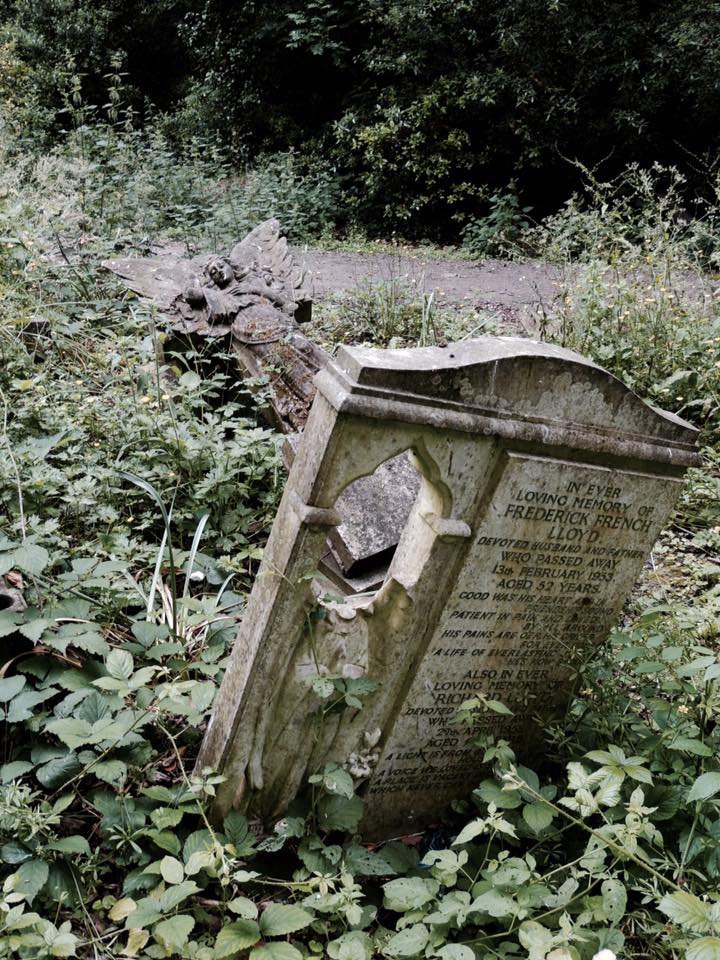
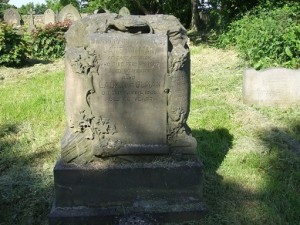
Nunhead Cemetery – Frederick French Lloyd

Lloyd headstone courtesy of Margaret McEwan

Lloyd headstone
courtesy of Margaret McEwan

Ooops, I’ve done it again! But I have done a lot on my project this weekend, so thinking I need a diversion.  I have had a couple of diversions lately, namely the headstone from East Ardsley churchyard, the newspaper article, and now I have another – a photograph of a headstone.

Why is it such a nice photograph? Why does it have information on it that I can read…..why? And why is he not called John Smith, that might be impossible, but he is not called John Smith!

He is Frederick French Lloyd and his tilting and damaged headstone in Nunhead cemetery, still retains some dignity.

‘In every loving memory of FREDERICK FRENCH LLOYD, devoted husband and father, who passed away 13th February 1953, aged 52 years.  “Good was his heart and in friendship sound.  Patient in pain and loved by all around.  His pains are o’er, his griefs forever done, A life f everlasting joy he’s now begun. Also in ever loving memory of RICHARD LLOYD, devoted **** and  *****, who passed away 27th April 1953’

The remainder of the headstone is covered by undergrowth but you can see part of another sentiment.

What relationship does Frederick and Richard have? Are they father and son, brothers or cousins?

Frederick French Lloyd was the son of Robert Horatio Lloyd and Emily  nee Groombridge, who he married in the late summer of 1872, in the St Saviours Registration District of London and was one of nine children:- Susan, Annie, Margaret, Elizabeth, Harriet, Maude, Richard, Albert and Frederick – born between 1870  and 1901.  At the time of Frederick’s birth, the family were living at 110 Brandon Road, Newington.  Robert was employed as a Fish Porter, Susan and Margaret were ‘mother’s helpers’ and 19 year old Annie, she, ironed collars to add to the family coffers.

It was ten years later in 1911. that the family, now consisting of six people, lived at 1 Eltham Street, Walworth, London – a six roomed house.  Robert was now classed as a General Dealer. Emily, who had been married to Robert for 36 years had given birth to 13 children with 10 surviving to the 1911 census.  Susan, now ironed collars, Maud Pearl was an Ironer, Albert was a Printer’s Assistant, while Frederick was still at school

"1899 Gus Ellen" by Kbthompson (talk · contribs) - The Theatre Museum (London). Licensed under PD-US via Wikipedia - https://en.wikipedia.org/wiki/File:1899_Gus_Ellen.jpg#/media/File:1899_Gus_Ellen.jpg

“1899 Gus Ellen” by Kbthompson – The Theatre Museum (London). Licensed under PD-US via Wikipedia –

Frederick left school and started working ‘on the markets’, as a Costermonger – a street seller of fruit and vegetables. In 1920 he was living with his parents, still at 1 Eltham Street with his parents, according to the Electoral Registers.

He married Hannah Tobin in the March quarter of 1924 in the Southwark Registration District and they went on to have five children.  In 1939, 1 Eltham Street is still home, but Frederick seems to be the head of the household, with his wife, Hannah also still living there as is Robert Horatio, but no Emily, as she had died in 1933 aged 77.

I think this now answers the question asked about the relationship between Richard and Frederick, they were brothers.  We know where they rest but where is Hannah ……….oh no! is that another question to answer?

NO!

A Walk around East Ardsley churchyard – who did we find?

Holman headstone copyright C Sklinar 2015

Holman headstone copyright C Sklinar 2015

A friend posted a picture on Facebook of the back of a  headstone from the village churchyard.  The only part visible in the image was the unusual back, making the headstone quite unique.

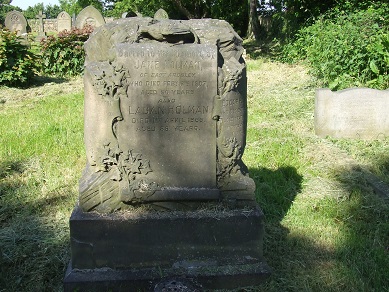
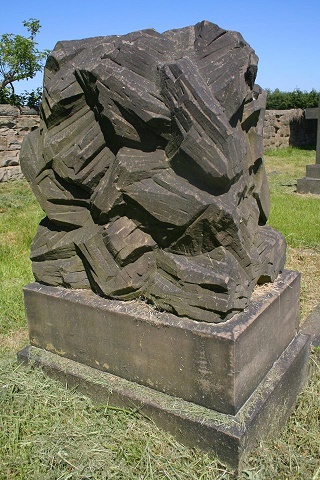
A walk up to the churchyard on a very nice Thursday morning brought me face to face, well face to stone, with the real thing.  From the back it looks like something you might see on Ilkley Moor – stones piled up in a random fashion.  But does the monument mean something more?

Who were these people mentioned on this headstone?  What connection do they have to East Ardsley?  And why does one of the people mentioned have such an unusual name?

First mentioned is ‘Jane Holman of East Ardsley, who died Feby 2nd 1907, aged 56 years‘.  Jane Holman, was born Jane in 1851, the daughter of William Haley and Hannah Walker.  Jane was born in North Brierley, but gave her place of birth as Oakenshaw and in 1881 was living with her family on Green Lane, Cleckheaton, working as a cotton and worsted weaver.

On the 9th of August 1876, Jane Haley went to The Parish Church in Bradford with her family and friends and married Horace Holman, born in Norfolk. Jane was now 24 and gave her residence as Oakenshaw, Low Moor, while Horace was 21 years old, employed as a carrier and also from Oakenshaw, Low Moor.  Horace, was the son of Charles Holman (deceased), a cattle dealer.  The marriage, after banns, was performed by Henry Prosser, B.A., and both Horace and Jane signed their names, as did their witnesses  G J Sewell and Emma Holman – Emma’s signature being quite naive.

By 1901 Horace and Jane were established in East Ardsley, living at Allinsons Buildings, with five children living at home. Horace was aged 45, a farmer, working on his ‘own account’ and a carting agent.  His sons also worked on the farm.

By February, 1907, we know that Jane had died.
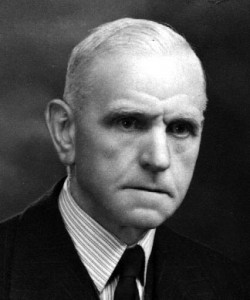
Laban Holman courtesy of Alistair Kennedy

Laban Holman courtesy of Alistair Kennedy

The inscription following that of Jane says ‘Also, Laban Holman, died 1st April 1966, aged 88 years’. As Laban was Jane’s son quite of a few of the census entries cross.  In 1881 Laban was with his family, he was four years old, being born on 2nd of April 1877 at Bottoms, Wyke and baptised on 20th May 1877 at the Wesleyan Methodist, Oakenshaw.

1891, Laban is living and working at Low Street Farm, in the Civil Parish of West Ardsley – he is a farm servant working for William Scott.  We know from his mother Jane’s entry,  that by 1901 the family were living and working in East Ardsley on the family farm and carting business.  Within six years of the 1901 census, we know that Jane had died.  Her will, proven in Wakefield, left all her business dealings to ‘my son Laban Holman for his own use absolutely in return for the good work he has done for me in managing the business and keeping myself and younger children thereout now for many years.’  Jane also left ‘all those Policies of Insurance on my life in the Prudential Insurance Office together with the household furniture and any money that may be in the house at the time of my death and the residue of my estate to my Trustees upon trust to sell, call in and collect the same and pay my debts, funeral expenses and the costs of proving this my will thereout so doing to pay and divide the same amongst all my children inclusive of the said Laban Holman, share and share alike.’…….what happened to Horace?  Probate to Jane, wife of Horace Holman, granted on 21st March to Laban Holman and Charles William Holman, electrical engineer, effect £189 6s.
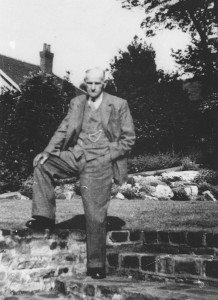
Laban Holman courtesy of Alistair Kennedy

Laban Holman courtesy of Alistair Kennedy

In 1910 there are Tax Valuations showing that Laban had access to various plots of land in East Ardsley and Thorpe  – some he rented from the Great Northern Railway, others he owned and sub-let.

Ten years later, in 1911 Laban is living with his sister Mary, her husband George Harper and their children, at 12 Allinsons Buildings, East Ardsley. Laban is a carting agent, his brother in law, George is employed as a teamster –  is he working for Laban?  The early 1920’s saw Laban, in directories as a haulage contractor working out of Thorpe with the telephone number of Rothwell 6.
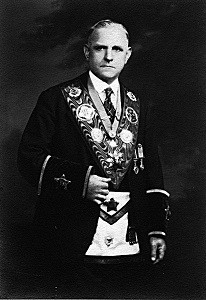
Laban Holman courtesy of Alistair Kennedy

Laban Holman courtesy of Alistair Kennedy

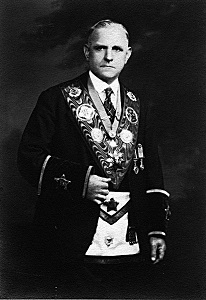
Laban, was also a member of a Masonic Lodge.  Laban, as we know, died on 1st April 1966 aged 88.  His Probate entry read ‘ Holman Laban of Oaklea, Wetherby Road, Bardsey, Yorkshire died 1 April 1966 at St Helen Hospital, Barnsley, Yorkshire.  Probate London 22 August to George Harper, coal and coke merchant and George Stone, bank manager.  £4245.

Another section of the memorial mentions ‘Francis Holman who died on 3rd of August 1903, aged 23 years’. Francis is living with his parents at Allinsons Buildings, East Ardsley in 1891 – so the family were in East Ardsley while Laban was living and working on the farm in West Ardsley. Horace gave his occupation as colliery labourer.  Francis can also be found on the census as Frank.  Also, on a section of the memorial ‘also of Edgar Holman, who died Septr 2nd 1889 aged 1 year ad 8 months , interred at Westfield Chapel, Wyke’.

But. what happened to Horace?   The 1911 census has an entry for a Horace Holman, carter, living at 19 Queen Square, Leeds, with his wife Clara…..could this be Jane’s Horace, who married Clara Hudson in the September quarter of 1907 in the York Registration District?  Could Horace have left the family home after the 1901 census.  That could be the reason why Jane left the business to Laban.   Anyway, there is a death for a Horace Holman in the Leeds area in the June quarter of 1923.
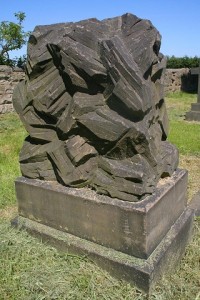
Rear of Holman headstone courtesy of Glyn Sherborne

Rear of Holman headstone courtesy of Glyn Sherborne

The headstone, some say the stonework resembles blocks of coal, or could it be stone.  Coal from the local mines or stone from local quarries that the business transported ………..you make your own mind up!

Thanks to Alistair Kennedy for allowing me to use his images, he also tells me that other members of the family have interesting stories to tell!

London – where the bombs landed

I wrote a short article about this resource a few years ago, so I thought I would give you all a chance to have a look.

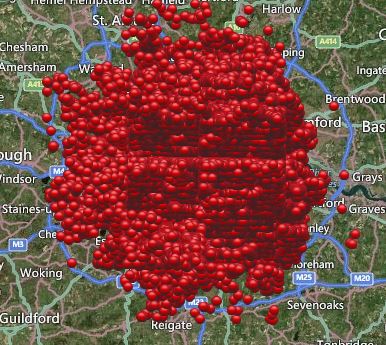
A jointly funded project, Bomb Sight, has been created to map the London WW2 bomb census between 7 October 1940 and 6 June 1941, which had previously only been available at the National Archives.

Bomb Site map of London within M25

Bomb Site map of London within M25

Visitors to the sight can explore the map by dragging, section by section which can be quite hard to find your way around due to the very large number of red circles – just shows how Londoners suffered, or enter a street or area.  By clicking on one of the circles you can see what type of bomb hit the area.  The read more section can sometimes give a lot more details i.e. current address, people’s memories and sometimes photographs

Take for example one of Londons tourist attractions, Buckingham Palace, within the period covered by the census over 25 bombs fell within the boundary of the palace or very close. The Tower of London and Tower Bridge also feared no better with over 15 bombs landing close.

Taking a look at the map, so that you can see all of the London are, it seems there was no peace for anyone inside the M25, even up to St Albans, Hatfield and Hoddesdon.

A drop down menu gives you the options of, the first day of the Blitz, street view, anti-invasion sights, 1940’s bomb map.  Another menu gives you the option of seeing the first night, weekly or aggregate bomb census.

Why not grab yourself a cuppa, take five minutes and explore.  It does not matter if you have family from the London area or not – I guarantee you will spend more time there than you planned.

Interactive WW2 map

Aberdeen was bombed during WW2 for three years.  This devastated those living and working in the area.

In 1943, according to the Press and Journal, was the deadliest attack killing nearly 100 people and injuring many.

At one time in the air 10 Luftwaffe Dornier 217 bombers circled the district, then swooped low, dropping bombs with no regard life or limb.  Killing, maiming from a distance and leaving panic and trauma in its wake.

The city saw its last raid in 1943 but had seen 141 others that were classed as minor.

Now an interactive map has been developed to show where and when the bombs fell and if your families life was impacted by these events.


A Poacher’s Tale is not always happy one!

A Poacher’s Tale is not always happy one!

A few years ago, well it seems like that but is probably longer, I was given a box of photographs to scan and do something with. Some of the carte de visite’s had that were handed to me in a shoebox had names or a clue to who they were.  While others, the only clue was the name of the photographer and the place where they had their studio.

The box held a wonderful time capsule of images, with many having a Morley, West Yorkshire connection, but others linked by the photographer to places as far away as America and Canada, but that is another tale.

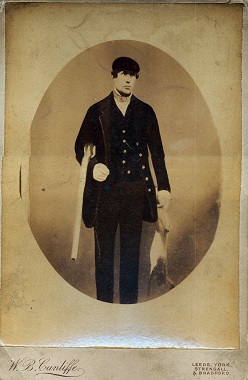
James Clough

James Clough

One of the pictures was handed over on its own………why?  Well, I soon found out.  I was asked it I could find out a little more about the person who would be  forever the age when the image was taken.  The reverse of the carte gave a name – James Clough, and I was also given a clue that he was a gamekeeper, that would also be suggested by the fact in the photograph he was holding a rabbit and a gun – just a few clues! It was also mentioned that James had been killed, but no idea when – now that would surely give me something to get my teeth into!

So, off to find a gamekeeper – James, found in the 1881 census as a gamekeeper. I now had 1819/20 as as approximate time of birth (61 years old), with Morley being given as his place of birth and confirmation of his occupation.  He is living with his wife Mary, from West Ardsley, aged 56 and sons George A and Scott, aged 10 and 8, both being born in Soothill.

Going back in time to find James as a young man, back to 1851.  James was living at Northgate, Dewsbury, working as a blacksmith with  Martha, aged 27 from Dewsbury, as his wife – looks like things could get complicated.  Martha was Martha Pickles who he married in Dewsbury All Saints in July 1839 after banns were read on the 7th, 14th and 21st of July.

24 jul 1858

Lancaster Gazette 24 July 1858

Forward in time with a search through newspapers came up with a bit of a surprise!  The Lancaster Gazette of 24th of July 1858.  The small headline in the newspaper column read ‘Daring Outrage by Poachers’.  James along with three others appeared before Wakefield Magistrates in July 1858 for night poaching in West Ardsley near Wakefield accompanied by violence. Three gamekeepers were keeping watch on the land owned by Joseph Ellis, esq.  The poachers were seen and followed by the gamekeepers and their dog. If you read the article you will see what the reporters said in the paper.  But it must have made a stir to be reported in Lancaster.

Leeds Mercury June 14 1859

Leeds Mercury June 14 1859

1859, only a year after being accused of poaching, James is now in the papers, and we see the first reference of him being a gamekeeper.

A few years late, 1861, James is living as a lodger in the home of Joseph Whittaker – The Joseph Whittaker who he was caught poaching with, in 1858. James is listed as married but his wife is not mentioned.

1871 came around and James is living in Soothill, with Sarah, his wife and son George Albert, aged 4 months.  By now James is 51 and Sarah, is 38 – who is Sarah his wife?  What happened to Martha?  There is a death of Martha Clough in the March Qtr of 1852 and a marriage of a James Clough to Sarah Westmorland on 23rd of July 1866 in Dewsbury Parish Church.  James was a widower aged 47 and the son of William Clough, while Sarah was a spinster aged 34, the daughter of Charles Westmorland.

1881 – James is still living in the Soothill area but now quite close to the Babes in the Wood, he is 61 years old. He now tells that he is a gamekeeer and living with his wife – Mary.  Who is Mary, you may ask?  Well, here we go again.  It appears that Sarah died in 1874 as there is a burial entry for her in Hanging Heaton churchyard on 13th of November 1874.

The year of 1884 brings another turn-up for the books – James Clough aged 64 married Leah Delbridge, a 53 year old widow, daughter of Thomas Griffiths,  on 7th January 1884 again in Dewsbury Parish Church, I hope by now he received a discount!

Hanging Heaton church copyright C Sklinar

Hanging Heaton church copyright C Sklinar

I hope life was going well for the couple who had seen the loss of their spouses, in James’ case he had seen the death of more than one wife.  But, life has a habit of throwing things at you.  It was in October of 1885 that James Clough, gamekeeper was killed by poachers.

James was laid to rest on the 19th of October 1885 in Hanging Heaton Churchyard.

Irish Catholic Church Records Going Online

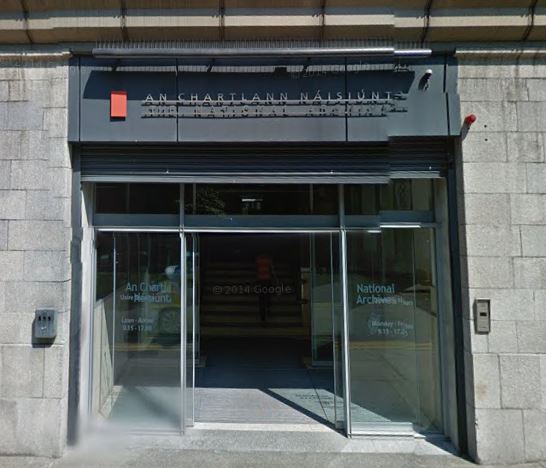
Irish National Archives, Dublin

Irish National Archives, Dublin

Tracing your family history in Ireland is to get a lot easier as the National Library of Ireland getrs ready  to give FREE online access to its Catholic Church records collection from this summer (2015) according to IrishCentral.

Genealogy expert John Grenham wrote in The Irish Times that it is “almost impossible to overstate the importance” of what will happen.

The records that will go on line mainly consist of baptismal and marriage records, the earliest of which dates back to the 1700’s and cover the 1,091 parishes in the country.  This will enable the millions of people worldwide to access their Irish roots much easier.  The records are currently available at the National Library of Ireland on microfiche and therefore you need to visit in person or hire a researcher but demand has put a great strain on this service and the cost of hiring a professional researcher has put these records out of many people’s price bracket.

For many years volunteers have been working to make these records ready for digitization and online research.  These records could be the most important records to go online since the 1901 and 1911 census for Ireland at the Irish National Archives.


Voluntary Aid Detachment volunteers

Over 90,000 people volunteered for the British Red Cross at home and overseas during the Great War, providing vital aid to naval and military forces and caring for the sick and wounded. County branches of the Red Cross had their own Voluntary Aid Detachments (VADs) made up of both men and women. The VAD’s work included such jobs as nursing, transport, rest stations, working parties and auxiliary hospitals. They ran libraries, did air raid duty, and a service that is still being used today – Missing and wounded service.

As women volunteered for jobs normally undertaken by men prior to the war it enabled over 11,000 men to be released for military service of some sort.

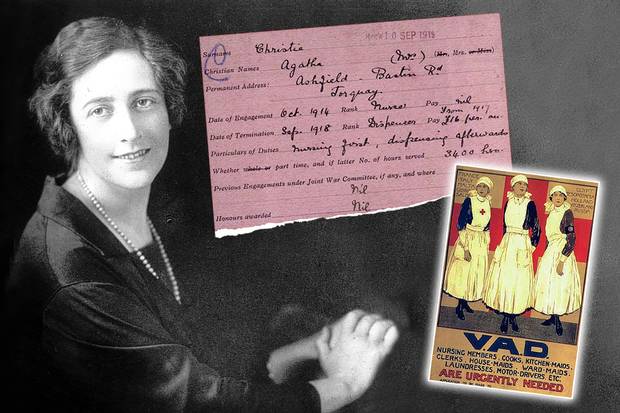
Agatha Christie record. London Evening Standard

Agatha Christie record. London Evening Standard

Did you know that Agatha Christie, volunteered for the Red Cross before publishing her first novel in 1920 and worked in a Torquay hospital. Her work, dispensing drugs, gave her an insight into poisons – this information she used in her books. Vera Brittain, famous for her ‘Testament of Youth’, joined the VAD in 1915 and by 1917 was working in France. Enid Bagnold, of National Velvet fame, served in London. Did you also know that E M Forster, novelist, critic and essayist, was a pacifist and instead of fighting he worked with the Red Cross. Lady Diana Manners, mentioned in an earlier article, – reputedly the most beautiful woman in England at the time and it was expected that she should marry the Prince of Wales. Her mother was not enamored at her joining the VAD. Diana stated in her memoirs, The Rainbow Comes and Goes. “She explained in words suitable to my innocent ears that wounded soldiers, so long starved of women, inflamed with wine and battle, ravish and leave half-dead the young nurses who wish only to tend them,” The Duchess relented “… knew, as I did, that my emancipation was at hand,” Diana says, and goes on to admit, “I seemed to have done nothing practical in all my twenty years.” The VAD plunged her and other young ladies into four years that would change their lives forever. I’ll dot in a few more volunteers further down the page.

Deaths – even though the VADs were non-combatant, they suffered many deaths. During the war,it is estimated that 128 nursing members and over 100 other VAD members not all directly working for the Red Cross died or  were killed. The Roll of Honour contains records of the deaths of 498 Joint War Committee members. This figure includes 8 VADs who died as a result of the sinking of the SS Osmanieh on 31 December 1917. The vessel was contracted by the British navy and was struck by a mine laid by the German submarine UC34 and sank, killing 199 people. They are remembered at the Alexandria (Hadra) War memorial cemetery. The most common cause of death of the VADs was pneumonia caused by Spanish flu.

An obituary in the Red Cross Journal, 1918 stated:

Miss Elger died on February 10th from pneumonia following influenza… For two and a half years she was a devoted and conscientious worker at Clayton Court Hospital, where her loss is felt most keenly by all who knew her. Clayton Court, it will be remembered, was most generously placed at the disposal of the Red Cross by Mr and Mrs Elger early in the war. After doing so much to help their country, it seems hard that they should have to bear this further personal sacrifice”.

The Red Cross has recently transcribed personnel records and at the moment surnames starting with the letters A and B are currently available to search. Volunteers are still working to update the site with more names. One such volunteer was Achsah Bradley of Westbourne, St Andrews Avenue, Morley. Her record card shows that she had originally lived at Denshaw, Morley. Achsah served from March 1917 to January of 1919. Her work as a Special Service Probationer, a pantry worker, was at Roundhay Auxiliary Military Hospital, Leeds, where she worked part time. In total she worked 3,920 hours, which roughly equates to nearly 40 hours per week for her 2 years’ service.

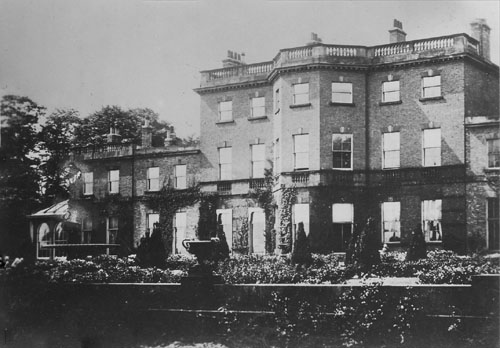
Thornes House, Wakefield home of the Milne-Gaskell's

Thornes House, Wakefield home of the Milne-Gaskell’s

Another volunteer was Lady Constance Milnes Gaskell, of Thornes House, Wakefield.

One of the gentlemen who volunteered was Retired Major Ernest James Gibson Berkley of 70 Camberwell Road, London, S.E.5.  Major Gibson served from June 1918 until June of the following year, working as a Divisional Inspector, with duties at the P.M.O. Hospital, and Southward V.A.D. Hospital.  He had been awarded the M.B.E. and O.B.E.  Major Berkley, in 1911 was aged 49.  He gave his occupation as ‘SURGEON MAJOR R A M C T CAPTAIN HUNSBURY’. Information about him can be found in The Gazette here and here.  Probate for Major Berkley tells that he died on 30th of April 1928 and Probate (to Barclays Bank) revealed that he left £20813 5s 7d. His wife will can be found here.

Source – The Red Cross archives

Four years of our war website

Batley Lads – Roll of Honour of Batley Grammar School – Book Review

We recently published an article by Guest Blogger, Philip L Wheeler, who wrote about Drighlington ‘pub lads ‘ who gave their lives during WWI.  Well I am pleased to say that Philip, with three others has written a book about the lads from Batley Grammar School, who died in the Great War 1914 – 1918, with the support of the National Lottery, Heritage Lottery Fund.

Batley Lads cover

Batley Lads cover

The paperback book, A4 in size contains over 300 pages. Before you visit the pages of the young men, you are invited to become familiar with life in Edwardian Batley and Batley Grammar School at the time leading up to 1914 enlistment and the period when the ‘old boys’ started to enlist.

You are then introduced to the 61 fallen boys and one headmaster from the school who paid the ultimate sacrifice, by a full colour page bearing their rank and name, lifespan and regiment, with at least one image per entry. Each of these pages has a selection from a poem or prose for example:-

“Earth has waited for them, All the time of their growth Fretting for their decay: Now she has them at last! In the strength of their strength suspended—-stopped and held.” Isaac Rosenberg 1917.

The book is easy to read, and is overflowing with information about the men and their families; what was happening during their war and where they now rest.   One of the men mentioned and highlighted on the back cover is Private Horace Waller, V.C., born in 1896, he served in the KOYLI 10th Batt.  Horace died on the 10th of April 1917 aged 20 from wounds received while throwing bombs at the enemy.  It was a result of these actions and actions earlier in the day that he was awarded The Victoria Cross.  Another young man was Corporal Gilbert Pattison, who served in the Royal Flying Corps.

The Epilogue, goes on to tell how the school and other schools continued after the war and bringing the school to the future, hoping that the current pupils will visit the cemeteries of their fallen.

Finally, there are the resources and index.

If you have a connection to Batley Grammar School, or the Batley area, this is a wonderful book to ‘pop in and out’ of.  All in all, this book has been researched in depth by Philip, an ex-pupil of Batley Grammar School and his co-writers – this is a book to be proud and well worth the £10 price tag!

If you would like a copy of this very informative book please email :  info@projectbugle.org.uk

A new princess

On the second of May 2015 HRH Princess Charlotte Elizabeth Diana of Cambridge came into the world.  Her birth was officially registered on the 5th of May and signed by her father William.

William, gave his occupation as that of Prince of the United Kingdom, and informed that his wife, Catherine Elizabeth, HRH The Duchess of Cambridge, was a Princess of the United Kingdom – people laughed at this!  Is he the first to enter such a position as his occupation?  I am not going to discuss his reasons, if it is correct in this day and age, even though one day he will be a King.

Lets have some fun looking around the census, birth entries and other records to see if others have done the same as William.

In the winter of 1841 Edward, son of Queen Victoria and Prince Albert of Saxe-Coburg and Gotha was registered as Gotha being his family name and his first names being Prince of Wales – not a mention of Edward!  gotha saxe coburg

1851, the first census to give a place of birth other than ‘in county’, and we find Her Majesty Alexandria Victoria, wife, aged 31 and her occupation is ‘The Queen’.  Her husband, HRH Francis Albert Augustus Charles Emanuel, head of the house, and his occupation is Duke of Saxony, Prince of Coburg and Gotha. Their children are also listed as having occupations as :- Princess Royal, Prince of Wales, Princes and Princesses, while Arthur William Patrick Albert aged 11 months is recorded as Prince of the United Kingdom, Duke of Saxony, Prince of Coburg and Gotha.

The census of 1881 is  similar with Victoria’s occupation being Queen of Great Britain and Ireland and her children being Prince of Princesses.  I must say this census return is rather untidily written to say who is the Head of the Household!

By 1911 King George was on the throne, his census has him as the Head of the Household, been married 17 years to Mary, his Queen and they had at the time six children, all who were alive at the time.  His occupation, as with that of his wife’s is blank.  Their sons, Princes Albert and Edward both give their occupation as being in the Royal Navy.

Also in 1911, the Duke of Northumberland, Harry George, aged 64, gave his personal occupation as Peer.  The Duke of Buccleuch, was just entered as ‘Buccleuch’ with the later addition of ‘The Duke’ in parenthesis.  His wife is listed as Peeress, while their son,  Lord Herbert Scott is a Lieut. Col.  in the 23rd London Regiment.   A visitor at the time of the census, Lord Claud Hamilton, aged 68 gives his occupation as Member of Parliament.

While Edmund, Lord Faber, gave his occupation as Banker, being an old Etonian, and a senior partner in Becket’s Bank of Leeds and York.  He was also a Justice of the Peace and Deputy Lieutenant of the West Riding of Yorkshire. Lord Stratheden aged 81, gave his occupation as that of private means.

Princess Elizabeth on her birth certificate is indexed as Windsor Elizabeth A M and her mother’s maiden name is Bowes-Lyon.

Queen Elizabeth II on her wedding certificate to Philip Mountbatten, her rank or profession is given as Princess of the United Kingdom of Great Britain and Ireland, while he entered HRH The Duke of Edinburgh, KG.

It looks like it boils down to how you understand the question asked.  To other generations the wording would be ‘your rank of profession’, while today it seems to be just ‘occupation’ as the wording on the certificates – but who asked the question of occupation and how was it asked!  Simple questions but could mean a world of difference.

Giving an example of census questions asked by the enumerator.  1. Where are you from?  2. Where were you  born?  I suppose they could be classed as similar questions, but when rooting your your ancestor  it could mean a world of difference.  1. Where are you from?  Could be understood as ‘I’m from Methley’.  The enumerator has an answer, he is happy.  Ten years later our family member has moved and he now says he is from Sheffield, again the enumerator has an answer and he may now know the family, so he is happy with the answer.

2. Ten years have passed and the enumerator asks ‘where were you born’ and our head of the household says ‘Bradford’.  Both questions could be understood as the same, but they could also mean something totally different.

It is not always how someone perceives themselves but how someone asks a relevant question.