Category Archives: News

Guy Victor Baring

It must be nearly 30 years since I started my family tree and it is nearly 15 years since I started my websites, and about 10 years since I started transcribing war memorials, but only 4 years since I started blogging.

During those years of transcribing war memorials I have travelled the country and seem to have gathered thousands.  I have not just photographed the more traditional memorial, but have also gathered into my folder of photographs,  memorials of a more individual nature, you know those to one man or woman, who is remembered not only on a village or town memorial, or a workplace or scholastic memorial but also by either their family or individually by their community.
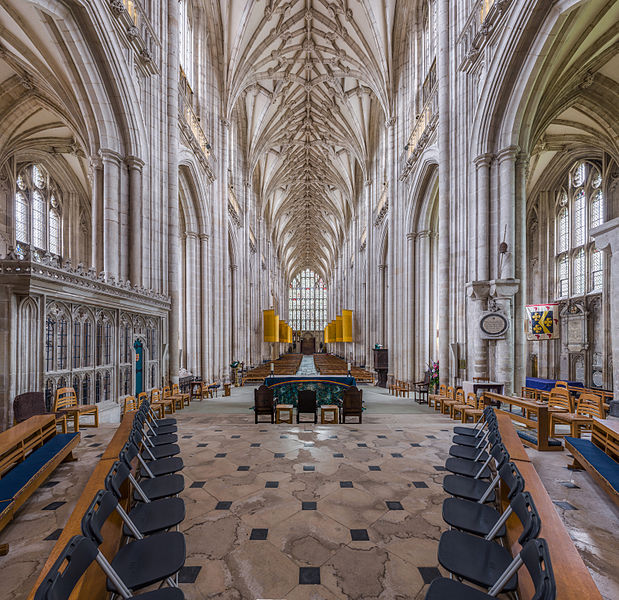
Winchester Cathedral interior from Wikipedia

Winchester Cathedral interior from Wikipedia

While on a visit to Basingstoke a few years ago to see my daughter and her boyfriend (now fiance) we ventured into Winchester Cathedral (read blog) and while photographing the memorials on the ancient walls, I came across a familiar name – Guy Victor Baring.  A name that is on my extended family tree.

I am not one of those people that say ‘I’ve done my tree’, I am one of those who like the chase, like to see who is connected to who and what kind of life they lead – how did they fair during their years on this earth.  I like to solve a mystery or you could just say I am nosey!

The link to Guy is via my great aunts husband family – it goes back and then comes forward, ending up with Guy Victor Baring.

Some of you may think that the surname is familiar, I did, and then I found out why.  The Baring family are synonymous with banking and commerce, and have been for over two hundred year. But, back to Guy.
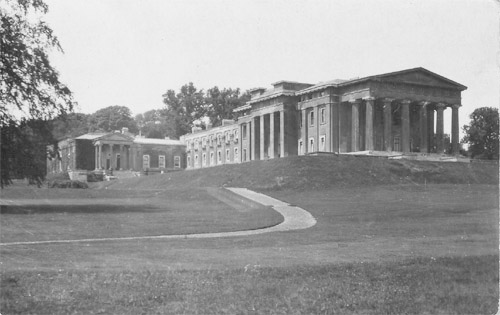
The Grange

The Grange

Guy was born on 26th of February 1873 in Piccadilly, London to Leonora Caroline (nee Digby (1844 – 1930)) the wife of Alexander Baring (1835 – 1889).  Alexander Hugh Baring, 4th Baron Ashburton, was a landowner and Conservative politician.  Guy was one of seven children in the household born between 1866 and 1885 and brought up at The Grange.  Guy was educated at Eton College and the Royal Military College, Sandhurst, being commissioned into the Coldstream Guards in 1893.

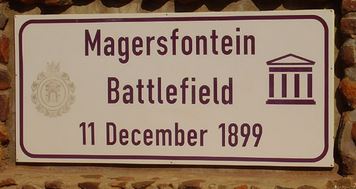
in 1899, Guy was sent with his unit to fight in the South African War, and was there during the battle of Belmont, Graspan, Modder River, Magersfontein, including the occupation of magersfonteinBloemfontein. During his time in South Africa he was mentioned in despatches, and received the Queen’s South Africa Medal with three clasps.
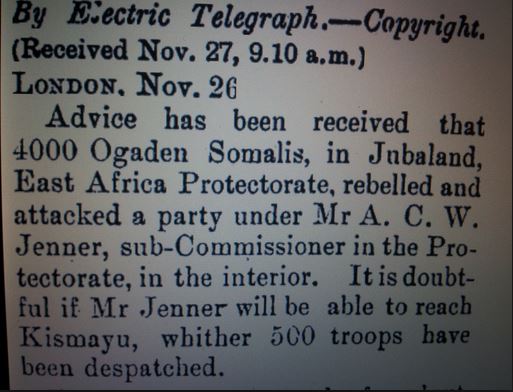
A detachment of Coldstream Guards was sent to Australia in 1900 when the Earl of Hopetoun was inaugurated as Governor General of Australia.  The year of 1901 saw him being promoted to Captain and it was during this time that he wa attached to the King’s African Rifles as a special service officer with the CaptureJubaland Expedition against the Ogaden Somalis  for this he was awarded a medal with clasp.
It was after his return, that in the late summer of 1903 that Guy married Olive Alethea Smith, in  London.

His political career started in 1906 when he was elected as Member of Parliament for Winchester in the general election and  was re-elected in the 1910 elections and officially left the regiment in 1913.

6 Hobart Place

6 Hobart Place

Back a few years to 1911 when the census was taken, and you would find the family at 6 Hobart Place, S.W. Guy was recorded as a Member of Parliament and on Staff Pay from the army.  He stated he was born at 82 Piccadilly, London.  Olive, 33, told she had been married to Guy for seven years and bore him four children, but one of them had died. Living at home with their parents was Simon Alexander Vivian aged 5 and Amyas Evelyn Giles aged 1.  Looking after the family in their fourteen room house were seven servants.  Hugh Alexander Vivian born in 1904 had died in Winchester in 1908 aged 3.

Guy and Olive went on to have six children.  One of their children, Amyas Evelyn Giles Baring (1910-1986) known as Giles went on to become a 1st class English cricketer between 1930 – 1946. Aubrey G A Baring, another child, fought in WW2, gaining the rank of Squadren Leader.  He was decorated with the DFC. Later in life he became the Chairman of Twickenham Film Studios. One of their other boys, Esmond Charles Baring, educated at Eton, like his brothers, went on to Trinity College.  He also fought in WW2 and gained the rank of Lieutenant Colonel in the Royal Armoured Corps. He was awarded the Croix de Guerre, the Legion of Honour and invested as an Officer, Order of the British Empire.
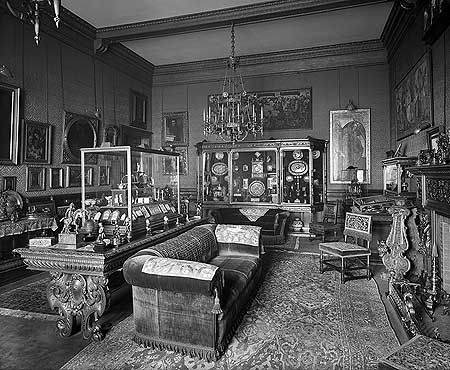
82 Piccadilly, Bath House - interior

82 Piccadilly, Bath House – interior

As we know Guy was born at 82 Piccadilly, known as Bath House, which stood on the western corner of Bolton Street, facing Piccadilly.  This fine building was ranked with the like of Devonshire House, Burlington House, Northumberland House and Lansdowne House, full to bursting with fine artwork, fine furniture and large numbers of staff.   The building had seen seen a few disasters including  a fire in 1873.  A letter from Charlotte Polidori, quoted in another letter to Dante Gabriel Rossetti told about  the damage: “All the pictures except three
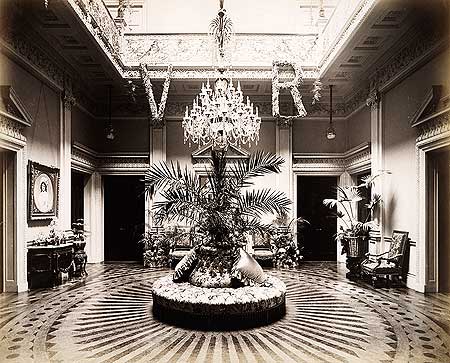
8s Piccadilly, Bath House interior

8s Piccadilly, Bath House interior

(Leonardo, Titian, and Rubens) in the Bath House drawing room are destroyed.”  The three paintings referred to were subsequently identified as Christ and the Baptist as children (likely by Bernardino Luini, now lost), Wolf and fox-hunt (Rubens, now in the Metropolitan Museum, from the collection of Lord Ashburton), and A woman with a dish of roasted apples (Pieter de Hooch, in fact destroyed in the fire). Rossetti’s correspondence regarding the losses described two pictures attributed to Giorgione, two attributed to Titian or Paris Bordone, and a Velazquez. Bath house was demolished in the 1960’s.
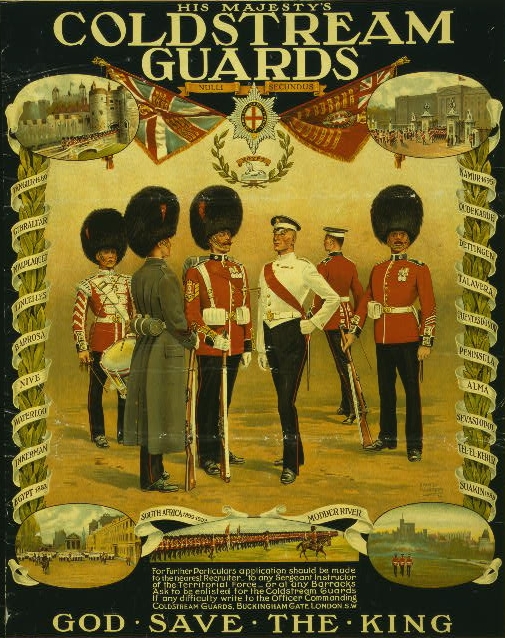
Coldstream_Guards_WWI_posterAt the outbreak of WW1, Guy rejoined the military and was posted to Windsor where he was in command of a training company until 1915 when he was posted to France.  During this time he was second in command of the 4th (Pioneer) Battalion.  After the Battle of Loos he commanded the 1st Battalion of the Coldstream Guards.

On the 1st of July 1916 the Battle of the Somme started and by November, when winter approached the battle was abandoned there had been  some 420,000 Commonwealth casualties, 200,000 French and 500,000  German – the reward for this had been a movement of 6 mile into German territory – some might ask, was it worth it?
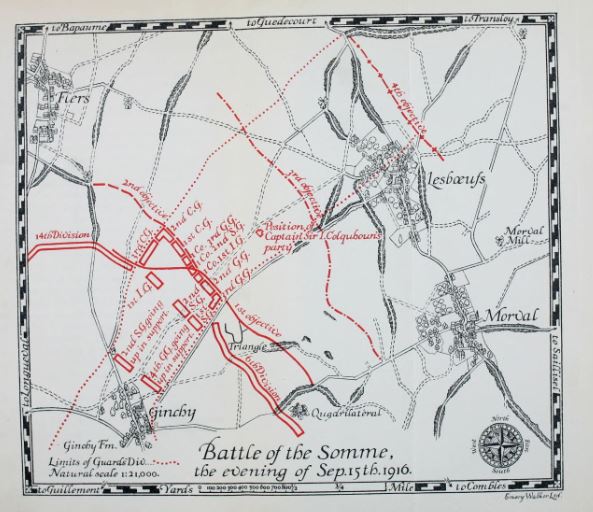
lesboeuf map source coldstream guards bookLess than three months into the Battle of the Somme, Guy’s Battalion, with two other battalions,  were advancing along the Ginchy to Lesboeufs road to attack a German position. This had been the first time that three Coldstream Guard battalions had attacked together, but advancing ‘as steadily as though they were walking down the Mall’  the action took a heavy toll. There were 17 officers and 690 other ranks walked down the road but only 3 officers (one injured) and 221m other ranks lived to walk back.
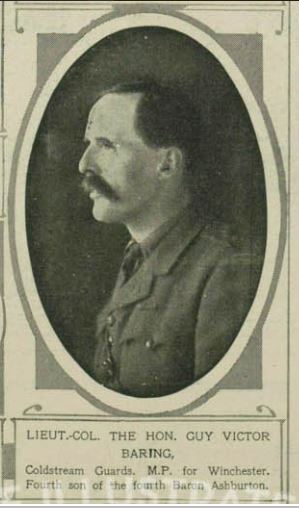
The Hon. Guy Victor Baring

The Hon. Guy Victor Baring

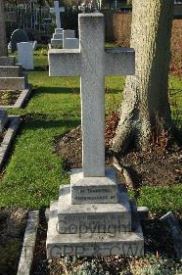
Lieutenant Colonel, The Hon. Guy Victor Baring was one of the 14 officers who were killed in action that day and he rests in The Citadel New Military Cemetery, nr Fricourt, with 362 other identified casualties and 16 young men whose name is known only unto their God.  Guy was one of 22 Members of Parliament who were Killed in Action during the Great War.

The entry for Guy in the Commonwealth War Graves Commission holdings tell that Olive was now living at Biddesden House.   At the time leading up to WW2 Olive was living, as seen in the 1939 Register, at Empshott Grange, Petersfield. Also in the house were numerous indoor and outdoor staff.  Olive at the time was part of the WVS (note not the WRVS until 1966)

Olive died in 1964 in the Petersfield area.
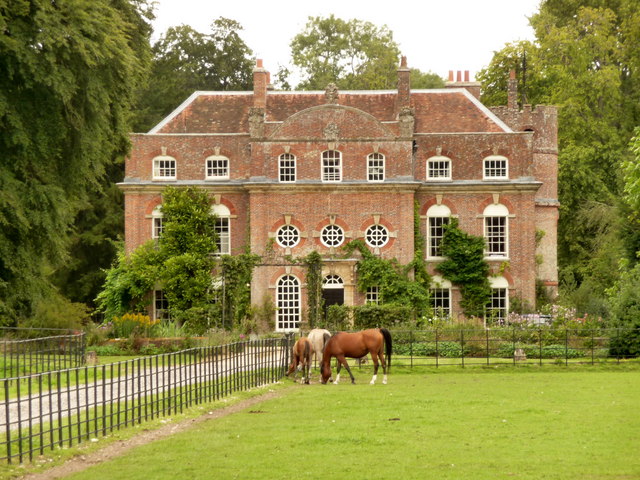
Biddesden House

Biddesden House

Sources:-

The Baring Archive – is here

Winchester Cathedral – click here 

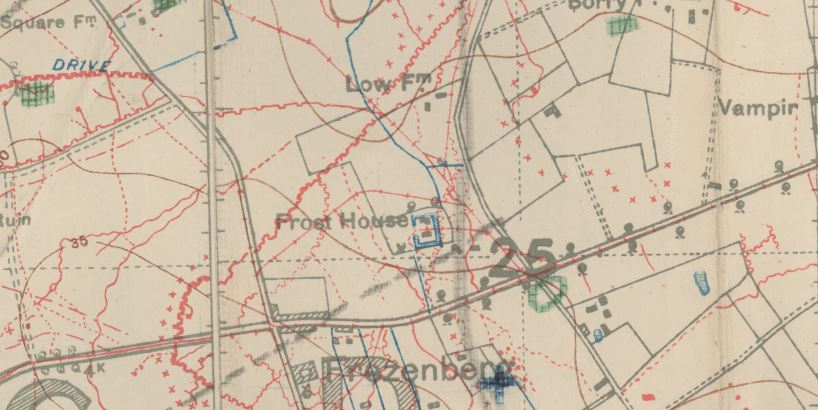
Military map can be found – here 

Eton Memorials are here 

Lost Heritage – click here

Ancestry, Find My Past, Freebmd, Wikipedia
W Epps, PNR

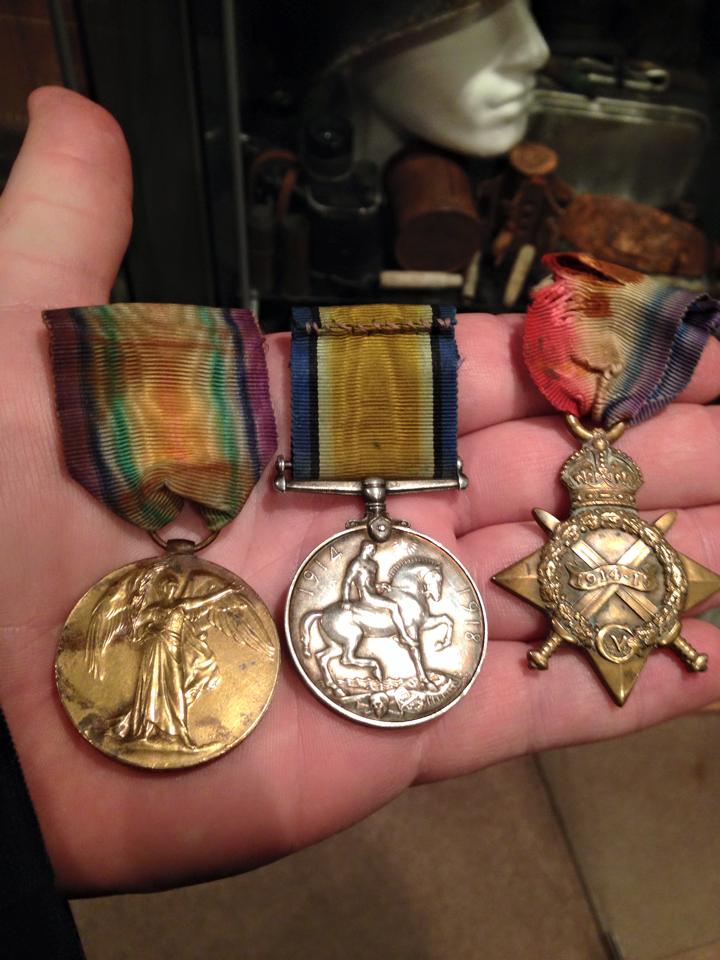
A few weeks ago a set of medals was posted on a Facebook groups page.  The ribbons looked a little unloved, as though they had seen better days and a little on the sad side.  I contacted the person who had posted the photographs, asking would they mind if I blogged about the medals.  The reply came back…………….Yes, I could.   There has been a week or two gap since the positive message, but here goes!

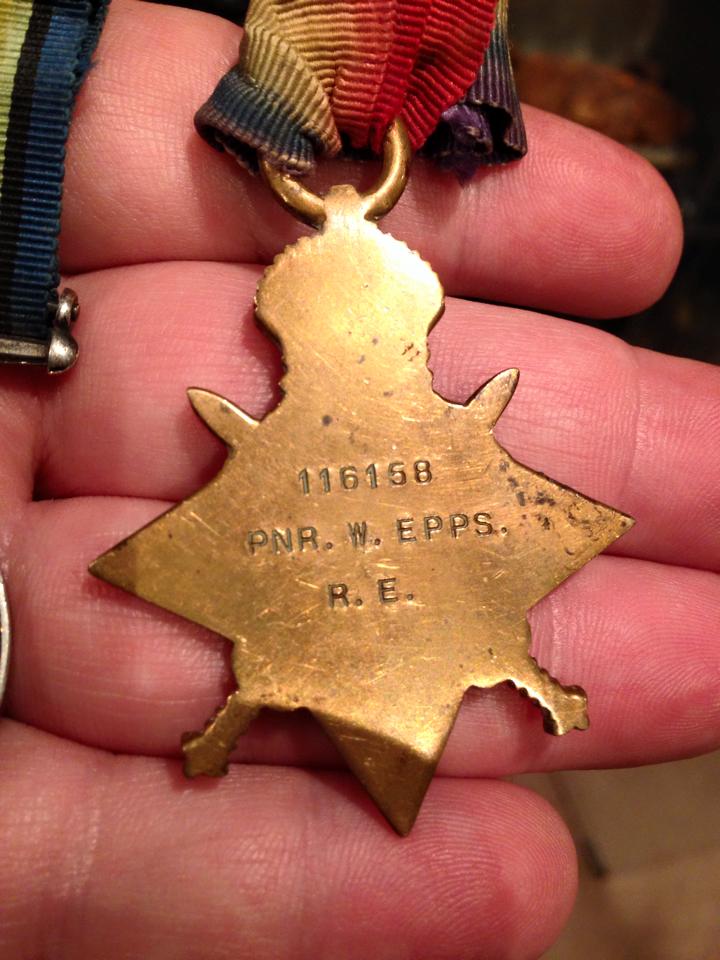
The back of one of the medals bares the information  –   11658, PNR. W. EPPS. R.E.

As search of Soldiers who Died in the Great War with that service number came up with nothing.  The same with the Medal Cards and a few other sources.  A different route was needed.

wickhamTrying again, with renewed vigor, I looked at the Medal Cards, as I knew there was one as we had pictures of the medals to prove it.  This time I entered EPPS and Royal Engineers, and there he was – EPPS, William, Pnr., 116158 and his list of medals.  What I now knew was that he also served as Pte., 292069, in the Labour Corps., and had entered France on 28th August 1915.  But, what is more important is that we know he is called William.

Why is it that you can find Service Records for every one else, but not the ones who you are related to…………….it is some kind of law but whose, Sods or Murphy’s?  More information about William from his Service Records –  William was living at The Square, Wickham, Hampshire.  Leaving his military records for a while and back to Civil Records.

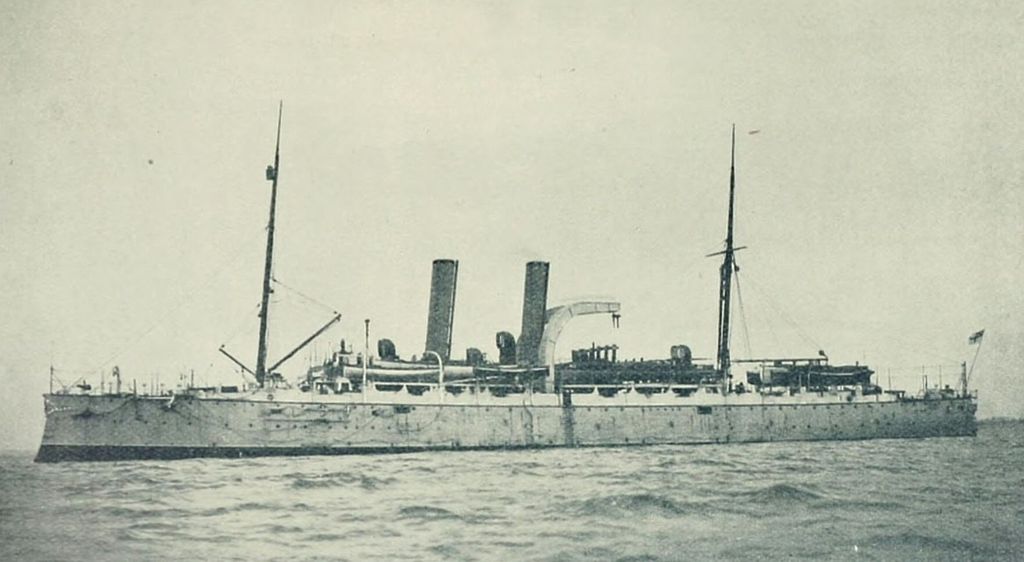
HMS Vulcan

HMS Vulcan

In 1911, William was 38 years old and had been married to Eliza Jane for five years and they had two children, George Thomas, 2 and Dorothy Alice aged eight months.  William had bee born in Portsmouth and earned his wage as a bricklayers labourer.  Ten years earlier in 1901 there is an entry for William Epps as a Royal Marine, as a crew member on the ‘Vulcan’ in the Grand Harbour Malta.  His place of birth varies slightly, so not completely sure this is our man.

Back to his service records – His Short Service Attestation is a Duplicate and the service number 116158 has been struck through and over written with 292069.  His Regiments also have multiple entries, starting on the line with Royal Engineers, written above is Labour Corps and then atop them all Pioneer Corps.  His address, we know as The Square.  He is a British Subject aged 43 and is married – this we know from the 1911 census.  He has also given previous service – this could have been him in the 1901 as there are the initials RMLI – cold this this be Royal Marine Light Infantry as seen in the census? He is also willing to serve for the duration of the war and he signed these papers at Whitehall London on 19th August 1915.

The next page. brings William more alive, as he is 5′ 8″ tall, with a fully expanded chest of 36″ and a 2″ range of expansion.  His wife Eliza Jane also added information to his records – that they were married on 14 of July 1906 at the Register Office, Portsmouth.  Her maiden name is not all that clear, therefore, a quick look at FreeBMD tells her maiden name was Hatton and she was a spinster at the time of their marriage.  Eliza also gave information on their children:  George Thomas was born on 2nd January 1909 and Dorothy Alice followed on the 9th of July 1910, with both children being born in Fareham.

William embarked for France, as a Private on 28th August 1915 as part of the British Expeditionary Force.  He was transferred to the Labour Corps on 31st of July 1917.

Epps, William, medals 2

Epps, William, medals 2

Epps, William, medals 1

Epps, William, medals 1

Also among his service records is the Discharge Documents.  It is so nice to write about a soldier that does not have a grave in a foreign land, a man who came home to his family, friends and neighbours.  After enlisting on 15th August 1915, William was Demobilised on the 15th of March 1919 in Nottingham.  In among the service records is a small slip of paper, the slip of paper is signed y William as a receipt for his British and Victory Medals.  There is also a receipt for another medal, as he only had three, this must be for the 1915 Star. which he duly signed for on 28th (?) October 1920 and he gives his details as 202069, 5th Labor Batt. R.E.

William, in February 1919, was issued a sheet of paper – his ‘Protection Certificate and Certificate of Identity (Soldier not remaining with the Colours’ which he would have had to carry with him.  it gives his regimental details, year of birth and where he would rejoin in case of an emergency, plus his occupation and address, and that was issued at Shorncliffe on 16th February 1919.

Further into the collection of his records is his original Attestation Paper.

There is a death entry for a William Epps aged 51 in the summer of 1925, which fits in with his birth being around 1874.

Sources

Jay Hewitt for allowing me to use the photographs

Ancestry

Wikipedia – HMS Vulcan

Royal Engineers Museum – click here 

Royal Pioneer Corps Museum – click here 

Find my Past

Freebmd

Younie Brothers in Arms

This is a blog I started a couple of weeks ago and saved as a draft, with it being late in the evening.  In the meantime I, after having a chat with a fellow researcher, did the long awaited entry for Alexander Riach who had an accidental death.

It has been a while since I have touched anything connecte to my family history, I’ve been too busy researching for a couple of projects I have on the go.  But tonight I took the bull by the horns and transferred my family tree from my pc to my laptop.

So I have been having a mooch around and seeing who is there, been looking through the pictures I have added to the many people and I came up with a piccy of a headstone, my friends will say ‘well what a surprise, a headstone!’  I had totally forgotten taking this one on a visit to Forres, Morayshire, years ago – I think it could have been one of those I’ll do a little research on that one at a later  moment…………………the moment has come!

Isn’t it wonderful what a headstone can tell you, and especially a Scottish headstone as they nearly always have the wife with her maiden name for all to see – a woman keeps her name from cradle to grave…………wouldn’t that be wonderful if that was done in other countries!

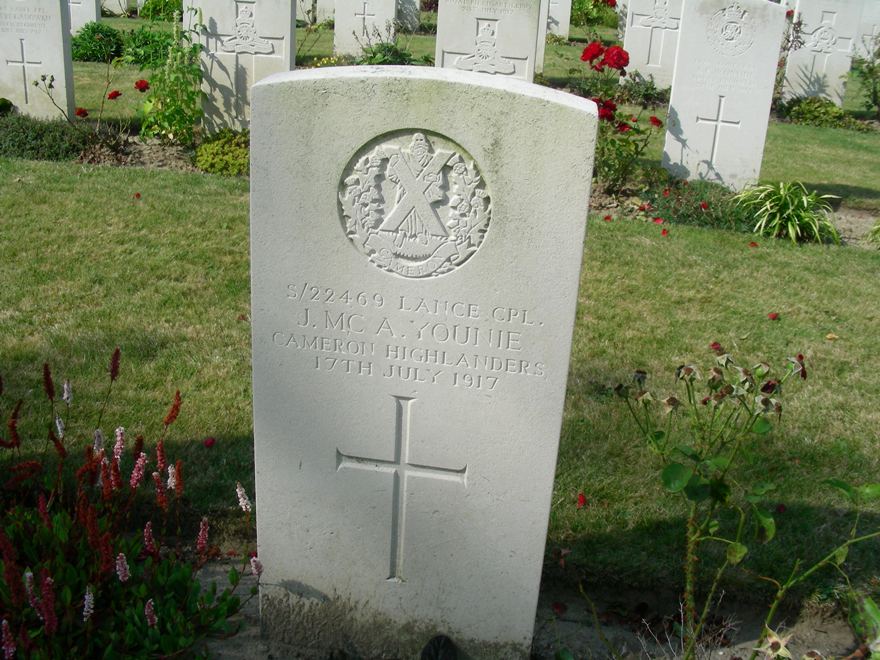
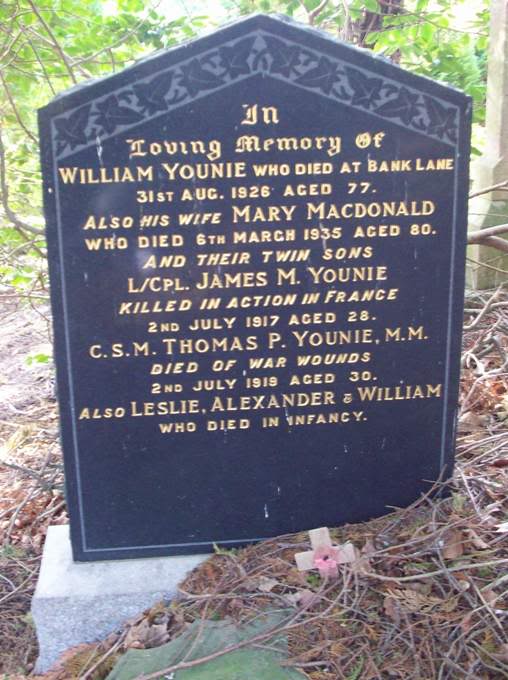
This simple headstone is to William Younie who died at Bank Lane, 1926 aged 77.  His wife, Mary MacDonald died in 1935 aged 80.  But there are another couple of entries to their children.  Two of these entries I will go into further detail in a while, but now I will name Leslie, Alexander and William who die din infancy.

So, to the other children, namely, James and Thomas. 1891 sees the family living at 34 St Leonards Road, Forres, where William is a mason.   In 1901 the boys, were living at 3 Bank Street, Forres, with their parents, William Younie and Mary Ann MacDonald, and siblings – Donald, John and Emma.  In 1901 James McAndrew Younie and his brother Thomas P Younie were 12 years old – yes, they were twins!

I had some left over credits on Scotlands People, not a place I like to spend money as I wish they would do an annual subscription, but hey ho!  The William and Mary are living at 3 Bank Lane, Forres, with two of their children – James aged 23 and Emma aged 13.  Also in the household is James Munro aged 25, a boarder, who speaks both Gaelic and English.  William and Mary had bee married 33 years and had had eight children born alive, but only five had survived to be in the census of 1911.   William was still a mason, but this census specifies house building.  James was aged 23 and employed as a grocers assistant. Just for interest James Munro was employed as a law clerk.

During the Great War both James and Thomas fought for their country.

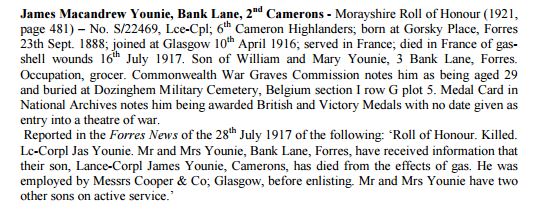
Lets look for James first.  He had been living in Glasgow, so it was there that he enlisted, joining the Queen’s Own Cameron Highlanders, with the service number S/2469 and rising to the rank of Lance younie james mcandrew kiaCorporal in the 6th Battalion.  And son it  was that  on the 16th of July 1917 that James McAndrew Younie died of wounds received in action aged 29.  He rests in Dozinghem Military Cemetery, near Krombeke, north west of Poperinge, in the West Vleteren region of Belgium, along with 3239 other casualties from  the  Commonwealth, the Chinese labour force and  Germany.

Westvleteren was outside the front held by Commonwealth forces in Belgium during the First World War, but in July 1917, in readiness for the forthcoming offensive, groups of casualty clearing stations were placed at three positions called by the troops Mendinghem, Dozinghem and Bandaghem.

The 4th, 47th and 61st Casualty Clearing Stations were posted at Dozinghem and the military cemetery was used by them until early in 1918.

A book about the War Memorial Unveiled in the United Free High Church has the following entry for James McAndrew Younie.

younie james moray n nairn fhs

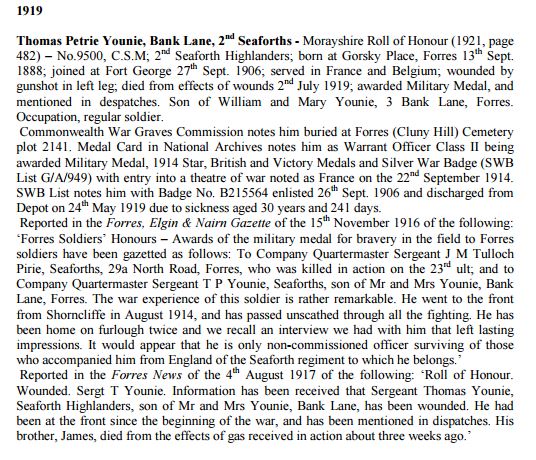
Now to James’s twin, Thomas – while looking for James in the 1911 Scottish census, there was not one entry that I could 100% say was him.  Looking for Thomas has been a lot harder going than his brother, but we got somewhere in the end.  Thomas enlisted at Fort George in 1906. During the Great War, Thomas Petrie Younie served in the Seaforth Highlanders and became, Company Serjeant Major, 9500.  He served in France and on 2 July 1919, nearly 2 years to the day since his brother James died, Thomas died as the result of a gun shot wound to his leg.  As the war had ended Thomas had been sent back home and he rests in Cluny Hill Cemetery, Forres.

Younie Cluny hill cem forresThomas had been awarded the Military Medal and a similar article to his brother tells more about his life and war.

younie thomas moray n nairn fhs


So it was that three brothers went to war, Mary’s twins both died and  one came home. But one question still remains – which other brother went to war, was it Donald or John?

Younie Cluny hill cem forres

Sources

Ancestry

Commonwealth War Graves Commission

Find My Past

Find a Grave

Soldiers who Died in the Great War

Moray and Nairn FHS click here 

Alexander Riach, 1828 – 1900

The blog about Alexander, seems to have been so long in the making.  It seemed only a few months ago I was asking for information from libraries, archives and companies. The truth is that I started enquiring in January of 2014…………….dosn’t time fly when you are having fun!  I must have been having too much fun…..but then I can’t remember enjoying myself that much last year!

My quest for information about Alexander had started many years ago, and like many other researchers, have put certain people on the ‘back burner’ ready for another day……….well they are not going anywhere, are they?  It was during  a long weekend in Lossiemouth, while visiting my aunt Gladys that my husband and I trawled the kirkyards in the area looking for Riach, Hay, Younie, Petrie and other names connected to mums family.  The weather was sunny, but a little bit cool as I scanned the headstones, three rows at a time, looking for family connections or something of interest on the family markers.  Although, the headstone to Alexander and Helen was interesting due to the family name, it was how and where Alexander died that struck me as interesting and quite surprising.

Who is Alexander?  Well, he is the husband of my 2nd cousin, 3 x removed. But saying that his wife’s grandmother was also a Riach.

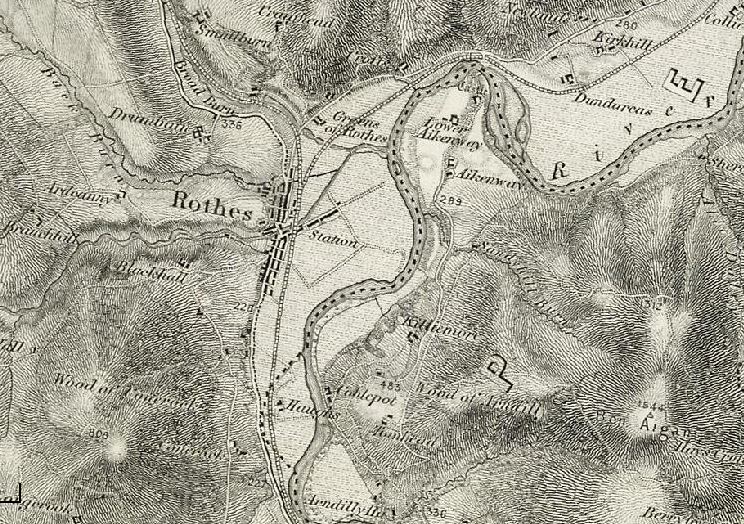
Rothes map - Vision of Briain.

Rothes map – Vision of Briain.

Alexander Riach was born in Dallas in 1828, and being baptised in Rothes on 18th October 1828. He seems to have  spent most of his time in Rothes, the son of James Riach and Annie Innes – James was from Rothes, but not sure about Annie.  In the census of 1841 and 1851 he is living on New Street, Rothes and working as a mason.

Alexander Riach, on Friday the 18th of January, walked up the aisle of Rothes kirk as a married man, after marrying Helen McKerron.  Wet and unsettled conditions had set in a few days before their wedding day and did not turn for the better until April – I hope they had a reasonably fine and clear day for their nuptials.

The census came around in 1861 and the couple, now with two young children were living at Kirton Street, West Side, Marnach, Mortlach. Alexander, still working a a mason, was now working on the railway.   Ten years down the line in 1871, the family has grown and Alexander is now father to four children, aged between 13 and 5 month old Margaret.  Home is now Easter Ardchyle Hut, 2, in the Perthshire village of Killin, where Alexander is aged 42 and a mason.

Alexander and his family seems to be quite elusive in the 1881 census but a bit of a tea break, finds the family not together.  Helen is living with 2 of her children in the home of Margaret McKinnon, the widow of a mason, at Station Street, Rothes.  Where is Alexander and the other children?   After searching through the census for Scotland, with knowing  where he died………….you will have to wait a little longer for that  information! I looked in the England census and there is an Alexander Reach, aged within reasonable ‘give or takes’ from the last census and born in Scotland. living in Barden in Skipton, working as a contractor manager for the new reservoir………..could this be him, living on his own and stating he is married?

Ten years later in 1991, there was quicker success – Alexander and Hellen are now living back together at Cressbrook Cottage, Queens  Road West, Old Machar, Aberdeenshire and now employed as a manager at one of the local granite quarries.

You now know a little about Alexander up to 1891 but what happened to him later………..?

I did the usual quick research by Google, looking for anything that could be remotely connected with how he died.  You know the things, confirming his death on the GRO, just incase the headstone was wrong – it would not be the first time.  I looked for any notification of any thing connected with his death that might have been in a local paper and scanned for online research……….nothing, but I did come up with a place that could be worth a visit sometime.

It was some years later while visiting our daughter who lived in Chiswick at the time, we were staying in a very nice pub opposite Kew Green.  We were due to meet her for lunch where she worked but had a while to kill, so we had a little drive around the area and drove past a building that woke the old grey matter and a eureka moment came.  It was after lunch and on our way back to our lodgings that we called in.  The place was closed but a few of the workshops were open.  The one I called in at, was a blacksmiths, a lady blacksmith and her work was fantastic.  After asking if this was Kew Bridge Works, she said yes, but everything was closed for the day….another visit was called for.  The next day I had found myself in a small, cluttered office, talking to one of the curators, who knew nothing of my man and his demise but she took my details and would pass them on to a volunteer researcher who went on a regular basis to the Metropolitan Archives……………I should wait! Waiting is not a thing I am known for where family history is concerned when I have bitten the bullet, but sad to say I am still awaiting their reply, probably six years down the line.

Kew Bridge Works, now London Museum of Water and Steam

Kew Bridge Works, now London Museum of Water and Steam

So it looks like I would have to continue something I started years ago, but on my own terms, with this new vigor, I rang the Registry Office for a death certificate but which office to contact would it be Richmond or Brentford.  I said I would tell you later about how and where he died – it looks like now is a good time to tell you.  Alexander Riach died on 31st of March 1900, as his epitaph tells ‘accidentally killed at Kew Bridge Works’.  I tossed a coin and came up with Richmond as my first port of call, as I was convinced he had died in an accident at what is now the Museum of Water and Steam, Kew.  The very nice person at the Richmond office, assured me that if I had the wrong office, I would, of course, get a refund.  Five long days later I had the certificate in my hands and although saddened by how Alexander met his maker, for a family historian, the way in which someone leaves their mortal coil, can mean there is more information to be found.

In 1900 he was living at 14 Bushwood Road, Kew and although, 71 years of age, was te Contractor’s Manager at Kew Bridge Works – as per his headstone, and still had me thinking about the steam museum building.  I had the impression, that with this information being marked on his headstone, for all the world to see, well those who visited the kirkyard, that te family were upset, annoyed and probably felt that it was someones fault, but whose?

The death certificate, as you know, gave me the date of death, his age was 71 years and we know his occupation but it was the cause of death that came as a shock.  He died of ‘Syncope from shock due to fractured ribs crushed by crane toppling over whilst being moved from barge to landing stage’.  There was a post-mortem and a verdict of Accidental Death was given by the Coroner for Surrey, A Broxton Hicks after an inquest held on the 4th of April 1900.

I felt surely that this would have caused a ripple through the Kew community at the time, so a telephone call to a wonderful man at Richmond Local Studies, who turned out to be the head of the department.  After a quick tale of who, where and when, I was promised he would let me know if anything was in the local papers.  He was very true to his word and in less that 24 hours I had a scanned copy of the entry in the Richmond Herald, which told me

‘An inquest was held in Richmond on Wednesday, touching on the death of Alexander Riach, manager of the Kew Bridge Works, who was killed by the falling of a crane.  Mr Gibb, the contractor for the works, was represented by a solicitor.  Evidence as to identity having been given by Margaret Riach, daughter of the deceased.  William Watson, a labourer, 2 York Villas, Kew, said that for the purpose of assisting in taking down the old bridge they had a steam crane on runners on a barge.  On Saturday, the manager asked witness and three others to remain behind to take the crane from the barge on to the wharf.  It was quite steady in the barge, but (the crane) had not been used in it, only being there for the purpose of moving.  The deceased came to the wharf about 2 o’clock, and they began to move the crane a few minutes later.  The top of the barge was level with the wharf, and they were going to move the crane on to the wharf by means of rails.  They had begun to move it,  ad it was half-way across, going by steam, when some steamers came up river,  and the wash caused the barge to rock.  Deceased was standing on the wharf near the crane, when it suddenly toppled on to him.  As it swung back, they managed to get the deceased out, and assistance having been called, he was conveyed in a cab home.  

Henry Kennison, a labourer in the employ of the firm, corroborated the evidence of the previous witness.  He was on the barge, and the crane as it was tilted, caught the witness by the clothes, but did not injure him.  Thomas Graham Menzie, 17 Bushwood Road, Kew, engineer to Mr Gibb, said he was o the crane on the barge on the Surrey side, and it was then quite steady, standing so for several days.  Deceased had had over fifty years’ experience with cranes.  After the accident happened, witness had the photographs produced taken.  In answer to Mr J T Mackie, factory inspector from the Home Office, the witness said he thought the crane was safe with the jib on.  The crane was not in steam at the time of the accident.  Dr Ernest Payne, who saw the deceased, said about eight of his ribs were fractured, and he was considerably bruised on the side of his body.  He died from syncope, following upon the shock of the accident.  A verdict of ‘Accidental Death’ was returned’.

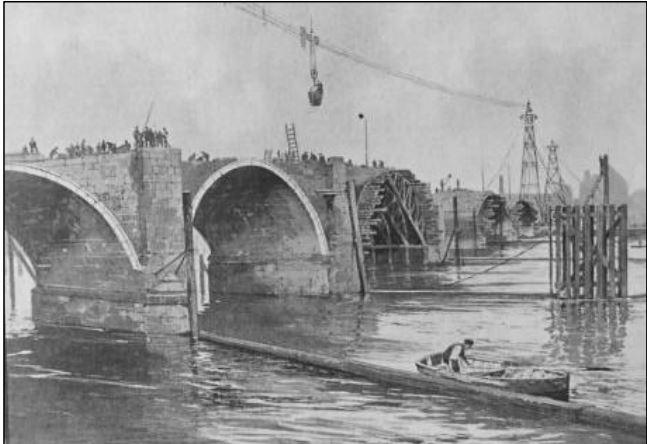
Kew Bridge

Kew Bridge being demolished

It was this article in the paper that told me where the accident occurred, I had wrongly thought that he worked at the Kew Bridge Waterworks, but no it was infact, Kew Bridge, works.  It was a very nice man at, yes, the Steam Museum, formerly, Kew Bridge Waterworks, that confirmed a few points.  Firstly, that Mr Gibb, the contractor, at the inquest, was in fact the contractor for Kew Bridge, when the new bridge was built between 1899 and 1903.  The dates fit with Alexander being in Kew and Mr Gibb, also fits in.  It looks like Alexander was involved with the building of the new Kew Bridge and the demolishing of the old bridge. Kew Steam Museum, came good in the end!

After years of waiting to find our why ‘accidentally killed at Kew Bridge Works’ is written on Alexander’s headstone, I now know.  But, this information make me want to ask more questions, such as:- How long had he been in London, and were his family with him.  We know Margaret, his daughter identified the body. But, was that as she was the only family member with him and was basically, his housekeeper. Or, had his wife Hellen, been too upset to view her husband, or had she stayed in Scotland?

The inquest tells that he had worked with cranes for fifty years, was that because his job as a mason involved moving heavy stones and he had gained his experience there.

I may never know the answers to some of the questions, but my family tree certainly has more information about Alexander and his family now than it did.

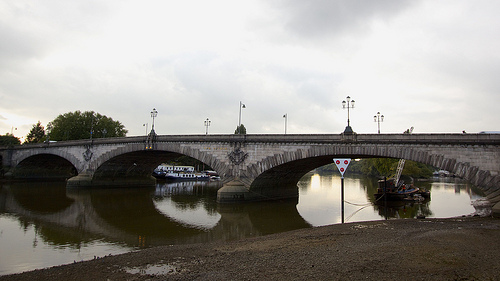
The third Kew Bridge opened in 1903

The third Kew Bridge opened in 1903

As I have said I know more about Alexander than most people now.  There are many trees on Ancestry that include him, but some have his birth details, some have his death details, and some don’t even have his parents, but although the odd one, and I do mean the odd one, has his death but nothing else.  Could it be that none of these people have seen his headstone?  It is possible that his demise is not common knowledge as many researchers could be from America, Canada or Australia and have not ventured to Morayshire.

I looked for a Will in the English records but nothing, so I took my ‘plastic’ in my hand and I might add it took some prizing out of my purse, but eventually, I paid a fee to Scotlands People, now that breaks my heart – why will they not do an annual subscription?  Wills are free to search, and there he was, confirmed by his wife Helen McKerron, also being in the index.  I now have his will and can see that he had property in Rothes, its proximity given quite clearly on the written pages and how after both his and Helen’s death, which occured in December of 1909, what should happen to their property.

Sources:-

London Museum of Water and Steam – click here

Ancestry

Find My Past

Scotland’s People


Guest Blogger

compilation logo in frameIf you don’t want the hassle of running and maintaining your own blog, but you like the idea of informing like minded people. You may be one of the people I am looking for.

Have you an interesting story to tell about a a member of your family.  Tell about the trials and tribulations of family historians or a local history  snippet on people or places; someone involved in WWI, WWII or other conflicts, a man or woman who stayed at home to do ‘war work’ or even a someone who objected to war.

You could tell how to research in a specific place i.e. the National Archives.  It could be an historical event that you would like to tell about – something that happened in your locale.

Do you have first hand experience of research in America, Canada, Australia or Europe and can give advice on where to look, with a few hints and tips that someone with local knowledge has learnt over the years.

Have you any tips on how to store your family history.  Do you have any suggestions for storing photographs or other research materials.

Or have you been on a visit to another country to do some family history ‘stuff’,  to a war cemetery, a battlefield or some other interesting place – let me know.

The blog can be short, long or something in between but it must be your own work.

Contact me at    –    guestblogger@wakefieldfhs.org.uk

Looking forward to hearing from you.

Walter Hamilton Riach contd., by guest blogger David Oxlade

A very warm welcome to my first guest blogger, with some further information on Walter Hamilton RIACH and his family.

I was intrigued to see the recent blog concerning the background research on Walter Hamilton Riach, as I have been looking into him myself, as he and my father were cousins. If it is of interest to anyone, I may be able to add a little more to his and his family’s background.

Walter Hamilton Riach’s (WHR) mother was Mildred Agnes Riach nee Baker, (sister of Eveline Maude Baker (EMB), my paternal grandmother) who had indeed married Lt. Col (RE) Arthur Dundas Riach on June 3rd in Newton Abbott, Devon. WHR was born June 24th 1897, and as noted previously, joined the Queens Own Cameron Highlanders where he was Capt., 5th Bn, was captured in France and died of his wounds shortly before his 21st birthday – like so many of his generation! – on May 5th 1918; he is buried in Le Cateau Military Cemetery. In his earlier days he had been at school near Newton Abbott – Newton College, now no longer – where his brother and a number of his relatives were sent from India, including my father, Eric Robert Oxlade, his cousin, who was one year younger than WHR. He had then gone on to Haileybury Imperial Service College where he had been one of the first group of 23 pupils to join the College, which opened in 1912; 12 of his group of 23 were killed in the first war alone!

WHR had three siblings, two younger brothers, Lt Col. Robert Malcolm Riach, DSO, OBE, (RMR) born July 24th 1900, died Nov 7th 1962, who also joined the Cameron Highlanders and Lt. (RE) Wilfred Knight Riach, (WKR) born 8th August 1907, died 4th February 1928 while at RMQ Woolwich. WKR is buried at the Fort Pitt Military Cemetery in Kent, see photo below; how and why he died there, I have not been able to find out as yet. WHR also had a sister Margaret Stewart Riach, (MSR) born Jan 27th 1902. In 1911 the two younger Riachs (MSR and WKR) were listed in the census that year as staying with their mother and my grandfather Henry John Wilson Oxlade (their Uncle) at his house in Colliers Down, Caterham.

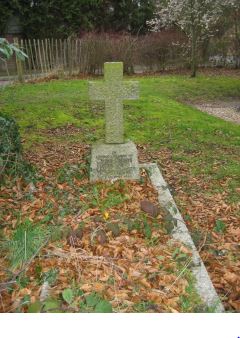
WHR’s mother Mildred Agnes RIACH nee Baker (usually known as “Agnes”) was born on 22nd Sept 1876, and died 14th June 1953; she was buried 18th June in St Peters Church, Yateley, Hampshire; her grave is located close to a tree behind the building attached to the back of the church, see photo below. While in England she seems to have lived most of the time in Cornwall, where exactly I don’t know, but letters from her father confirm that she was there and when her husband Arthur Hamilton Dundas Riach was in England on home leave, that is where they lived, although at various times her husband gave his address as 30, Mattock Lane, Ealing.

Her headstone reads:

riach mildred agnes wo arthur hamilton riach

Grave of Mildren Agnes Riach by D Oxlade

In Loving Memory of / Mildred Agnes / widow of Lt. Col. Arthur Hamilton Dundas Riach R.E./  Died 14 June 1953 / Aged 77 years.

riach robrt malcolm

Grave of Robert Malcolm Riach by D Oxlade

WHR’s younger brother, Lt Col. Robert Malcolm Riach (“Malcolm”), DSO, O.B.E., was born on July 24th 1900 and died on 7th Nov 1962. Also of the Cameron Highlanders like his older brother, Malcolm married in 1939 Marjorie Joan Howarth. His DSO was awarded in July 1940. RMR and his wife are buried at the Colvend Parish church in Dumfries and Galloway.

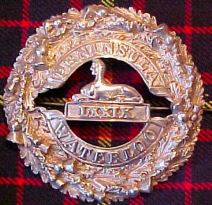
An interesting reference to RMR’s military career (and mentioning others of his family) is this extract from the description of an auction sale of various militaria:   ‘Robert Malcolm Riach enlisted on the 18th December in 1919 and was appointed as 2nd Lieutenant at Aldershot and the following year moved with the 2nd Bn to Ireland where he was wounded during the SInn feinn operations. He transferred to the 1st Bn in 1925 and served in India and Burma until 1929 when he was seconded to the 1st Nigerian Regiment until 1934 when he re-joined the 2nd Bn proceeding to Palestine the following year. He was transferred back to the 1st in 1935 and later completed a tour of duty at Cameron Barracks until the outbreak of war when he rejoined the 1st Bn. Embarking with the Bn for France he commanded “A” Company with distinction and was one of the survivors at Dunkirk. Awarded the D.S.O. (LG 11/2/ 1940). Commanded 2nd Bn Liverpool Scottish in May 1941 Awarded MID 29 April 1941 Awarded MID 10 May 1945 Awarded O.B.E. 24th Jan 1946. Commanded 4/5th Bn in 1947 until his retirement in 1950 as Lieutenant Colonel. riach broochBUT……take a good look at this lovely brooch and note that this is the pre 1881 version with the letters “LXX1X” beneath the sphinx. The Riach family have given great service to 4 their Regiment and to their Country. Now then, just who first owned this glorious brooch? It was made before 1881 so my guess is that perhaps RMR’s Great great Grand father might be a contender’.

Robert Malcolm RIACH’s engagement – and subsequent disengagement – seems to have been a matter of public record as well, his fiancée Dorothy Spicer being described as “one of England’s most beautiful airwomen” :  (From the Sydney Herald in August 1934: nla.gov.au/nla.newsarticle17103972; see also the Straits Times 30th July 1934 page 15 for a longer and slightly more colourful version)

Women’s Air-Taxi Business. There is only one air-taxi business in England, and it is conducted at Hunstanton, Norfolk, by two women, Miss Dorothy Spicer, the first woman to gain the Air Ministry’s B certificate for ground engineers, and her partner, Miss Pauline Gower, daughter of Sir Robert Gower, M.P., the second woman in England to obtain the Air Ministry’s B pilot certificate. Miss Spicer is young and very attractive, and became engaged some time ago to Captain Robert Malcolm Riach, of the Queen’s Own Cameron Highlanders, who has just arrived home from serving in Africa, naturally desirous of claiming his bride. But Miss Spicer has broken off her engagement. So the three-seater Moth of the Spicer-Gower partnership, the former as mechanic and the latter as pilot, is still available for passengers.

Grave of Wilfred Knight Riach

Grave of Wilfred Knight Riach

As mentioned above, WHR’s younger brother Wilfred Knight Riach died while at RMQ, and is buried at Fort Pitt Cemetery in Kent.

WHR’s sister Margaret Stewart RIACH (“Stewart”), was born January 27th 1902, and married Dennis Noel Venables, born 24th (some records state 20th) December 1898, Lt. Commander, RN, on June 23rd 1928. He was commissioned in August 1914, made Lt on Nov 15th 1919 and retired 15th Nov 1927 as Cmdr. He was obviously called up again and was mentioned in despatches 11th Nov 1941, awarded the DSC on Jan 1st 1943 and bar on Jan 23rd 1945. He commanded HMS Alresford and HMS Bagshot, both minesweepers, and HMS Glenearn an Infantry Landing Ship.

Margaret Stewart Riach and Dennis Noel Venables had three children: Robert Malcolm Venables, born 4th March 1935; Katherine Patience Venables who married an architect, Richard Watson, with whom she had a daughter and Hugh Spencer Venables, born ? and died 12th January 1946.

Hopefully the above will fill in some more details for anyone looking for background on this branch of the Riach family!

David A Oxlade – Guest Blogger

The original blog about Walter Hamilton Riach can be found here

If you have any further information on this family, or your family tree also ties in with these people, please let me know / Carol

1911 census occupations

Just a short blog this time, thank goodness you might say!

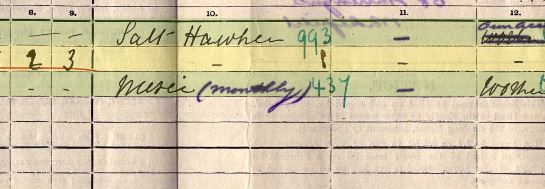
Have you ever been a little annoyed that you can’t read what the occupation of someone in the 1911 census was.  It is either unreadable, has been struck through or written  over, but what you can see clearly are the 3 numbers written in red, or some other colour  by the enumerator.
1911 extract

This seems to be a good example of the numbers coming in quite handy.  The salt hawker, simple enough but the occupation of the lodger.  At first glance, the occupation looks like music as there is an ‘dot’ over what looks like an i, but the wording in brackets, monthly, why would someone involved with music be monthly.

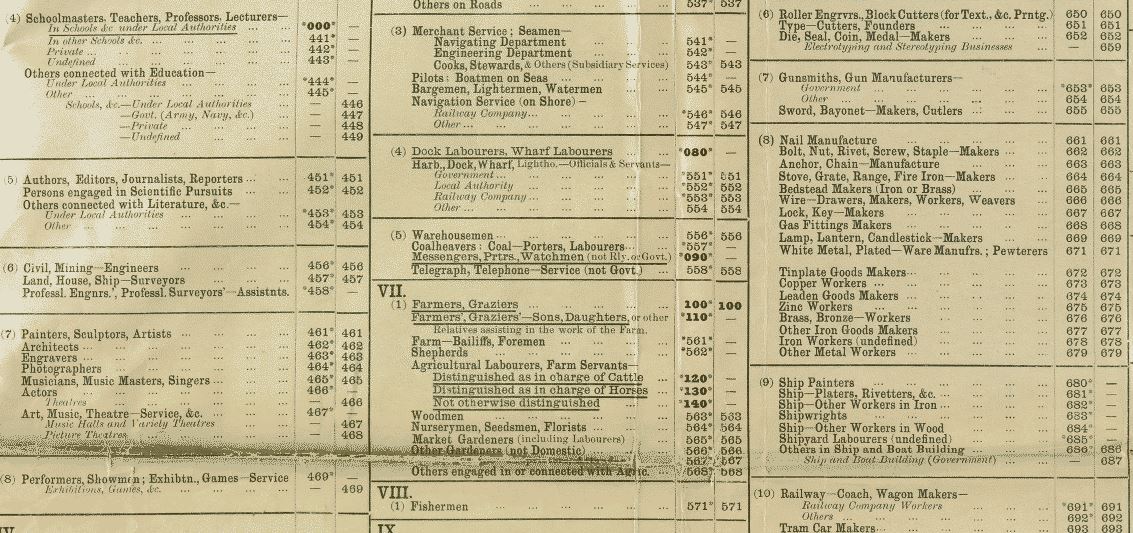
A look down the list for 437 and it gives a totally different meaning to the occupation.  The reference of 437 is listed as ‘sick nurses, invalid attendants and other’. The wording looks more like music than nurse, but the enumerator must have been right!!

To view the census codes click here you may find them some help when using the 1911 census as a research tool.

1911 census code sheet

1911 census code sheet

The Great Lafayette

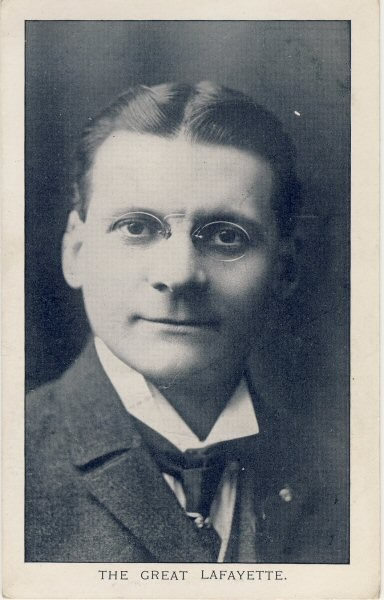
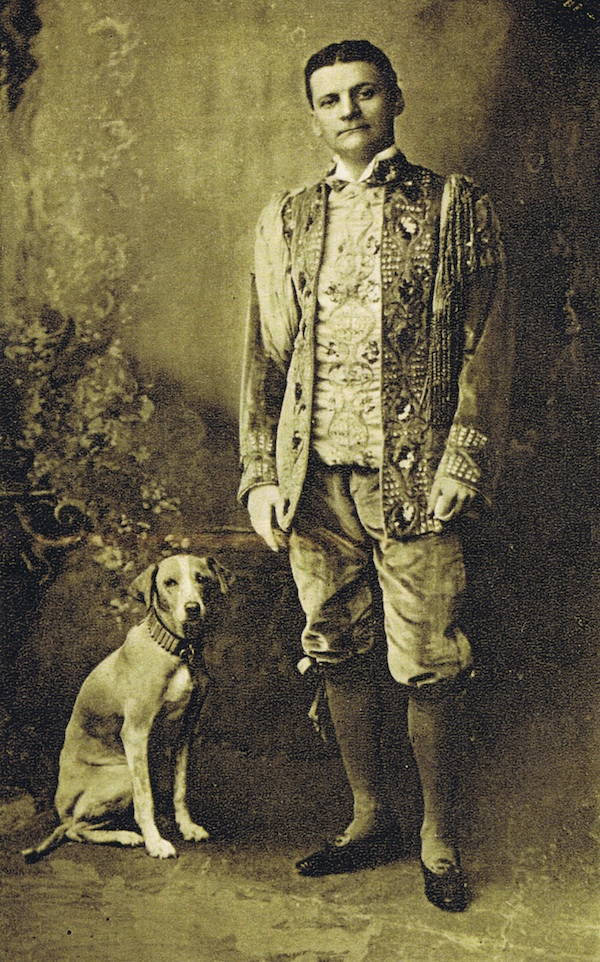
lafeyetteThe Great Lafeyette, Sigmund Neuberger, was born in February of 1871 in Munich. When Sigmund was 19 his family emigrated to the United States where he began his career in one of his many guises.

Sigmund imitated the career of Ching Ling Foo, who studied Chinese magic and was a very well respected magician in his own country, and developed many illusions, including breathing smoke and fire or producing ribbons and a 15′ long pole from his mouth.   It seemed likely that when Ching Ling Foo brought his act to America, a few tried to emulate him, taking similar names and developing similar illusions.  Sigmund, taking the name of The Great Lafeyette, he was famed for his quick-change routines, flamboyant costumes and his dramatic illusions, including one he developed called the  ‘Lion’s Bride’ a 25 minute routine – this routine made him very popular with audiences.  But he was always aware of publicity and how to draw more people to see his act.

He was a world class illusionist and according to many was the highest paid magician of his time. In vaudeville it is estimated that he earned around £44,000 a year, millions of pounds in today’s money.

Lafayette-with-Beauty-11Lafeyette was an admirer of Harry Houdini and the two became great friends. Harry showed his friendship by the gift of a dog, who became known as beauty. Beauty, was pampered  even by celebrity pooches today.  He had his own set of rooms, ate five course meals and wore diamond studded collars. Both were to become inseparable and life long companions.

Life was going well for him, he was involved in all aspects of the shows, including set design, costume design and the creation of illusions. He created shows the like of which had never been seen before.

Lafeyette, is reputed to have his own Pullman carriage and he and Beauty always travelled first class, staying in the best hotels and always having a second room or suite for his best friend, Beauty.  He also looked after his staff, who toured with him – he paid well, but demanded total loyalty.

In 1911 Lafeyette and Beauty were in Edinburgh and set to appear at the Empire Theatre. It was just a few days before the show was set to open that Beauty died. The artist was so distraught that he sought permission to bury his companion in Piershill Cemetery, Edinburgh. The authorities were against this request until Sigmund said that he too would be buried there when his time came. Little did he know!

Empire Palace Theatre after the fire

Empire Palace Theatre after the fire

While in a state of deep mourning, it was during his performance on 9th May 1911 that, while performing  his ‘Lion’s Bride’ routine an oriental lamp burst into flames. The fire curtain dropped, but not fully. Lafeyette was very secretive of his illusions and had all the doors locked off. The fire very soon became out of control. In less than 20 minutes, the backstage area was ablaze and full of smoke, and the fire curtain fell to the stage. The audience, even in a state of panic all managed to escape to safety, but back stage was a different matter. Ten people in the back stage area lost their lives, including Lafeyette. He was identified by his costume and later cremated. But, strangely enough days later, after his solicitor had become involved while trying to find missing ornate jewellery that Lafayette wore,  another body was found under the stage, and identified as Lafeyette by a ring. The previously cremated body was that of a man who acted as Lafeyette’s double – a 25 year old man who played in the orchestra.

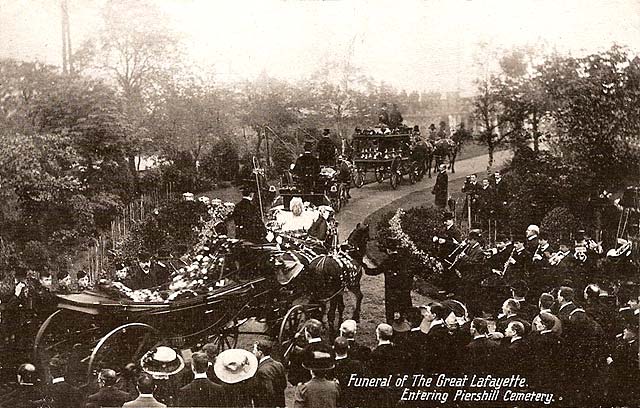
The Great Lafeyette's funeral

The Great Lafeyette’s funeral

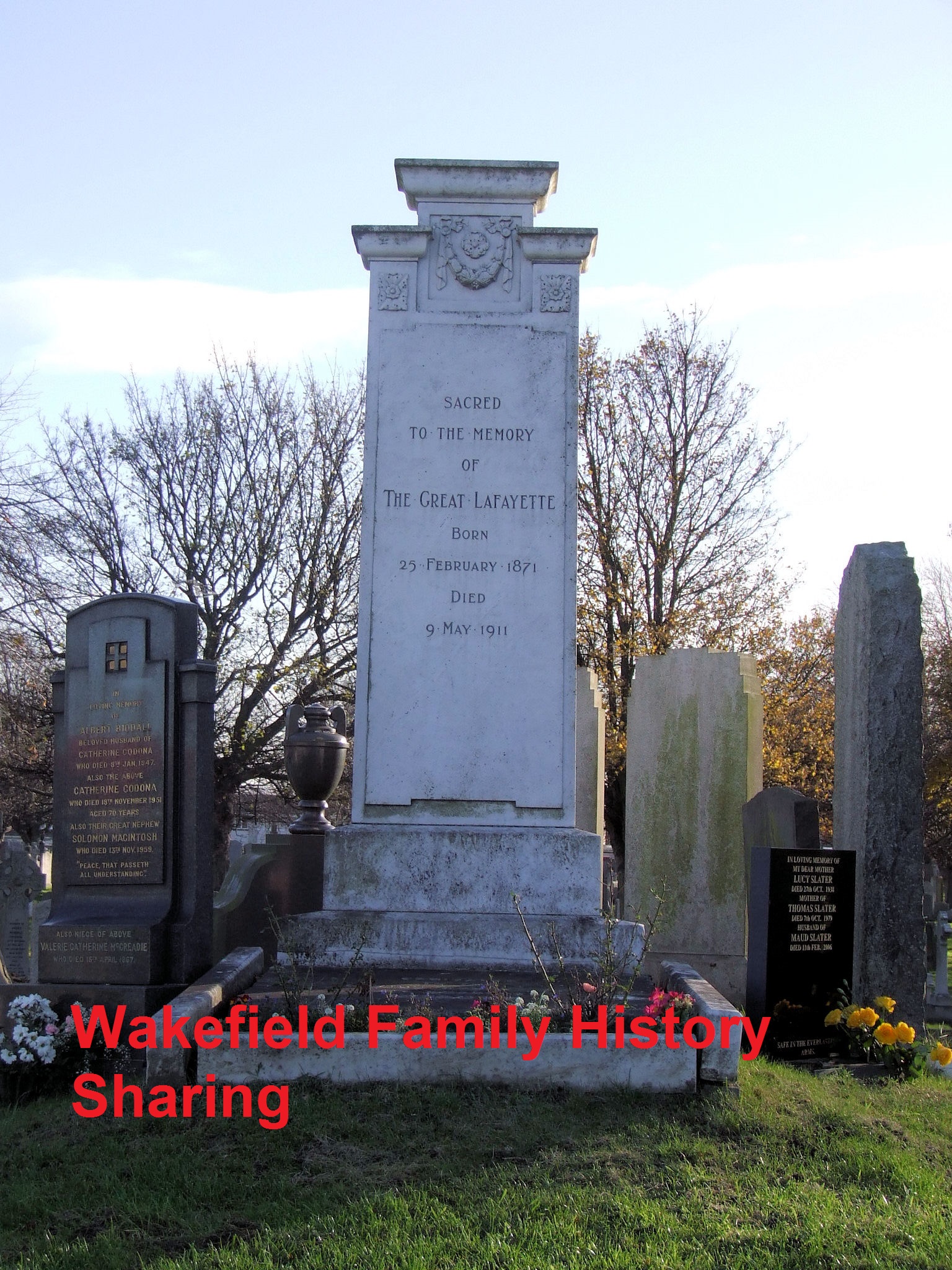
lafeyette headstoneOn 14th May 1911, The Great Lafeyette, was cremated and the urn containing his ashes was laid to rest between the paws of his best friend, Beauty.

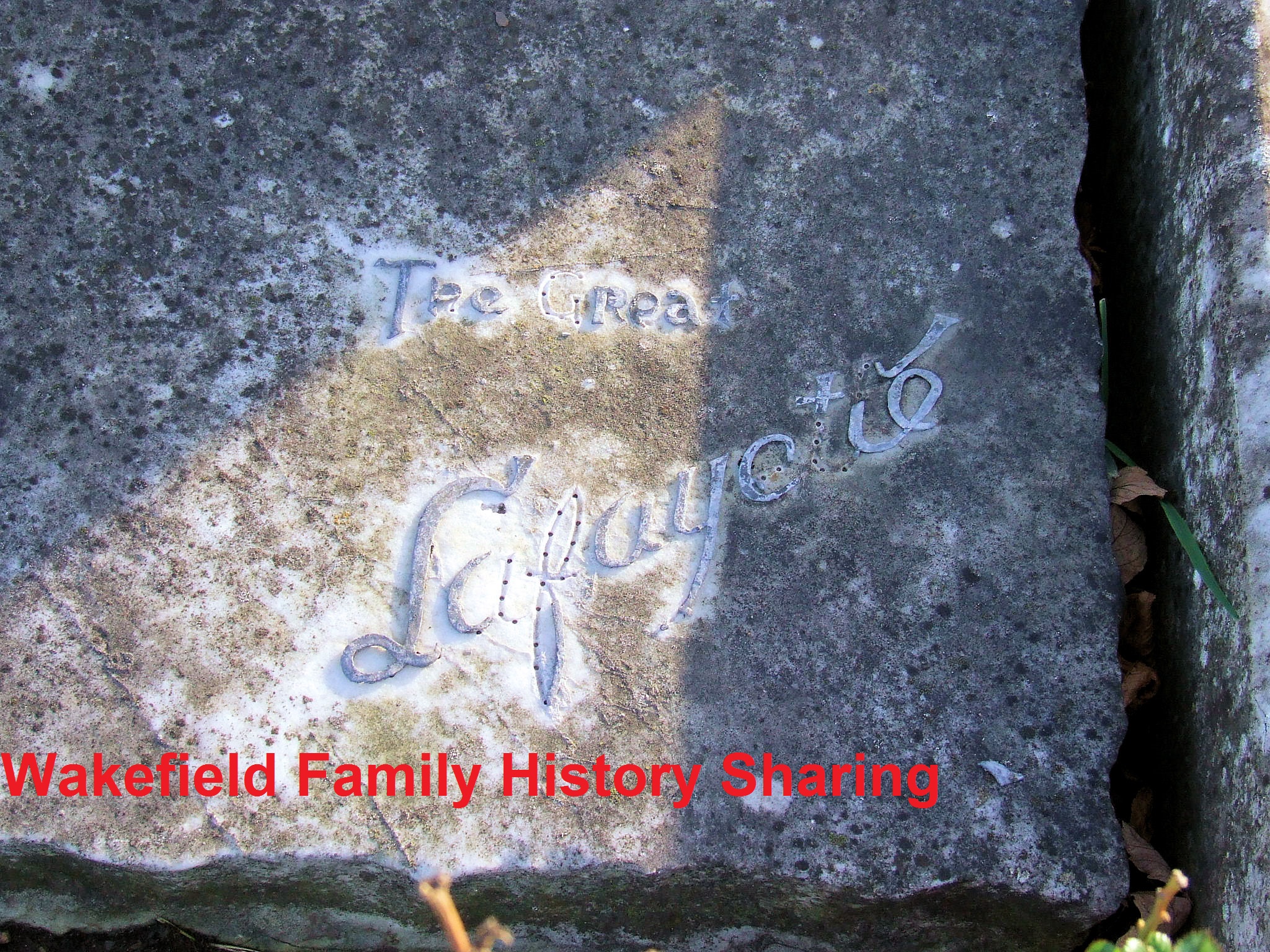
Years ago, while in Edinburgh I visited the grave of Sigmund and Beauty, a quite simple kerbed plot, headed by a simple yet informative headstone.

In the company was one James Edwin Baines, who I was sent information many years ago, but with computer glitches lost that information, so I have had to start again.

Early in 1881, James married Sarah Bailey, in the Dewsbury Registration District  and they can be seen in the census of that year, living at 72  Kirkgate.  James is employed as a clog sole maker. By the time of the 1891 census, James and Sarah were mother and father to four children.  The family lived at 10 Kirkstall Lane and James worked as a Journeyman Clogger

James in 1901 was living on Bradford Road, East Ardsley, a few houses away from the Black Swan Inn, married to Sarah and father to Edwin, Mary, Elizabeth and Esther – working as a Rate Collector.

On the night of 2nd/3rd of April 1911 census was taken and there is a James Edwin Baines, born in Leeds around 1861, which ties in with information regarding funeral arrangements made in Edinburgh. James is a 50 year old man, working as a musician, a visitor in the house of Henry Robert Tubbs, a car-porter living in Brighton, also in the house, as visitors, are other acrobats and musicians from various countries in Europe.  How has James come from being a rate collector to working as a musician.  If James is Brighton, where is his wife.  Well Sarah, is within a few miles of her birth – Hanging Heaton. Sarah, in 1911 says she has been married 29 years, bore 11 children and suffered the deaths of 7.  But as her husband is not with her, that information has been struck through.  While her husband was away, and more than likely when he was at home, Sarah worked as a woollen weaver in one of the local mills, close to her home at 10 Wordsworth Square, Morley (bottom of Commercial Street).

Lafeyette

Lafeyette

Sigmund is also on the census, he is living at 55 Tavistock Square, London. He is entered as Mr Lafeyette, 38 years old and says he is born in Los Angeles. He is single and works as a Music Hall Artist, of independent means. Also entered is Beauty Lafeyette, aged 16 of independent means and there is a 1 in the ‘children living’ column. Both the children living and the entry have been lined through. In the infirmity section Mr Lafeyette wrote ‘too good’ that has also been struck through.

The death of Mr Baines, it is thought was due to a gallant effort to rescue two members of the show from their dressing rooms. The body of James Edwin Baines, of Hackney, London, was encased in a polished oak coffin, accompanied by his wife and sister, he was conveyed by the 10.50pm train to Wakefield, where he would be interred in Woodkirk Churchyard. The solemn event was witness by family, friends and the majority of the local communities, who held James in high regard.

On 22nd August 1911, Probate was granted to Sarah with effects if £24 18s – What happened to Sarah and her family.

The building that once was the Black Swan Inn, still remains and today 98 Bradford Road, East Ardsley has been the home of H Waterhouse and Sons, since they moved there from Waterhouse Corner, opposite Woodhouse Lane.

Note- some sources say that James was accompanied on his last train journey by his brother-in-law.

Prisoners of War WW1

Over the past week or so I seem to have gone into blogging overdrive – well I have had a gap of over 12 months due to technical problems.  So, I am back with vengeance, as they say!

Those of you who visit my pages on a regular basis, will know that I like to tell you of resources to help with your research, news about places and updates to my website plus the odd mystery that has diverted me from my original path.

I think this bit of information will come under the heading of ‘help with your research’.  A few days ago someone sent a message around about Prisoners of WW1 record cards being put online by the International Committee of the Red Cross, and what a good source of information that is.

I think most people will be like me when a name search is placed directly in their view – yes, I go through most of the main surnames I am researching, well what did you expect me to say!   Siddle, no matches ; Wilkinson, too many ; Riach, not many.  Looks like Riach it is.

But before I tell you about soldier Riach, a little bit of background.   During the Great War 10 million, yes 10 million, sounds a lot dosn’t it? More than I imagined.  These 10 million were servicemen and civilians who were captured and sent to detention camps.  The countries involved provided an index card for each prisoner or detainee and  5 million are available to search through. One must realise, that the ICRC has a great deal of extra information in French, as it is based in Switzerland.

 Riach, was my search criteria, and a soldier named Walter H Riach turned up.

But what do his index cards tell? Walter was a Captain in the Cameron Highlanders. I saw his rank and thought to myself, that his service record won’t be online.  He was classed as wounded and missing on 23 March 1918. Words and references are F.S.E.  R.I.A E70738 with Z154 being struck through.  The card gives the impression that enquiries should be made to Berlin. Details of a Mrs Helen J W K Bakewell, of Forest End, Sandhurst, Berkshire are noted along with the fact he may be a Roman Catholic and that he was a prisoner, but with information that I now know the dates show the information was slow to be passed through.

If certain references are registered on the card it gives a link to other information available for that person – Walter has the relevant references. Another card tells that Walter Riach was a ‘soldat’ and had a reference of PA 28358 prefixed by a printed cross – possibly signifying a Red Cross reference.

Another card gives more references – A34209 with 27819 struck through.  We already know that Walter was wounded and missing since 23 March but now we know that it was between Fries and Equancourt – a look on a map tells me that Fries could be Fins.  We now have another name – Colonel Goff (cousin), Villa Valerie, Bellaria, La Tour, Vaud, Suisse.  the final page has another reference A400 with 30245 struck through.

As I said earlier there are reference that give access to more information and Walter had one, PA28358  which took me to a scanned book, typed and very faint but all in French.  The PA refers to British prisoners in the hands of Germany. The site has screen shots of what each reference means but sadly there was only one set of references for Walter so his information came to a halt here…………….but I wanted to find out what happened to him and more to the point who he was and who were Mrs Bakewell and Colonel Goff, his cousin.

Walter Hamilton Riach was the son of Arthur Hamilton Dundas Hamilton a Lieutenant Colonel in the Royal Engineers who served in India.  There are sources that say that Walter was born in Muree, India about 1897. This is getting very complicated as the more I search for the family the more I find peoples research differs and as this is not my Riach line, well not yet anyway, I am not going to get bogged down in others research, therefore, I will focus on what is out there on original documents. One document I did find was the Roll of Honour of The Imperial Service College which tells that during 1912-1914 Walter was there.

Ancestry has the medal card for Walter which tells what we know already – his name, ranks, that he was eligible for the 1915 Star etc. That he served in France from 30 September 1915 and his date of death.  Yes, Walter died his wounds while a prisoner of war on 5 May 1918 aged 21.  Here is card is unusual as it has information on the reverse.  An application was made by Mrs C H Holmes on behalf of her late nephew Capt., Riach W H for his medals.  An address is given as Rosevale, Newton Abbot presumably for Walter and his fathers address is given as 44 Grange Road, Ealing, W5.

Now, as to who is Mrs Bakewell and Colonel Goff, shall we say that is my next adventure………..see you there!

The CWGC tells that  Walter served in the 5th Bn., of the Cameron Highlanders and that his father at the time information was given regarding his grave was 30 Mattock Lane, Ealing, London.  Additional documentation for the CWGC gives references to his plot and tells that a headstone had been erected, no. 324, with the design 1010/1C with a cross with the words ‘The pure in heart shall see God’ his father’s name is also listed with his address but without seeing the headstone I’m not sure if all the wording is included.

le cateau cwgcWalter rests in plot III F 4 in Le Cateau Military Cemetery, along with over 700 others who gave their lives for King and Country, of which 511 are identified.  The probate for Walter’s estate was granted on 13 August 1919 to Arthur Hamilton Dundas Riach, Lieutenant-Colonel R.E.. Effects £593 9s 7d.

The area had been in German hands since 1914 and Le Cateau had been the site of a German railhead and also the site of an important military hospital.  In 1916 the Germans laid out the cemetery and allocated separate sections for Commonwealth servicemen and German soldiers, of which over 5000 rest within its boundaries and 34 Russian servicemen .

 There are three other people mentioned in this snippet, Arthur Hamilton Dundas Riach, Mrs Bakewell and Colonel Goff, a cousin.  Who they are will have to be another story……………so see you soon!

Sources

Ancestry

International Committee for the Red Cross

CWGC

WW1 Trench Maps

Have you ever tried to place the whereabouts of a family member who served during The Great War?

We have the medal cards, sometimes the service records and pension records, not forgetting the CWGC who can give a clue to an approximate area of those who gave the ultimate sacrifice, but how a library in Scotland have scanned over 130 Trench Maps from that period in time, covering France and Belgium.trench map

The changing Front Line, with communication trenches as well as enemy positions.  Also highlighted are observation posts, guns emplacements, machine gun positions, mines and wire entanglements.  Some maps include the names of soldiers that gave the trenches their unique names plus landmarks.

It has been estimated that there were more than 34 million British maps of the Western Front printed during the war years.

These maps are a wonderful resource, adding that little bit of extra information to your soldiers war record.

The National Library of Scotland, who has digitised the maps also includes on their map image link:- maps of Scotland, County maps, Town plans and views, series maps plus more.

Sources

The Daily Mail

National Library of Scotland