Category Archives: News

It’s May – an eventful month

Well, only a few days into the merry month of May and so much has happened.

We have see the birth of another great grandchild to Her Majesty The Queen and the Duke of Edinburgh, but that will have to wait for another blog.  There has also been celebrations taking place for the end of the war in Europe – V E Day.

We have see the commemorations to those who lost their lives in the sinking of the Lusitania, 100 years ago and we have seen an election which I don’t think anyone predicted the outcome of.  But enough of politics, so back to the Lusitania a more fitting subject for this blog.

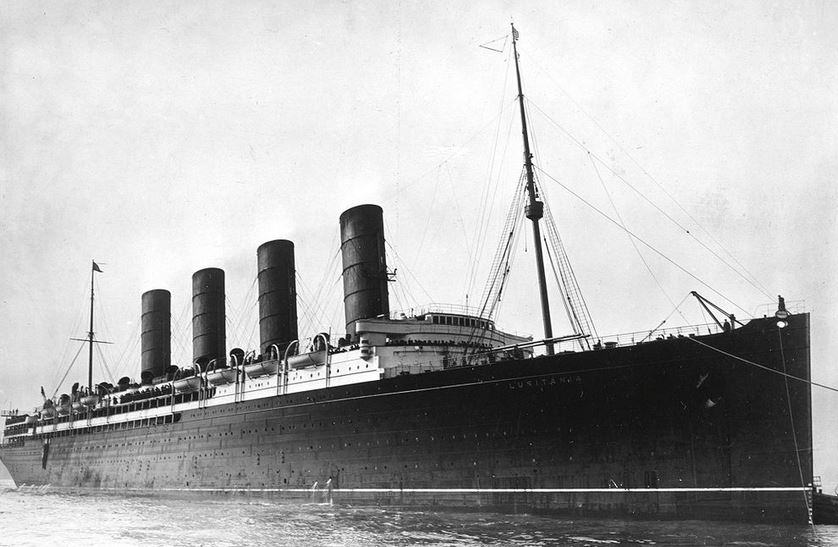
RMS Lusitania - Wikipedia

RMS Lusitania – Wikipedia

She, RMS Lusitania was a British ocean liner and holder of the Blue Riband (an unofficial accolade given to passenger liners crossing the Atlantic at a record high speed – of 35 holders of the Blue Riband, 25 were British).  She was launched on 7th of June 1906, becoming part of the Cunard Line.  RMS Lusitania was the biggest passenger ship – for a short time.  Built by John Brown & Co., at Clydebank, she weighed in at 44,060 tons. She had 9 passenger decks, provided approx. 50% more passenger capacity that any other ship at the time.  The ship was equipped with lifts, electric lights, wireless telegraph and her first class accommodation and decks were magnificent in their furnishings.

The Lusitania left New York on the 1st of May 1915 for the port of Liverpool with 1962 people onboard including a crew of 850.

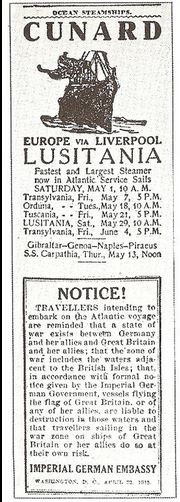
Advert from American papers - Wikipedia

Advert from American papers – Wikipedia

By this time the German Government had declared that all Allied ships would be in danger of being attacked in British waters.  Submarine activity was intensifying around the Atlantic making any vessel in our coastal waters a target for attack.  It is said that the German Embassy in the United States placed an advertisement in newspapers warning passengers of the danger of being a passenger on the Lusitania.

On the 7th of May, RMS Lusitania, was off the coast of Ireland ready to complete her 202nd crossing and was due to dock in Liverpool later that afternoon.  A course running parallel to the south coast of Ireland,  and roughly 11 miles off the Old Head of Kinsale when the liner crossed in front of U-20 at 14:10hrs. The Commanding Officer of U-20, Schwieger, gave the order to fire one torpedo, which struck the Lusitania on the starboard bow – just beneath the wheelhouse.  Shortly after, a second explosion came from within her hull, and the ship began to founder with a prominent list to starboard.

The crew rushed to launch the lifeboats but the position of the vessel and the conditions made their deploy quite difficult and in some cases almost impossible.  As it was only six of the 48 boats were launched.

Eighteen minutes after the torpedo struck, the bow touched the seabed, with the stern still visible above the surface of the water – finally, sliding beneath the waves to her grave.

Of the 1962 passengers and crew on board the Lusitania 1,191 lost their lives, 405 members of the crew lost their lives including John Henry Lowrie Hayes .

 The Lusitania had signalled her distress which brought Irish rescuers to the scene.

By the following morning the news if the sinking, of this unarmed passenger liner,  had spread worldwide.  Most of the passengers were either British of Canadians, there were 128 Americans on the passenger list who lost their lives and this outraged many in their country.

Dr. Bernhard Dernburg, a German spokesman published a statement saying that the Lusitania carried ‘contraband of war’ and also she was ‘classed as an auxiliary cruiser’ Germany had the right to destroy her regardless of any passengers on board.  He also stated that because of the published warning in American papers that Germany were relieved of any responsibility for the deaths of the American citizens.  He stated the ammunition and military goods listed as her cargo, which included an estimated 4,200,000 rounds of rifle cartridges, 1,250 empty shell cases and 18 cases of non-explosive fuses.

Cunard denied that she was carrying munitions but admitted her transportation of small-arms ammunition.

100 years later on the 7th of May 2015, Cunard’s MS Queen Victoria underook a voyage to the site of the sinking to lay a wreath to remember those who lost their lives on that day.

Previous commemorations had taken place, including  a lifeboat crew rowing the 12 miles to the site of the disaster.

Albert Edward Shepherd

A few years ago my cousin and I were jointly researching branches of our family tree.  I was doing the internet side by looking at census, military service records and other online sources.  He was going the ‘old school’ route by visiting the archives and viewing the church records on microfilm.  Normally, on a Sunday morning we would have a long chat on the telephone, compare notes and decide what other routes to go down and people to search out………..It worked for us and we found a lot of information about our joint relatives, their spouses and children.

It was while researching a joint relative – nearer to him than me by just a little, we ventured into the Shepherd line.  There were a few ups and downs and a few hiccoughs along the way but with a joint effort, we got there.

And so it was that in 2010, one sunny but cool Sunday afternoon I ventured forth with car keys, camera, spare batteries and music for my journey a few miles down the road.  But before I tell about that day, it may be good to know who Albert was.

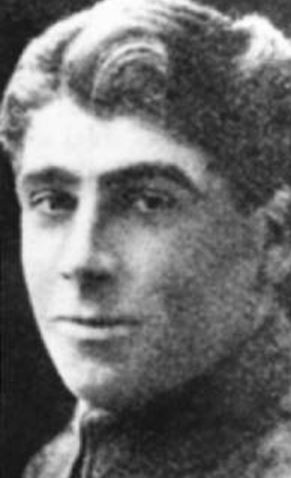
Albert Edward Shepherd was the son of Noah Shepherd and Laura Darwin born in 1897 in the small town of Royston near Barnsley.  Albert was not our main interest, it was his brother Jabez born in 1905 that was the direct relative.  But you know how it is with family history, you start off in a nice orderly fashion then off you go on a tangent.  It seemed that Albert was our tangent, but at least some of the information fitted them both.

Noah was a Shropshire man, a miner by trade and it looks like he followed the coal fields ending up in Royston where he met Laura who was from Hoyland Common.   The couple married in 1896 and went on to have 6 children born between 1897 and 1908 in and around Royston.

1901 the family were living at 2nd 5th Hallam Street, Brightside Bierlow, Sheffield.  By the time the 1911 census came around Noah was a widower bringing up his children in Royston.  Not only had he lost his wife but one of their six children had also died.  Albert was working like his father, down the mine.  Also in living in the house was Thurza, Noah’s mother;  Percy his 15-year-old brother and Joseph Darwin, his father in law, also a widower.

One source says that while he was working at New Monkton Colliery, his main sources of recreation were boxing and running.

sheherd a e picAlbert enlisted, but some say it was on the first day of the war, while others say it was  on the 4th of August 1915, but his Medal Card says he enlisted on 18th of August 1915 being drafted into one of Lord Kitchener’s service battalions, the 12th King’s Royal Rifle Corps – that regiment all are agreed upon.  Again I seem to be highlighting a member of this regiment, but this time it is not intentional.  During his service, he was seriously wounded in the arm and gassed twice – thus qualifying for a Silver War Badge and an Army Pension.

He was promoted to the rank of Lance Corporal on 28 August 1916 and became acting Corporal one month later on 28 September 1916. He was still a young man but had taken part in the Battle of the Somme in 1916 and the Battle of Passchendaele in late 1917.

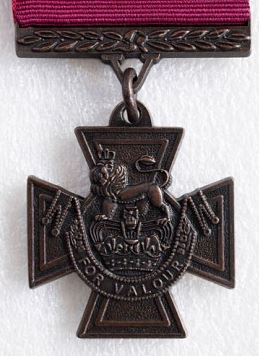
His love of running served him in good stead as it was while a company runner that he was awarded the highest and most prestigious award for gallantry in the face of the enemy that can be awarded to British and Commonwealth forces – The Victoria Cross.

Victoria Cross

Victoria Cross

Villers Plouich, France, 20th November 1917-

The citation reads:

No. R/15089 Rflmn. Albert Edward Shepherd, K.R.R.C. (Barnsley).

For most conspicuous bravery as a company runner.

When his company was held up by a machine gun at point blank range he volunteered to rush the gun, and, though ordered not to, rushed forward and threw a Mills bomb, killing two gunners and capturing the gun. The company, on continuing its advance, came under heavy enfilade machine gun fire.
When the last officer and the last non-commissioned officer had become casualties, he took command of the company, ordered the men to lie down, and himself went back some seventy yards under severe fire to obtain the help of a tank.
He then returned to his company, and finally led them to their last objective.

He showed throughout conspicuous determination and resource.

—London Gazette, 13 February 1918
DSCF1794

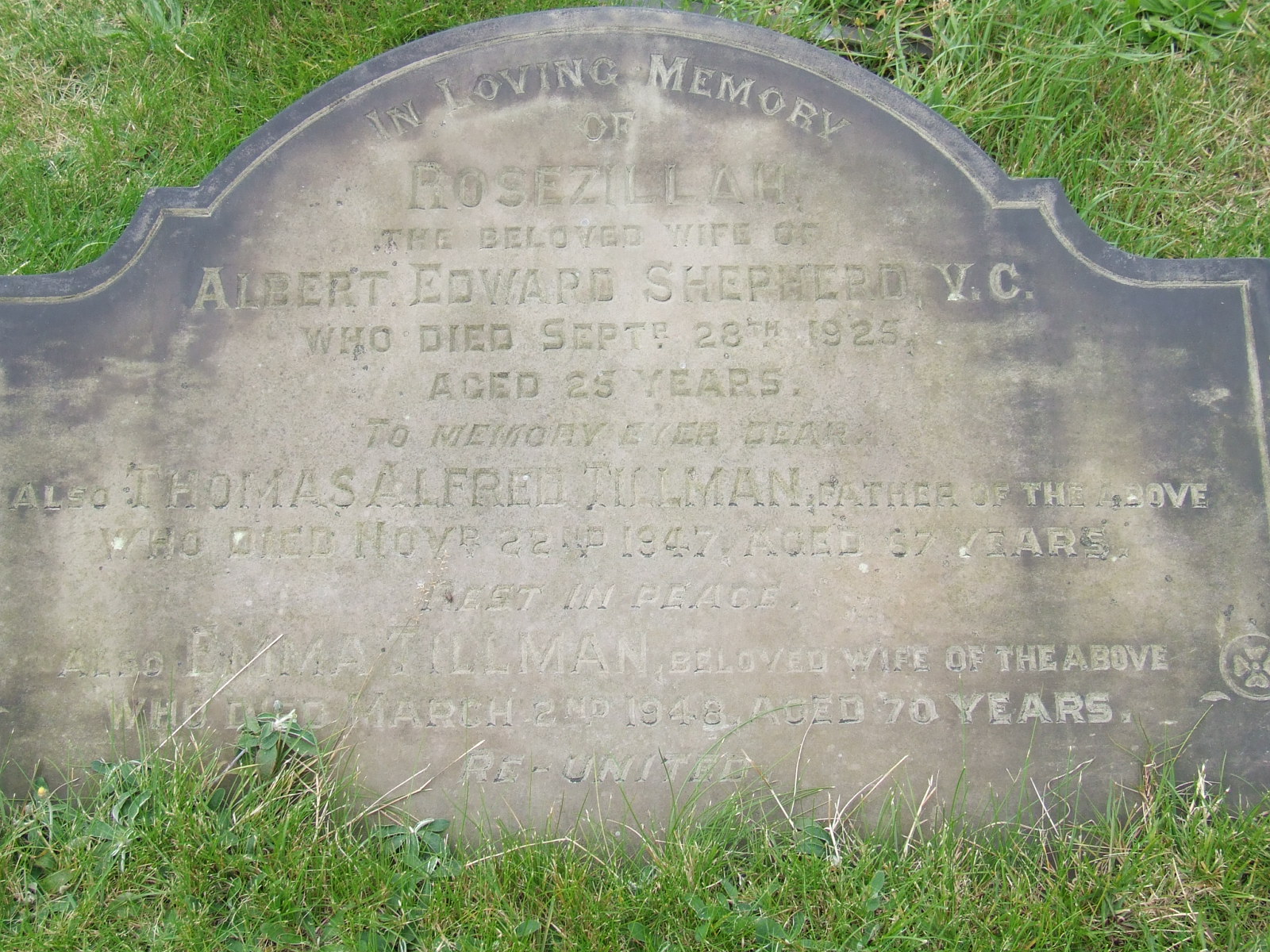
Rosezillah Shepherd, headstone in Royston Cemetery. Copyright C Sklinar

The Great War, the war to end all wars, came to an end for Albert on the 2nd of January 1919, when he was discharged and he returned home to Royston. He went back to the colliery as a caretaker and on 17th of February of 1919, he married Rosezillah Tillman.  Rosezillah died in September of 1925 and rests in Royston Cemetery.

On the 6th of November 1926, Albert married for the second time, this time to Gladys Maud Lees.

He later joined the Corps of Commissionaires.

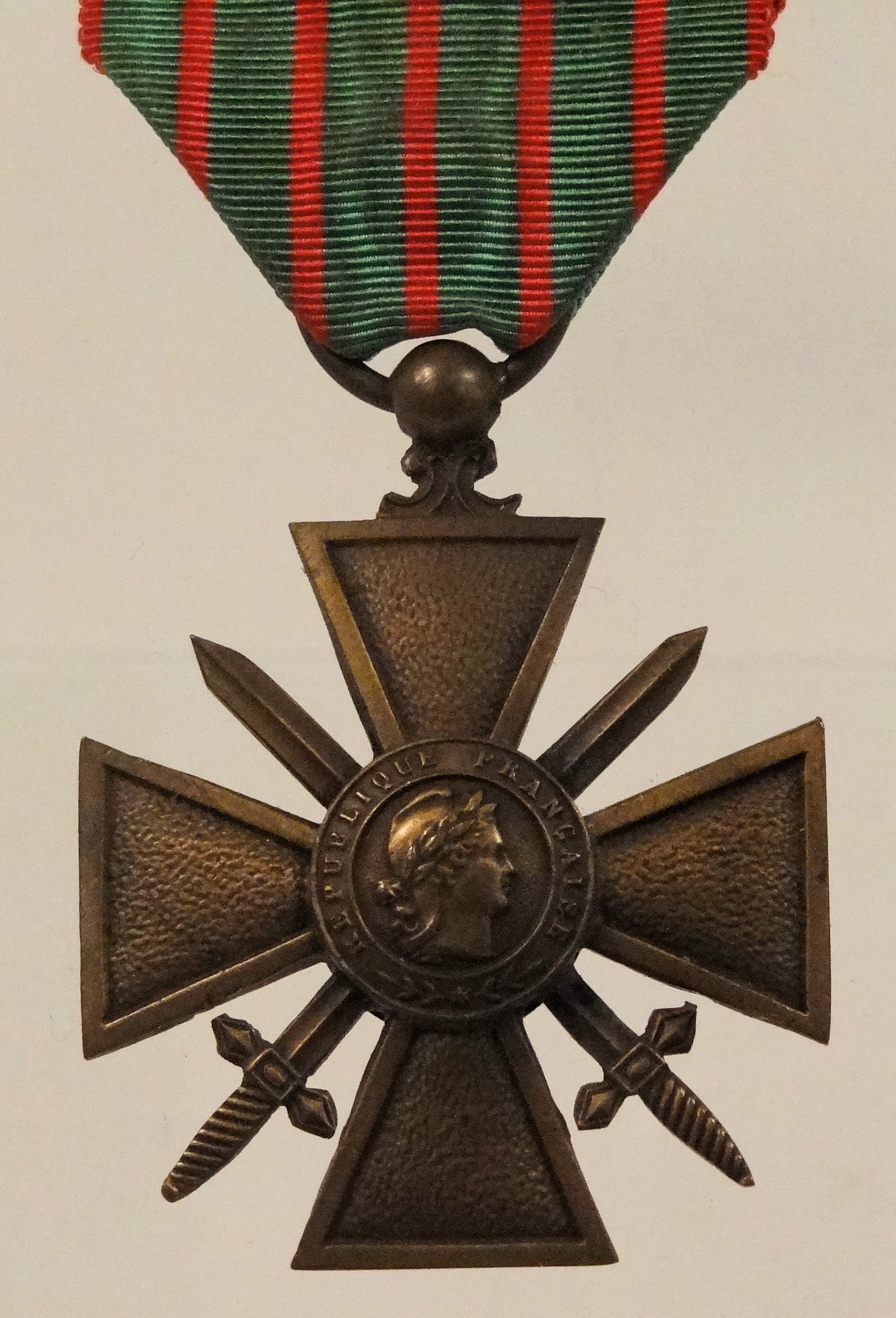
croix de guerre

Croix de Guerre

In early 1920 he heard that he had been awarded the French Medaille Militaire, followed a few months later in January of 1921 he had been awarded the Croix de Guerre.

As well as the Silver War Badge, for being injured,  his tally of military and civilian medals added up to quite a few:-

mdaille militaire

Medaille Militaire

 * Victoria Cross
* 1914 – 15 Star
* British War Medal ( 1914-20 )
* Victory Medal ( 1914-19 )
* King George VI Coronation Medal ( 1937 )
* Queen Elizabeth II Coronation Medal ( 1953 )
* Croix de Guerre ( France )
* Medaille Militaire ( France )

In June of 1920, he attended the Buckingham Palace garden party, given by King George V for Victoria Cross Recipients.  His Majesty was accompanied by The Queen and other members of the Royal Family. The recipients assembled at Wellington Barracks and marched to the Palace via Birdcage Walk.  The King inspected the Victoria Cross Recipients who later filed past his Majesty and all had the honour of being presented to The King and Queen. Nine years later was a guest at the Prince of Wales’ House of Lords’ dinner on 9th of November 1929.  He retired in 1945 and the following year attended the Victoria Cross dinner at the Dorchester.  It was his normal practice to attend most of the Victoria Cross / George Cross functions, one of which was the Hyde Park Review in June 1956 and the review f the Corps of Commissionaires in May three years later.

The Imperial War Museum has within its vast collection invitations and souvenir programmes for the Victoria Cross Garden Party.

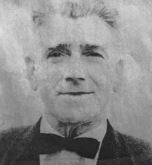
Albert E Shepherd VC

Albert E Shepherd VC

Albert Edward Shepherd, V.C. died at his home in Oakwood Crescent, Royston on 2rd of October 1966 aged 69.

DSCF1797

Albert Edward Shepherd V.C. copyright C Sklinar

He was given a full military funeral at St John the Baptist Church, Royston.  His cortege as it made its way to the church was given a guard of honour.  The Union Flag was draped across his coffin and his Victoria Cross and Croix de Guerre were proudly laid upon his countries flag.  The Last Post and Reveille were played at his graveside.

In 1968 his second wife, Gladys presented his Victoria Cross and his other medals to the Royal Greenjackets at Winchester.

DSCF1812

© C Sklinar 2015

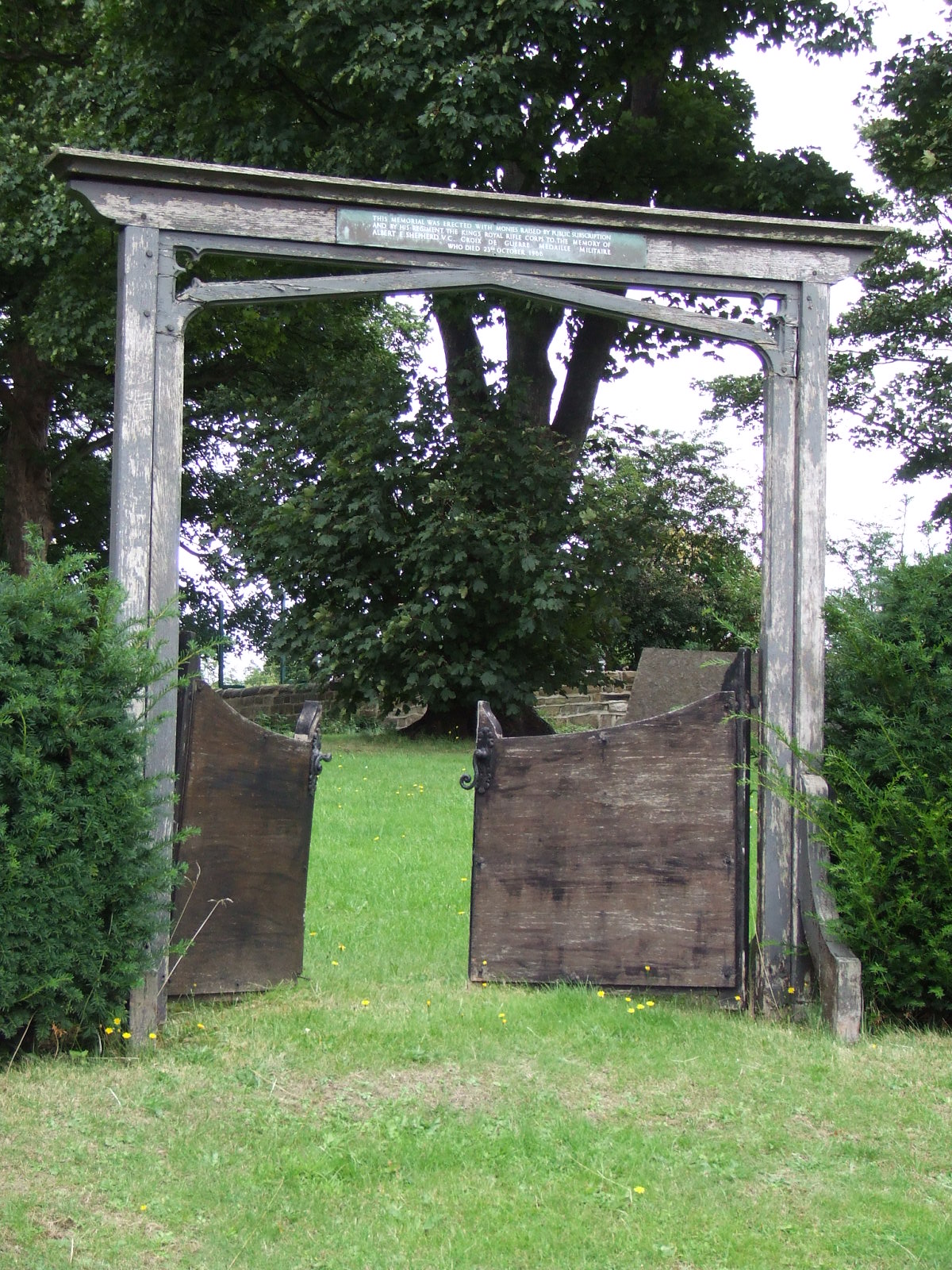
It is said that a vicar in the 1980’s used part of the archway, which bares Alberts memorial, as part of a washing line – needless to say, it did not go down well with the local British Legion.

And so………..back to that day when I ventured forth with keys and camera.  I eventually found the cemetery and proceeded to walk up and down scanning the headstones, but Alberts could not be found. I had found Rosezillah’s headstone, but no Albert.  There were quite a few people around mostly using the cemetery as a shortcut.  I asked many of them if they knew where Albert was, after explaining why I was looking for him and why he was special to Royston.  Sadly, not one of them had heard of him or knew where he rested.  Finally, I spoke to a man who suggested I spoke to a couple who were just making there way down the path.  With a quick turn around and the couple in my site – I found him, within feet of where I stood, and therefore, did not need the couple proceeding down the path.

A few weeks ago, I spoke to Barnsley local studies, wondering if they had any information that had eluded me.  I was told that Barnsley was very proud of Albert – my previous experience led me to take that with a very big pinch of salt.  I came to the conclusion that money had been made available in the form of a grant and like a lot of other councils, schools etc., have got on the 100-year bandwagon.  But, how long will they remember after 2015 or even 2018 I ask?

Many groups, associations and individuals have been remembering for much longer and will remember long after 2018 – personal rant over!

DSCF1813

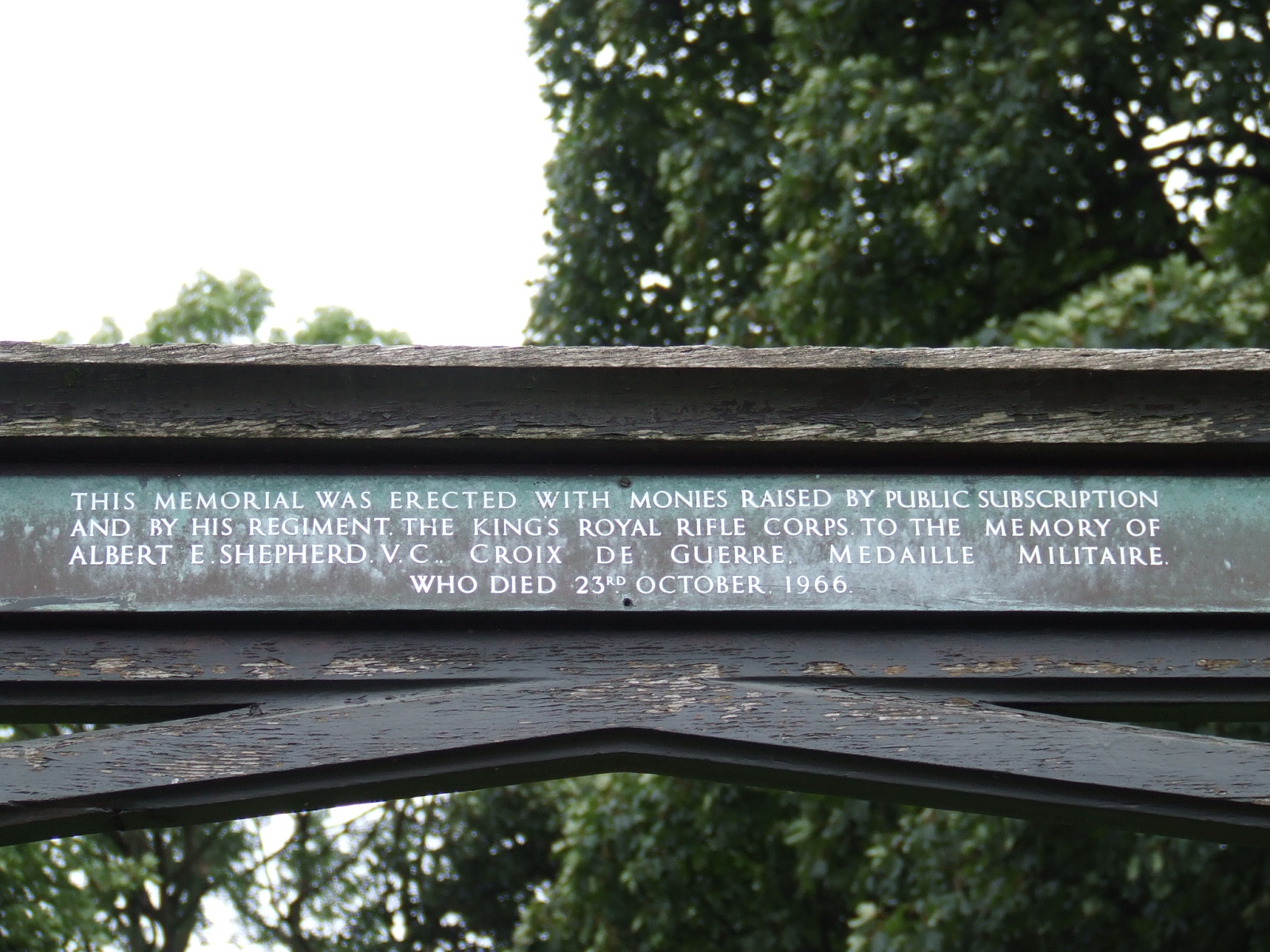
The inscription on the arch ‘This memorial was erected with monies raised by public subscription and by his regiment the King’s Royal Rifle Corps. to the memory of Albert E Shepherd, V.C., Croix de Guerre, Medaille Militaire who died 23rd October 1966.

Although the arch looks a little worse for wear these days, with the varnish crackling and the wood rotting a little, the memorial stands proud.  If you take a walk to the back of the memorial that now stands to the rear of the War Memorial, you will see the original gate that someone covered over with what looks like plyboard.

shepherd memorial new

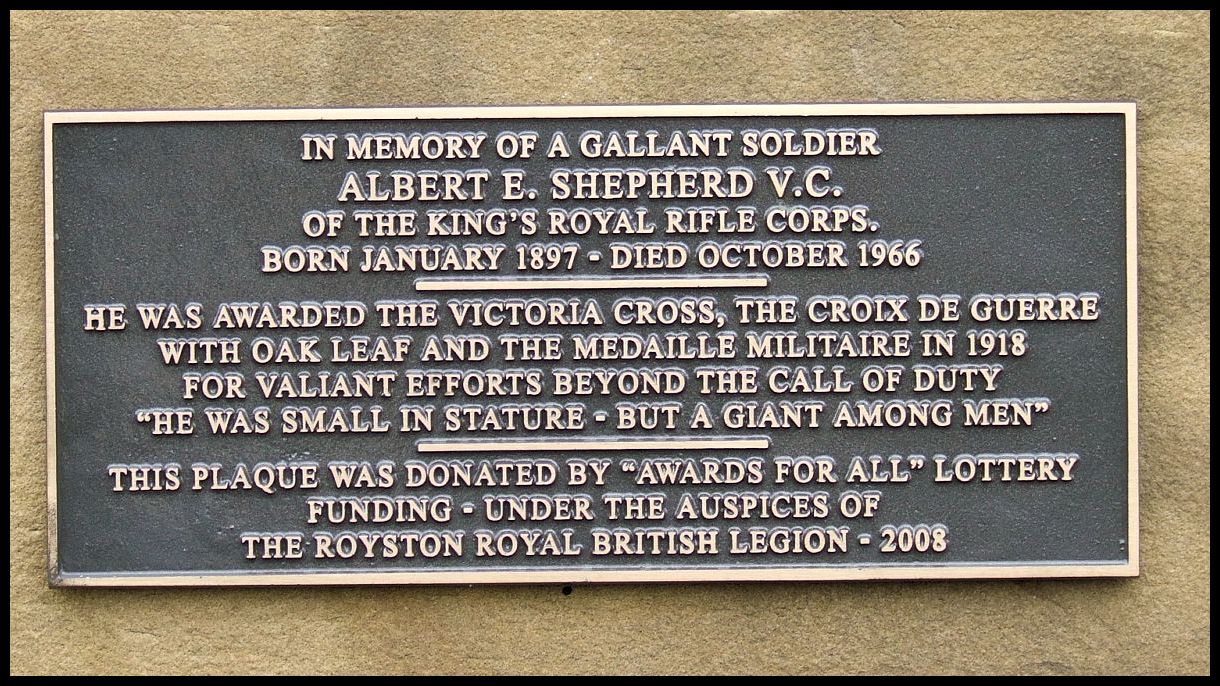
Memorial to A E Shepherd V.C. on Royston War Memorial copyright C Sklinar

Amos Bates, born 1844

I seem to have written about a great deal of military ‘stuff’. This will please quite a lot of people, including myself, but I think I need a change of research material.

Who to bring to the fore?  Who, out of the many fascinating people in my family tree deserves their day?  Should it be the hangman?  Should it be the suffragette who was accused of attempted murder?  Should it be one of three sisters who became doctors in the early 1900’s? Should it be a Lord, a Lady, someone who has done great things or someone who lived their life to the best of their ability to feed their family?  Looks like the latter wins!

Amos Bates, born in Wakefield in 1844 was the son of William Daubna Bates and Elizabeth Ward.  William, born in 1812 was from Althorp, Lincolnshire and his wife, Elizabeth hailed from Westwoodside, also in Lincolnshire.

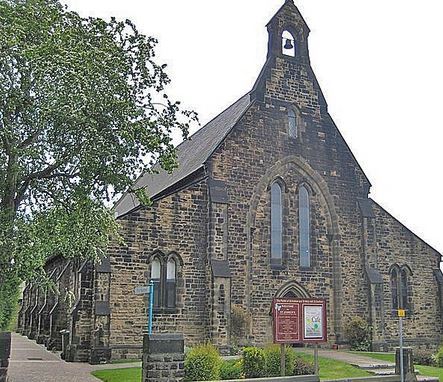
St Andrew's Church

St Andrew’s Church

Amos on his entry dated 21st April 1861 in the Marriage Register of St Andrew’s, Wakefield gave his occupation as Malster.  His future wife was Martha Siddle, who was born on the 1st of December 1843 in Wakefield and christened on Christmas day of that year.  Her father was Benjamin Siddle (born 1823 in Sowerby Bridge) and her mother was Elizabeth Stringer (born 1825 in Wakefield).

Life went on for Amos and Martha, during the next few years they went on to have three children – William, Elizabeth and Anaba.

In 1866, the year Anaba was born the lives of the family, living on Charles Street,  were turned upside down.

The Wakefield Journal and Examiner of 23rd of November 1866 gives details of ‘terrible floods across Wakefield the previous weekend’.  It goes onto include an account of a small community of Irish people who had settled on Westgate Common –

‘The Chald was swollen to a dreadful extent by the rains and poured down in a wide and great stream through the lower end of the town, devastation and ruin attending its steps. Brooksbank was of course soon inundated but most of the inhabitants had time to make their escape. Some five children, however, were left behind and their piercing screams were heard by the crowd which had gathered around the edge of the waters. At the lamp at the bottom of Westgate, Mr McDonnold, the Chief Constable, at length made his appearance and called for volunteers to go to the children’s rescue. Mr John Edward Kemp, Mr Evan Hunter, and a noted character named Charles Harkin at once came forward and, taking hold of a rope, the party carefully waded their way round the prison, up to their armpits in water. They had to break down some palasading (sic) to reach the hovel where the children were. The velocity of the current and the difficulty in reaching the place led to a discussion whether the children should be left behind as the lives of the adults were of much more importance, but the enthusiasm of the youthful minds, added to the piteous cries of the children to be removed, carried the day and Harkin, carrying two of the poor things in his arms, and the others carrying one apiece on their backs, the party set off on their return, which they safely The floods of 2004 at Magdalene Bridge courtesy of the Environment Agency effected. As they came into view, they were loudly cheered by the assembled crowd, blessings were poured in amazing volubility from the lips of the collected Irishwomen upon their heads. Captain Armytage, the governor of the prison, with praiseworthy generosity threw open the Industrial Home to those who had been turned out of their houses and supplied them with hot coffee and eatables. Our reporter visited the place about eight o’clock and found a number of Irishwomen and children crowded round a blazing fire, some female attendants from the prison in the meanwhile liberally dispensing among them the welcome coffee and bread and butter. Again at Brooksbank, a woman had a husband sick in bed and when the waters had risen some feet she began to fear the place would be submerged. She therefore took her husband on her back and attempted gallantly to wade through the swift current. In all probability she would have been drowned had not some men from the adjoining mill thrown her a rope which she seized and by its aid managed to reach a place of safety.’

 It seems fitting to once again turn to a newspaper entry for the next part of our life and times of Amos Bates.  This time the 17th of November 1866 edition of the Wakefield Express.

GREAT FLOOD

SAD DISASTER ON THE CALDER YESTERDAY. TWO LIVES LOST.

Only once, within our recollection, has this town been so deluged with water as it was yesterday and early this morning. In December 1837, Kirkgate was flooded with nearly as great a body of water as was seen yesterday, and, at that time, for several hours small boats were plying in the streets as though they were on a river.

The rain commenced to fall here between three and four o’clock yesterday morning, and continued, without the slightest abatement, throughout the whole of the day. Although it was our usual market day, the streets seemed almost deserted. The effects of such a downfall soon made themselves apparent: for between eight and nine o’clock the river and the Ings Beck had risen to a great height and about noon began to overflow. A shocking casualty occurred in Thornes Lane, by which two men lost their lives, while another had a narrow escape. From information from which we were able to gather from numerous sources, it appears that between eight and nine o’clock in the morning Mr. William Armstrong, the captain of a keel named “Peace”, of Beverley, was moving his boat down from the hoist, where it had been lying through the night, towards Mr. J. Fawbett’s flour mill, for the purpose of delivering his cargo, consisting of wheat. While he was doing this, the force of the “fresh” ? caused the rope, and the vessel was drifted down to the edge of the dam-stakes. Upon this the captain and his mate, who was also a Beverly man, appear to have done their utmost to prevent the vessel from being carried over. They secured it by ropes to the bank, and, after getting more ropes, a young man named Amos Bates, who was a miller in the employ of Mr. Fawcett, and another man named William Hepworth, a corn porter, were returning to it, when the force of the water capsized the boat, and both men were precipitated into the current. Hepworth who it is said is a good swimmer, succeeded after a hard struggle, in regaining the shore; but, we are sorry to say that Bates, who resided on Primrose Hill, was carried down the stream with great force, and, although attempts were made to secure him, he was drowned, and has left a wife and three young children behind him. The mate of the vessel also came to a similar fate; for, while endeavouring to pass from the vessel to the shore by means of two ropes, which were suspended from the boat to the bank, he was also carried away, in the presence of a large crowd, and met with a watery grave. We have heard that the body of Bates was taken out of the water at Stanley Ferry during the afternoon. The water continued to rise; the vessel was forced over the dam-stakes, and, after being moored alongside the boat yard, its cargo was removed, after which it was dragged back into the river. About noon another vessel which was moored alongside Messrs. Dunn & Co’s warehouse, and which was a new one, broke away and was carried down the river at a great speed. In its progress it came in contact with another vessel, which it somewhat damaged. On reaching the top of the dam-stakes, its mast caught the telegraph wires of the United Kingdom Electric Telegraph Company, which cross the river at that point, tearing them down. This somewhat checked its speed, but when the wires broke it was driven with tremendous force against the buttresses of the bridge. After a little hard work it was hauled back into the river again. Although as we have already mentioned, the rain continued to fall in torrents, the Kirkgate Bridge and the neighbourhood of Thornes Lane were thronged with crowds during the day.

The river continued to rise very quickly all the day, and during the afternoon it had overflowed in many places. The Ings Beck also overflowed, and all the fields in the vicinity were covered with water. In the evening the greater part of Thornes Lane, Ings Road, Bottom of Westgate, Denby Dale Road, and other low-lying districts were covered with water, which was several feet deep. In some neighbourhoods–particularly the Ings – the whole district was completely covered, and the houses were all inundated. At a late hour last night we visited the lower parts of the town. At the bottom of Westgate, the water had somewhat subsided, yet a greater portion of those districts was even then covered, the Ings being one vast sheet of water. Parties wishing to proceed to their homes which were situated in any of these districts were compelled to do so by means of conveyances, of which a large number of all descriptions were plying for hire, and as many parties out of mere curiosity took a trip through the inundated districts, the proprietors appeared to reap a good harvest. As the water increased very suddenly during the afternoon, it was impossible for many of the occupiers of houses, shopkeepers, and others to remove their goods, and many parties will have suffered considerable damage. In some of the houses in Ings Road & Grove St. the water stood as high as 5ft, and in some cottages the tops of chests of drawers were only just visible, while articles of almost every description could be seen floating on the surface. The streets were thronged up to a very late hour last night, and at the bottom of Kirkgate the water had risen up to Messrs. Simpson’s. Along the banks of the river all the fields are covered, and, as the night was clear and moonlight, the silvery surface could be easily discerned at a distance. The Pugneys, the footpath to Heath, the fields around the Low Mills, Brooksbank, and many other neighbourhoods, were also entirely covered. Several horses, pigs, cows, and other animals were seen in the water, and a great number also came drifting down from districts above the town, where it is thought the flood must have been equal to, if not worse than it had been in this town. The school-room under the Methodist New Connexion Chapel in Grove Street, the houses in Brooksbank, Denby Dale Road, &c., were all much flooded, and in some places the supply of gas was stopped. There must have been great injury done at Mr. Clay’s works, the Forge, the Glass Works, the Grease Works, and the mills in Kirgate and the neighbourhood.

This morning at two o’clock, the water had reached the end of the Brewery Street, and there seemed to be no sign of the water receding. There were a considerable number of people, even then, in the street. From further inquiry we find that Mr. Armstrong, the owner of the first vessel which went over the dam, was not on it, but in addition to the mate, there was a man named Robert Firth, and another named Hodgson. It was this vessel which tore down the telegraph wires, and not the second as stated above.

The disaster will be long remembered by those who have been driven from their homes to seek a night’s lodging elsewhere, and who, when the water subsides, will find their homes in deplorable condition.

And so, the life of Martha and her children were changed.  Amos was buried in Warmfield churchyard on the 22nd of February 1866.  As time went on there were more entries in the local newspapers and Martha had to endure an Inquest.

At the house of Mrs Mary Gibson Kirkthorp Thursday

The 21 Day of February 1867

In view of the body of Amos Bates decd

Martha Bates of Charles Street Wakefield Widow she says Decd was my husband. He was 24 years and a labourer in a Corn Mill. I last saw him alive on the evening of Thursday the 15th Nov last when after eating his supper he left home to go to his work. I saw his body this morning on the Bank of the river Calder at Kirkthorp. I can recognize him by his clothes & by his tobacco box, knife & pocket hand kerchief.

Joseph O’Rourke of Kirgate Wakefield Blacksmith, he says, on Friday the 16th Nov. last about 10 o’clock I was in the yard adjoining the Old Soke Mills & saw the decd & Mr Hepworth in a small boat trying to get a rope from a Vessel on the Dam to the shore. The water was then going 2 feet or more over dam. There was a rope from the vessel to the shore & also another from the boat to the shore. The boat got to the Vessel two or 3 times with ropes. The last time the boat got to the Vessel the boat went over the dam & capsized & decd & Hepworth went into the water. Hepworth was pulled out on the other side of the river but decd was carried under the bridge by the stream. After getting under the bridge I did not see his body until today. Signed Joseph O’Rourke

Thomas Smith of Kirkthorp Railway Platelayer he says, About 9 o’clock this morning I was on the bank of the river Calder * I saw a hand sticking out of sand & wreck on the side. I gave information to Widdop P.C. & we dug for about 2 hours & got out the body. I saw Widdop take out 4s. 4d. in money & a knife, tobacco box & a hand kerchief out of decd pockets.

Verdict. Accidently drowned.

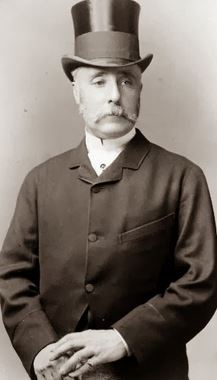
Percy Tew

Percy Tew

The local community, did as they still do today, they started a fund for the widow and her young children.  Many of the great and the good of Wakefield donated, including W H Leatham, MP; Edward Leatham; Edward Green; Alderman Rhodes; Thomas Clayton; Josiah Walker; Mrs Leatham, Heath; Percy Tew;. Companies also helped the coffers – Robert Mackie & Sons; M Sanderson & Sons; M P Stonehouse.   The Vicar gave 10s (which vicar, no idea).  The following chapels held collections – West Parade Chapel, Zion Chapel, Methodist Free Church, Trinity Church, Westgate Chapel Offertory and the Salem Chapel, each giving a donation between £13 and £2.  The Oddfellows Society of the Commercial Inn contributed £1 and the millers of the area gave two contributions.  Other small sums were also added to the pot with a total of £129 18s  6d being raised – a great deal of money for the time.

Life would have had to carry on for Martha and her family, but there was still more to come from the newspapers – Wakefield Express 23rd of February 1867 had the following article.

THE LATE FLOOD – RECOVERY OF THE BODY OF AMOS BATES-

On Thursday evening T. Taylor, Esq, held an inquest at Mrs. Gibson’s, at Kirkthorpe on the body of Amos Bates, a workman late in the employ of Mr. James Fawcett, miller, who was drowned on Friday, the 16th of November last, whilst endeavouring to rescue some men from a boat which had been washed from its moorings down to the dam-stakes by the flood.

The following evidence was given:-

– Martha Bates, of Charles Street, widow, said: Deceased was my husband. He was twenty-four years old, and was a labourer in a corn mill. I last saw him alive on Thursday, the 15th November last, when after eating his supper he left home to go to his work. I saw his body this morning on the bank of the Calder at Kirkthorpe. I can recognise him by his clothes, and by his tobacco box, knife, and pocket handkerchief.

-Joseph O’Rourke, of Kirkgate, blacksmith, said: On Friday morning, the 16th November last, about 10 o’clock, I was in the yard adjoining the Old Soke Mills and saw deceased and William Hepworth in a small boat, trying to get a rope from a vessel on the dam to the shore. The water was then going two foot or more over the dam. There was a rope from the boat to the shore. The boat got to the vessel two or three times with ropes. On the last time of going to the vessel, the boat went over the dam and capsized, and deceased and Hepworth went into the water. Hepworth was pulled out on the other side of the river, but deceased was carried down the stream. After getting under the bridge I did not see his body again until today.

-Thomas Smith, of Kirkthorpe, railway platelayer, said: About nine o’clock this morning I was on the bank of the river Calder, and saw a hand sticking out of sand and wreck on the other side. I gave information to Police-constable Widdop, and we dug for about two hours and got out the body. I saw Widdop take 4s. 4d. in money, a knife, tobacco box, and a handkerchief, out of the deceased’s pockets.-The jury returned a verdict of “Accidentally drowned.”

holy trinity church

Holy Trinity Church, George Street, Wakefield

With all the sadness in her life I think Martha was due for a bit of light in her life, and that was to come on the 25th of December 1869 – another visit to church on Christmas day…..remember her christening was also on Christmas day.  She was walked down the aisle the  of Holy Trinity Church where John G Patrick, a widower, was waiting for her.

The couple had more children – Agnes Patrick Bates born in 1868 and Grace Patrick…..notice the dates and the order of the names.

Martha died in Wakefield in 1875

Yorkshire’s Cycling Champion

With the Paris Roubaix cycle race just gone and the Tour de Yorkshire taking place shortly, I started to think about a cyclist whose career spanned five decades, yes, five decades and included too many podium places to name and many, many world records.  Not bad for a lass from Yorkshire who stayed firm in her Yorkshire roots.

Who am I talking about?  If you are from the Morley area, you will certainly know…….Beryl Burton.

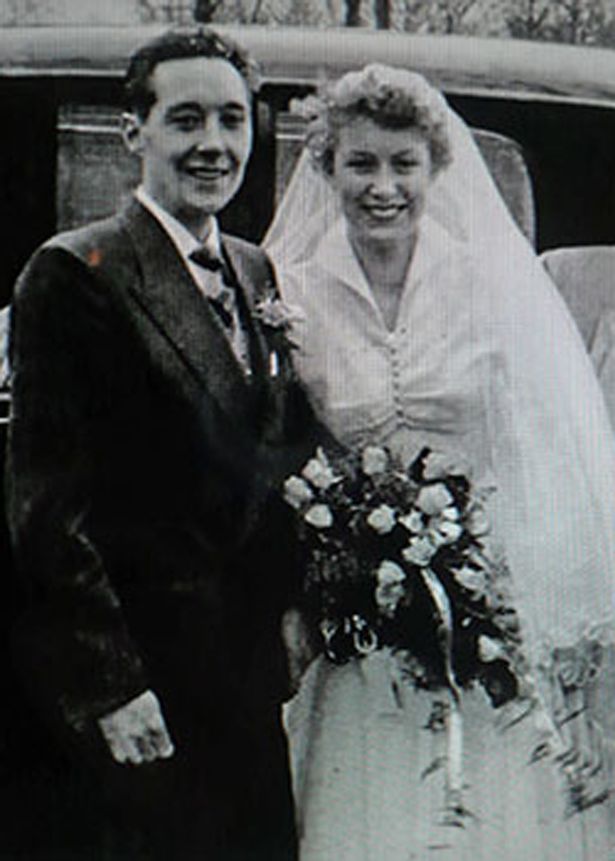
Beryl B wed day

Beryl Charnock with her new husband Charlie Burton

Beryl Charnock was born in Leeds on the 12th of May 1937 and married Charlie Burton when she was 17 years old.  She had met Charlie in a tailoring firm in Leeds – first noticing the noise of his cleats on his cycling shoes.

Beryl was a member of Morley Cycling Club, and loyally rode for the club her entire amature career.  She was awarded the M.B.E. in 1964 and the O.B.E. in 1968.

She was in charge of her own training and entered the competitions she wanted to and had very little to do with the sport’s governing bodies.  Beryl was asked in the 1980’s why she continued to ride impressive distances each week and race against women half her age…………she simply replied that she liked cycling!

In 1967 Beryl set a record for 277.25 miles in 12 hours and Beryl still holds this record.

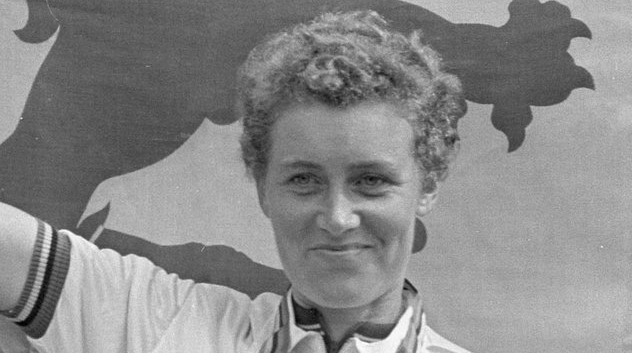
beryl burton

Beryl Burton

Beryl Burton, died doing the thing she loved the best – cycling.  In 1996 at the age of 58 while on a training ride near Harrogate she died.

A plaque was placed on Morley High Street after her death but within a few years had disappeared.  Now  the memorial has been placed in the foyer of Morley Town Hall, after being found lying on the street and kept safe for many years by a member of the public.  A facsimile will also be placed in Beryl Burton Gardens, Morley.

Maxine Peake, known for her part in the tv drama, Silk, in 2014 wrote a play about Beryl after receiving a book about Beryl as a birthday pressie.

beryl b

Beryl Burton, M.B.E., O.B.E. 1937 – 1996


Who Do You Think You Are – a Wakefieldfhs Road Trip!

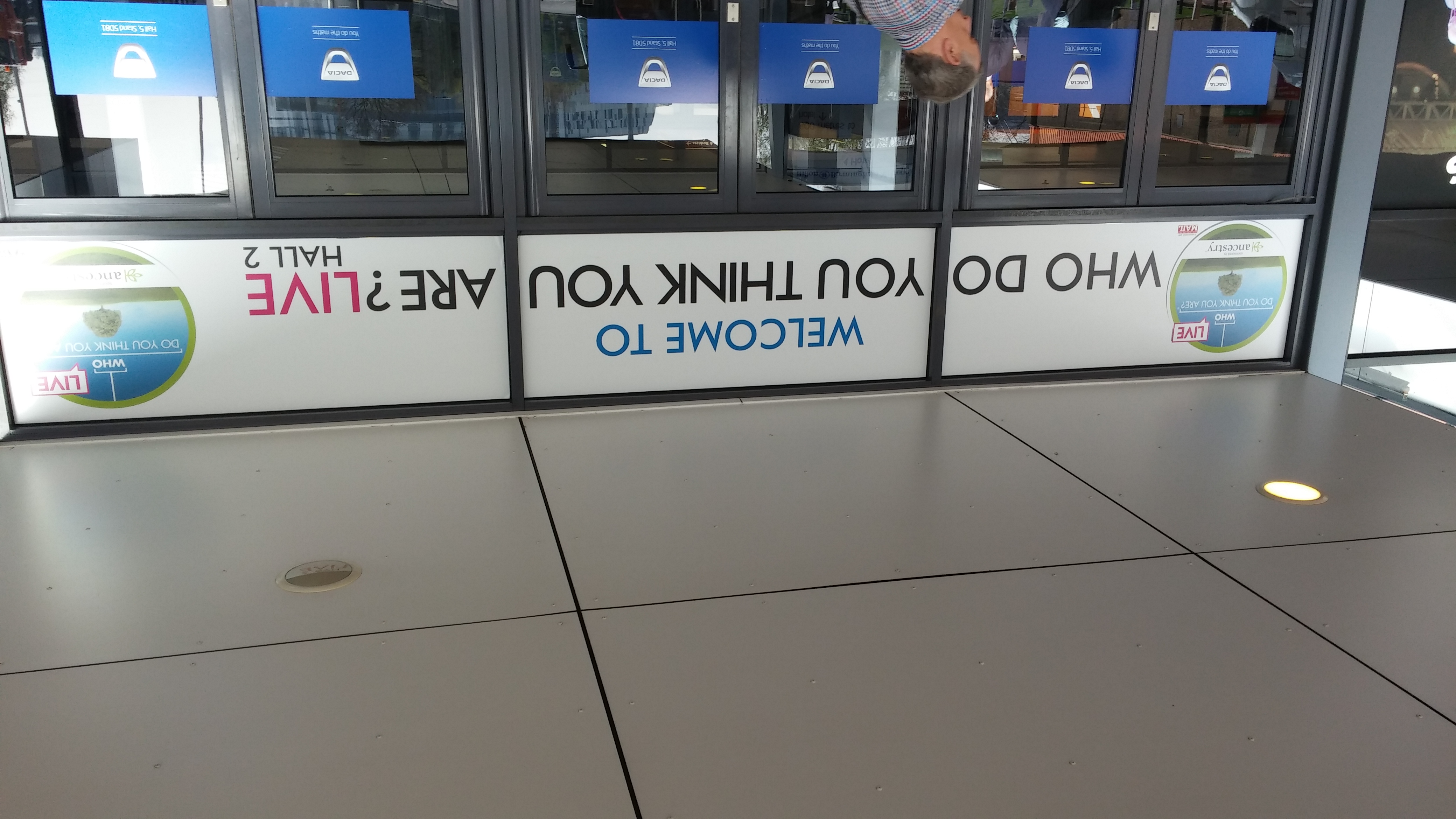
Thursday morning bright and early – well, early, but not necessarily bright, my two friends and I set off for the NEC at Birmingham.  The 7am start set us in good stead as the roads were not all that bad, even though we were travelling in the commuter hours – luckily the traffic queues were all heading north.

20150416_095805We arrived slightly after 9:30am, parked the car and after my friend said goodbye to her ‘hubby’, who had been out driver, we caught the shuttle bus to arena 2.  So, after a committee meeting to decide whether to have a coffee of not.  It was a very short meeting with a unanimous decision – yes, a cuppa was in order.

I was very surprised that there was no queue of people waiting to show their tickets and enter the arena.  Once inside we decided we would go our own ways, but meet at 12:30 for lunch and fresh air.

20150416_10520720150416_105215As we entered the stand that was prominent was Ancestry, well they had a couple of stands – one with people using the free access to find their long lost family, another had a bank of three laptops for membership questions, discounts and offers.  A membership discount was available but the laptops seemed to be having problems and we had to go back again – infact we went back a few times, but the problems seemed to be all day.  Behind the laptops was a nice man who was the the technical side of the company and offered help on searching techniques.  There was also the Ancestry DNA stand.  After the Ancestry section I decided on a  system so as not to miss anything.  Row by row, I progressed down the area one side and up the other – it worked.

The night before our visit I had made a very rough list, and I mean rough list, of people I had wanted to ask questions about, that was if there was any stand that fitted my needs. The list consisted of :-

John Kaye, a Home Child, who later became a regular soldier.  A divorcee, who married my aunt.   John Younie, who died while in a court in India in the war. How could I get a copy of a death certificate and where would he be buried?  Relatives from Germany.  Members of the Grace family, carvers, gilders and one an artist (a friend of Whistler) who lived in Wakefield and Chiswick.  PLUS two distant relatives who had been awarded the Victoria Cross.

Aswell as the professional associations i.e. AGRA, ASGRA etc., there were a plethora  of Family History Societies and Groups, quite a few companies wanting you to have your DNA tested, a few software companies, research supply companies and other companies that had no connection to our subject at all but seemed to need ‘footfall’.

I was surprised at a few well known companies i.e. online research and software companies that had staff manning their expensive stands, and whose staff on Thursday stood around talking to each other, while customers, prospective customers, waited for help. The staff at one particular stand not only had staff stood in a huddle, but they either did not care about the product they were trying to get you to purchase or had not been trained.    Saying that there were a couple of other stands, non-family history stands, whose pressure selling would have been welcomed by the  aforementioned companies.  Apart from this negative bit, the rest of my day was a pleasure.

Some of the stands I will tell you about individually, while others will be mentioned here.

Who did I talk to and why was I impressed enough to tell you about them!

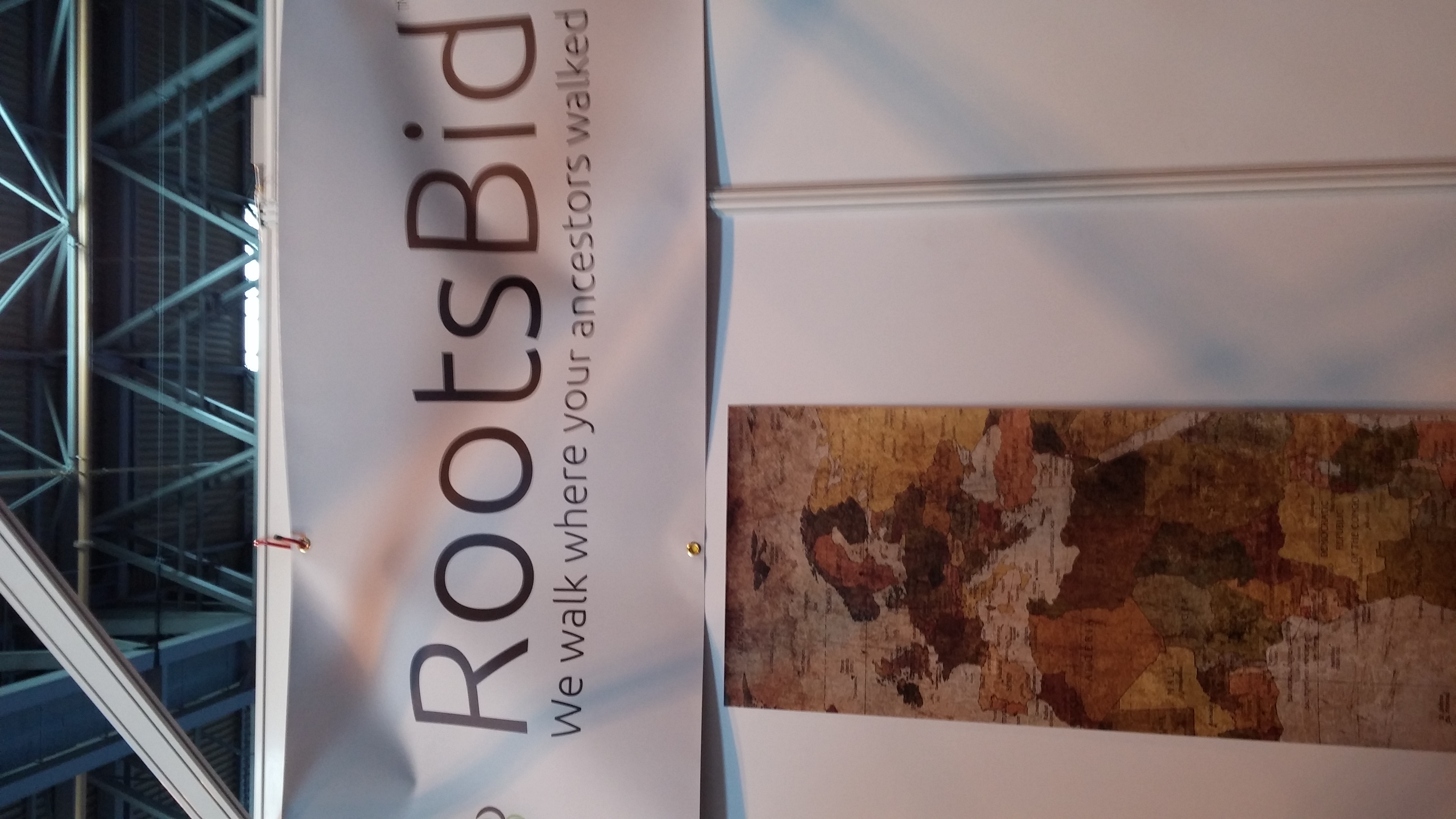
20150416_105743………with my leaflets and brochures sorted and besides me, lets work through them. Firstly, I met a very nice lady from Rootsbid, an online company where you place a request for help, a photograph etc., and people place their bid for the request.  You simply then chose the person you wish to do the job, pay and upon completion the monies are passed over.  Seems a good idea but I would have liked the option of having more than one area where you are willing to help.  But other than that, take a look – could be an idea for out of area or out of country photographs and archive work.

I had a nice chat with a man from the Guild of One Name Studies, who nearly persuaded me to join and register  one or two unusual names – that may have to wait as too much on at the moment…………but maybe one day!  But after a look at their website and searched a few of my family names, it seems I may have to register a lot of names, sometime,  as no one at the moment seems to be specialising in them.

20150416_161715FIBIS – Families in British India Society, seemed like a stop to ask about John Younie.  The stand was well presented and manned with lots of friendly and willing people.  One of the ladies showed me their website and we looked for him.  A few with the same surname were there but not him.  I was however, given a few hints and tips and suggestions of where to look next.  I was given a few hints and tips on where to go and what to ask for.

We, as family  historians research and record information about people who have gone before, but sometimes we forget that there are living relatives.  These family members may be older in years but hold such a vast amount of information.  There were two companies at the exhibition who specialised in recording memories.  Both companies were manned by nice people who knew their product. One was Speaking Lives and the other was Love Your Stories.

cardsThe previous companies were for the recording of history, but there was a stand, promoting Family Legacy Cards. Wonderfully designed cards with a suitable sentiment, covering a variety of occasions.  Set up by two friends, whose children both suffered with Autism and Learning Difficulties.  The cards, each with a thought provoking cover,  can either be sent to an older relative for them to write their memories or stories,  or they can be filled in by parents, grandparents or other relatives to children and kept until an appropriate time to be read.

My attention was caught by a banner advertising Surrey in the Great War – the county are looking to record how the Great War affected those within the area and are asking for volunteers – they say unlike 1914 enlistment, they have no age, height or medical restrictions, all are welcome.  They are also wanting school, college and community group involvement, including family and local history societies.

The Belgian Tourist Board had a small but impressive stand.  They had available wonderful brochures which gave wonderful information about places with WW1 connections.  Their Trade Manager, was a very nice man and promised to post a brochure for around the Ypres area.

In a small corner of one stand were a few people representing F G Marshall Ltd., The skill shown on the stand was amazing and the patience these artists must have, could put us all to shame.

A number of stands were promoting education i.e. courses on family history, heraldry, military subjects.  Some of the courses were complete in a matter of weeks, while others, could take a year or two. Some of the courses were organised by –  University of Oxford Dept., for Continuing Education; University of Dundee, Centre for Archive and Information Studies; Strathclyde University, genealogical studies.  Finally, Pharos Teaching and Tutoring Ltd., 

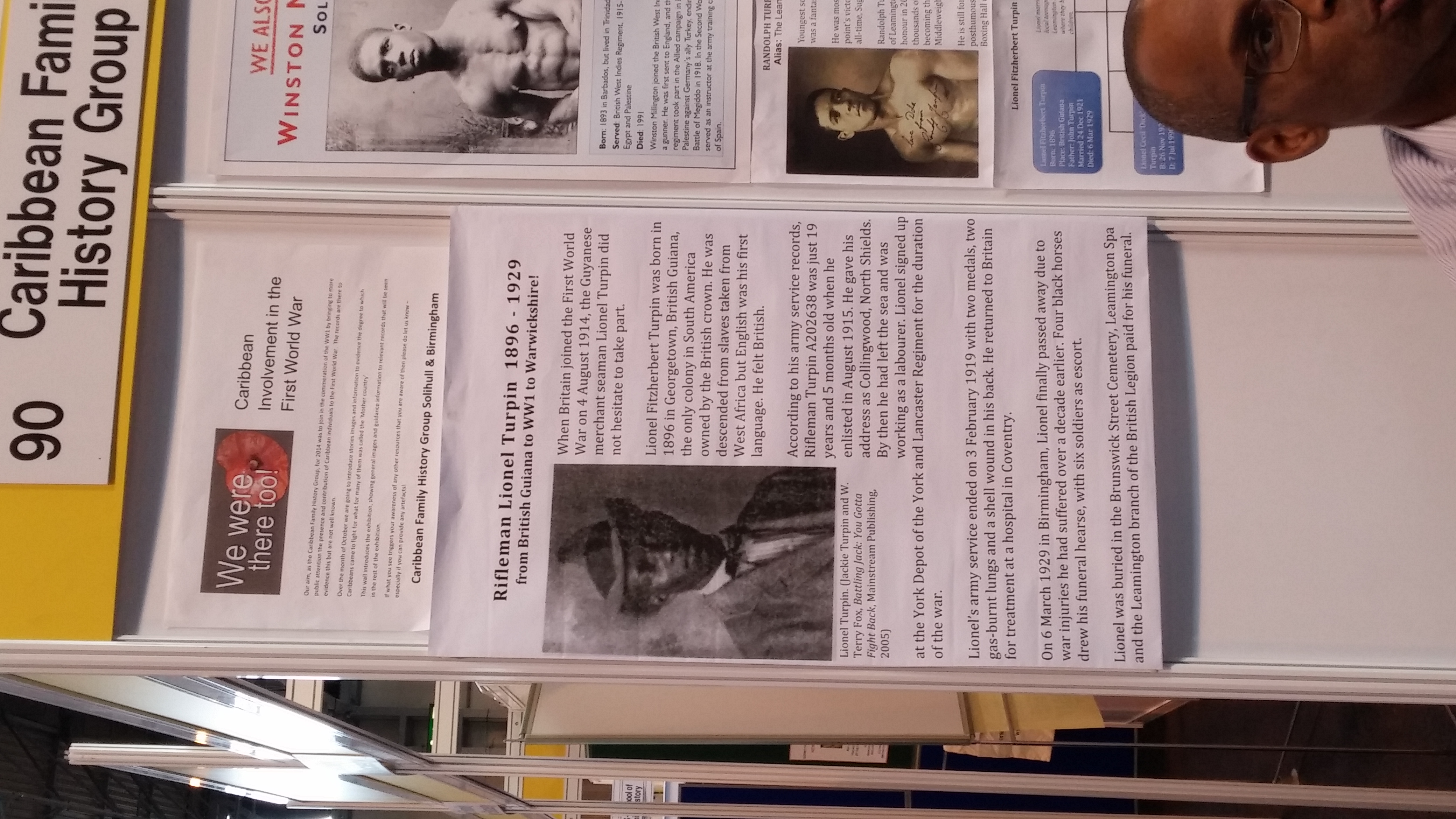
20150416_155732If you had Caribbean roots, there was a stand that catered for your needs – the Caribbean Family History Group.  The leaflet I collected proved very informative about what is available in the UK, the link take you to Solihull Council website, which give more pointers.

The Imperial War Museum, had a large stand promoting their20150416_145524 website Lives of the First World War.  The site aims to add life events to the men and women who played a part in the Great War.  You can simply remember a person or add facts, pop along and see who is there.

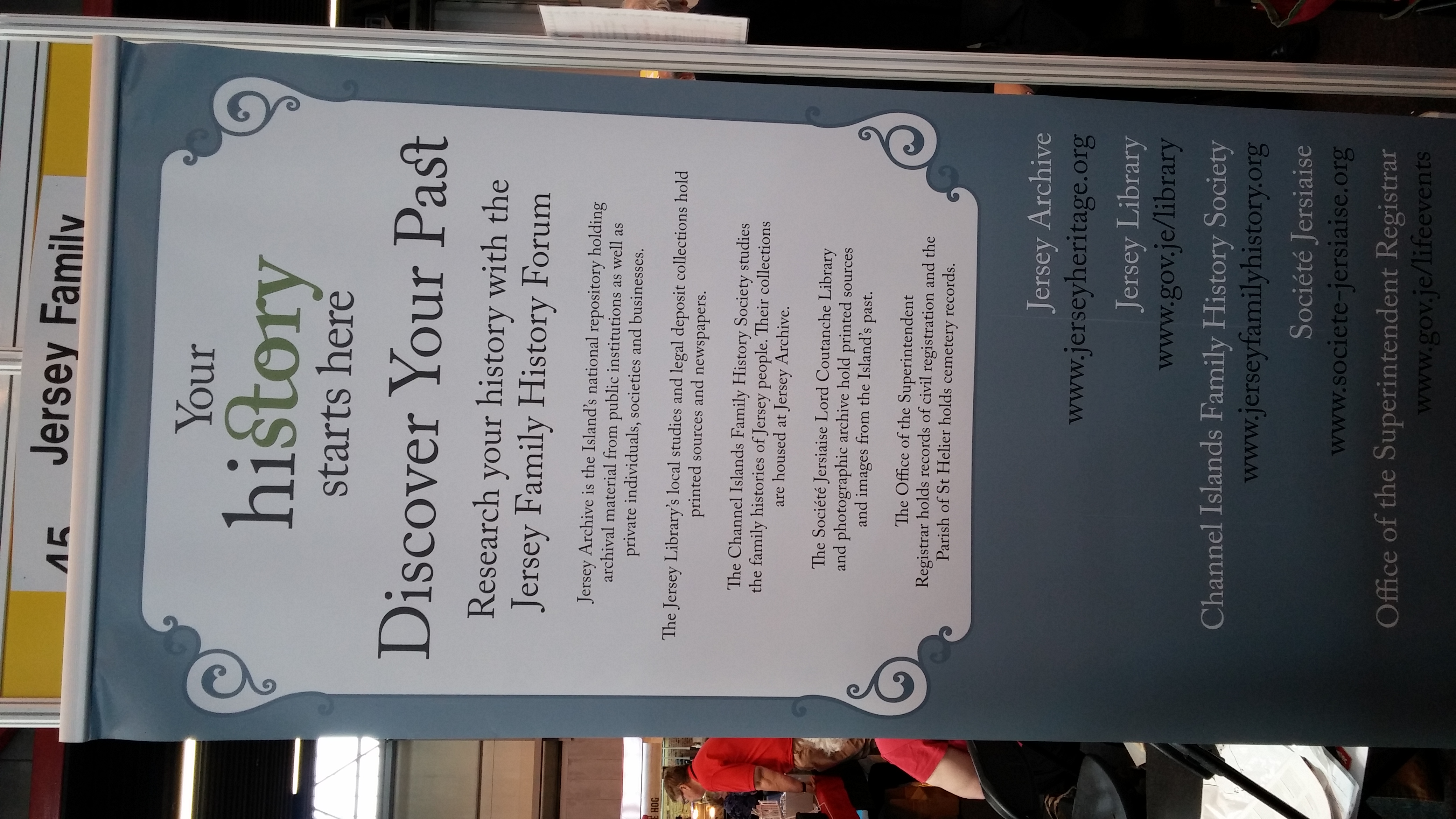
20150416_155527The Jersey Archives had a stand and I met a lovely young lady, who was pleased and surprised when I told her of a connection between Wakefield and the Channel Islands.  The General Register Office were also there armed with facts, information and leaflets to aid research.20150416_115114

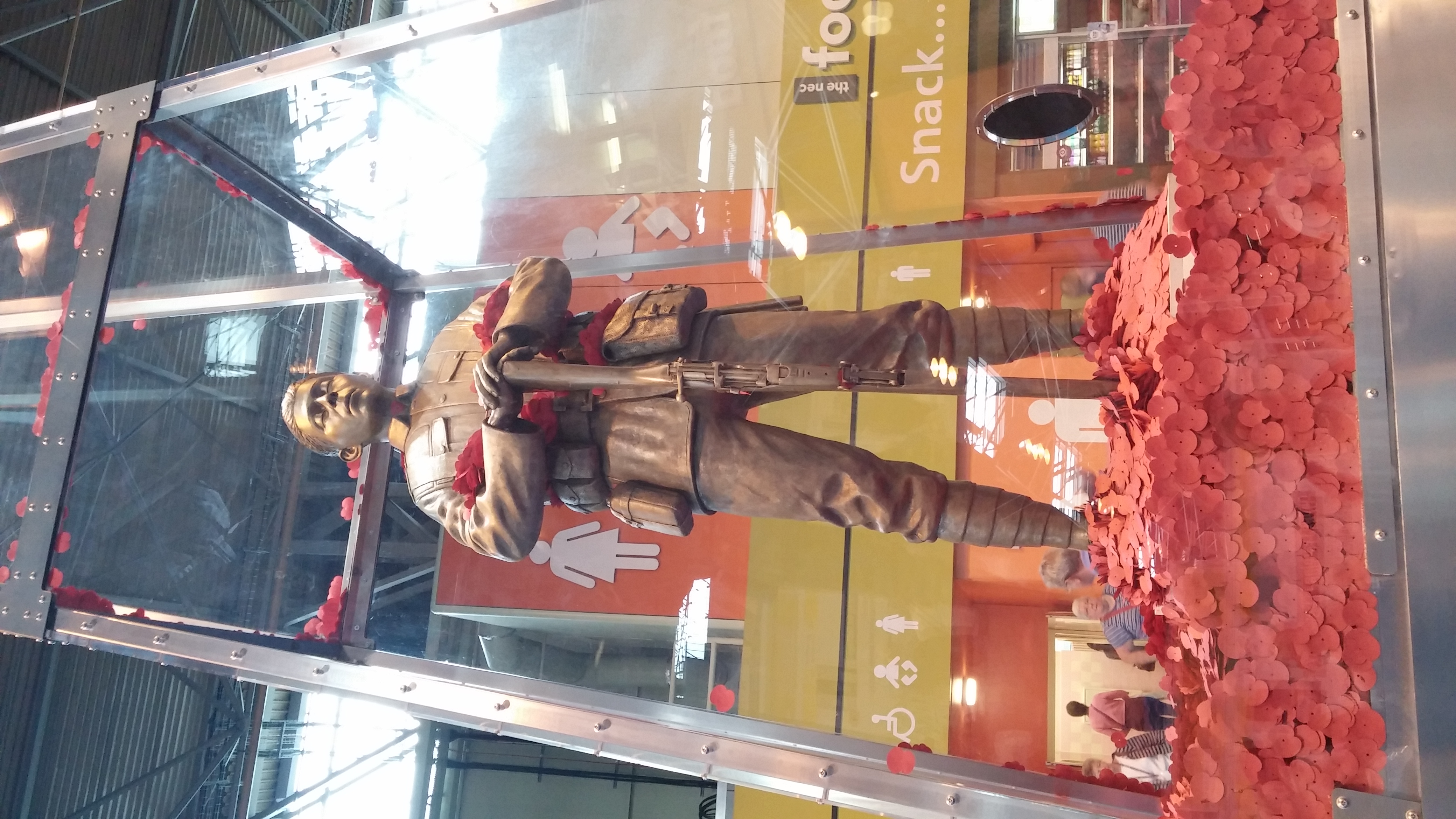
I was drawn to a very large dome, 20150416_114048enclosing a statue of a soldier standing at ease, with his rifle barrel down.  On regular invervals hundreds of poppies were blown around.  The Royal British Legion were promoting their site Every Man Remembered at Who Do You think You Are this year.  Met a couple of nice men, one of them gave me a quick tour of the site – he made it look easier than it actually is, but I got there in the end and remembered my Great Uncle Herbert Siddle.

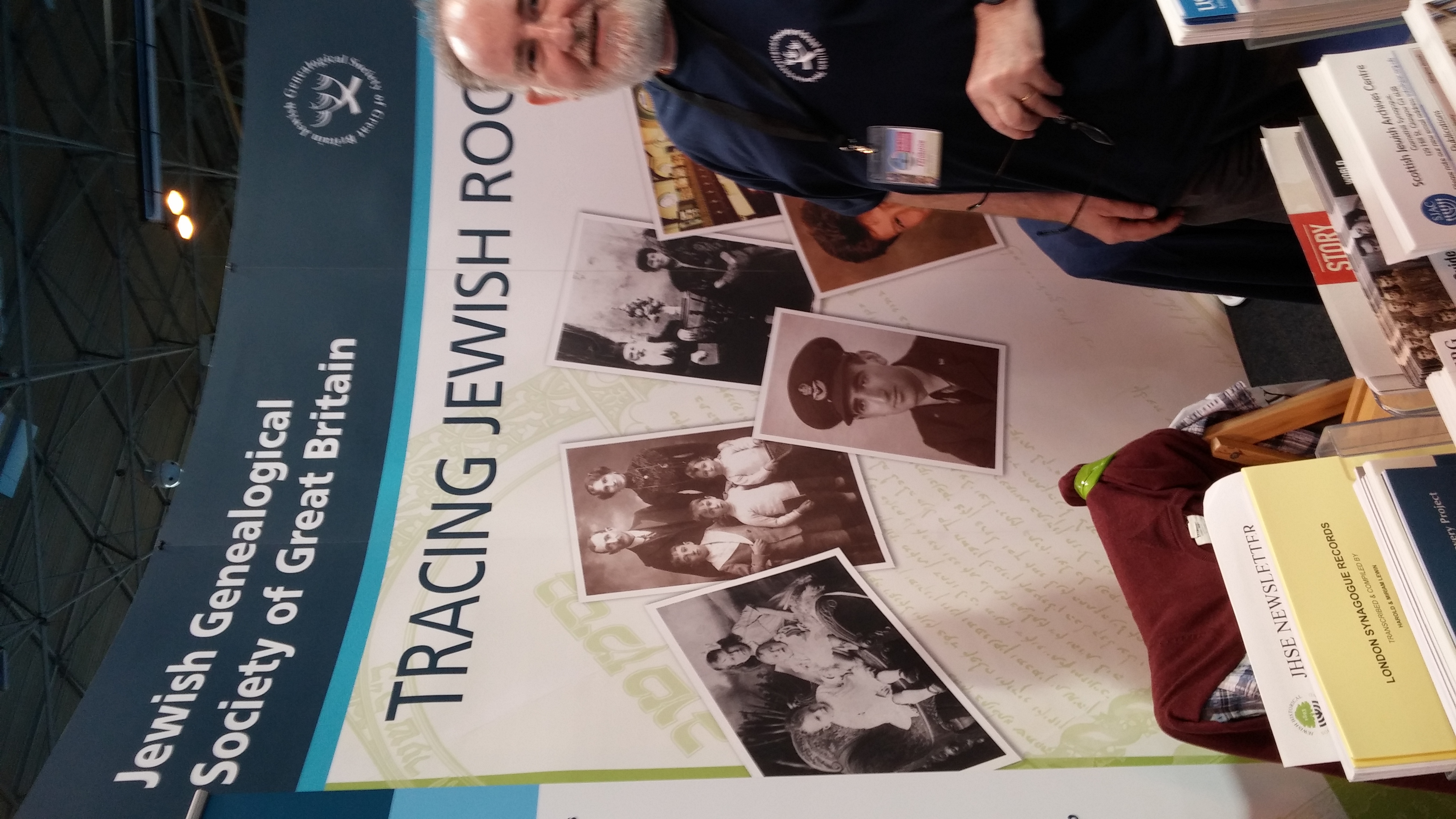
20150416_163456I picked up a few leaflets from the Jewish Genealogical Society of GB – one for a friend who has researched a cabin trunk owned by a lady who managed to get out of Germany a short while before war was declared, I thought they may be of interest to her.   I also picked up a leaflet or two from the Ministry of Defence20150416_142920 stand.  The leaflets were guides to WW2 Casualty Packs, Medal Office Guide, Personnel and Record Guides – all very interesting and useful.  They also had on display a collection of medals, including the V.C., which a couple of my family members were awarded.  I was also told to take the A3 prints they had of all the medals, nice things to keep for reference.

If you do family history you will know of the next stand that caught my attention, the stand of the Jesus Christ of the Latter Day Saints, namely Family Search, who have been the forerunners in family history research for decades. I don’t need to say anymore about this site, just to to the website and lose an afternoon or a weekend looking for your family.

Another site I stopped at was manned by Chris Patton for Unlock the Past Guidebooks.  Chris has written quite a number of books but all with the family history link. All of the publications can either be purchased in book form or available as an e-book as a PDF document, well worth a look as some of the titles look very interesting.

Another large stand, this time belonging to Find My Past – not only did they have laptops available for look-ups, very helpful staff, they also had a series of free talks during the show.  They were also promoting the 1939 Register.  All making a very busy stand.

The National Army Museum had another good stand packed with very useful information leaflets giving information on events, the study and research centre etc., and again, manned by very nice and helpful staff.

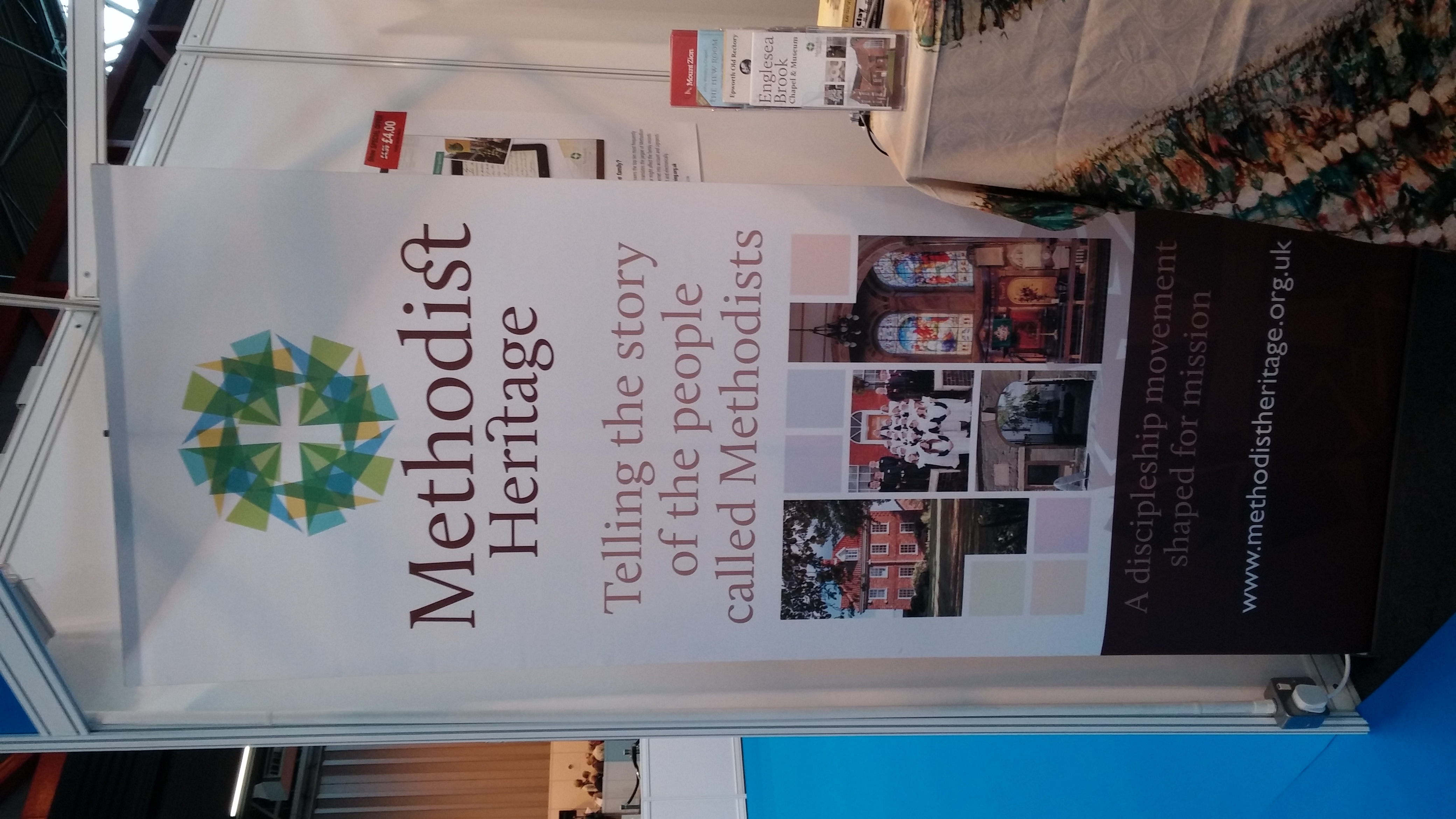
20150416_120926As one of the groups I am a member of is within a non-conformist area, so it seemed natural that I should pay a visit to the Methodist Heritage stand.  Leaflets packed with the history of Methodism plus places to visit that have a Methodist connection.

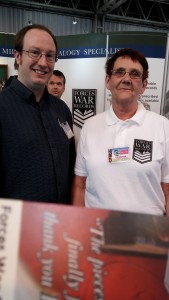
Just taking a final look through my collection of leaflets and I have very nearly forgotten to mention Forces War Rec20150416_152149ords.  It is a site that I have found when googling the name of many soldiers who were KIA or DofW during the Great War.  While I was chatting to a couple of the people on the stall I mentioned my two V.C. awardees. So, they set too to find them, and show me what the site could do.  Well initially, they could not be found, but eventually we found one and I sneakily took down the edition of The Gazette – tell me you haven’t done the same!  While we were looking for the other elusive VC recipient, other staff members came and started chatting, laughing and joking.  I said that if you can find them, I would join  but would want a discount to do so – I was given a discount code. A few Tweets went back and forth and one told me the elusive man had been found.  A Tweet said, looks like I should join……………I did and used the discount code.    Thank you very much.

20150416_145105I also paid a quick visit to the Western Front Association while wandering around, such a nice set of people and very knowledgeable on their subject.

Lastly, but my no means least, was the stand of The Commonwealth War Graves Commission. Again a wonderful stand packed with information and resource material.  Over the years I have acquired a few of their booklets and pamphlets, now it was time to add some more to the collection.  Some of the booklets would be wonderful as information fillers in a book that I am researching for.  One of the staff was very helpful when I mentioned an error on a headstone – so to gather the evidence and forward to them.

Mystery medals

A few weeks ago I wrote about a set of medals. An acquaintance had sent me some images and so I wrote about the man who they had belonged to.

A few days after the photographs of Pioneer W Epps medals arrived, three more were attached to another email.

Pvte Bayliss

Pvte Bayliss

The first picture was of the reverse of a medal to Pte., G. Bayliss, 16989, S. Staff:R.

Pte., Bayliss according to the Medal and Award Rolls, embarked on 6th of October 1915.  A search for his Medal Index Card gives his name, with the initial G, as the Commonwealth War Graves Commission information gives.  His Medal Card, however, has his initial with the completion of his name – e o r g e, filled in as a later addition, along with his details for the Victory and British Medals.  George, was also eligible for the 1915 Star.  His rank and regiment are written in red, but written in blue is information that George was promoted to Acting Corporal.

The entry for George in Soldiers who Died in the Great War, tells that he was born in Wolverhampton and enlisted there.

The campaign in Gallipoli, fought by the Commonwealth and French forces, was an attempt to open a supply route to Russia through the Dardanelles and the Black Sea.  The first landings took place in April 1915, with further troops landing in August and being put ashore at Sulva.

George and his comrades  headed for Turkey – George like many other young men never returned.  He was Killed in Action on 1 December 1915 and rests in the Amzak Cemetery, Sulva, Turkey along with over 1,070 other identified casualties and over 680 who are known only unto their God.  Among the unidentified casualties and 114 officers of the 1st/5th Norfolk Regiment, which contained the Sandringham Company, who died on the 2th of August 1915.

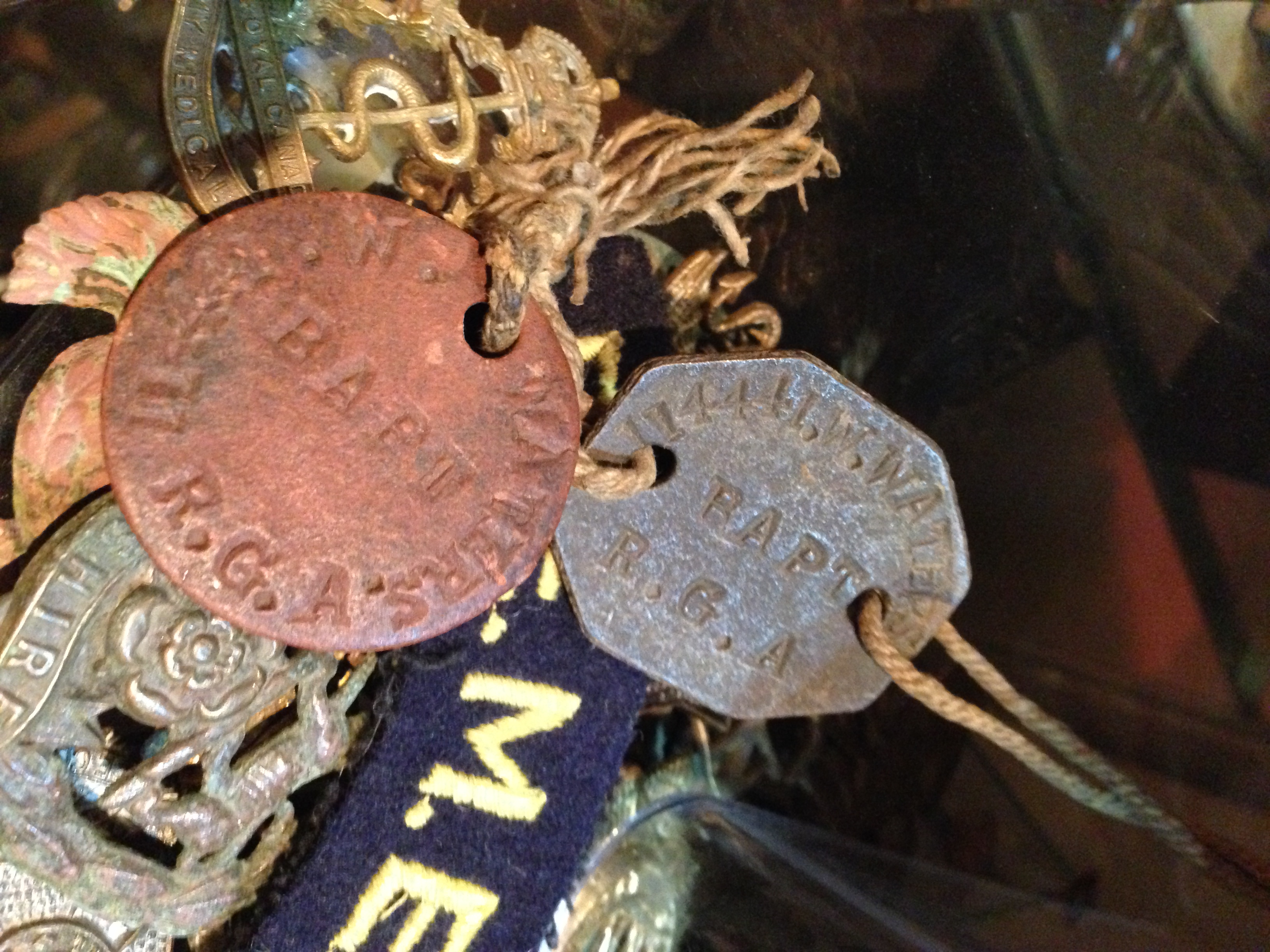
W Waters 114441

W Waters 114441

Another image was for a set of identity tags, more than likely still held together with their original string.   So, who are they to identify, incase of injury or death?   Waters, William J, Gunner 114441, R.G.A.  enlisting on the 16th of August 1916.

William obtained the Victory and British Medals, but also had a Silver War Badge, number 415505.  William John Waters, served in the 351 Sge. By. and as a result of being injured or sickness, was discharged from the services on the 2nd of July 1918.  The paperwork for the Silver War Badge (S.W.B.) tells that he served 321 days overseas and that he was 34 years old when discharged.

There is a William John Waters aged 28 in the 1911 census living with his wife Annie (nee Pooley)and son William Edward at 77 Burrard Road, Custom House, Canning Town, Essex.  William gives his birth place of Plaistow and he works as a painters labourer. The couple had married four years earlier.  Whether this is the William whose identity tags are now in a private collection………….well, it could be.  But it nice to write about someone who fought and lived and went home to his family and friends.

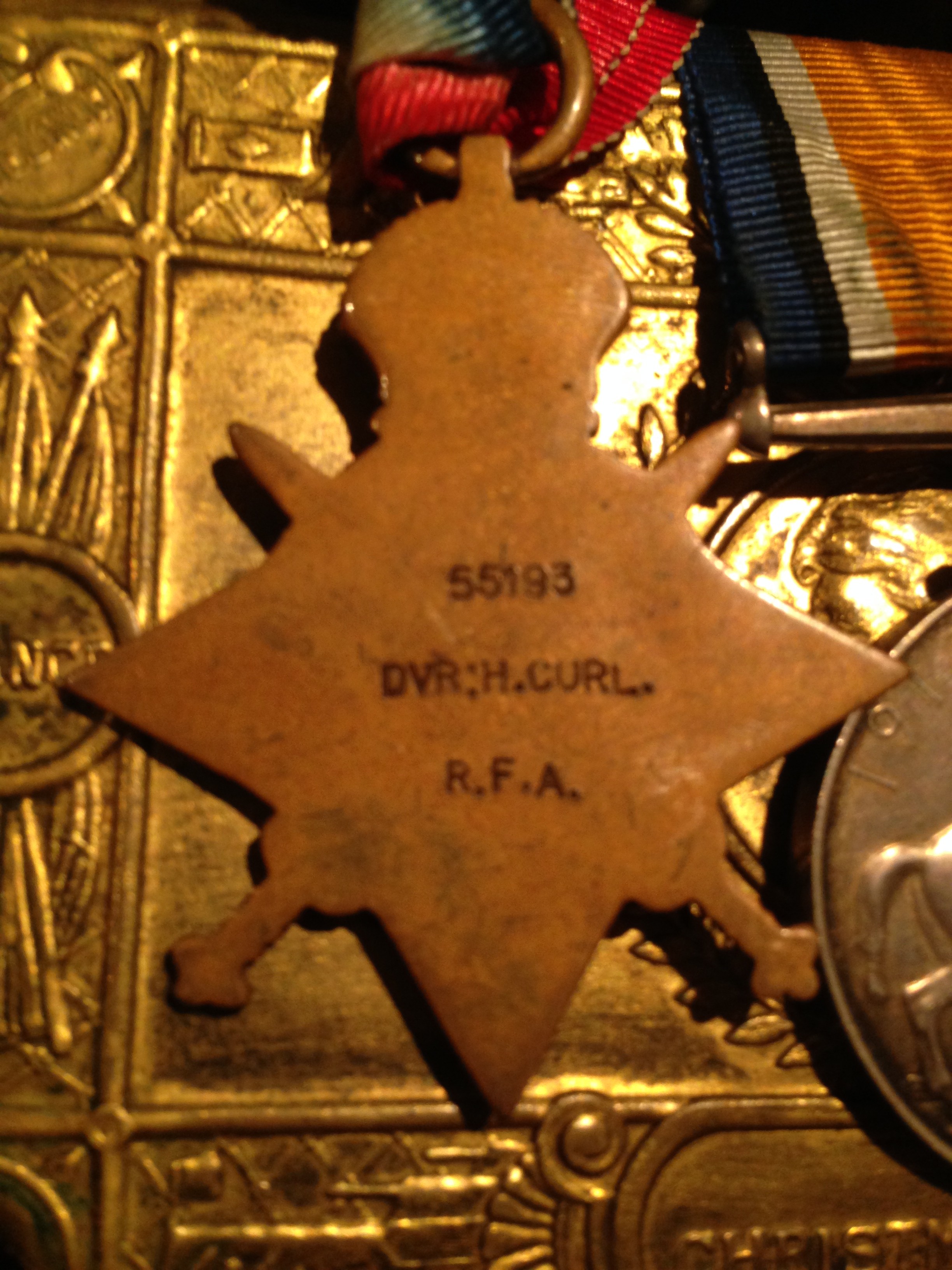
The last photograph is for another medal, this time awarded to Dvr. H Curl, 55193, R.F.A.  I think I seem to have left the hardest until last!

Dvr H Curl 55193

Dvr H Curl 55193

When looking for information on Dvr. Curl, I immediately looked for a medal card, using the information we already knew – his surname and his service number, but nothing came to light.  A change of tact and this time used only his surname, as I did not expect to me 100’s and 100’s of Curl’s.   Scrolling down to the H’s and looking for a man that was  in the R.F.A. – there he was with three service numbers!

Henry C Curl, served as 55193 in the 33rd Bde R.F.A, as we know, but he also served as 532463 in the Labour Corps and  42518 in the Royal Army Service Corps.  There seems to be a lot of over-writing and fitting  in of words but below his final service number is written transfd. 9.3.18.  It seems he was eligible for the 14 Star with being in the R.F.A. and the Victory  and British Medals were through the R.A.S.C.

If you can’t find the information you would like to add ‘more meat to bones’, try another record.  The Service Medal and Award Rolls, do that, give more information – Henry Charles Curl, Cpl., we now know his middle name.  Also the information about the R.F.A., his serial no. 55193, and Bombardier. We now  find out that he was tfd (transferred) to the R.A.S.C. on 3rd December 1918  and dis. (discharged) on 11th of March 1919.  It looks like that Henry Charles also went home to be reunited with his family and friends.


Sources –

Ancestry, CWGC, Freebmd.

Thanks to Jason Hewitt for the use of his photographs.


Epsom College men with a Wakefield connection

At a family history fair a few years ago I bought a book – Epsom College Register, 1855-1905.  It was bought in a bit of a rush, while having a break from manning a stall for one of the local family history groups I am a member of.  But, and there is always one of those! I glanced at the title, thought it was a good purchase for the price and I could make use of it later, for research and additional information purposes.  Idiotic me, I had glanced at the title and read Eton for Epsom, an easy mistake, while reading the title in a dimly lit section of the hall.  But never mind, I would still make use of the book………….sometime!

Well, it looks like today is that sometime.

While having a quick look through the pages of the 105 year old book, 100’s of names and places jumped out.  Places in England, France, Canada, North and South America, South Africa, India, Burma, Australia and New Zealand to name a few.

A few names and places seemed interesting enough for me to put fingers to keyboard and give you a very small snippet of their lives.

Bertram William Francis Wood, born on 19th of August 1887 to Francis H Wood, a General Practitioner, and his wife Maude M B Wood.  When the census of 1891 came around the family were living at 130 Northgate, Wakefield.  Bertram, aged 3 had an elder sister, Margaret aged 11.

Ten years later, in 1901, William is a student boarder at Epsom College, with other young men, including John Athelston Braxton Hicks, Canute Denntzer, Cedric Heuchman Harnsey Clubbe, Claude Fitzroy Clarke and Samuel Alwyne Gabb.

William left Epsom College in the early years of the 1900’s and by the time of the next census in 1911, by now he was 23 years old and  living with his parents who still lived at 130 Northgate, Wakefield.  His occupation was given as Medical Student, so he was obviously following in his fathers’ footsteps.

William’s entry in the Epsom College Register ‘Wood, Bertram William Francis [F H Wood, Esq., Arundel House, Wakefield] ; b.Aug. 19, 1887, e. Jan., 1. Dec., 1902. W.


Another young man with a Wakefield connection is James Stansfield Longbotham.   In the 1881 census, James is with his parents, George Longbotham, aged 35 and his wife Sarah, also 35. George is a General Practitioner of Medicine, living at 1 Grange Road, West, Middlesborough.  Twenty years later George and Sarah were living at Woodlands, Putney, where George, now classes his occupation as that of Surgeon, temperarily retired.  James is the only child still at home and he is a student at the Pitman Met. College.

Longbotham, James Stansfield [George Longbotham, Esq., 1 Grange Road, Middlesborough] ; b. 1878, l 1892. C. Southgate Chambers, Wakefield.

The Southgate Chambers, mentioned above was the address of the Official Receivers’ Office.


Bridgefoot, Castleford. Image Twixt Aire and Calder

Bridgefoot, Castleford. Image Twixt Aire and Calder

An entry for a William Kemp born in 1862 – who is this young man?

The 1871 census finds William and his family in Castleford, his dad has been wrongly transcribed as Elmyra Walker Kemp, where it very clearly says Ebeneze Walker Kemp, born in Wakefield and earning his living as a Surgeon, General Practitioner.  It seems by sheer chance I have chosen young men whose families were all in the medical profession.

Some 20 years later the family were still at Bridge Foot, Castleford.  The whole census page looks a little cluttered, as the people who had their details taken that night were originally entered as initials and surname. Someone at a later date, and I say someone, as the writing differs from the original, has entered the first name of all the entrants.  Mr Kemp, is now a Surgeon and J.P., while his son, William, is entered as M.B.C.M. Edinbro’.

Surgeons' Hall, Edinburgh

Surgeons’ Hall, Edinburgh

Ten years on, William is now aged 38 and living a Bridge Foot, Castleford, with his Scottish born wife, Sarah, also aged 38 and their two children, his mother-in-law, Helen Blair, a widow, William Somerset, another man with the same qualifications as William.  There is also a nephew, Gray L Gibson, Isabel  McGreggor (the two latter being born in Scotland) and three servants.

Another ten years later, brings 1911 and the first census that gives information about infant mortality.  Sarah had given birth to three children in her 16 year marriage to William and all had survived to be included in the census.  There are two servants listed, but at the very bottom there is an entry for Helen Blair (William’s mother-in-law) but now she is listed as ‘other relative’. William now vaguely gives his employment as  ‘Medical Profession’.  he signs the census sheet as W Kemp, Castleford – no address, but probably still at Bridge Foot (a look at the schedule, confirms that Bridge Foot is still his address.

Kemp, William [E. W. Kemp, Esq., Castleford, Normanton] ; b. 1862, l. 1881.  XI., Factory Surgeon, Castleford District, M.B.C.M. Edin. 1887. Bridge Foot, Castleford


Morayshire man to get memorial 100 years after his death

 After seeing a link to an online version of the Press and Journal, a Scottish newspaper, I was very interested, as the young man concerned was from the same village as my grandad – Dallas, Morayshire.

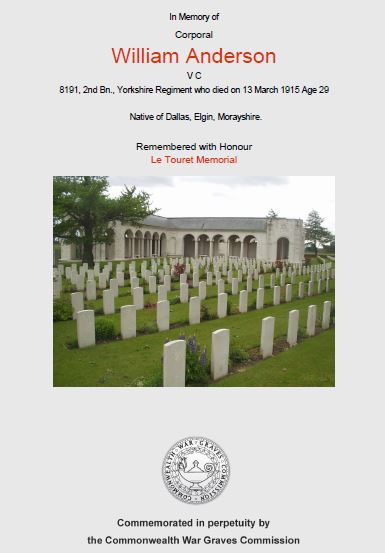
Anderson, William V.C.

Anderson, William V.C.

William Anderson was born in 1885 in Dallas, but by 1891, the family consisting of Alexander and Bella, the parents, plus children, James, Maggie, William and Alexander, living at 79 North Road. Alexander snr., worked as a labourer to keep a roof over his family’s head.

He went to Glasgow and was employed as a car conductor with the Corporation Tramways for several years before moving  to Newcastle upon Tyne where an elder brother of the family was serving with the Yorkshire Regiment (Alexandra, Princess of Wales’s Own) and enlisted in the same battalion in 1905, serving in it for a period of seven years in Egypt and India. After his service expired William returned to Glasgow and was employed in the Elder Hospital in Govan. He had been there only for a year before deciding to emigrate to South Africa. However, before he could leave war broke out and he was called up as a reservist and went to the front in France with the British Expeditionary Force.

Our soldier, William Anderson, served in the 2nd Battalion, Yorkshire Regiment.  He served as Corporal, 8191.

An extract from “The London Gazette”, dated 21st May, 1915, records the following: “For most conspicuous bravery at Neuve-Chapelle on 12th March, 1915, when he led three men with bombs against a large party of the enemy who had entered our trenches, and by his prompt and determined action saved, what might otherwise have become, a serious situation. Cpl. Anderson first threw his own bombs, then those in possession of his three men (who had been wounded) amongst the Germans, after which he opened rapid rifle fire upon them with great effect, notwithstanding that he was at the time quite alone”.

William’s commanding officer wrote him up for his Victoria Cross – he had died within less than 24 hours, his Soldier’s Effects record states ‘on or since 13.3.15’.  The document also mentions his sister, Mrs Margaret Ingram and his brother Alexander, who would receive monies owed to William.  Various payments had been made to his siblings covering the period 10 May 1916 to 2 December 1919.

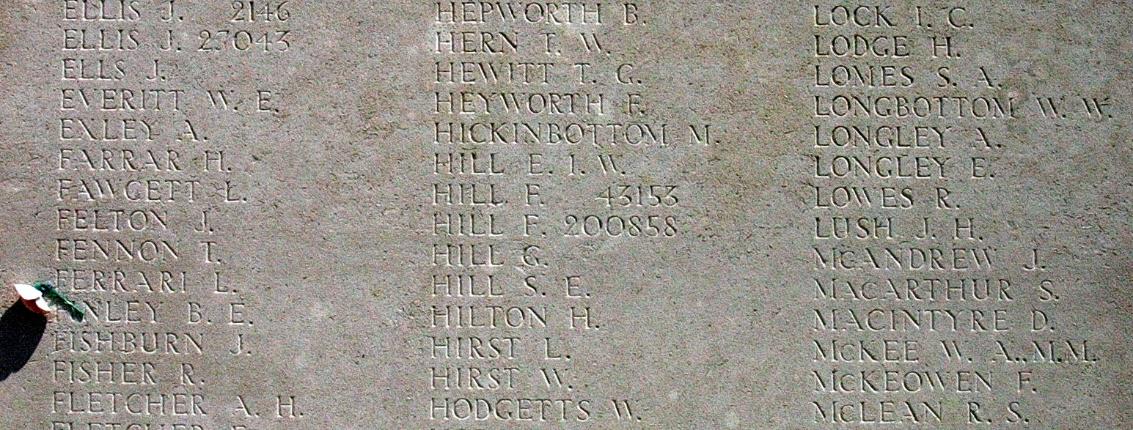
Anderson, William V.C., Corporal 8191, has no known grave and is therefore, remembered on the Le Touret Memorial, along with over 13400 other men whose final resting place is known only unto their God.

The Memorial commemorates, as I have said, over 13,400 British soldiers who were killed in this sector of the Western Front from the beginning of October 1914 to the eve of the Battle of Loos in late September the following year – 1915.

Extracted from the Commonwealth War Graves Commission “Almost all of the men commemorated on the Memorial served with regular or territorial regiments from across the United Kingdom and were killed in actions that took place along a section of the front line that stretched from Estaires in the north to Grenay in the south. This part of the Western Front was the scene of some of the heaviest fighting of the first year of the war, including the battles of La Bassée (10 October – 2 November 1914), Neuve Chapelle (10 – 12 March 1915), Aubers Ridge (9 – 10 May 1915), and Festubert (15 – 25 May 1915). Soldiers serving with Indian and Canadian units who were killed in this sector in 1914 and ’15 whose remains were never identified are commemorated on the Neuve Chapelle and Vimy memorials, while those who fell during the northern pincer attack at the Battle of Aubers Ridge are commemorated on the Ploegsteert Memorial”.

Commonwealth War Graves certificate

Commonwealth War Graves certificate

To read the continuing story of William and his V.C. visit the Press and Journal’s website 

For information on other men from the Yorkshire Regiment you might find this of interest.

I’ve moved, come and follow me!

Stay in touch with me on Facebook

I’ve moved, come and follow me!

This evening, while on a Wakefield Family History Sharing road trip, my daughter and I developed a new and more up-to-date Facebook page – drop by and say hello!

My blog will link automatically to the new Wakefield Family History Sharing page.

The Wakefield FHS profile on Facebook will remain, so that you can still visit to see the things I have been up to over the years.  But for up-to-date stuff Wakefield Family History Sharing is the place to go!

Also, come and follow me on Twitter by clicking here.

Drighlington ‘pub lads’ of the First World War by Guest Blogger, Philip L Wheeler

‘Drig Lads’ who lived in the pubs of Drighlington who gave their lives in the First World War

Drighlington Pubs.

Over the years many pubs have come and gone in the small Yorkshire village of Drighlington, which is situated between Bradford and Wakefield on one road and Halifax and Leeds on another. It once thrived with several industries such as an iron works, coal mines, sweet making and mineral water making. Other industries such as woollen mills and horse hair production were also prominent before and for some time after the First World War. Farnells was a good example of an industry that changed with changing times. Situated just off the moor it produced wagon wheels in their thousands, but had to change with motorised transport coming along in the first decade of the twentieth century. The factory went on to make tennis racquets and cricket bats before finally going out of business in the 1920’s.

With good employment prospects the village pubs thrived it seems and the fact that there were still about twenty in the village at the time of the First World War showed that they could make a reasonable living and be an integral part of village life.

cockersdale

A map of the Cockersdale area of Drighlington in 1908 showing some of the industries that would have supported one pub, the Valley Inn.

The area around the Valley Inn in in about 1908 supported coal mines, a brass foundry, at least two mills nearby with others a little further afield and a boiler works. All no doubt with thirsty employees who would frequent the ‘Valley’ and the Cockersdale Arms, which later became the ‘Gas House Tavern’.

The two villages of Adwalton and Drighlington which make up what is now regarded as simply Drighlington also had industries scattered about their sides of the village with their own pubs. Sadly most are now gone. The Waggon and Horses, in whose outhouses I used to play with the licensee’s son as a child is now a children’s nursery the Victoria, a thriving pub in my school days with an exciting football team is now an Indian restaurant and the Painters Arms along the road has gone too.

The New Inn, closed for some time has reopened recently with a view to making it a music venue and good luck to the landlord in that venture. Communities need pubs and hopefully the remaining ones, the Railway, The Malt, the Bull, and the New Inn and Spotted Cow and the Valley, will continue to thrive, even though these days it seems to do so they have to offer food as an incentive in order to do so.
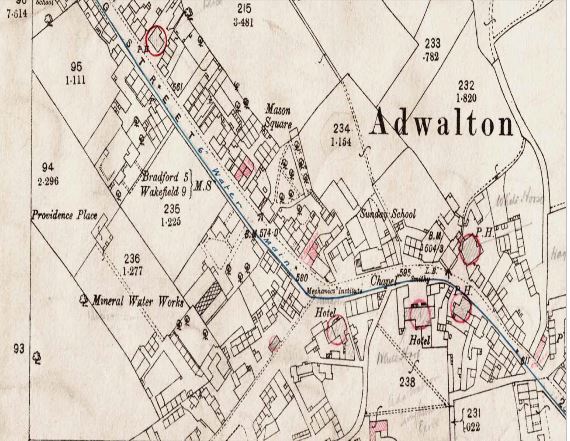
Map of Adwalton in 1908, showing at least five different pubs in the Three Road ends, King Street Area. Only the Black Bull survives, with the White Hart Hotel, the White Horse, The Waggon and Horses and the Unicorn now gone.

Map of Adwalton in 1908, showing at least five different pubs in the Three Road ends, King Street Area. Only the Black Bull survives, with the White Hart Hotel, the White Horse, The Waggon and Horses and the Unicorn now gone.

The area around the Crossroads supported at least three pubs, the Victoria and the Spotted Cow, along with the Painters Arms, along with the ‘Steam Plough Inn’ along Station Road. The Tempest Constitutional Club, which opened in 1911, made the Crossroads a good area for having plenty of pubs to choose from on an evening out. Perhaps the location of the Police Station when it was open, just along Bradford Road, was picked for its closeness to several pubs. The Gas House Tavern existed in Whitehall Road and the nicely named Steam Plough Inn was close to Brooks Buildings in Station Road next to the Drighlington Cricket Ground. Of course the Spotted Cow, infamous for its ‘talking corgi’ publicity stunt of the 1960’s is the only survivor. Perhaps the notoriety gained by the visit of the then very famous DJ and TV presenter David Jacobs gave the pub a boost to the present day!!
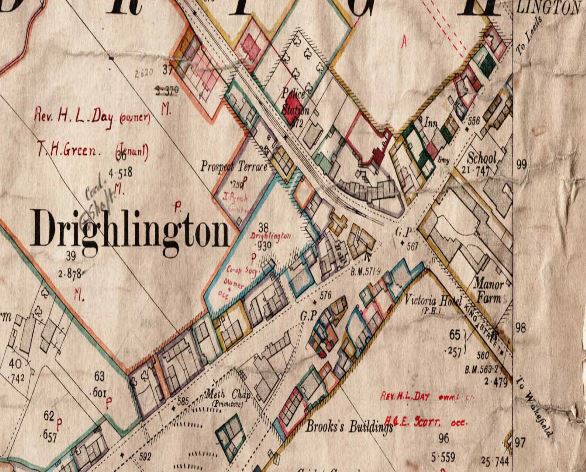
A map of Drighlington Cross Roads in 1908 showing the Victoria right on the Cross Roads and the Spotted Cow in Whitehall Road, opposite the old school.

A map of Drighlington Cross Roads in 1908 showing the Victoria right on the Cross Roads and the Spotted Cow in Whitehall Road, opposite the old school.

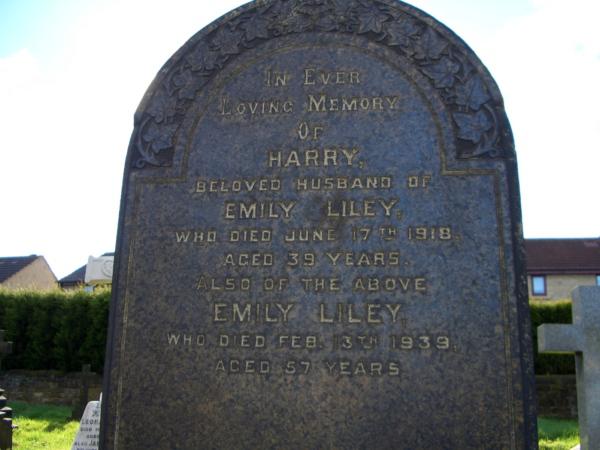
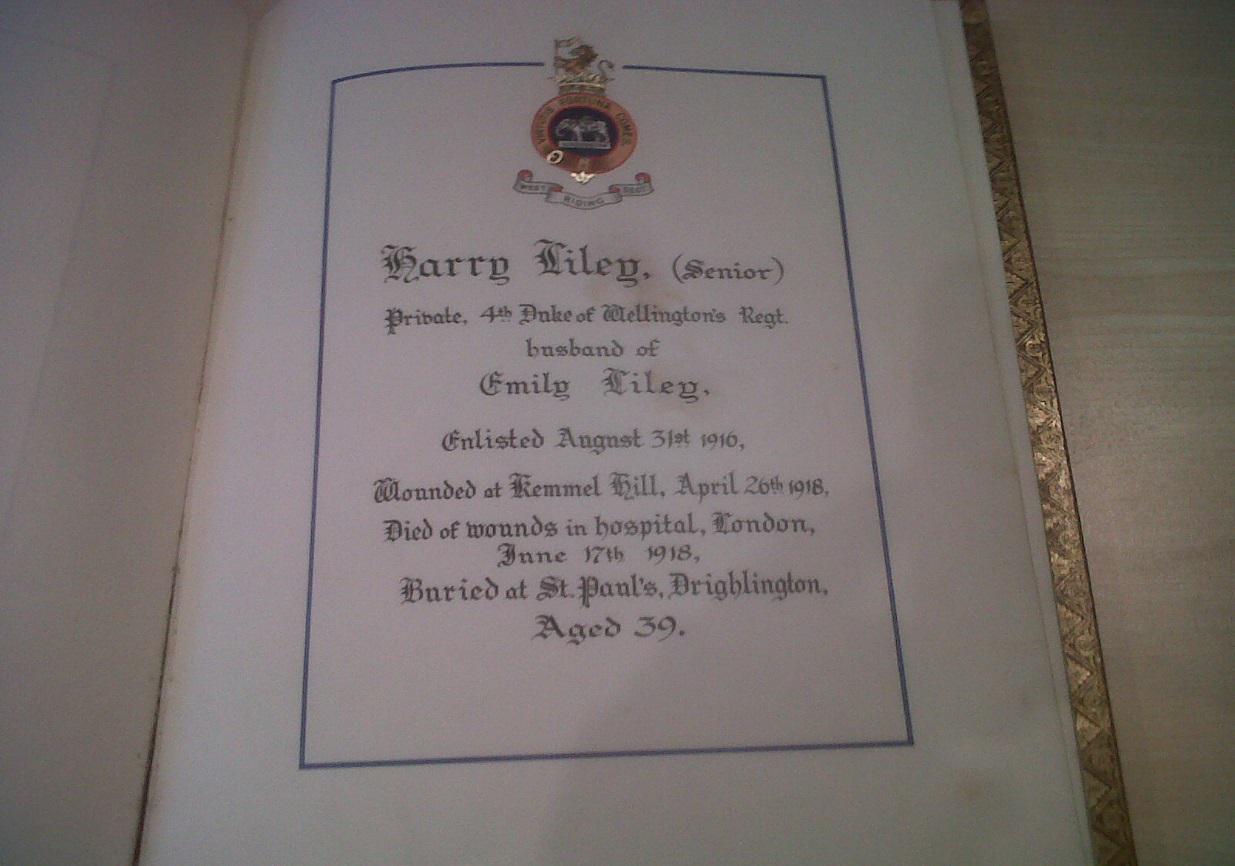
So, like many villages at the time of the First World War, pubs and clubs like Liberal and Conservative clubs formed a vital part of the community. Who knows what discussions and decisions took place in the bars of those pubs as men met to discuss the war and whether they would decide to join the colours! Certainly the landlord of the Malt Shovel had such discussions, because Harry Liley, himself the licensee joined the army on August 31st 1916. He became Private 203158 Harry Liley of the 1st/4th Battalion, Duke of Wellington’s West Riding Regiment. Harry died on June 17th 1918. He was in the Military Hospital in Endell Street in central London at the time. It seems strange as well that so many licensed premises seemed to thrive in a village which also boasted several well attended Methodist chapels like the Wesleyans, the Zion Methodists, Moorside Methodists and others.

It was whilst researching the war memorial in Whitehall Road, Drighlington, that I became aware of the fact that several of the pubs in the villages of Adwalton, Drighlington and Cockersdale had actually sent their young men to fight with the army in the battlefields of Northern France and Belgium. Of the 62 names on the memorial, 4 had actually lived in pubs that were thriving at the time the war started. Two more, Helliwell and Longley, are not even named on the memorial, but they made the number of men who left the pubs they lived in, never to return, to be six.

Another young man from the village also left the Steam Plough Inn, in Station Road, where his father was the landlord. Percival Millington Brooke was the son of another Percival Brooke, who had lived next door to the Steam Plough Inn in 1901, but by 1905 he had become the landlord of the very same pub! Percy Brooke survived the war but we know little of his regiment or his service. Finding his name as a soldier on his marriage certificate at Tong Church in 1916 showed that his father was an inn keeper and brought to seven the number of young men who left pubs in Drighlington to fight for King and Country. In his case he was lucky as he was to return home from the war.
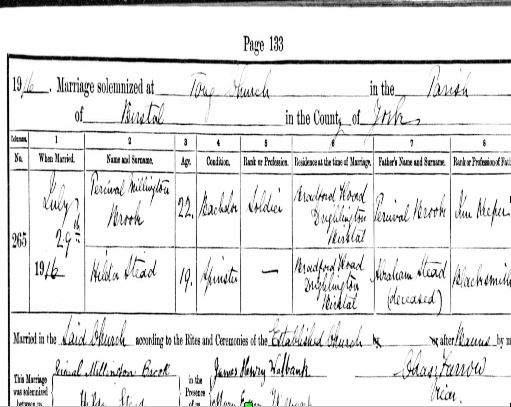
The marriage certificate for Percival Brooke in 1916

The marriage certificate for Percival Brooke in 1916

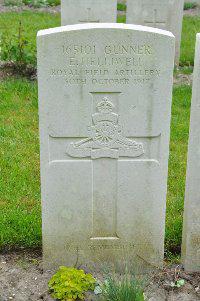
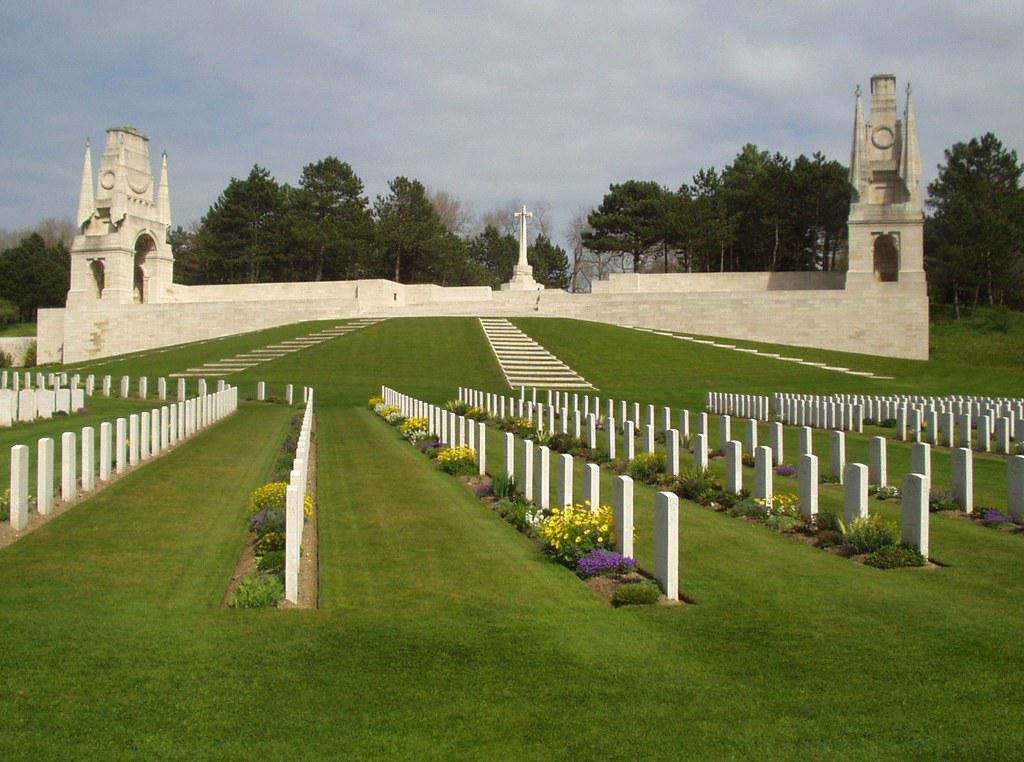
Along with Liley from the Malt Shovel, Harold Hainsworth left the Spotted Cow and Ernest Helliwell was resident at the Victoria with his wife according to the Commonwealth War Grave Commission records, when he died in October 1917. His last resting place being at Etaples in France. Allen Longley was the son of the licensee of the White Hart Hotel a large many roomed hotel and public house that fronted Wakefield Road in front of the feast ground, or t’ gang as my old grandfather Joseph Wheeler used to call it. The pub was always bolstered by the horse fairs that were regularly held around the pub from the time of the granting of a fairs licence in the middle ages. Queen Elizabeth the First is reputed to have visited there on her travels, but it is highly unlikely and an urban legend only.

The pub’s main claim to fame in modern times was when it was scheduled for demolition in the 1960’s and the then owner, though not licensee as it had long since ceased trading held a Mexican shotgun standoff with police sent to evict him for some three days before finally giving up! Bernard Brennan, a native of Ireland had come to the village some years earlier and actually married my great aunt, Frances Blakey, one of four sisters of the Blakey family, my Grandma Elizabeth being one of them and Mary Anne being another, the mother of Marion Grayshon a long standing resident of the village and supporter of Moorside Methodist Church who sadly died before getting to her hundredth birthday.

Brennan, whose antics attracted coverage from the fledgling Calendar evening news show, causing a buzz in the village, is buried just around the back of the church, with my great auntie. An obelisk marks the grave.

In 1916 John George Johnson was living at the Waggon and Horses public house with his uncle, the licensee. His father had been so before that and his grandma, Mercy Johnson had also held the licence. Knowledge of John living at the pub only came to light when looking at the probate register for his death, which lists his address as that very same pub. He was to join the 1/5th Battalion of the Duke of Wellington’s West Riding Regiment in 1916. John Johnson was to die of ‘accidental injuries’ in France on February 17th 1917. What the accidental injuries were is not actually known.

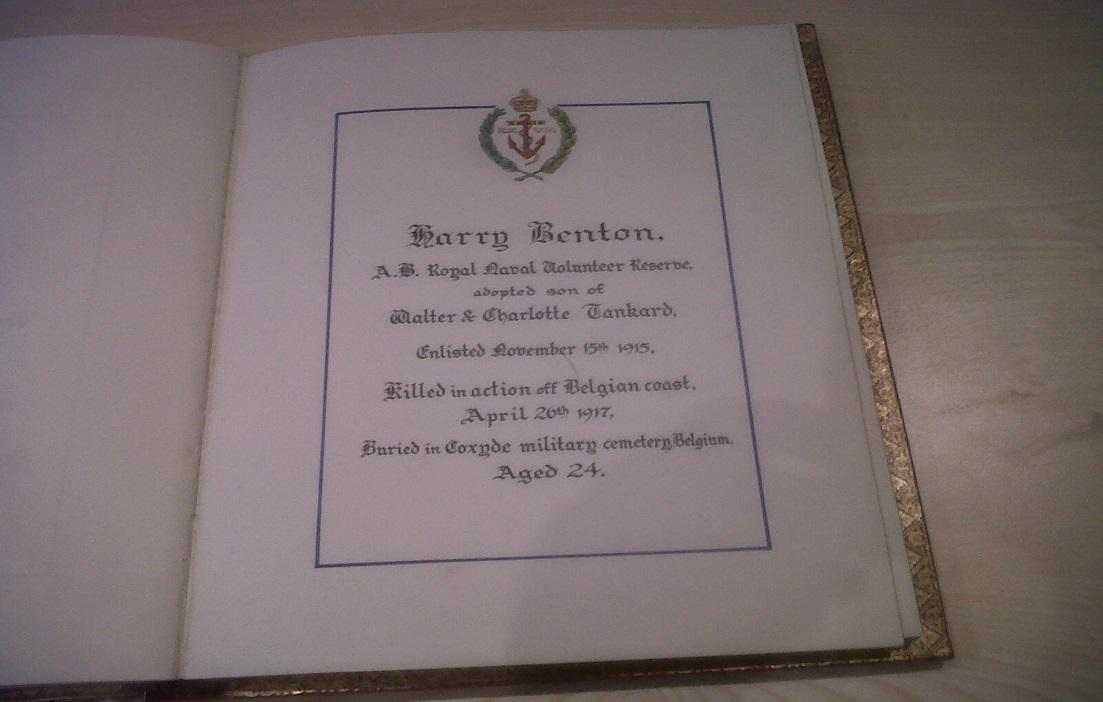
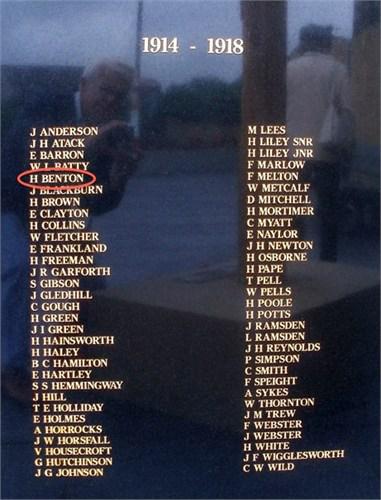
The highest honour that France gives to a soldier is the Croix de Guerre and it was this honour that was conveyed upon one Harry Benton, who was the foster son of the Tankards, the so aptly named hosts of the Railway Tavern in Whitehall Road Drighlington. When I first researched the names on the memorial it was the Railway In that I attributed Harry Benton to, but looking again at the list of pubs and the 1911 census it has become clear that the Tankards lived at the ‘Tavern’ and not the Railway Hotel, which is still open and doing good pub food despite the closure of the railway station itself in the 1960’s.

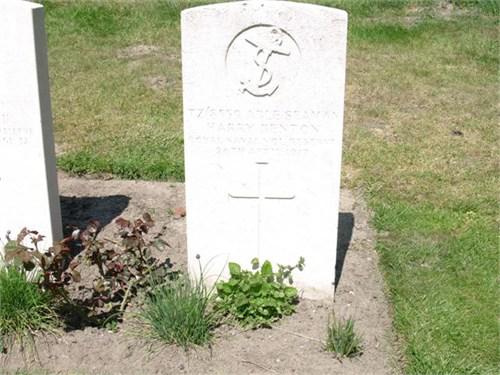
Harry Benton joined the Royal Naval Division in April of 1915 and was killed in action on a battery gun emplacement in Dunkirk in April 1917. His two colleagues on the battery were also killed and all three were afforded a funeral of honour by the French government. All three were buried together in Croxyde Military Cemetery, West Flanders. Their headstones form a group of three on their own, standing out with the badge of the Royal Naval Division on the top section.

Visiting their grave in 2014 was a poignant one for me, as was the visit to other graves of Drig lads, such as John Reynolds, an Adwalton lad like myself. John is buried in the lovely churchyard of Brevern-Uzer in Belgium, a village churchyard which made room for a handful of British casualties only, all buried not in a row but in a circle facing each other, overlooked by a marvellous village church. How funny to think that an Adwalton lad is resting there!! But then most of the men whose names are on the memorial do still reside in graves in the countries of northern Europe, excepting of course Herbert Page, who died in India almost a year after the war had ended in September 1919.
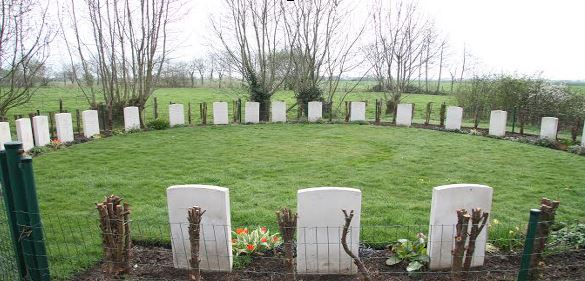
The marriage certificate for Percival Brooke in 1916

The marriage certificate for Percival Brooke in 1916

The last of the seven men to leave the pubs of Drighlington and go to war was Harold Hainsworth. He was the son of the licensee of the Spotted Cow at the time of the war, one Arthur Hainsworth. Harold left the comfortable surroundings of the pub and his wife to join the army on March 19th 1917, joining the Duke of Wellington’s West Riding Regiment. His time before the colours was short lived and by April the following year he was killed in action, being buried in Gonneheim Cemetery Northern France.

So, those are the seven men who no doubt knew from their lives in the pubs, many of the men who had gone before them to fight for their country. Indeed , any or all of them may have been inspired to go and fight by one or more of the men whose names now sadly adorn the village memorial. However, we must never forget that as well as those whose deaths we remember on memorials, many men also seved and came back to the village to live their lives to the full.

No doubt many of these who were lucky enough to get leave to home spent evenings in the pubs of Drighlington, but one wonders if they ever tried to persuade people to join up, knowing what they did about the horrors of war and being glad to be out of it for a short period of leave. One such survivor was my own grandfather, Joseph Wheeler, originally a Birstall lad, but who came to Drighlington after the war and married one of the four Blakey sisters, daughters of the local wheelwright and undertaker. Joseph survived the horrors of the Somme faced by the Bradford Pals and came home to live in Moorside frequenting the Railway hotel two doors awy from his house on many an occasion.

Certainly it is easy to imagine that villain turned hero, Horace Osborne would have spent many hours in the Valley pub, near where he was brought up in Cockersdale, or the Cockersdale Arms. His story is a fascinating one of courage and medals, after a pre war stint with the Guards which saw him serve time in a London prison! John Willie Horsfall, another name on the memorial,who lived in Brooks buildings at the crossroads would have had his pick of the ‘Vic’, the Spotted or the Steam Plough and the Painters Arms, all within just two minutes walk of his front door.

There may well be villages in other parts of the country where pubs sent several men to fight for their country, who knows. Without detailed research into our war memorials it would be hard to tell. Certainly the pubs as community centres must have played their parts in recruiting men, as no doubt many a decision to join was made in one of the pubs as discussion of the war was made over pints of beer. However, it is the known contribution of these seven pubs in one small village that makes for a unique story and now the story of the bravery of these men can be revealed for posterity, which for the residents of Drighlington, past, present and future will hopefully be an inspiration.
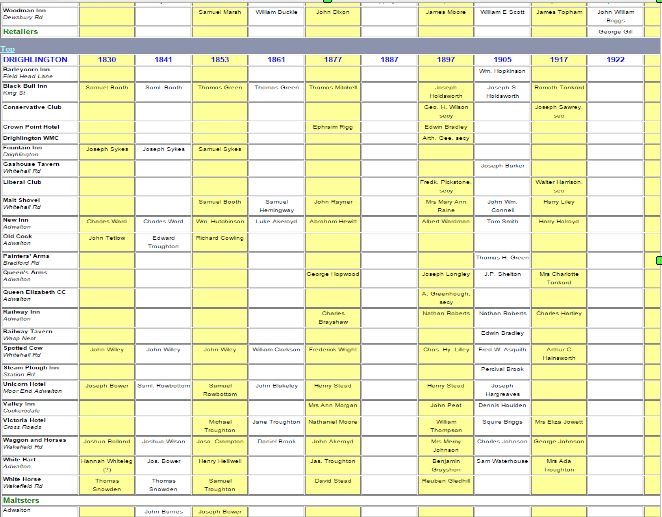
A list of the known pubs of Drighlington and their licencees (1830-1917)

A list of the known pubs of Drighlington and their licencees (1830-1917)

Private John George Johnson (1888-1917).

1st/5th Battalion Duke of Wellington’s (West Riding) Regiment.
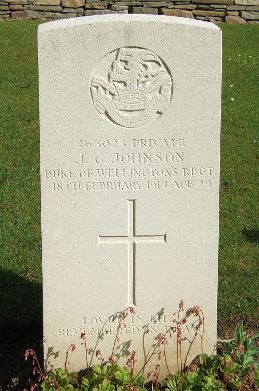
The headstone for John George Johnson in Le Fermont Cemetery.

The headstone for John George Johnson in Le Fermont Cemetery.

John Johnson was born in Drighlington on February 6th 1888. He was actually baptised at Drighlington Parish Church some three years later in February 1891. In that year the census showed that John’s father, George Johnson was living in Mason’s Yard, Adwalton, with his wife and John George, his 3 year old son. There were also two daughters in the family at the time. Nelley who was a babe in arms and Ellen who was 5 years old. George, who had been born in Leeds, was a cloth miller by trade. By the time of the 1901 census the family had grown to 5 children, though it is believed that Nellie had died by then. John George was working at the time as a ‘Band’ Maker, or rope maker. The Johnson family were living in Adwalton Lane by 1901.

The census of 1911 included much more detail about families than ever before. From this census we can tell that George and his wife Elizabeth actually had ten children. Eight of the children survived by 1911 and seven of them were living with their parents in Thornton’s Buildings. This was a four roomed dwelling and for five working adult people and four children to share it must have been very cramped. John George was shown as a 23 year old cloth miller at this time, like his father George.

By the time of his death in 1917 John George Johnson was actually living at the Waggon and Horses Public House in Adwalton. At the turn of the 20th century there were more than a dozen public houses in Drighlington. There were also working men’s and political clubs such as the Liberal club. Many of these establishments are long forgotten. The Steam Plough Inn, delightfully named but now gone forever from Station Road. The Unicorn no longer exists in Moorside Road, or the ‘Beesom’, though the latter still exists as a building.

Luckily there are still some pubs remaining in the village of Drighlington. Three of the seven pubs which sent men who lived in them away to war still exist in 2014. However, one other, the Waggon and Horses is now no longer a pub, though the building remains and is now a nursery.
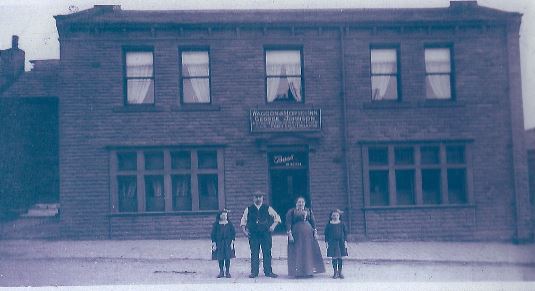
The original Waggon and Horses, with George and Elizabeth and their two daughters, probably Nelley and Ellen. The photograph is probably of about 1900.

The original Waggon and Horses, with George and Elizabeth and their two daughters, probably Nelley and Ellen. The photograph is probably of about 1900.

John Johnson enlisted in the army in Bradford on September 26th 1916. He became Private 263023 Johnson of the 1/5th Battalion of the Duke of Wellington’s West Riding Regiment. Other than this little else is known of his war service.
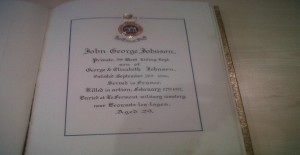
The entry for John Johnson in the Book of Remembrance.

The entry for John Johnson in the Book of Remembrance.

John George Johnson was one of seven men to leave public houses in Drighlington six of whom did not return. His family had been landlords of the pub in the 1890’s when Mercy Johnson, John George’s grandma was the incumbent. The pub then passed to Charles Johnson and thence to his brother George. The actual link to John George and the ‘Waggon’ as it was always known, would be little known were it not for the probate registry entry for John George Johnson. It reads:

Johnson, John George, of the Waggon and Horses inn Drighlington, Bradford a private in the West Yorkshire Regiment died February 17th 1917 in France administration (with will) Wakefield 21st June to Elizabeth Johnson, wife of George Johnson. Effects £159.17s.6d”.

The note on the probate register is at odds with the date of John’s death as posted on his headstone, but only by one day. The commonwealth war graves register shows that he actually died of accidental injuries whilst in France. No trace of what the accident was can be found as yet.

John Johnson was buried at Le Fermont Military Cemetery, Riviere in France.
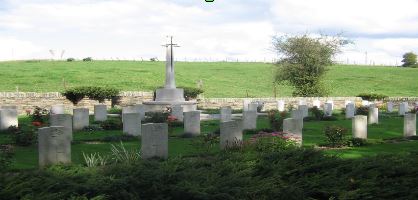
Le Fermont Military Cemetery, Riviere, France.

Le Fermont Military Cemetery, Riviere, France.

Able Seaman Harry Benton (1893-1917)

Royal Naval Division.
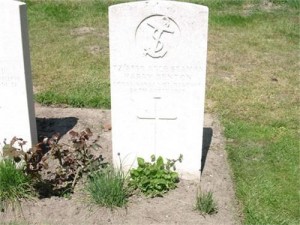
The gravestone of Harry Benton in Croxyde Cemetery, West Flanders.

The gravestone of Harry Benton in Croxyde Cemetery, West Flanders.

Harry Benton was another of our soldiers who left pubs in Drighlington during the First World War to fight for King and Country. He, was not a ‘Drig’ lad but actually came to the village after he was fostered to the family who ran the Railway Tavern which was situated just off West Street near Hodgson Lane. This is not to be confused with the Railway Inn which stood and still stands opposite the old railway station in Moorside Road. The Railway Inn must have been quite a busy public house in the many years before Dr. Beeching’s cuts put paid to the railway station across the road in the mid 1960’s.

Harry Benton was actually born in Cleckheaton on June 2nd 1893. In the 1901 census Harry was shown as a 7 year old, living with his family in Gildersome. His father was Willie Benton and his mother Annie. He had a younger sister and a baby brother at the time. Willie was a hairdresser by profession.

In 1901 Harry’s mother Annie died and by 1911 the family found themselves in circumstances where Harry had to be fostered out. In 1911 Harry was to be found on the census of that year living at the Railway Hotel in Drighlington. There he became the foster son of the adequately named Walter Tankard and his wife Charlotte, who were both from Drighlington and Westgate Hill themselves. Harry was 17 years old at the time and was shown to be working as a cloth finisher.

Harry Benton joined the services on April 15th 1915. His entry in the book of remembrance wrongly states that he was ‘Killed in Action off the Belgian Coast on April 26th 1917’. However, the entry is wrong in that Harry’s unit was not a sea going unit at all. Colleagues back in Drighlington writing the memorial book in the 1920’s probably saw Royal Naval Division and assumed that he died on a ship, as they wrote ‘off the coast of Belgium’. It seems that the concept of the Royal Naval Division as a land fighting force had not filtered through to the people at home even by the 1920’s. Harry was certainly on dry land when he was killed at Dunkirk in 1917.
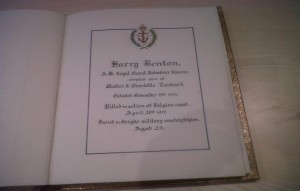
The entry for Harry Benton in the Book of Remembrance.

The entry for Harry Benton in the Book of Remembrance.

Most Drighlington men were to join local regiments such as the Leeds or Bradford Pals or the Kings Own Yorkshire Light Infantry, but Harold Benton found himself joining the Royal Naval Division. This was a collection of battalions of largely naval personnel who were surplus to navy requirements and were kitted out as a land fighting force during the First World War. Harry though was to be posted to a naval gun unit and was sent to guard Dunkirk in case of a German rush to the coast.

He was on duty at the ‘Carnac’ battery in Dunkirk on April 26th 1917 when a German 6” naval shell burst near his gun emplacement, killing outright Sub Lieutenant Donovan and Able Seaman Harry Benton, another Able Seaman was injured and died later.

Harry Benton’s funeral was held in Belgium on April 28th 1917 and he was buried in the cemetery at Croxyde, West Flanders, Belgium. It seems that a large contingent of French, Belgian and British officers were present at the funeral and they formed a guard of honour as the cortege passed them. Prince Alexander of Teck was also noted to have attended the funeral.

This was obviously a great honour for the three British ‘sailors’ to be treated in this way. The two seaman were transported in one vehicle and the officer in another and a four mile walk was taken by the mourners to the cemetery on the nearby hillside just over the border in Belgium. The transports pulling the carriages were pulled by four horses with French soldiers riding them. A diary written at the time noted that ‘four of our machines hovered overhead’.

All in all this must have been an extraordinary way for the deaths of three servicemen to be treated, as many of their colleagues were unceremoniously buried in hastily dug graves, only to be retrieved later and placed in properly dug cemeteries.

The French must have taken the sacrifice of the three men of the Royal Naval Division to heart and they awarded them the Croix de Guerre. Able Seaman Harry Benton, late of the Railway Tavern Drighlington, went to his grave with the Croix de Guerre Second Class pinned to his uniform on top of his coffin.
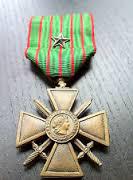
A Croix de Guerre Medal like the one awarded to Drig Lad Harry Benton.

A Croix de Guerre Medal like the one awarded to Drig Lad Harry Benton.

Nothing is known of how the news was to reach his foster parents in Drighlington, though one suspects that it was conveyed to them by the dreaded telegram delivered by the local telegram boy, bearing the news from the War Office and expressing deepest sympathy. By the time of his death the Tankards themselves had moved from the Railway to another pub, the Queen’s Head in Drighlington, the latter no longer exists. Thus yet another pub can be said to have mourned for one of its lost sons.
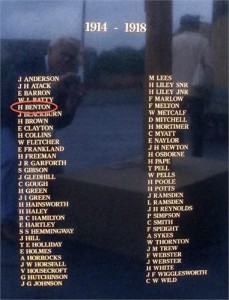
The war memorial at Drighlington with the name of Harry Benton on it.

The war memorial at Drighlington with the name of Harry Benton on it.


    Gunner Ernest Helliwell (1893-1917).

38th Brigade Ammunition Column, Royal Field Artillery
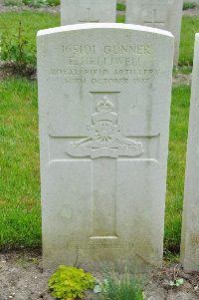
The grave marker for Ernest Helliwell in Etaples Military Cemetery, France.

The grave marker for Ernest Helliwell in Etaples Military Cemetery, France.

Ernest Helliwell was born in Bradford in about 1893. He was the son of Edward and Sarah Helliwell who had three other children by the time of the 1901 census recording the family’s life in East Bierley. Edward Helliwell was shown to be a railway engine driver in the census forms for that year.

By 1911 the census for that year tells us that the Helliwell family were living in Low Moor, Bradford. Edward was still working as a railway engine driver but Ernest was now in work after leaving school and had become a clerk in an office, working for a yarn merchant.

It is not known when Ernest Helliwell joined the colours, but join he did and he was posted eventually to an ammunition column working to supply the guns of the Royal Field Artillery. He was Gunner 165101. He was to die on October 30th 1917 and he was buried in Etaples Military Cemetery in France.

Little else is known about Ernest and where he lived prior to the war. However, the Commonwealth War Grave Registration documents for Ernest’s grave tell us that he was the husband of S.E. Helliwell, and that they lived, at the time of his registration with the commission, at the Victoria Hotel, which of course stood at Drighlington Crossroads for many years. The building still stands but is now an Asian restaurant.
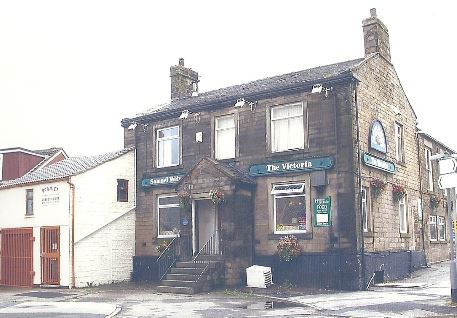
The Victoria, where Ernest Helliwell was living with his wife prior to joining up.

The Victoria, where Ernest Helliwell was living with his wife prior to joining up.

Research into who ‘S.E’ Helliwell was has failed to find any record of the marriage of the Helliwells and it may well be that the couple were at the Victoria Hotel as guests for a short time and not actually living there. We cannot know the answer to that. It seems that the Helliwells reverted to their Bradford roots after the war at least. The CWGC records show that after choosing the epitaph for her husband’s grave ‘Ever Remembered’, she was recorded as living at 673 Manchester Road, Bradford.
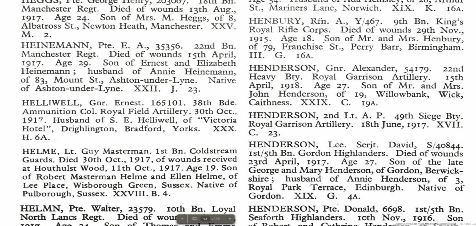
The Probate register for Ernest Helliwell, showing his address as the Victoria Public House.

The Probate register for Ernest Helliwell, showing his address as the Victoria Public House.

War diaries for ammunition columns are hard to trace and even when they exist it is difficult to pin down a particular death to days when mainly logistical information regarding shell numbers are recorded in the diaries.

There is somewhat of a mystery as to why Ernest was shown to be living at the Victoria Public House before he went off to war, but his albeit short stay there helps to complete an intriguing picture of no less than seven pubs which gave up their men to send them off to fight in the First World War.
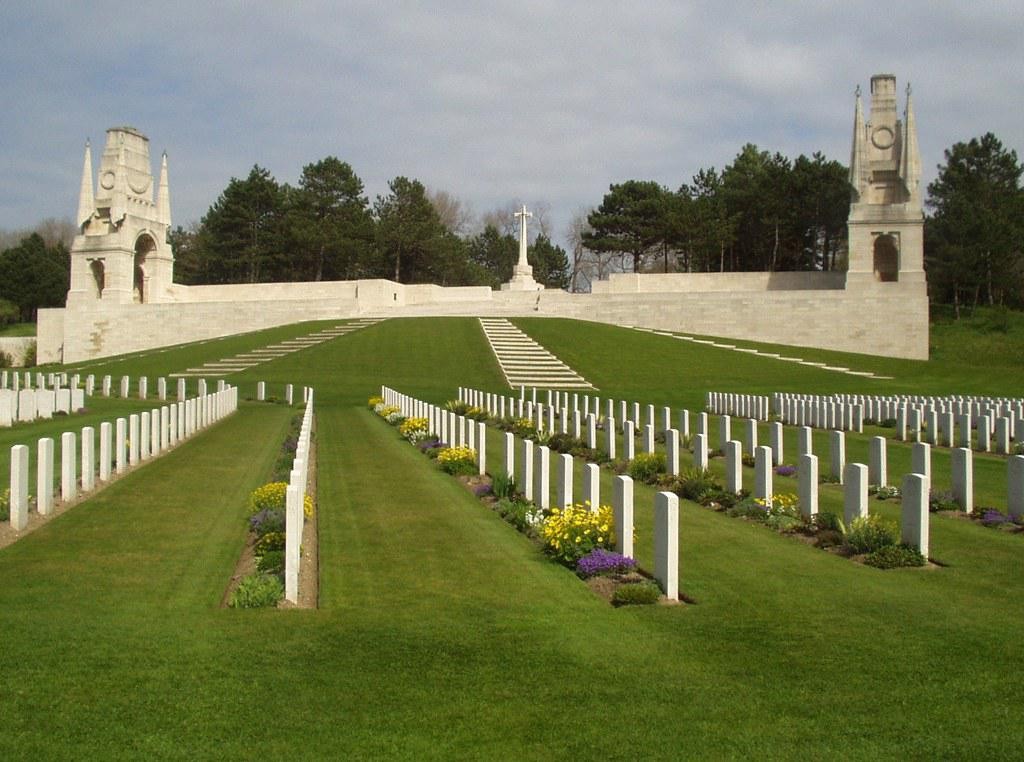
Etaples Military Cemetery, France, where Ernest Helliwell is buried.

Etaples Military Cemetery, France, where Ernest Helliwell is buried.

Private Allen Longley (1895-1918).

9th Battalion King’s Own Yorkshire Light Infantry.
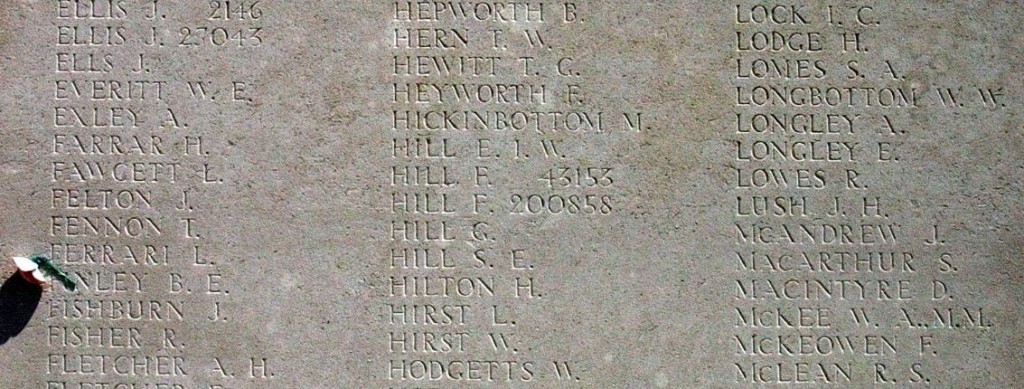
Allen Longley’s name is carved on the Tyne Cot Memorial in Belgium.

Allen Longley’s name is carved on the Tyne Cot Memorial in Belgium.

Allen Longley was not a Drig Lad as such. He was born in Rothwell on May 5th 1895. His parents were Richard Allen Longley and Gertrude Maude Longley. In 1891 the census shows the Longley family at Rothwell, where Richard’s occupation was shown as a coal miner. By 1901 his occupation had changed to that of gardener.

Richard Longley obviously worked hard to grow his gardening business and by 1911 his son Allen was shown as ‘assisting in the business’ run by his father. He was 16 years old and his 17 year old sister Emily was also employed in the family business.

At some stage around the start of the First World War the Longleys took over the licence for the White Hart Hotel, the old sprawling building which once occupied a frontage along what was Adwalton Lane but was to become Wakefield Road.
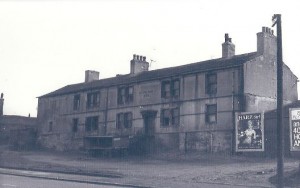
The front of the old White Hart Hotel in the 1960’s.

The front of the old White Hart Hotel in the 1960’s.

It was from this address that Allen Longley left to go to war. Sadly, we know little of when this was as his service records do not exist. However, we do know that Allen Longley joined the 9th Battalion of the King’s Own Yorkshire Light Infantry. He was to die on April 23rd 1918, at the age of 22.

The war diary for the 9th KOYLI’s makes interesting reading around that date, and a sad story emerges of how Allen Longley probably became a victim of what is now called ‘friendly fire’. On April 20th 1918 the battalion moved to trenches at Grand Bois, near the Belgian village of Millekruis.

The war diary entry for the date of April 20th shows that even from the very beginning, the battalion, or part of it, was in trouble, but not from the enemy! It reads:

At dark, C Company took over Forth House with two platoons from the 2nd South African Battalion. Our own artillery commenced to shell B Coy trench ( left coy) at 2pm and when the SOS was put up at 9pm bursts falling short from our own 18 pounders killed 4 and wounded 4 men”.

It seems that the battalion were unable to get the rogue battery to stop firing at them and the very next day similar entries are made in the war diary.

In spite of remonstrations one of our gins continued to shell B coys. Trench during the early hours of the 21st, inflicting the following casualties.

One Officer Killed. 2nd Lieutenant Cundall

One officer wounded 2nd Lieutenant Woods.

12 Other ranks Killed

11 Other ranks Wounded.

The strongest protest was made against this discreditable performance and it is to be hoped that the officer of the artillery concerned will be tried by Court Martial for this carelessness.

The war diary shows that on April 23rd 1918 the 9th KOYLI’s were relieved in the trenches by the East Yorkshire regiment. The 9th went in to barracks for two days at Jasper Camp, Millekruis. There is no mention of any casualties on the day of April 23rd 1918, and it seems likely that Allen Longley was one of the ‘other ranks’ who died as a result of a carelessly aimed artillery barrage from men on his own side, dying some days later.

Allen’s body was never found, again supporting the idea that he was actually killed by shelling, albeit from his own side! His name is carved on the Tyne Cot Memorial in Belgium.
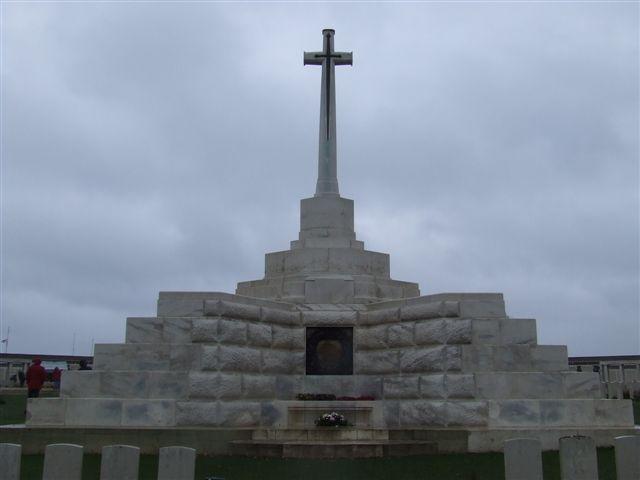
The cross at the Tyne Cot Memorial, Belgium.

The cross at the Tyne Cot Memorial, Belgium.

Private Henry (Harry) Liley (1878-1918)

1/4th Battalion Duke of Wellington’s West Riding Regiment
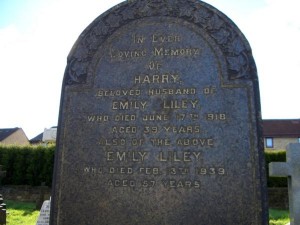
The headstone for Harry Liley (snr) buried in Drighlington Churchyard.

The headstone for Harry Liley (snr) buried in Drighlington Churchyard.

There are two H. Liley’s on the Drighlington War Memorial, one notes snr and the other jnr. This may mistakenly indicate that they may have been father and son but they were not. However, it could be that the words senior and junior were added to delineate that one was 39 or 40 years of age when he died and the other was a mere 19 years of age.

There were several ‘Lileys’ in Drighlington at the turn of the 20th century, many living in the Whitehall Road area of Drighlington. In fact another member of the Liley clan who went by the name of ‘Willie’ Liley was born in Drighlington and was killed in the Great War. However, probably by virtue of the fact that he had moved to Morley by the time of his death he does not figure on the war memorial for Drighlington. His name is to be found on the Morley War Memorial.

Although the ‘H’ Liley’s on the memorial were not father and son they may well have been relatives in some way, but research would be needed to establish that. Coincidentally Harry Liley also had a son who was named ‘Willie’ but he was too young to have fought in the Great War. His full name was William Barraclough Liley, but he is entered on the 1911 census by his shortened name.

In 1911 Harry Liley was the landlord of the Malt Shovel public house in Whitehall Road, Drighlington, which is actually the nearest pub to the war memorial which now bears his name. Another pub coincidence is that when Harry married his wife Emily Bradley in1907, Emily’s address was shown as being the ‘Railway Hotel Drighlington’. However, it is unlikely that she was a landlady or related to the landlord, but possibly worked as a barmaid there. Her father was described as a stone mason on the wedding certificate. Harold Middleton Liley was 27 years old at the time and Emily was 25. Harry was a painter at the time, living in Melbourne House Drighlington. However, they were actually married at Birstall Parish Church on March 27th 1906.

Their first and only child, William, came along on December 2nd 1907, at a time when the family were living in Fieldhead Lane Birstall.

Harry was born as ‘Henry’ Middleton Liley in the summer of 1878. His father Middleton was at that time a rag merchant as well as a grocer and the family lived in a house near to the station named Melbourne House. ‘Harry’ had three sisters and two brothers in 1881. His mother had been Grace Barraclough before marrying Harry’s father. She died in 1881 so Henry was left with just his father and siblings from a young age.

In the 1901 census Henry or ‘Harry’ is to be found working away from home in Nottingham as a painter. However, by 1911 he and his wife were shown to be living at the Malt Shovel Inn, in Whitehall Road Drighlington. Harry was shown to be the publican and his wife Emily was assisting in the business. They had one servant living in the pub, the aptly named Thomas Tetley.
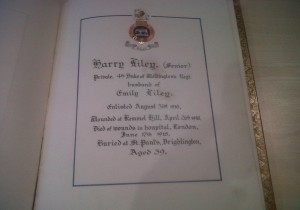
The entry for Henry Middleton Liley (Harry) in the Book of Remembrance.

The entry for Henry Middleton Liley (Harry) in the Book of Remembrance.

According to the book of remembrance Harry Liley joined the army on August 31st 1916. He became Private 203158 Harry Liley of the 1st/4th Battalion, Duke of Wellington’s West Riding Regiment.

Harry died on June 17th 1918. He was in the Military Hospital in Endell Street in central London at the time. He had therefore been brought home from France suffering from wounds received in action. He was taken home to his family in Yorkshire and buried in Drighlington churchyard on June 21st 1918. He left the sum of £393-14s-11d to his widow Emily.

It is impossible to know how Henry Middleton Liley, otherwise known as Harry was wounded unless a member of the family comes forward in the future with family legend of it. The book of remembrance shows that he was wounded in action at the Battle of Kemmel Hill on April 26th 1918.

It is very clear that Harry felt the need to fight for his country and despite having a young child and a wife to support he left to join the colours as many Drighlington men did. One wonders how many regular attenders at his old pub the Malt Shovel actually know that a previous landlord went off to war to fight for them to be able to drink there.
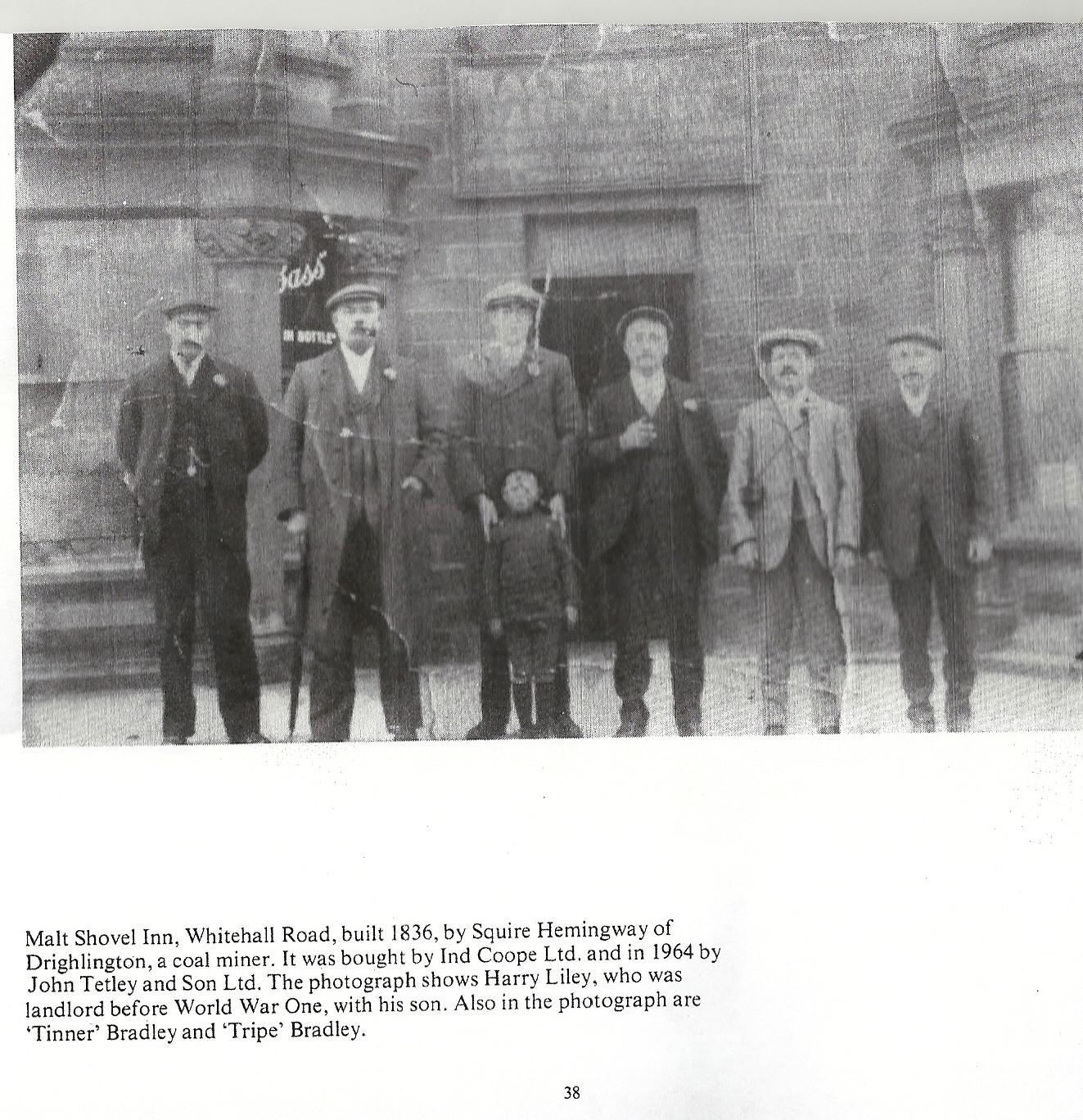
malt shovel people

Corporal Harold Hainsworth (1895-1918).

Second Battalion, Duke of Wellington’s (West Riding) Regiment.
Gonnehem British Cemetery.

Gonnehem British Cemetery.

Harold Hainsworth was another man living in licenced premises in Drighlington who was to lose his life in the Great War. Harold was living at the Spotted Cow Inn, opposite Drighlington Junior School, as it once was.The pub is just about one hundred yards or so from the parish church of St Paul. It is still a lively Drighlington pub today, despite the demise of many others which served the village in that era.

Harold’s father, Arthur Crowther Hainsworth was the landlord of the pub, living there with his wife, Harold’s mother, Mary Hainsworth. By the time that Harold was killed he had married Mary Ellen Tew, who had lived at number 10 Bankhouse, Pudsey. She had taken up residence at the Spotted Cow with her husband’s family. The couple married at Tong Church on July 3rd 1915.

The Hainsworth’s were not actually a Drighlington family originally. Arthur Hainsworth was born in Farnley, nearby, in 1865. He married Mary Schofield, also of Farnley, on May 8th 1886. In 1887 their first son, Albert Vincent, was born but sadly he died at the age of four in 1891. Their second son, Harold, was born in 1895. Both Arthur and Mary lived until the 1940’s, losing both of their sons before their own deaths. However, Harold’s attestation papers for the army show that he had a sister, one Annie Peat. On a form asking the his wife to declare any full blood relative she cites Annie as such. However, Annie Schofield as she was before marrying was not a full blood relative, but was Mary’s daughter from a previous relationship. She is shown as living with Arthur Crowther Hainsworth and Mary in the census of 1901.

Arthur seems to have had differing jobs in his youth before finally becoming a publican. In 1891 he was working as a blast furnace stoker and by 1901 he was working on the roads a labourer, breaking stones.

By the time of the 1911 census he was shown to be a publican, living in Bankhouse Lane, Pudsey. It is likely that he ran a pub there and the Bankhouse Inn, still in use today, may well have been his first public house.

By the time of Harold Hainsworth’s death in 1918 however, the Hainsworth family had moved to Drighlington and Arthur had become the licensee of the Spotted Cow in Drighlington.
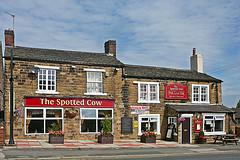
The Spotted Cow Inn.

The Spotted Cow Inn.

In 1911 Harold Hainsworth was working as a garden labourer, whilst his father ran the pub in Bankhouse Lane. He was sixteen years old at the time but by 1915 at the age of twenty he was to marry Mary Ellen Tew, who had lived at 10 Bank House Pudsey, no doubt not far from the public house his family owned. By this time Harold had become a fettler in the local mills.

War broke out on August 4th 1914, but it was not until 1915 that Harold Hainsworth enlisted in the army. Surprisingly it was to be another two years before he was called to the colours. Luckily his attestation papers survived the blitz of the Second World War and from these papers we can see his postings and obtain some knowledge of his life in the army. Unfortunately the papers of many soldiers from the First World War were destroyed by Luftwaffe raids on London in the Second World conflict.

On December 8th 1915 Harold Hainsworth travelled to Halifax and signed his enlistment forms to join the Duke of Wellington’s West Riding Regiment. It may be that the enthusiasm shown in the area for joining regiments such as the Leeds Pals and the Bradford Pals inspired him to eventually join the colours himself. It was to be more than a year before Harold was actually mobilised on March 19th 1917. The attrition rate amongst young soldiers in 1916 obviously brought about the need to mobilize those who had already been recruited but not yet called up.

Harold and Mary were to have one child, Iris, who was born on July 14th 1916. Whether the recruiting officer at the time spared Harold from joining his regiment because his wife was pregnant is doubtful, but certainly a possibility which explains the long time between December 1915 and March 1917. Certainly, other men were being called up in their thousands and Harold was not in a reserved occupation, showing on his forms that he was now a ‘Fettler and Grinder’ at a mill making gun cloth.
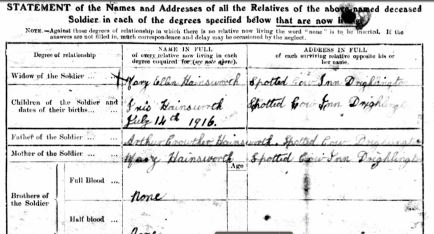
The service record for Harold Hainsworth.

The service record for Harold Hainsworth.

From his medical notes in his attestation forms we know that Harold Hainsworth was 5’6” tall. Not a very tall man but bearing in mind many of the recruits of the time were much smaller than modern day young men of the same age he was probably of average height for the time. The existence of ‘Bantam’ regiments where recruits had to be less than 5’3” tall to join bears testament to the fact that many men were of small stature, especially in the mining areas of the industrial north. His medical notes show that his teeth were ‘decayed’ and that his joining up was subject to medical treatment, so this may well have been the reason for the delay in him actually being mobilised.

Harold was medically examined for joining up in March of 1917. His weight was shown as 131 pounds. He was then 22 years old. We even know that his chest measurement was 34 ½ inches and that his general physique was ‘good’.

It is not known where Harold received his training in full, although we can tell from his records that by August of 1917 he was at Chirton Camp in South Shields. On August 15th 1917 he was shown as ‘Absent Without Leave’ from the evening of August 15th until 6-30 am the next day. His punishment for this was admonishment and the forfeit of one day’s pay.

Only a few days later Harold embarked from Folkestone for Boulogne on August 23rd 1917. He was posted to the 10th Battalion of the ‘Dukes’ at that time but on August 31st he was posted to the 2nd Battalion, with whom he was to remain for the rest of his service.

There is one incident of note on Harold’s file from this time, this being an injury to his scalp on October 21st 1917. Such were the sensibilities about soldiers injuring themselves intentionally in order to be invalided home (colloquially known as getting a ‘Blighty One’ when wounded), that all injuries had to be investigated and witnesses sought. On October 27th 1917 Harold Hainsowrth was involved in an injury that needed such an investigation. He was an acting Lance Corporal by this time, but unpaid it seems as the status of being paid for the rank was not afforded him until Novembr 7th 1917. On the same day he was appointed Acting Corporal, no doubt to cover for losses in that rank in the regiment.

Harold sustained a injury to his scalp on October 27th 1917 which necessitated him being hospitalised.

Statement of witness as to the circumstances under which L/Cpl No. 31247 H. Hainsworth recived an injury to his head”.

1st Witness. J.C. Marshall 2ndBattalion Duke of Wellington’s Regt. States.

On 27th Oct. 1917 I was in charge of No 3 Platoon, No 1 Coy. The platoon was doing physical training and L/Cpl. H. Hainsworth was present. The order was given for the men to double around a wagon which was standing near and in doubling round this L/Cpl Hainsworth struck his head against an iron pipe which was projecting from the wagon”.

2nd. Lt. J. C. Marshall.

Lieutenant Marshall’s statement was one of three taken to ensure that Harold had not actually inflicted the wound upon himself in order to avoid duties at the front. It was an unfortunate and unlucky incident, and came only one day after Harold was reprimanded because he had a dirty mess tin upon being inspected by his officers on October 26th 1917.

Though the accident happened on October 27th 1917 it seems that Harold did not receive hospital treatment for it until November 6th, when his file shows that he was taken to hospital. It may be that the scalp wound had become infected, as a further entry for November 11th 1917 shows that he was then taken to a casualty clearing station. He was to stay there for some days and finlly rejoined his unit on November 22nd 1917. The infection, if that is what it was, may well have caused the next admission to hospital for Harold in January of 1918. The initials P.U.O. appear in his file, diagnosed by the 10th Field Ambulance Unit on January 26th 1918.

The initials PUO stood for ‘Pyrexia of Unknown Origin’, which was a medical term usually applied to a diagnosis of Trench Fever. He returned to the 2nd Battalion on February 7th 1918, whereupon he was immediately sent to ‘Bomb School’. Corporal Hainsworth remained at the bomb school for about a month, returning to his unit on March 18th 1918.

He was to be with them for just one more month or so, as on April 23rd 1918 he was killed in action. He is buried in Gonneheim Cemetery in Northern France, a village which the Germans were advancing on in April 1918, reaching to within 3 miles of the village. It was an action in what was known as the Battle of Bethune. Harold’s medal record simply states K.A.

When the army records office asked Mary Ellen Hainsworth to fill in a form regarding the nearest relatives to Harold in 1919 the family were still living at the Spotted Cow Inn, but it is not known what happened to them after this time. The form was to sort out who would receive the plaque and scroll given to relatives of fallen soldiers. Mary Ellen, his wife, was already receiving a separation allowance of a paltry 19/6d and this would have been included in the eventual pension calculation she received. It took until 1921 for the family to receive Harold’s Victory medal and the plaque and scroll.

Luckily Harold had filled in the ‘Will Page’ which was included in the paybook of all soldiers at the front at the time. This meant that there were no legal difficulties in Mary Ellen getting what money he did leave. This totalled £96-1s-2d.

On August 28th 1918 the Army Records Office at York wrote to Mary Ellen at the Spotted Cow, asking her to send a receipt in exchange for receiving the effects of her late husband. All that Harold Hainsworth’s wife received from the front were a note book, a photo, and some cards.
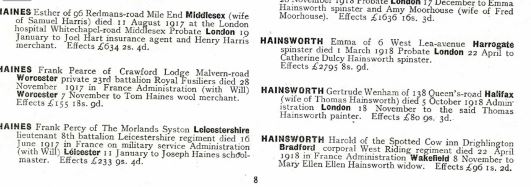
The probate record for Harold Hainwsorth.

The probate record for Harold Hainwsorth.

The name of H. Hainsworth, namely Corporal 31247 Harold Hainsworth is featured on the recently refurbished Drighlington War Memorial, in Whitehall Road, Drighlington.
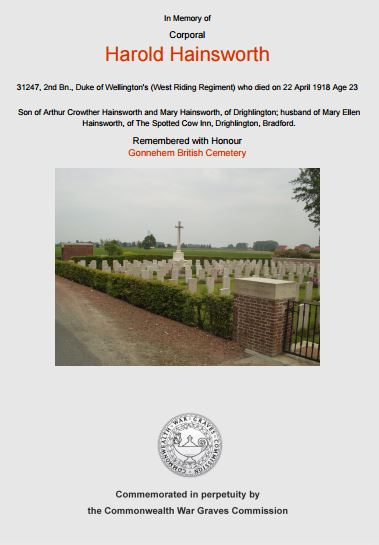
The Commonwealth War Grave Commission Certififcate for Harold Hainsworth.

The Commonwealth War Grave Commission Certififcate for Harold Hainsworth.

Percival Millington Brook

The Steam Plough Inn.
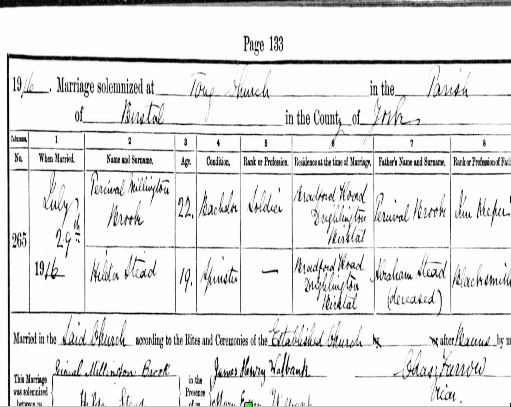
The marriage certificate of Percy Brook, son of the landlord of the Steam Plough Inn.

The marriage certificate of Percy Brook, son of the landlord of the Steam Plough Inn.

Without the discovery of the marriage certificate for Percy Brook and Hilda Stead little would be known about Percy Millington Brook. However, the fact thathis occupation is listed as a soldierupon the certificatetells us that here was another Drig Lad who went to war from his home in a pub in the village.

Percival Millington Brook was the son of Percival and Mary Ann Brook. In 1901 the two were living in Brooks Buildings, a substantial row of houses which stood until late into the 20th century at the beginning of Station Road, on the left before the cricket ground. At that time the Brooks lived right next door to the Steam Plough Inn, in Station Road. The landlord of the pub at that time was Sam Theaker. By 1905, however, Percival Brook senior had taken over the licence of the pub. The 1911 census shows that Percival Brook was now a ‘Beer House Keeper’. This was a change from his job as a weaving overlooker as he was in 1901. Percival (snr) was a Drighlington born man but his wife Mary Ann was from Cleckheaton. In 1911 the Brooks had six children living with them, sadly, one of their children had died by then. Percival Millington Brook was 16 years old in 1911 and was a warehouse boy.

Unfortunately at this juncture it has been impossible to trace which regiment Percy Millington Brook joined when he went to war. It is clear that he was serving as a soldier by July 1916 and he also survived the war to return no doubt to his native Drighlington. Perhaps family historians of the future will be able to fill in the gaps of our knowledge about the men such as Percy Brook who went away but actually came back from the war.

As it is is, the story of Percival Millington Brook, sparse in detail as it is, completes an interesting tale for the village of Drighlington. A small village sent seven of its men from pubs around the village to fight in the Great War. Only one of them came back!

Brooks Buildings in Station Road Drighlington, pictured in the 1960’s.

Brooks Buildings in Station Road Drighlington, pictured in the 1960’s.

Epilogue.

The story of these seven men and their pubs will be sent to all of the existing pubs in Drighlington, as well as the local library. One would hope that the present landlords and customers will enjoy reading of men who lived and worked in their pubs one hundred years ago. Who knows, their stories may inspire the landlords to drink a glass of beer to the men on the date of their deaths, in a special evening to remember them. That would be nice. Sadly there are only two of the pubs here mentioned still trading, the Spotted and the Malt, otherwise a good pub crawl between the pubs might have been a good idea.

However, there are still enough pubs in the village for people to visit and think that they are standing drinking in a bar that was undoubtedly visited by many of our soldiers whilst waiting to go or at home on leave. Again, a glass or two might be raised to them, whether in the Bull or the Valley or the Malt or the Spotted.

One hopes that the present landlords might get together with their regulars and find a way to honour these men for one night a year, at least for the next four years or so whilst the country commemorates the losses of the First World War. That would be a nice thing.

Perhaps someone will organise a Battlefield Tour to visit some of the graves of our village fallen. It’s a long way to travel even to get to the channel ports, but I can assure you that any visit made will be poignant and and facsinating to do. I hope that some people reading this might feel inspired to go and visit the places mentioned for themselves.

Villages and communities need pubs. They provide a community spirit and a place to go for people to meet. No doubt that sense of needing somewhere was much more acute in the years between 1914 and 1918. So, if you are not reading this in one of the pubs then make a point of visiting one of the Drighlington pubs in the near future and raise a glass to these men, but not only these, to the 62 men on the village memorial and to the few who are not, but still gave their lives, and also to those who served but came home wounded or damaged by the horrors they had seen. Like many of you reading this they will always be Drig lads through and through, like myself!

Guest Blogger………Philip L. Wheeler

Thank you to Brian Furniss for helping with background information and photographs of the pubs from his great archive of Drighlington photographs.

Additioal information by Donald Briggs :-
In the above guest blog by Philip L. Wheeler I believe some of the information regarding Ernest Helliwell is incorrect. My research has revealed the following: –   Ernest Helliwell – Gunner 165101 Born 1884 in Bradford. Son of William Helliwell and Jane (nee Davenport) who had four other children. William was a Joiner (Journeyman).Ernest married Sarah Elizabeth Ibbitson on 25th September 1911 at Bradford Register Office. At the time of their marriage Ernest was living at 18 Herbert Street, Bradford working as a Telephone Operator and Sarah was a Cloth Weaver living at 673 Manchester Road, Bradford. Their daughter Mary was born in 1912.